

A dog paw injury can look small in the field and still end a working day fast. A livestock guardian may keep circling the pasture on a sliced pad. A herding dog may finish a gather with a torn nail. Hunting dogs often run through pain until the truck ride home, when the adrenaline wears off and the limp becomes obvious. The safest response is simple: stop the work, move the dog somewhere secure, and inspect the foot before another mile makes the damage worse.
Paws take the full force of wire, thorns, hot ground, frozen ruts, sharp rock, crop stubble, and hidden debris. Pad tissue also flexes with every step, so a shallow split can reopen each time the dog bears weight. Field first aid should protect the injury and get the dog home or to a clinic. It is not a substitute for a veterinary examination when a wound is deep, contaminated, painful, or affecting the dog’s ability to walk.
Stop the Dog and Check the Entire Leg
Call the dog in as soon as you notice limping, repeated paw licking, a shortened stride, sudden refusal to work, or a dog falling behind its normal pace. Clip on a leash before examining the foot. Pain can make even a steady dog pull away or bite, so work slowly and use a muzzle if the dog can safely wear one.
Start at the ground and work upward. Check each pad, the skin between the toes, every nail, the dewclaw, and the top of the paw. Then feel the lower leg for heat, swelling, tenderness, or an angle that does not match the other leg. Compare both front feet or both rear feet if you are unsure what is normal.
Look for a torn nail, a loose pad flap, puncture, burn, ice cut, foxtail, thorn, burr, wire cut, or embedded object. Mud and dark hair can hide blood. A dog that will not place the foot down may have a deeper foreign body, fracture, tendon injury, or joint injury even when the pad looks normal.
What You’ll Learn
What a Veterinarian Wants You to Do First
Dr. Melinda Fleming, DVM, of TelaVets, advises owners to take a working dog’s change in gait seriously, even when the dog is still eager to run.
“For a working dog that suddenly starts limping in the field, the first step is to stop the dog from continuing to work. Adrenaline can hide pain, and a dog may keep running on an injury that needs attention. Move the dog to a safe spot, check the paw pads, between the toes, nails, dewclaws, and the lower leg. Look for bleeding, swelling, heat, a torn nail, a flap of pad, a puncture wound, burns, ice cuts, foxtails, thorns, wire cuts, or anything stuck in the foot.”
That stop matters with dogs bred for persistence. A guardian may keep patrolling because livestock are unsettled. A stock dog may fix on the next command. A bird dog may show only a slight hitch while scent and excitement are high. Refusing to continue is not the only measure of pain.
This is one reason recall and handling practice belong in a working dog’s health plan. Our guide to training a livestock guardian dog covers the basic commands that help when you need to interrupt a patrol and examine the dog safely.
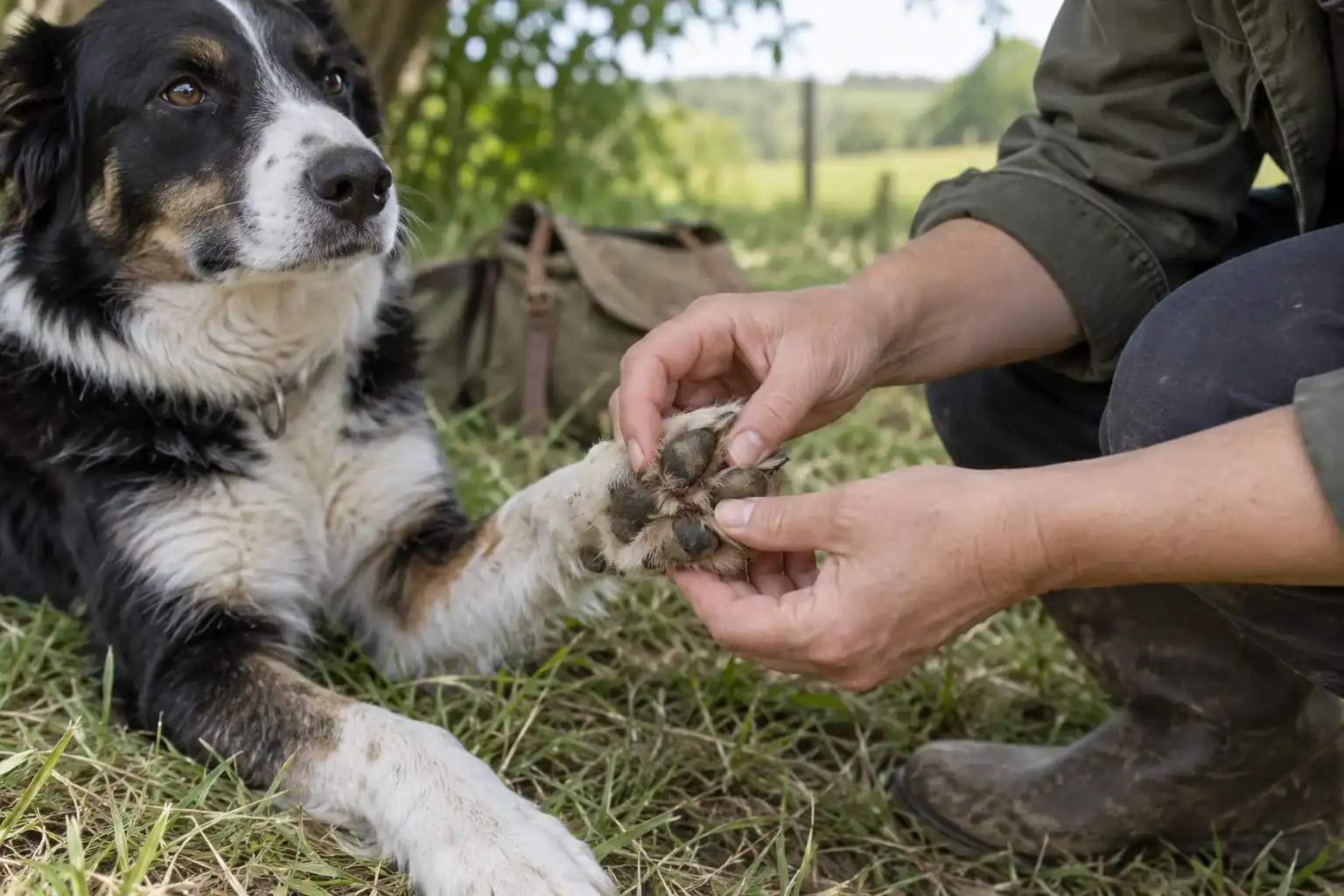
How to Clean a Minor Dog Paw Injury in the Field
Rinse first. Sterile saline is ideal, but a generous amount of clean water is useful when you are miles from the barn. Flushing lifts out sand, soil, and plant material without grinding debris farther into the tissue. Remove only loose material that comes away easily. Leave anything deep, firmly embedded, or penetrating the paw in place for the veterinarian.
Dr. Fleming says, “Small, shallow scrapes or minor pad abrasions can often be rinsed, gently cleaned, protected, and monitored at home if the dog is weight-bearing and the wound is not deep, dirty, or actively bleeding. Saline is ideal for flushing. Clean water is fine in the field. A dilute chlorhexidine solution can be used around minor wounds, but owners should avoid harsh products like hydrogen peroxide, alcohol, bleach, essential oils, powders, or strong ointments. Those can irritate tissue and slow healing.”
If the paw is bleeding, press a clean pad, gauze, or folded cloth firmly against it. Hold steady instead of lifting the material every few seconds to check. The American Veterinary Medical Association's pet first aid guidance recommends at least three minutes of direct pressure before checking a bleeding wound. If blood soaks through, add clean material on top so you do not disturb the clot that is trying to form.
Foot pads can bleed heavily, and walking often starts the bleeding again. If firm pressure does not control it, head for emergency care. Do not improvise a narrow tourniquet around the leg.
How to Wrap a Paw for the Trip Home
Cover the cleaned wound with a nonstick pad. Add roll gauze for light padding, then secure it with self-adherent wrap. The goal is a temporary clean cover, not a rigid cast. Pulling elastic wrap tight can restrict circulation after the paw begins to swell.
Dr. Fleming recommends leaving the toes visible when possible so you can watch their color and size. “A light wrap can protect the foot for transport, but it should never be tight. Toes should stay visible if possible so the owner can check for swelling or color change. If the toes become cold, swollen, pale, blue, or the dog seems more painful, the bandage should come off and the dog should be seen right away.”
The Merck Veterinary Manual's bandaging guidance warns that tight bandages can compromise blood flow and damage tissue. If you have never wrapped a paw, use the least pressure needed to hold the dressing during transport and have a veterinary professional show you the correct technique.
A dog bootie may help keep the temporary dressing clean during the walk back to the vehicle. Remove or change a wet cover promptly. Moisture trapped against healthy skin creates another problem while you are trying to protect the first one.
When Does a Paw Injury Need a Veterinarian?
Call for same-day veterinary care when the dog will not bear weight or when you find a deep cut, puncture, heavy bleeding, pad flap, burn, embedded object, bite, contaminated farm wound, barbed-wire injury, or nail torn close to the base. Punctures can push bacteria, plant material, and metal below a small opening. The surface may look better than the tissue underneath.
Swelling above the paw, spreading redness, discharge, bad odor, worsening pain, deformity, or pain when a joint moves also need prompt attention. A cold, pale, blue, or black toe can signal impaired circulation and should be treated as urgent.
“Owners should also get urgent care if they see swelling above the paw, spreading redness, discharge, bad odor, increasing pain, a cold or pale toe, a blue or black toe, obvious deformity, grinding, severe lameness, or pain when a joint is moved,” Dr. Fleming says. “Those can point to infection, poor circulation, fracture, foreign body, tendon injury, or joint involvement.”
The veterinarians at VCA Animal Hospitals also caution that a deep foreign object should be left for removal under veterinary care. Digging into the pad adds pain and can damage tissue around the object.
If a clinic is far away, call while you are arranging transport. Describe the location and depth of the wound, whether bleeding has stopped, whether the dog can bear weight, and what contaminated the foot. A photo can help the clinic prepare, but it should not delay leaving when the dog has an urgent sign.
Build a Working Dog Field First Aid Kit
A useful kit needs to survive dust, truck heat, rain, and being moved between vehicles. Keep it in a marked waterproof container, replace opened or expired supplies, and make sure everyone who handles the dog knows where it is.
Dr. Fleming recommends carrying:
- Saline or extra clean water for flushing.
- Dilute chlorhexidine for use around minor wounds.
- Gauze, nonstick pads, roll gauze, and self-adherent wrap.
- Bandage scissors and tweezers.
- Disposable gloves and a clean towel.
- A digital thermometer and tick removal tool.
- A dog bootie and an e-collar or inflatable collar.
- A properly fitted muzzle.
- The nearest emergency clinic’s phone number and directions.
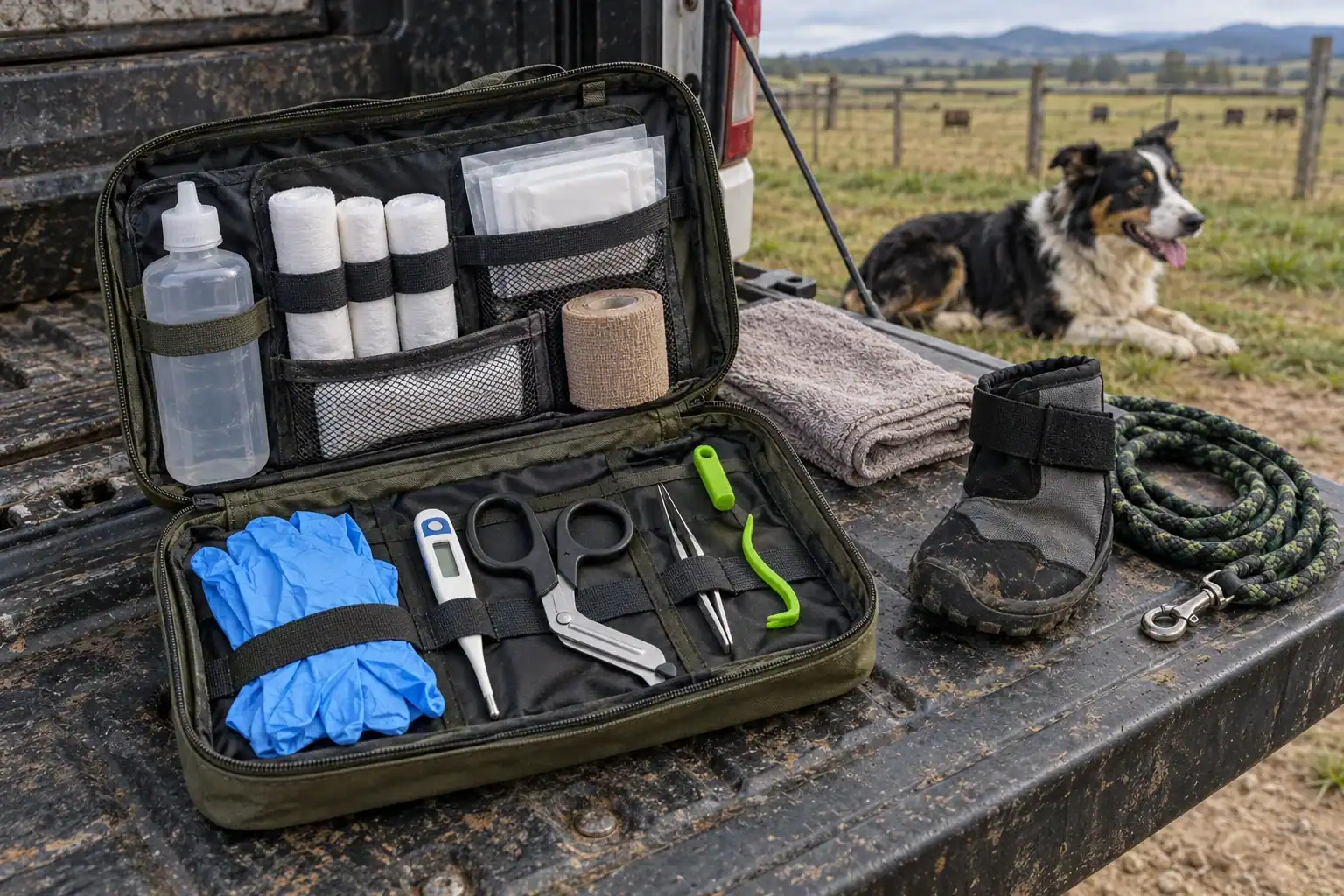
Carry enough water to flush a dirty wound rather than rationing a few ounces. Save your dog’s medication list, vaccination record, regular veterinarian, and emergency clinic in your phone. Our broader guide to keeping homestead dogs healthy and safe can help you plan for the problems that happen beyond the paw.
The kit is only useful if you know how to handle the supplies. Ask your veterinarian to demonstrate a temporary paw wrap and safe muzzle use during a routine visit. A first aid class can also give you practice before you are kneeling beside a truck with a hurt dog.
Rest Is Part of Dog Paw Injury Care
Once the dog is home, keep the foot dry and prevent licking. Follow the clinic’s directions for cleaning, dressing changes, medication, and rechecks. Do not give human pain medicine unless a veterinarian specifically directs you to do so. Several common pain relievers can be dangerous to dogs.
Pad wounds often improve enough that the dog wants to work before the tissue can handle a full day. That is when they split open again. Dr. Fleming advises rest, dry footing, and a gradual return only after the dog walks normally and the wound is closed, dry, and free of swelling or pain.
Winter creates its own risks, including ice cuts, cracked pads, and frostbite. Our guide to livestock guardian dog winter care covers cold-weather checks and prevention. During every season, take a few seconds to look at the paws after a patrol, hunt, or long gathering day. Early debris removal and a night of rest can prevent a small sore spot from becoming an infected wound.
“The biggest mistake is trying to ‘tough it out’ because the dog still wants to work,” Dr. Fleming says. “Working dogs are often stoic. Limping, licking the paw, slowing down, or refusing a command may be the only sign that something is wrong.”
A working dog does not need to agree that the day is over. Stop when the gait changes, inspect the foot, and let the injury decide what comes next. What do you keep in your working dog’s field kit?
Frequently Asked Questions About Dog Paw Injuries
What should I do first when my working dog starts limping?
Stop the dog from working, move to a safe area, and inspect the pads, spaces between the toes, nails, dewclaws, and lower leg. Check for bleeding, heat, swelling, debris, punctures, burns, torn nails, and pain before allowing any more activity.
Can I clean a dog paw injury with hydrogen peroxide?
Do not use hydrogen peroxide, alcohol, bleach, essential oils, or harsh cleaners on a paw wound. Flush with sterile saline or clean water. Ask your veterinarian whether dilute chlorhexidine is appropriate around a minor wound.
How do I know if a dog paw injury needs a veterinarian?
Seek same-day care for a deep cut, puncture, burn, loose pad flap, embedded object, contaminated wound, torn nail near the base, uncontrolled bleeding, or refusal to bear weight. Swelling, discharge, odor, spreading redness, deformity, or a pale, blue, cold, or black toe also requires prompt care.
How tight should a temporary paw wrap be?
A transport wrap should be light and just secure enough to hold a clean nonstick dressing. Leave toes visible when possible and remove the wrap if the toes swell, become cold, pale, or blue, or if the dog’s pain increases.
When can a working dog return after a paw injury?
Return to work gradually after the dog walks normally, the wound has closed, and there is no drainage, swelling, or pain. Paw pads flex and reopen easily, so a dog that feels eager may still need more rest.