
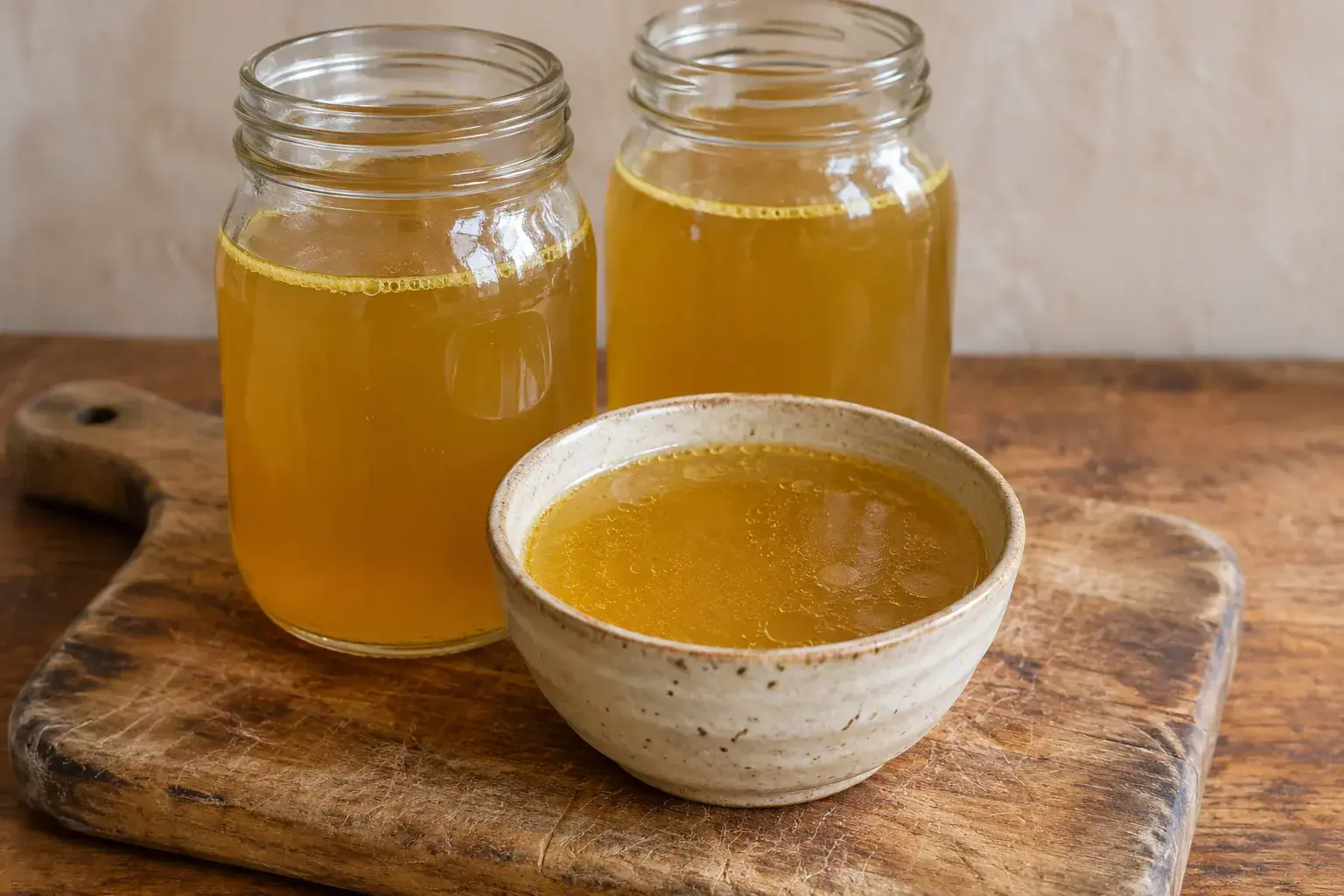
Homemade chicken stock is one of those quiet kitchen habits that makes everything else taste more complete. A roasted chicken carcass, a few vegetables, and a slow afternoon on the stove become a pot of golden stock you can use for soup, gravy, stuffing, beans, rice, and pan sauces. It is frugal without feeling stingy, and it gives useful scraps one last good job before they reach the compost.
The method is simple, but a few choices make the difference between a clean, savory stock and a pot that tastes muddy or bitter. You do not need a perfect collection of scraps. You need good bones, fresh vegetables, gentle heat, and enough time for the water to pull flavor and gelatin from the carcass.
Why Homemade Chicken Stock Is Worth the Pot
Store-bought broth is useful, and there is no shame in keeping cartons in the pantry. Homemade stock earns its place because it uses what you already have and gives you control over the salt. The flavor is fuller, especially when the bones came from a well-roasted bird with browned skin and a little cooking juice saved alongside it.
Stock also connects one meal to the next. Sunday’s roast chicken can become Monday’s soup or the beginning of Thanksgiving gravy. If you are already working on freezer soups and stews, a few labeled quarts of stock make that work much easier.
Which Kitchen Scraps Belong in Chicken Stock?

Good stock scraps are clean, fresh, and mild. Onion ends, carrot peels, celery leaves, parsley stems, thyme sprigs, mushroom stems, and the green portions of leeks all work well. Keep a freezer bag for these scraps and add to it as you cook. When the bag and a chicken carcass are both ready, make stock.
Skip anything spoiled, slimy, or moldy. Avoid large amounts of broccoli, cabbage, Brussels sprouts, and cauliflower because they can turn sulfurous during a long simmer. Beet scraps can stain the stock, and too many potato peels can make it cloudy. A stockpot is a place to use good odds and ends, not a rescue mission for food that should be discarded.
Should Chicken Stock Boil?
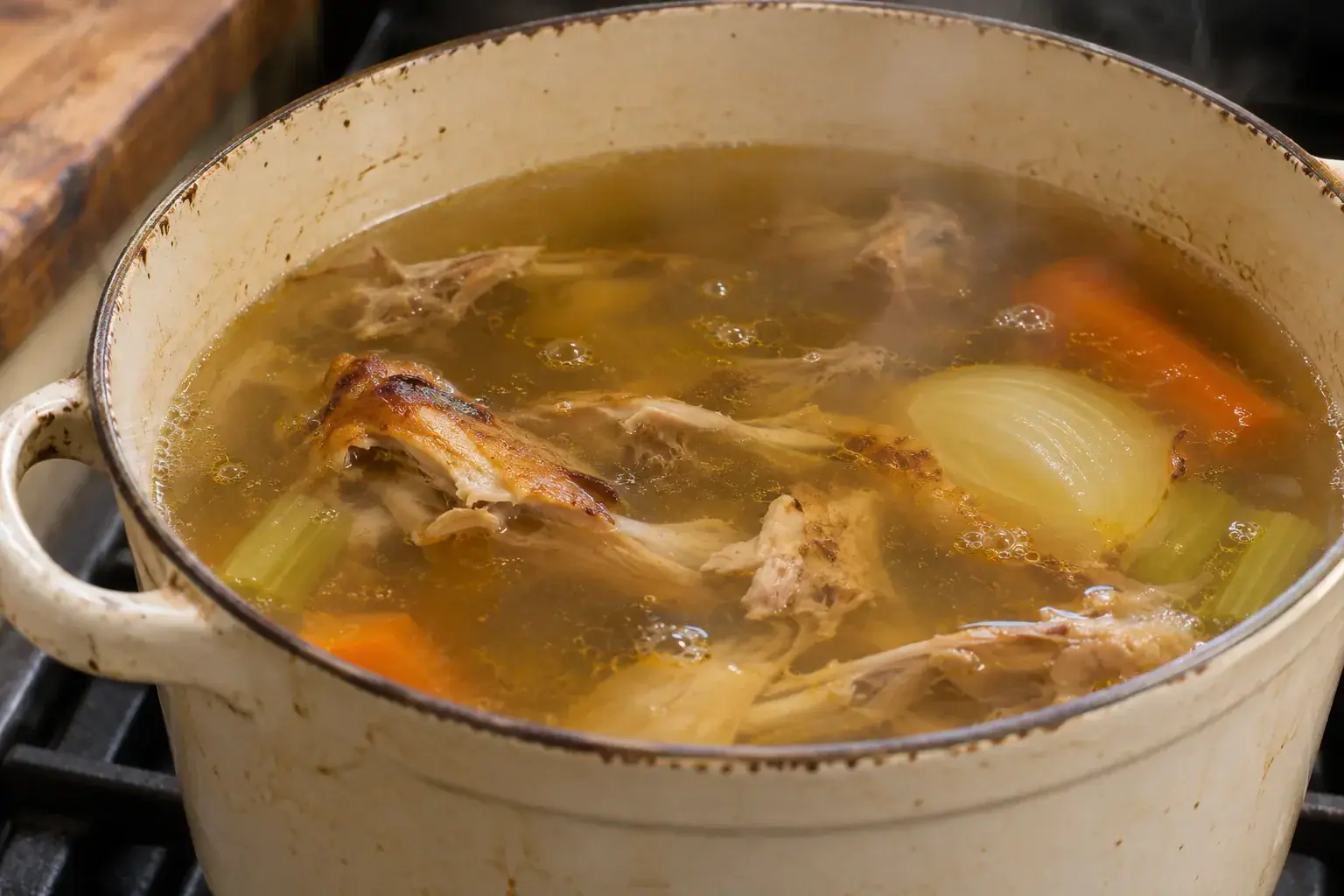
Chicken stock should come to a gentle simmer and stay there. A hard boil breaks fat and protein into tiny particles, making the stock cloudy and sometimes greasy. Gentle bubbles give the bones time to release flavor while keeping the finished liquid cleaner.
Skim the foam that rises during the first part of cooking, then lower the heat. Three to four hours is enough for a roasted chicken carcass. Longer is not always better. Vegetable flavor can become dull or bitter after an all-day boil.
How to Get a Stock That Gels
A chilled stock that jiggles is a good sign. The gel comes from collagen in joints, skin, cartilage, wing tips, and neck bones. Include those parts when you have them, and do not drown the bones in too much water. Cover them by about an inch.
If the finished stock is flavorful but thin, it is still useful. Simmer the strained liquid uncovered to concentrate it. Salt only lightly while it cooks because reduction also concentrates salt.
Cooling and Storing Chicken Stock Safely
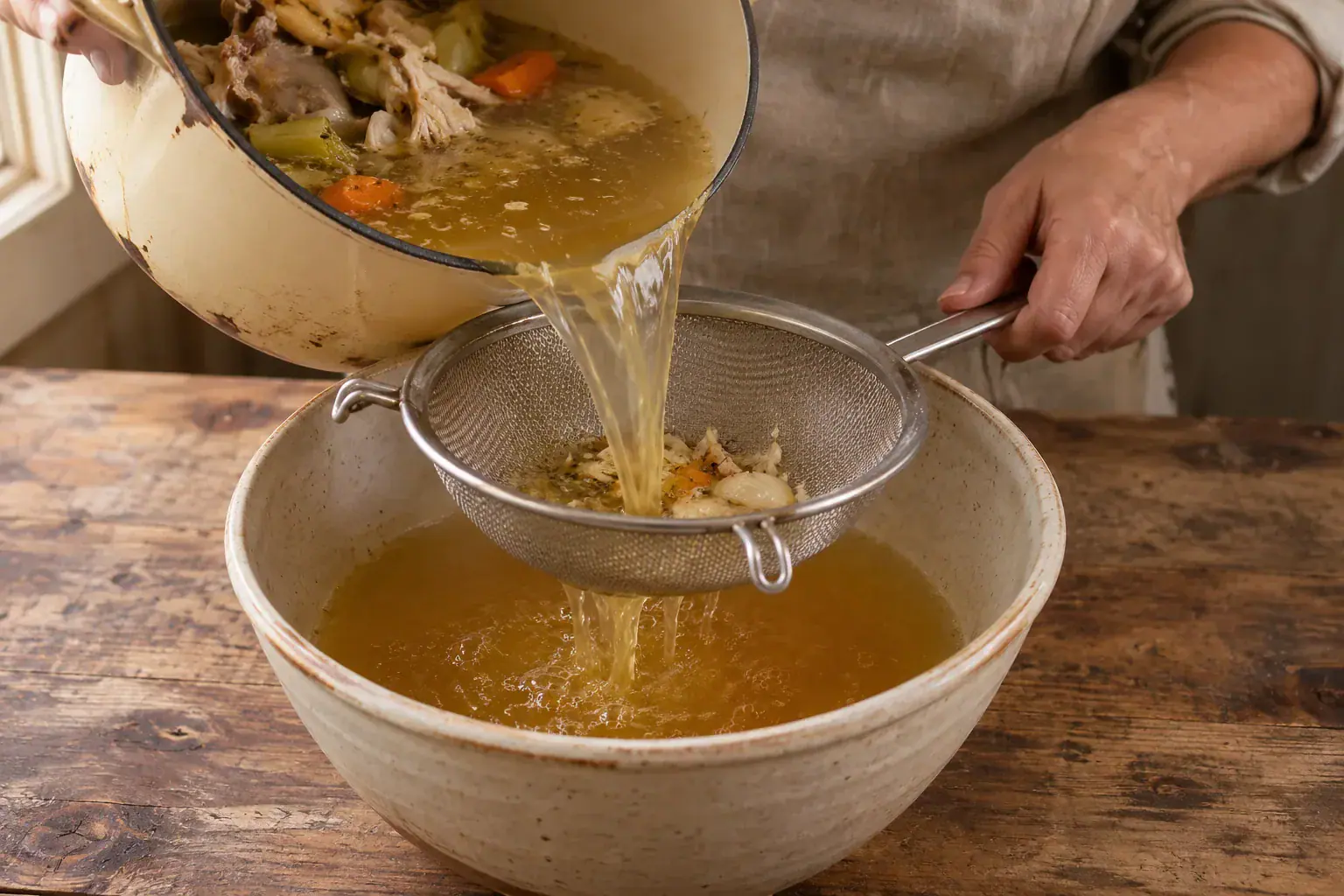
A large stockpot holds heat for a long time. Strain the stock, divide it into shallow containers, or set the bowl into an ice bath so it cools promptly. Refrigerate it for up to four days. Freeze it in quart containers for soup, pint containers for smaller meals, or ice cube trays for pan sauces.
Label the container with the date and amount. Pair that habit with a working homestead pantry system so the stock gets used instead of forgotten.
Ways to Use Homemade Chicken Stock
- Build chicken noodle, vegetable, bean, or wild rice soup.
- Replace water when cooking rice, barley, or savory grains.
- Make gravy for roast chicken or holiday meals.
- Loosen a skillet sauce after cooking meat or vegetables.
- Add body to stuffing, pot pie filling, beans, or casseroles.
For an immediate cold-weather use, stock is a natural starting point for homemade French onion soup.
Homemade Chicken Stock Recipe
Waddle & Cluck Recipe
Homemade Chicken Stock From Bones and Kitchen Scraps
Ingredients
Instructions
- Place the chicken carcass and any extra bones, skin, wing tips, or neck in a large stockpot. Add the onion, carrots, celery, garlic, bay leaves, peppercorns, herbs, vinegar, and salt.
- Pour in the cold water. The bones should be covered by about 1 inch; add a little more water if needed.
- Bring the pot just to a gentle simmer over medium heat. Skim off any foam that rises, then lower the heat. Do not let the stock boil hard, which can make it cloudy and greasy.
- Simmer partially covered for 3 to 4 hours. Check occasionally and add a little hot water if the bones become exposed.
- Strain the stock through a fine-mesh sieve into a large heat-safe bowl. Press lightly on the solids, then discard them.
- Cool the stock quickly by dividing it among shallow containers or setting the bowl in an ice bath. Refrigerate promptly.
- Once chilled, lift off any firm fat from the surface if desired. Season the stock to taste, then refrigerate for up to 4 days or freeze in useful portions for up to 6 months.
Cook mode is on. Your screen will stay awake when supported.
Common Questions About Homemade Chicken Stock
Can I make chicken stock in a slow cooker?
Yes. Add the ingredients to a large slow cooker, cover with water, and cook on low for 8 to 10 hours. Strain and cool it promptly.
Can I freeze stock in glass jars?
Use wide-mouth freezer-safe jars and leave generous headspace because liquids expand. Cool the stock before freezing and avoid jars with narrow shoulders.
Why is my chicken stock cloudy?
Cloudiness usually comes from boiling too hard or pressing the solids aggressively during straining. It does not make the stock unsafe, and it is usually fine for home cooking.
If you make this stock, tell me what meal you use it in first. A jar in the freezer is useful, but a pot of soup shared at the table is the real point.