An apricot almond tart is the highest ratio of impressiveness to effort in the whole dessert canon. One sheet of shop-bought puff pastry, a bowl of almond filling stirred together in two minutes, some halved apricots laid on top, and 25 minutes in the oven. It looks like a patisserie window and it is barely a recipe.

But there are two places it goes wrong, and they are the two things worth understanding before you start: the pastry gets warm, and the bottom goes soggy. Both are solvable, and the almond filling turns out to be the answer to the second one.
Key Takeaways
Why the Almond Filling Is Doing More Than You Think
The almond layer in this tart is a rough frangipane: ground almonds, sugar, butter, egg, vanilla. Everyone assumes it is there because almonds and apricots taste good together, which they emphatically do. That is only half of it.
Apricots release a surprising amount of juice as they bake. Without a barrier, that juice runs straight down into the puff pastry, and the pastry, which is essentially layers of dough and butter relying on being dry and crisp, turns to a pale wet raft. This is the soggy bottom, and it is the single most common failure in a fruit tart.
Frangipane is that barrier. It sits between the fruit and the pastry and it drinks. It absorbs the juice as it is released and bakes it into itself, becoming richer and more apricot-flavored in the process, while the pastry underneath stays dry enough to crisp. The filling is structural. This is why almost every classic French fruit tart has a layer of it, and why skipping it or spreading it too thin will cost you.
So spread it properly. An even layer, at least a quarter inch thick, right up to your one-inch border. Thin patches are where the sog gets in.

Keep the Puff Pastry Cold
Puff pastry works on a simple physical principle: it is dozens of alternating layers of dough and solid butter. In a hot oven, the water in the butter flashes to steam and forces the dough layers apart. That is the puff. It is steam, not yeast and not baking powder.
Which means that if the butter has melted into the dough before it reaches the oven, there are no longer distinct layers, there is no steam explosion, and there is no puff. You get a flat, greasy, dense base. This is what happens when the pastry sits on a warm counter while you slowly pit apricots.
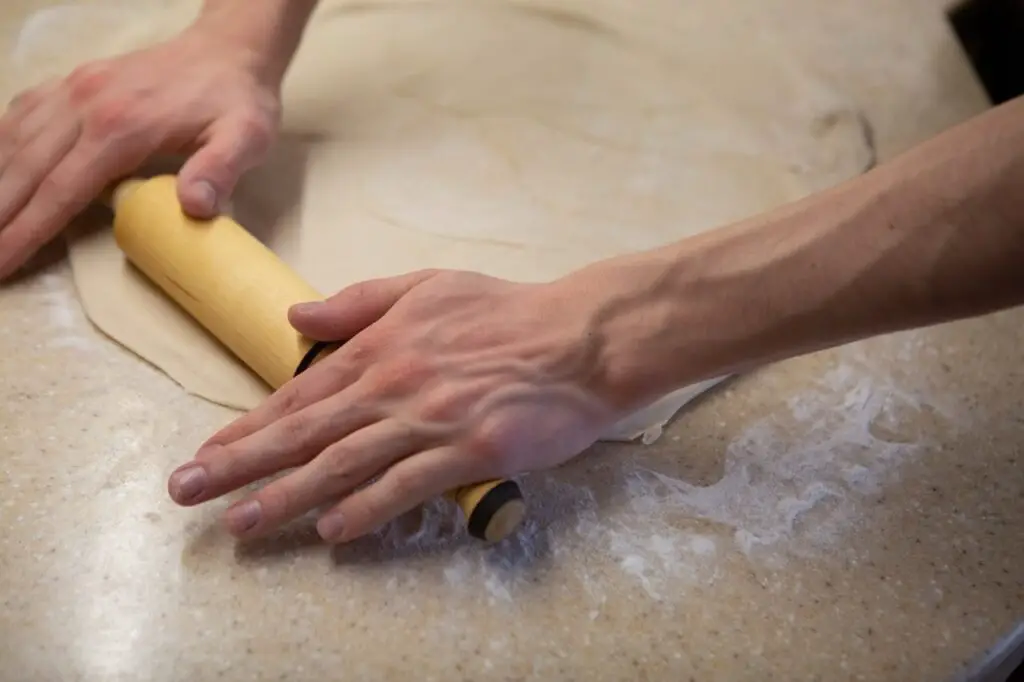
The fix is just to be organised. Make the almond filling first. Pit and halve the apricots. Warm the jam. Line your baking sheet. Have the oven fully up to 400F. Only then take the pastry out of the fridge. Roll it just enough to smooth the creases, spread, arrange, fold, and get it in the oven.
If at any point the pastry starts feeling soft or tacky, stop and put the whole assembled tart, baking sheet and all, into the fridge for 10 minutes. Cold pastry into a hot oven is the whole game, and a 10 minute pause costs you nothing.
Choosing and Arranging the Apricots
You want apricots that are ripe enough to have flavor but firm enough to hold their shape through 25 minutes at 400F. Press gently near the stem: it should give slightly, the way a peach does when it is ready. A rock-hard apricot has no perfume and will stay sour. An overripe one collapses into the filling and floods it.
Apricots have a short season and they do not ripen well after picking in the way a peach will, so buy them when they are good and use them quickly. If you find yourself with more than you can use, the National Center for Home Food Preservation has straightforward guidance on freezing stone fruit for later.
On which way up: the recipe card has them cut side down, pressed into the filling. That gives you more contact with the frangipane, more caramelization on the cut face, and a slightly more rustic look. Cut side up is the other school. The hollows fill with juice and syrup and it looks more like the tarts in a French bakery window. Both are correct. I lean cut side up when it is for company and cut side down when it is for us, which tells you something about how much it actually matters.
Either way, sit them close together but not overlapping. They shrink as they bake, and a tart that looked crowded going in will look sparse coming out.
Mora Ceramic Deep Fluted Pie Dish for Baking - 9 inch Porcelain Pie Plate for Apple, Quiche, Pot Pies, Tart, etc. - Modern Farmhouse Style - Vanilla White

A Few Details That Lift It
- Use almond meal, not almond flour. almond meal is coarser and made with the skins on, which gives the filling more texture and a deeper almond flavor. Blanched almond flour is finer and paler and bakes closer to cake. If your shop only has one, either will work, but ground almonds is the better choice here.
- Egg wash the border. Brush the folded pastry edge with a beaten egg before baking. Two minutes of work and it comes out deep gold and glossy rather than pale and floury.
- Add a splash of almond extract to the frangipane along with the vanilla, if you have it. A quarter teaspoon. It amplifies the almond without anyone being able to name why.
- Do not skip the jam glaze. Warmed apricot jam brushed over the fruit and the pastry while the tart is still hot. It takes 30 seconds, it makes the apricots gleam, and it stops them drying out. This is the step that makes it look professional.
- Dust the sugar last, and cold. Powdered sugar on a hot tart just dissolves into a damp film. Let it cool first, then dust right before it goes to the table.

How to Tell When It Is Done
20 to 25 minutes at 400F, but use your eyes rather than the clock. The pastry border should be a deep golden brown, not blond. The almond filling should be set and puffed, with no wet shine in the middle. The apricots should be tender and slightly slumped, with a little caramelization at the edges.
The most common mistake here is pulling it too early because the top looks done. Lift a corner of the tart with a spatula and look at the underside. If it is pale and doughy, it needs longer, and it will not hurt the top. If you are worried about the fruit scorching, drop the oven to 375F and give it another 5 to 8 minutes.
Variations
- Different stone fruit. Peaches, nectarines, plums, and figs all work with the same method and the same timing. Plums are particularly good, since their tartness cuts the sweetness of the frangipane.
- Add a spice. A pinch of cardamom or cinnamon in the almond filling. Cardamom with apricot is a genuinely special combination and almost nobody does it.
- Make it nut-free. Swap the almond meal for the same weight of all-purpose flour. You lose the flavor and some of the absorbency, so keep the fruit on the drier side.
- Change the glaze. Any jam you have works, warmed and brushed. A little of our pepper-infused peach jam gives the glaze a faint heat that is unexpected and very good against the almond.
- Individual tarts. Cut the pastry into rectangles, one apricot’s worth of filling and two halves on each. Same bake time, better for a crowd, and no cutting at the table.
Storing and Reheating
At room temperature under a loose cover, the tart keeps for 2 days. It is at its best a couple of hours after it comes out of the oven, when the pastry is still crisp and the filling has settled.
Avoid the fridge if you can. Cold air makes puff pastry go leathery and the frangipane firm and dense. If you must refrigerate, bring it back with 5 to 10 minutes in a 350F oven, which will re-crisp the pastry and wake the whole thing up. A microwave will do the opposite and turn the pastry to a damp flannel, so do not.
Frequently Asked Questions About Apricot Almond Tart
What is frangipane?
Frangipane is a sweet almond filling made from ground almonds, sugar, butter, and egg. It bakes into something between a cake and a custard. In a fruit tart it does two jobs: it tastes wonderful with stone fruit, and it soaks up the juice the fruit releases so the pastry underneath stays crisp.
Why is my apricot tart soggy on the bottom?
Either the almond layer was spread too thin to absorb the fruit juice, or the puff pastry got warm before it went into the oven. Spread the frangipane in an even layer at least a quarter inch thick, and make sure the oven is fully preheated to 400F so the pastry sets fast.
Can I use canned or frozen apricots?
Canned apricots are too soft and too wet, and they will turn the filling to sludge. Frozen work better than canned but must be thawed completely and patted very dry first. Fresh, firm, just-ripe apricots are worth waiting for, and their season is short.
Can I make an apricot almond tart ahead of time?
You can assemble it unbaked, cover it, and refrigerate it for up to a day, which actually helps because the pastry goes into the oven properly cold. Baked, it is best the day it is made, though it holds at room temperature for 2 days. Do not refrigerate a baked tart if you can avoid it, since the pastry goes leathery.
What can I use instead of apricots?
Any firm stone fruit. Peaches, nectarines, and plums all work with the same method and the same bake time. Figs are excellent. Avoid very juicy or watery fruit like berries on their own, since frangipane can only absorb so much liquid before it gives up.
Final Thoughts
Cold pastry, thick almond layer, hot oven, jam glaze while it is still steaming. That is the whole recipe, and everything else is arranging fruit.
It is the dessert to make when someone is coming for dinner and you have 40 minutes. If even that is more than you have, our soft, chewy snickerdoodle cookies take half the time, and for a lower-effort fruit dessert in the same family there is a rustic apple crisp with oats and pecans or a homemade peach cobbler.
Print Apricot Almond Tart
A simple yet elegant dessert that impresses with minimal effort
- Total Time: 35-40 minutes
- Yield: 6–8 servings 1x
Ingredients
- 1 sheet puff pastry, thawed
- 1/2 cup almond meal
- 1/4 cup sugar
- 1/4 cup unsalted butter, softened
- 1 egg
- 1 teaspoon vanilla extract
- 6–8 fresh apricots, halved and pitted
- 2 tablespoons apricot jam, warmed
- Powdered sugar for dusting
Instructions
- Preheat your oven to 400°F (200°C). Line a baking sheet with parchment paper.
- Roll out the puff pastry on a lightly floured surface to smooth out any creases. Transfer to the prepared baking sheet.
- In a bowl, cream together the almond meal, sugar, butter, egg, and vanilla extract until smooth.
- Spread the almond mixture evenly over the puff pastry, leaving a 1-inch border around the edges.
- Arrange the apricot halves, cut side down, on top of the almond mixture.
- Fold the edges of the puff pastry over the apricots to create a border.
- Bake for 20-25 minutes, or until the pastry is golden and the apricots are tender.
- Brush the warmed apricot jam over the tart while it’s still hot.
- Allow the tart to cool slightly, then dust with powdered sugar before serving.
- Prep Time: 15 minutes
- Cook Time: 20-25 minutes
- Category: Dessert
- Method: bake