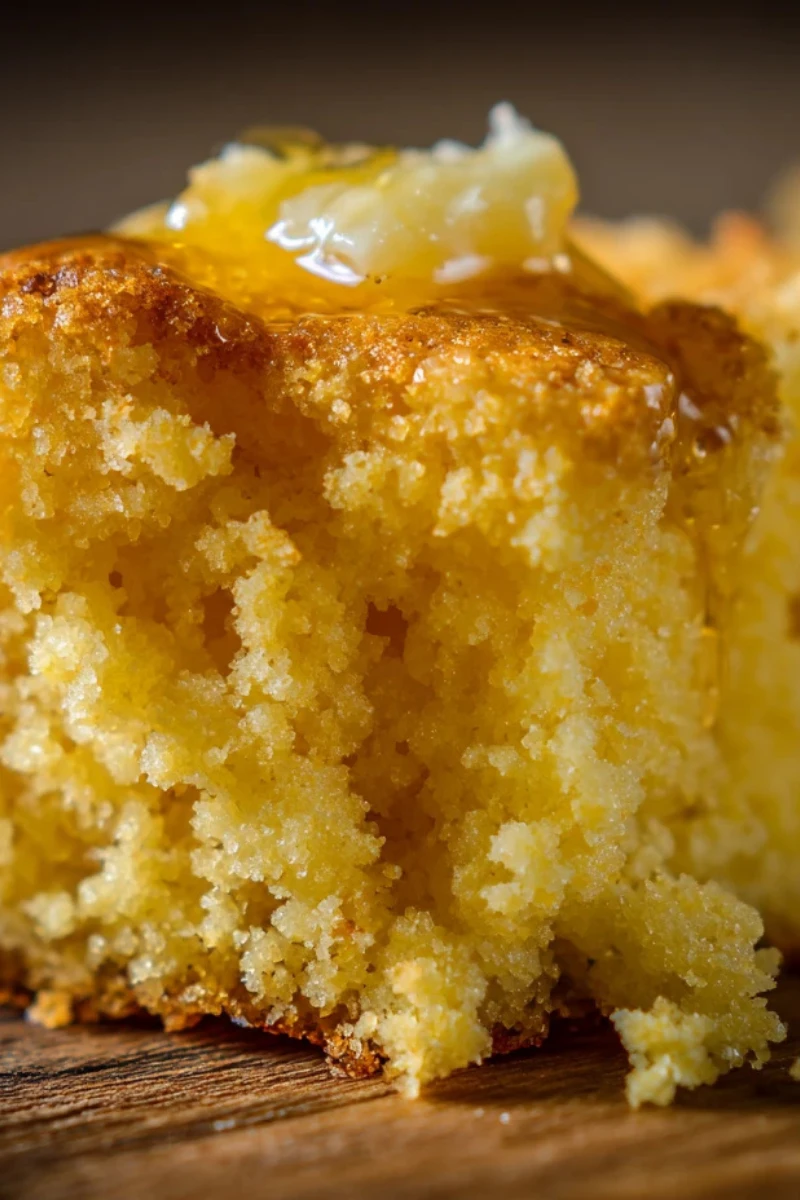

Cornbread has a reputation for being plain, and most of the time it earns it. This one does not. Jalapeño cheddar cornbread takes the same 10 minutes of work as a basic pan of cornbread, and gives you something with actual range: honey sweetness up front, a warm bite of pepper behind it, and pockets of sharp cheddar running all the way through. The honey matters more here than people expect: a dark fall honey brings a molasses depth that a mild spring one will not, which is why goldenrod honey has its defenders.
It also solves a problem. A pan of cornbread on its own is a side dish nobody remembers. A pan of this disappears before the main course does, and it is the thing people ask about afterward. It goes with chili, it goes with greens, it goes with a bowl of soup, and it is very good on its own with a smear of butter while it is still too hot to be sensible about.
What You’ll Learn
What Makes Jalapeño Cheddar Cornbread Work
The recipe is doing a three-way balancing act, and it is worth understanding before you start adjusting things.
Honey brings sweetness, but it does something more useful than that: it is hygroscopic, meaning it pulls in and holds onto moisture. That is why a honey-sweetened cornbread is still soft on day two while a sugar-only one has gone sandy. The quarter cup in this recipe is not there to make the bread taste like dessert. It is there to keep it tender.
The jalapeño is the counterweight. Without it, honey plus cheese plus corn is a sweet, rich, one-note pan of bread. The pepper gives the whole thing somewhere to go. And the cheddar is doing the salt and fat work, which is why sharp cheddar matters more than you would think. Mild cheddar melts into the batter and vanishes. Sharp cheddar stays present.
Take any one of these three out and the other two lose their balance. That is the whole design.
How Do You Control the Heat?
Almost all of a jalapeño’s capsaicin (the compound that makes it hot) is concentrated in the pale membrane, or placenta, that the seeds attach to. The seeds themselves are not hot. They just sit next to the part that is, and they pick up heat by contact. The Chile Pepper Institute at New Mexico State University, which has been studying peppers since 1992, is the standard reference on this, and it is the single most useful thing to know about cooking with chiles.
So you get to choose:
- Barely warm: seed the jalapeño and scrape out every bit of the white membrane with the tip of a spoon. You get the grassy pepper flavor and almost no heat. This is the version to make if kids are eating it.
- A real but friendly bite: leave about half the membrane in. This is where I usually land.
- Actually spicy: use two peppers, membranes and all, finely chopped. Anyone who says cornbread is boring will stop saying that.
A note worth having: heat varies enormously pepper to pepper, even on the same plant. Two jalapeños from the same bush can differ by a factor of ten. Taste a sliver of yours before you commit, and if you are cooking for a crowd, err mild. You can always pass hot sauce, but you cannot un-spice a pan of cornbread.
Choosing the Cheese and the Cornmeal
Grate your own cheddar. Pre-shredded cheese is coated in potato starch or cellulose to keep it from clumping in the bag, and that coating stops it from melting cleanly. It goes waxy instead of gooey. A block of sharp cheddar takes 90 seconds to grate on a box grater and the difference in the finished bread is not subtle.
On cornmeal: medium-grind yellow cornmeal is what this recipe wants. Fine grind gives you something closer to cake, and coarse grind (or true stone-ground meal) gives you a grittier, more rustic crumb that some people love and others find sandy. If all you can find is coarse, soak it in the buttermilk for 10 minutes before you mix, which softens it considerably.
The buttermilk is not optional either. Its acidity reacts with the baking powder for lift, and it tenderizes the crumb. If you are out, stir a tablespoon of vinegar or lemon juice into a cup of milk and let it sit for 5 minutes. It is not identical, but it is close enough.
How to Make It
The full measurements are in the recipe card below. Here is what actually matters while you are doing it.
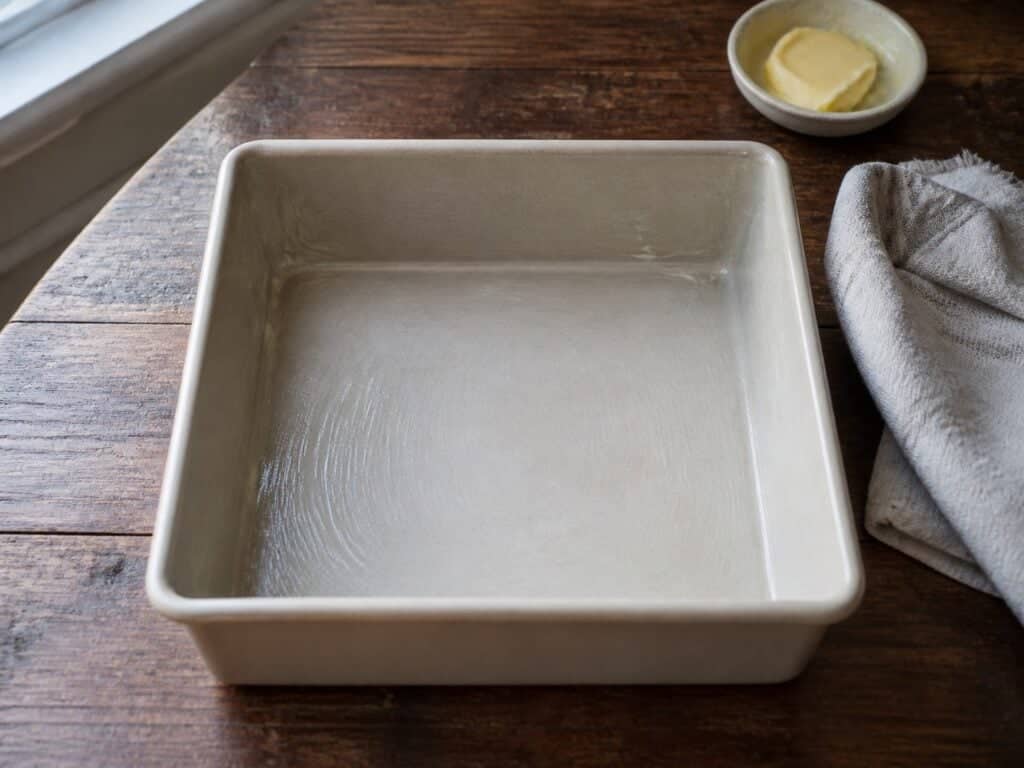
Preheat to 400F and grease the pan. The high heat is what sets the crust before the interior overcooks. If you are using cast iron, put the greased skillet in the oven while it heats so the batter hits a hot pan.
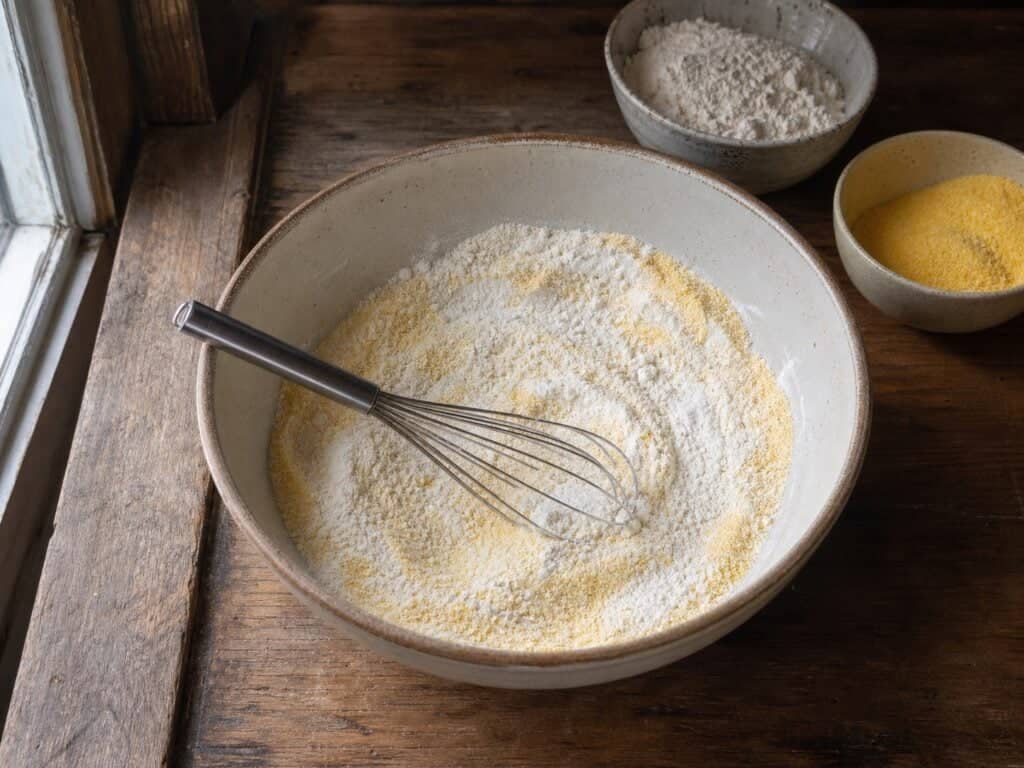
Whisk the dry ingredients thoroughly. Flour, cornmeal, sugar, baking powder, salt. Baking powder clumps, and a clump means a bitter metallic pocket in the finished bread. Whisk for a full 20 seconds.
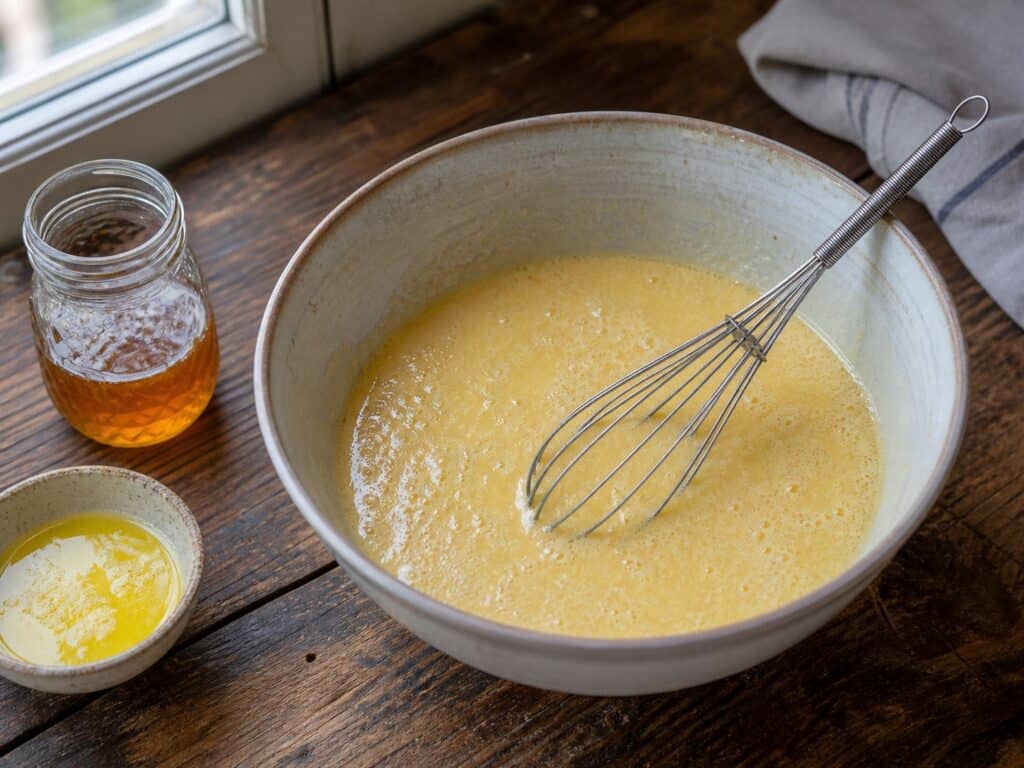
Beat the wet ingredients separately. Buttermilk, eggs, honey, melted butter. Let the melted butter cool for a minute first, otherwise it will scramble the eggs on contact.
Combine, and stop early. Pour the wet into the dry and stir until the last dry streaks just disappear. The batter should still look lumpy and slightly shaggy. This is the step people get wrong.
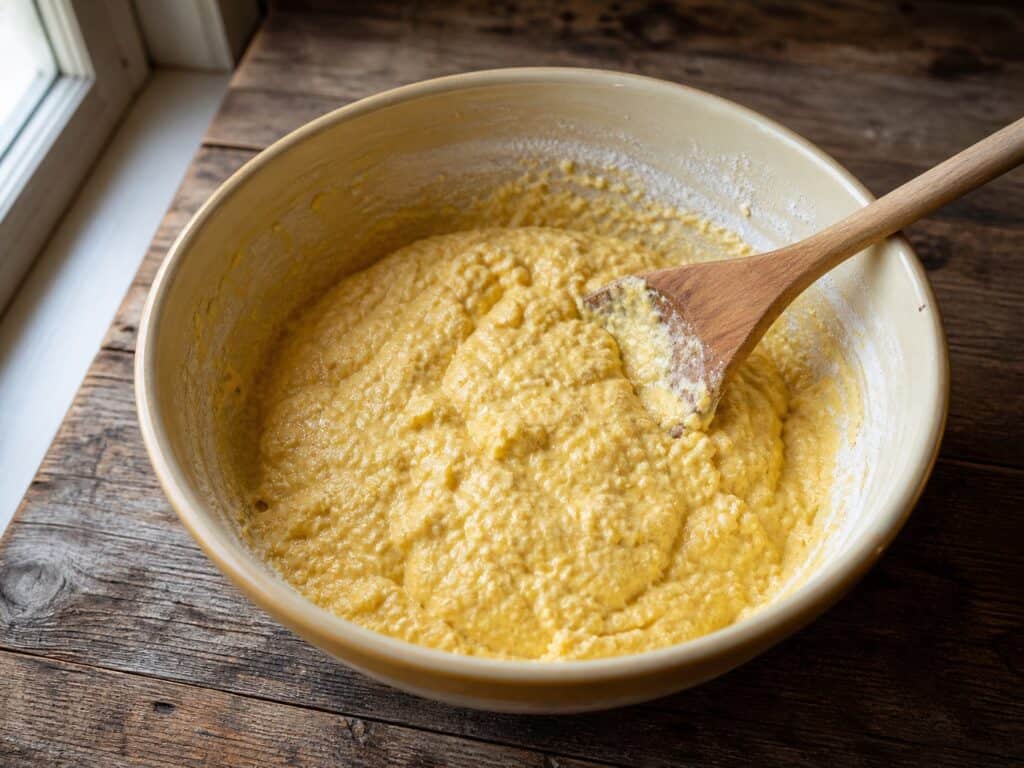
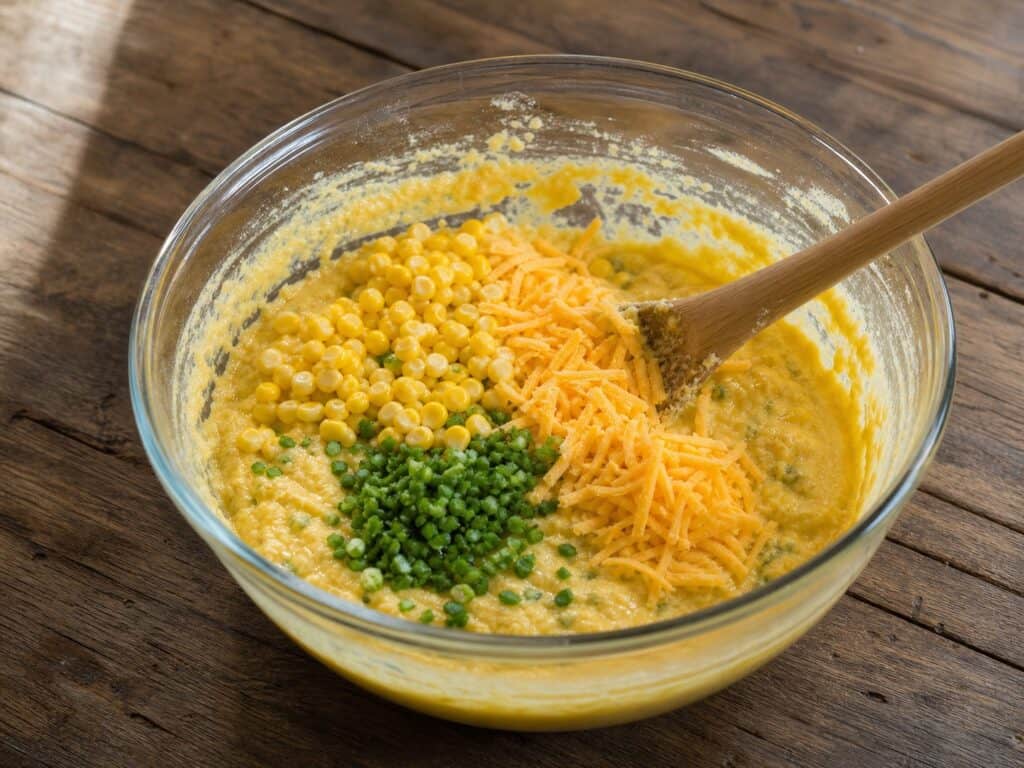
Fold in the corn, jalapeño, and cheddar. Five or six turns with a spatula. Every extra stir is developing more gluten.
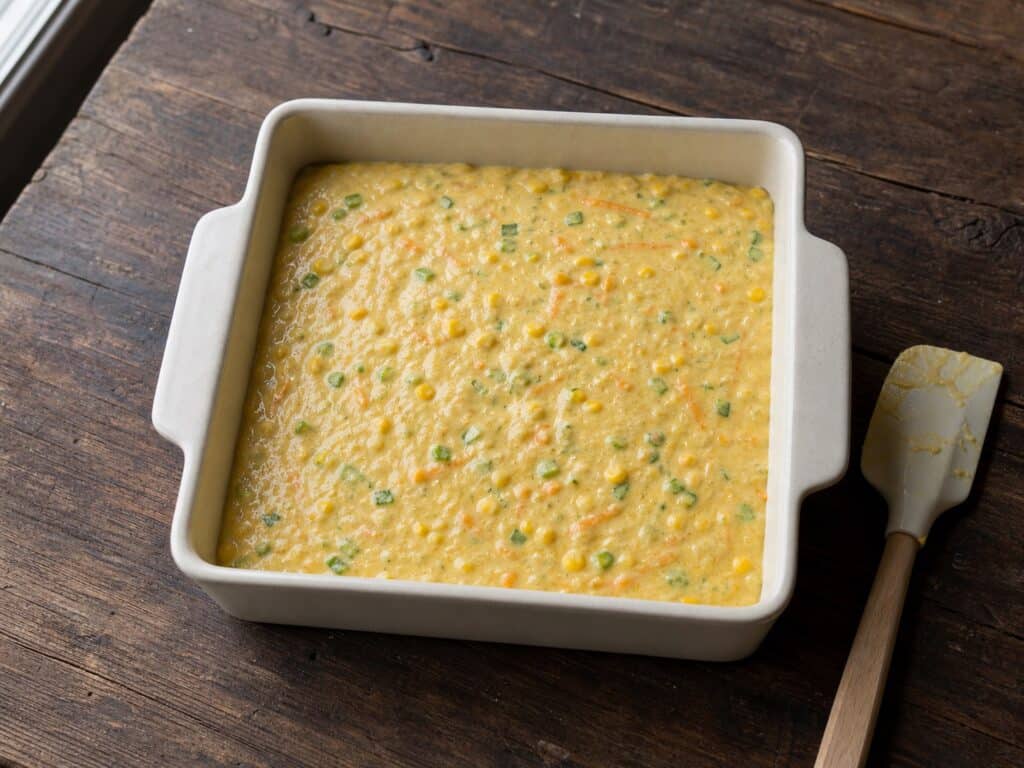
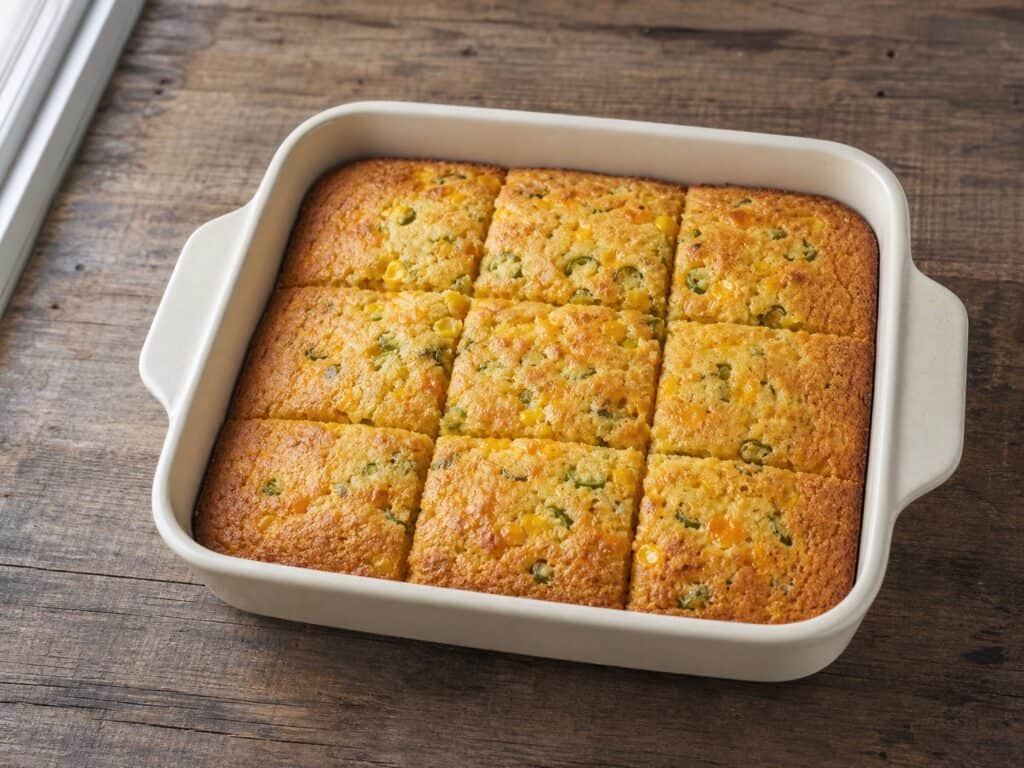
Bake 20 to 25 minutes until the top is golden and a toothpick comes out with a few moist crumbs clinging to it. Not clean. A clean toothpick means you have gone slightly too far.
Rest 10 minutes in the pan before cutting. It is still setting up. Cut it straight out of the oven and it will crumble on you.
Why Overmixing Ruins Cornbread
This is the one rule I would tattoo on the inside of a mixing bowl if I could. When flour gets wet and then gets agitated, it develops gluten, the protein network that gives bread its chew. Chew is exactly what you want in a baguette and exactly what you do not want in cornbread.
A tough, rubbery, dense pan of cornbread is almost never a bad recipe. It is a batter that got stirred 40 times when it needed 12. The batter is supposed to look slightly wrong when you pour it, lumpy and uneven. Trust it. Those lumps hydrate and disappear in the oven.
The same logic applies to the add-ins. Fold the cheese and peppers through with as few strokes as you can manage, and accept that the distribution will be a little uneven. Uneven is fine. Uneven is why some bites are cheesier than others, which is not a flaw.
What to Serve With Jalapeño Cheddar Cornbread
This is a side dish with opinions, so pair it with something that can hold its own.
- Chili or a pot of beans. The classic, and it works because the sweetness of the honey plays directly against the smoke and heat of the chili.
- A brothy soup. Something like a slow cooker chicken and wild rice soup gives you a plain, savory backdrop that lets the cornbread be the interesting thing on the table.
- Barbecue or anything smoked. Pulled pork, brisket, smoked chicken. The cheddar and pepper hold up next to heavy smoke where plain cornbread just gets lost.
- Butter, and nothing else. Warm from the pan with a slab of herb compound butter you can keep in the freezer melting into it is a legitimate meal and I will not be argued out of this.
- Something sweet and sharp on the side. A spoonful of pepper-infused peach jam alongside a warm square is very good, and it doubles down on the sweet-and-heat idea the bread is already built around.
Storing, Freezing, and Reheating
Cornbread goes stale faster than most quick breads because there is so little gluten holding moisture in the crumb. Cover the pan tightly or move the squares to an airtight container as soon as it is fully cool. At room temperature it is good for 2 days, and the honey buys you most of that second day. In the fridge it will last 5 days but it firms up and the crumb tightens, so let it come back to room temperature or warm it before serving.
To freeze, cool completely, cut into squares, and freeze them spread out on a sheet pan before you bag them. Frozen in a lump, they weld together and you will end up chiseling them apart. They keep about 3 months.
The best way to reheat a square is in a dry skillet, cut side down, over medium heat for a couple of minutes. It crisps the cut face and warms the middle without drying it out. The microwave works and takes 20 seconds, but it makes the crumb slightly gummy. Your call on which tradeoff you want.
Frequently Asked Questions About Jalapeño Cheddar Cornbread
How spicy is jalapeño cheddar cornbread?
With one jalapeño, seeded and de-membraned, it is barely spicy at all. It reads as warmth in the background rather than heat. Leave the membrane in and it gets a real bite. Use two peppers with membranes intact and it will genuinely register as spicy to most people.
Can I use fresh corn instead of canned or frozen?
Yes, and it is better. Cut the kernels straight off a raw cob and fold them in as they are. They will cook through in the oven and they hold more moisture and pop than canned kernels do. About one small ear gives you the quarter cup the recipe calls for.
Why is my cornbread dry and crumbly?
Usually one of three things: too much cornmeal relative to flour, overbaking by even 5 minutes, or overmixing the batter. Cornbread carries on cooking in a hot pan after it leaves the oven, so pull it as soon as a toothpick comes out with a few moist crumbs, not bone dry.
Can I make jalapeño cheddar cornbread in a cast iron skillet?
Yes, and a preheated skillet gives you a crisper, browner crust than a glass or metal baking dish. Put the greased skillet in the oven while it preheats, then pour the batter into the hot pan. It should hiss when it hits. Bake 18 to 22 minutes, a little less than the square pan.
Can I freeze it?
Yes. Cool it completely, cut it into squares, and freeze them in a single layer before bagging them so they do not fuse together. They keep about 3 months. Reheat from frozen in a 350F oven for 10 to 12 minutes, or wrap a square in a damp paper towel and microwave it for 30 seconds.
Final Thoughts
Cornbread is one of those recipes where the difference between forgettable and very good is not skill or ingredients, it is restraint. Do not overmix, do not overbake, and taste the pepper before you commit to it. Everything else takes care of itself.
Make a pan of it the next time you have chili on the stove. And if you want the plainer, older version to compare it against, our skillet cornbread with honey butter is the one to start with. For a sweeter quick bread on the same principle, there is always cranberry orange bread.
Print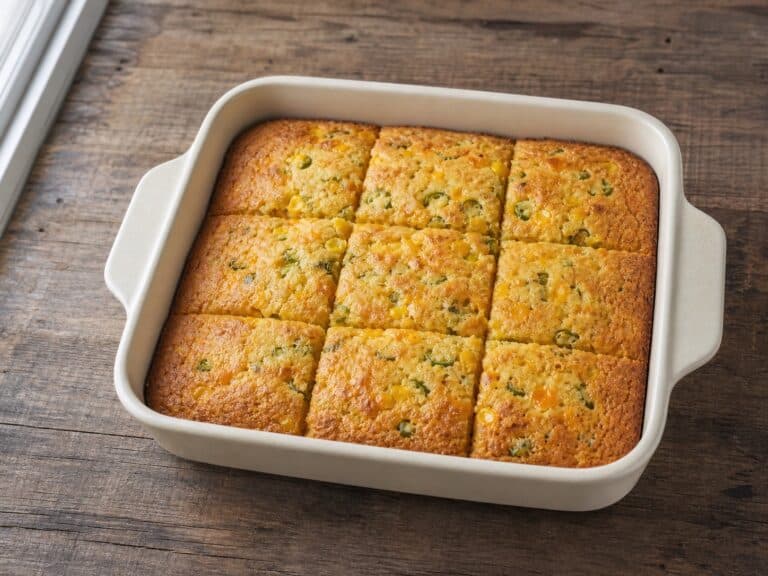
Honey-Jalapeño Cheddar Cornbread
A sweet, spicy, and cheesy delight that pairs perfectly with any meal
- Total Time: 35 minutes
- Yield: 9 squares 1x
Ingredients
- 1 cup all-purpose flour
- 1 cup yellow cornmeal
- 1/4 cup granulated sugar
- 1 tablespoon baking powder
- 1/4 tsp baking soda
- 1/2 teaspoon salt
- 1 cup buttermilk
- 2 large eggs
- 1/4 cup honey
- 1/4 cup unsalted butter, melted
- 1/4 cup corn kernels (fresh, canned, or frozen and thawed)
- 1 jalapeño, finely chopped (optional for a spicy kick)
- 1/2 cup grated sharp cheddar cheese (optional for a cheesy flavor)
Instructions
- Preheat the Oven and Prepare the Pan:
- Preheat your oven to 400°F (204°C).
- Grease an 8-inch square baking dish or a similar-sized pan with butter or non-stick spray.
- Mix Dry Ingredients:
- In a large mixing bowl, whisk together the flour, cornmeal, sugar, baking powder, and salt.
- Combine Wet Ingredients:
- In another bowl, beat the buttermilk, eggs, honey, and melted butter until well combined.
- Combine Wet and Dry Ingredients:
- Add the wet ingredients to the dry ingredients, stirring just until combined. Be careful not to overmix.
- Add Extras:
- Fold in the corn kernels, jalapeño, and cheddar cheese if using.
- Bake the Cornbread:
- Pour the batter into the prepared baking dish.
- Bake for 20-25 minutes or until the top is golden and a toothpick inserted into the center comes out clean.
- Cool and Serve:
- Let the cornbread cool in the pan for about 10 minutes before cutting into squares.
- Serve warm with butter, honey, or your favorite toppings.
- Prep Time: 10 minutes
- Cook Time: 25 minutes