
Watering and irrigation are where most home gardens either settle into a rhythm or slowly fall apart. Plants rarely fail because fertilizer was wrong, but inconsistent water shows up quickly and compounds fast. Too much water, too little water, or water applied at the wrong time creates stress that plants struggle to recover from.
This article looks at watering and irrigation the way experienced gardeners actually deal with it. There are no rigid schedules or complicated systems here. The focus is on how water moves through soil, how plants respond to it, and how to build habits that keep the garden steady instead of reactive.
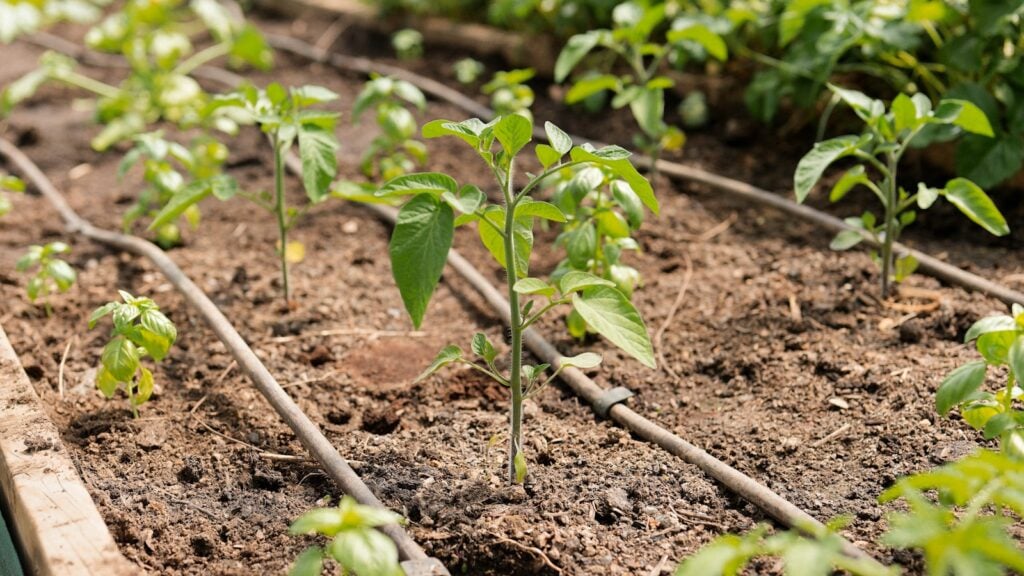
Watering and irrigation basics most gardeners overlook
Watering and irrigation work best when they are treated as parts of the same system instead of separate decisions. Watering is the act of putting water into the garden, whether that happens by hose, can, or bucket. Irrigation is the structure that controls where that water goes, how fast it arrives, and how consistently it shows up. Problems usually start when people focus on one and ignore the other.
A common example is installing irrigation without changing watering habits. The system runs on a timer, but no one checks whether the soil is actually absorbing water or if plants are getting what they need. On the other side, hand watering without any structure often leads to uneven coverage, with some plants getting soaked while others barely get damp.
Plants respond far better to consistency than precision. They do not need perfect amounts delivered on an exact schedule, but they do need water to arrive in a predictable way. A simple watering and irrigation setup that delivers moisture reliably will almost always outperform a complicated system that only works when every variable lines up.
This is why stability matters more than optimization. Chasing the perfect system often leads to constant tweaking and second guessing. When watering and irrigation are aligned around steady moisture at root level, plants settle in and problems tend to resolve themselves before they become visible.
Why watering and irrigation matter more than most garden upgrades
Water is the pathway plants use to access nutrients, oxygen, and microbial life in the soil. Nutrients move through water films in the soil, and roots rely on that moisture to take them in. When soil dries out too much or stays saturated for long stretches, that exchange breaks down and roots stop functioning the way they should.
Wide swings in moisture stress plants even when the soil itself is healthy. Roots that cycle between drought and saturation become less efficient and more vulnerable to disease. Over time, this kind of stress shows up as slow growth, poor fruiting, and plants that never seem to recover their strength.
Irrigation helps smooth out those swings by delivering water in a more predictable way. During busy weeks or unpredictable weather, a basic irrigation setup keeps soil moisture within a workable range instead of letting it crash or spike. This is especially important during heat, wind, or sudden dry spells.
When moisture stays relatively stable, plants spend less energy trying to survive. Root systems stay active, soil microbes continue their work, and growth becomes steadier and more resilient. That consistency often matters more than adding amendments or changing fertilizers.
How plants actually use water
Plants absorb water through their roots, not through leaves or the soil surface. Water sitting on top of the soil may look reassuring, but it does very little if it never reaches the root zone. When watering stays shallow, roots have no reason to grow deeper, and they remain clustered near the surface where conditions change quickly.
Shallow root systems dry out fast and react poorly to heat, wind, and missed watering days. These plants often wilt dramatically, even when watered regularly, because the moisture they rely on disappears as soon as the sun comes out. Over time, this pattern creates plants that look needy and unstable rather than established.
Deep watering changes how roots behave. When moisture reaches several inches down, roots follow it and begin to spread through a larger volume of soil. That deeper root system has access to water that lasts longer and stays cooler, especially during hot weather.
Watering and irrigation work best when the goal is moisture at root depth rather than constant surface dampness. A garden watered this way may look dry on top between sessions, but below the surface the soil stays usable. That is where plants actually benefit.
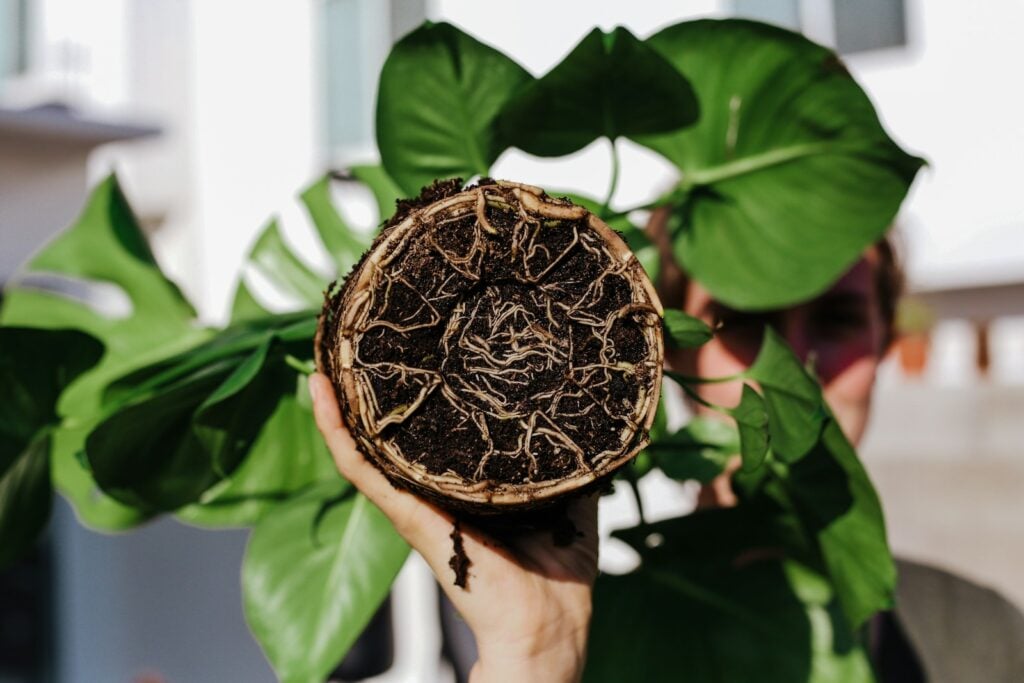
Watering depth versus watering frequency
One of the most common mistakes in home gardens is watering too often without watering deeply enough. The soil looks damp on the surface, so it feels like the job is done, but just a few inches down it can be dry. Roots living in that dry zone struggle even though watering happens regularly.
This pattern trains plants to rely on shallow moisture. Roots stay near the surface because that is where water appears, and they never build depth or resilience. The result is a garden that needs constant attention and still looks stressed during heat or wind.
Most vegetables and flowers respond better to fewer watering sessions that soak the soil thoroughly. Deep watering encourages roots to spread downward and outward, giving plants access to moisture that lasts longer. That kind of root system supports steadier growth and better tolerance during tough conditions.
How often deep watering is needed depends on soil type, plant size, and weather. Sandy soil drains quickly and may need deeper watering more often. Clay soil holds moisture longer but needs slower application so water can soak in instead of running off. Paying attention to how your soil behaves matters more than following a fixed schedule.
The practical difference between watering and irrigation
One of the most common mistakes in home gardens is watering too often without watering deeply enough. The soil looks damp on the surface, so it feels like the job is done, but a few inches down it can already be dry. Roots sitting in that dry zone struggle even though water is being applied regularly.
Over time, this pattern trains plants to rely on shallow moisture. Roots stay close to the surface because that is where water consistently appears, and they never develop depth or strength. The result is a garden that needs constant attention and still looks stressed as soon as heat or wind shows up.
Most vegetables and flowers respond better to fewer watering sessions that soak the soil thoroughly. Deep watering encourages roots to spread downward and outward into a larger volume of soil. That wider root system gives plants access to moisture that lasts longer and supports steadier growth.
How often deep watering is needed depends on soil type, plant size, and weather conditions. Sandy soil drains quickly and usually needs deeper watering more often. Clay soil holds moisture longer but requires slower application so water can soak in instead of running off. Watching how your soil behaves over time is more useful than following a fixed schedule.
When hand watering works best
Hand watering makes sense for small gardens, containers, and raised beds where close observation matters. It allows you to respond to plant size, changing weather, and early signs of stress without adjusting equipment or schedules. You can slow down, aim water where it is needed, and adjust on the spot.
Hand watering also keeps you connected to what is happening in the soil. You notice how quickly moisture soaks in, where water runs off, and which areas dry out faster. That awareness is harder to maintain once watering becomes fully automated.
The limitation is time. As gardens grow larger or schedules get busier, hand watering becomes harder to do consistently. Missed days and rushed sessions add up quickly, which is where irrigation often becomes necessary to support steady watering habits.
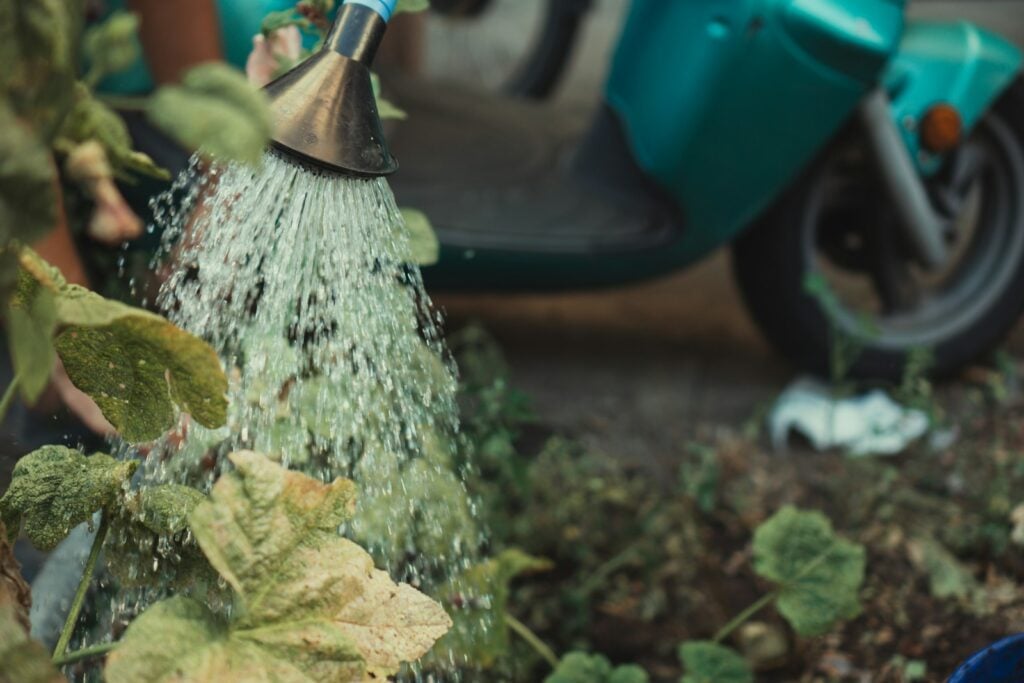
Simple irrigation options for home gardens
Effective irrigation does not need to be complicated to work well. In many home gardens, simpler systems are easier to manage, easier to repair, and more reliable over time. The goal is consistent water delivery, not technical perfection.
Soaker hoses are often a good starting point. They deliver water slowly at soil level, which helps moisture soak in rather than run off. They work especially well in raised beds and along rows where plants are spaced fairly evenly. Because water stays low, there is less evaporation and fewer issues with wet foliage.
Drip irrigation takes that idea a step further by placing water directly at the base of each plant. This reduces waste and allows for more precise control, which can be useful in mixed plantings or larger gardens. Drip systems require a bit more setup, but once in place they are efficient and adaptable.
Sprinklers still have a role, especially for lawns or large open areas. In food gardens, they are less efficient because wind and heat carry water away before it reaches the soil. Wet leaves can also increase disease pressure, which is why sprinklers tend to work better outside of vegetable beds.
Choosing a watering and irrigation setup that fits your space
The best watering and irrigation setup is the one that fits the garden you actually have, not the one that looks impressive on paper. Raised beds tend to work best with soaker hoses or drip lines that deliver water slowly and evenly across the bed. In ground rows often benefit from drip tape, which keeps moisture close to plant roots without soaking the entire surface. Larger open areas tolerate sprinklers more easily, especially when precision matters less than coverage.
Problems usually start when gardeners try to mix too many systems at once. Different delivery methods run at different pressures and speeds, which can lead to uneven watering and constant adjustments. More parts also mean more maintenance. Starting with one simple system makes it easier to see what works and where changes are actually needed.
For many home gardens, a basic drip irrigation kit is a solid place to begin. Systems like the Rain Bird Drip Irrigation Landscape Watering Kit, which is widely available on Amazon, are flexible and easy to customize. These kits usually include tubing, emitters, connectors, and simple instructions that work well for raised beds, containers, and small in ground gardens.
The advantage of a starter kit like this is control without complexity. You can add lines where needed, adjust flow at individual plants, and expand gradually as the garden grows. It keeps watering and irrigation manageable while still giving plants the steady moisture they respond to best.
Comprehensive 108-piece kit for flower beds, gardens and landscaped areas; eliminates hand watering, saves time and money

Best times of day for watering and irrigation
Early morning watering is generally the most effective option for most home gardens. Cooler temperatures mean less water is lost to evaporation, and soil has time to absorb moisture before heat builds. As the day warms, leaves dry naturally, which helps reduce disease pressure across the garden.
This timing works well for both hand watering and irrigation systems. When water is applied early, plants have access to moisture during the part of the day when they are actively growing. Roots can pull water efficiently without the added stress of high heat.
Evening watering can work in dry climates where humidity stays low overnight. In more humid areas, however, wet foliage that lingers through the night creates ideal conditions for fungal diseases. The risk increases when watering methods wet leaves rather than delivering water at soil level.
Midday watering is usually the least efficient option. Heat and sun cause rapid evaporation, and water applied at this time often does not penetrate deeply. It can also shock plants that are already stressed, unless they are wilting severely and need immediate relief.
How to handle watering and irrigation during extreme heat
Heat increases water demand, but it also limits how efficiently plants can absorb moisture. During extreme heat, roots slow down even when water is present, and saturated soil can actually make stress worse. Adding more water in the middle of a heat wave does not always fix wilting and can create problems like root damage or disease.
Deep watering early in the morning gives plants the best chance to use moisture before temperatures climb. Roots can take in water while the soil is still cool, which supports the plant through the hottest part of the day. This approach is far more effective than trying to compensate later with frequent light watering.
Shallow watering during the day usually does more harm than good. Water evaporates quickly, and the soil surface heats up without delivering meaningful moisture to the root zone. In some cases, this repeated surface watering can actually increase stress.
Mulch plays a larger role during extreme heat than adding extra watering sessions. A good mulch layer keeps soil cooler, slows evaporation, and helps maintain more stable moisture levels. In hot conditions, mulch often does more to protect plants than increasing irrigation alone.
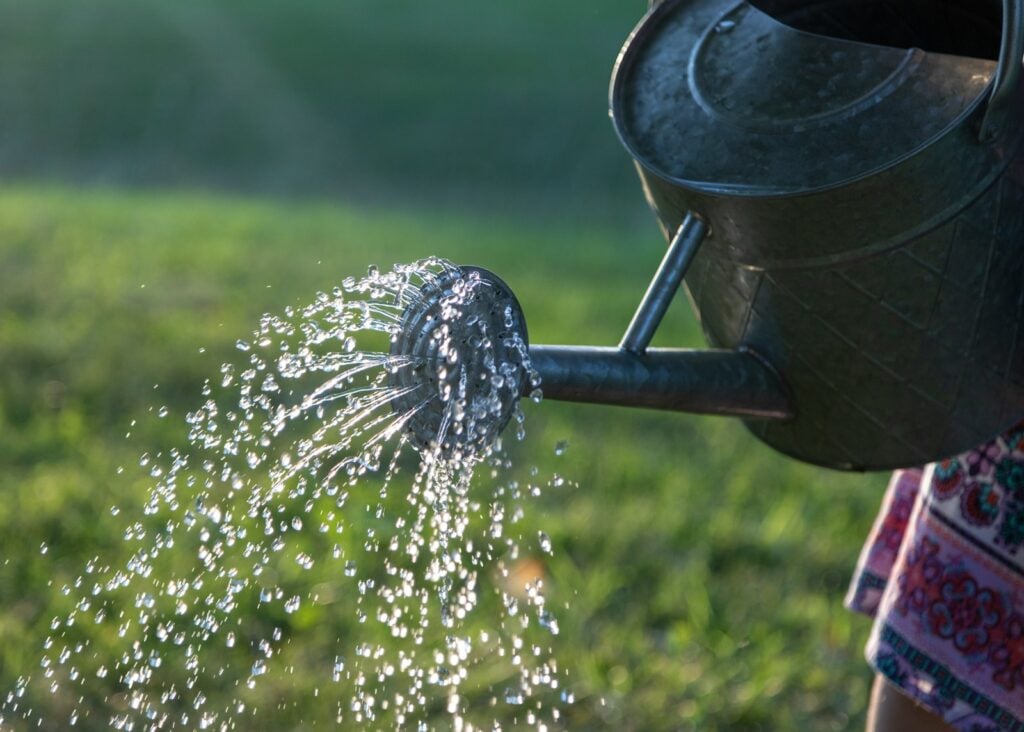
Signs your watering routine is too much
Yellowing leaves, slow growth, and soft or weak stems often point to excess moisture rather than nutrient problems. Roots need oxygen to function, and when soil stays saturated, air pockets disappear. Without enough oxygen, roots lose efficiency and begin to decline even though water is present.
Over time, this kind of stress weakens the entire plant. Growth slows, leaves lose color, and plants become more vulnerable to pests and disease. Because the symptoms can look similar to underwatering or deficiencies, excess moisture is often overlooked as the real cause.
Fungal diseases thrive in consistently wet conditions, especially when foliage stays damp for long periods. Leaf spots, mildew, and rot problems tend to show up when watering and irrigation timing are off. This is particularly common with overhead watering or irrigation systems that run too late in the day.
If these issues persist, irrigation timing or volume usually needs adjustment. Allowing the soil surface to dry slightly between watering sessions helps restore airflow and balance below ground. The goal is not dry soil, but soil that stays moist without remaining saturated.
Signs your garden needs deeper watering
Wilting that does not recover overnight usually points to deeper dryness rather than a problem at the surface. Plants naturally droop during the heat of the day, but they should rebound once temperatures cool. When they do not, it often means moisture is missing where the roots actually are.
Cracked soil and stunted growth are also common signs of inadequate deep watering. These issues can show up even when plants appear to be watered regularly, especially if watering has been shallow. The surface looks fine, but the root zone stays dry, and plants never fully settle in.
Checking moisture several inches below the surface gives a much more accurate picture than judging by appearance alone. A finger, trowel, or soil probe can quickly tell you whether water is reaching the roots. When water is needed, applying it deeply allows moisture to move into the root zone where it can actually support the plant.
Light, frequent watering often masks the problem without fixing it. Deep watering encourages roots to grow downward and access moisture that lasts longer, which reduces stress and improves overall plant health.
Watering containers compared to in ground beds
Containers dry out faster than in ground beds because they hold a limited amount of soil and heat up quickly. During warm weather, they often need daily watering and sometimes more than once a day if they are small or exposed to sun and wind. Because the soil volume is so restricted, moisture levels can swing fast, which makes consistency especially important.
In containers, roots have nowhere else to go when soil dries out. A missed watering shows up quickly as stress, wilting, or stalled growth. This is why container plants often look fine one day and exhausted the next, even when the same plants thrive in the ground.
Drainage is critical for container growing. Containers that hold water at the bottom restrict oxygen and damage roots in a short amount of time. Every container should have clear drainage holes, and excess water should be able to escape freely after each watering.
Self watering containers can help regulate moisture by providing a small reservoir, but they are not a set it and forget it solution. During prolonged heat, reservoirs can empty quickly, and soil can still dry unevenly. Regular checks are still necessary to make sure roots are getting both moisture and airflow.
Watering and irrigation tips for raised beds
Raised beds drain faster and warm earlier in the season, which changes how watering needs to be handled. Because the soil is elevated, water moves through it more quickly than in ground beds. That means raised beds dry out faster, especially during warm or windy weather, even when they are filled with good soil.
For this reason, raised beds benefit from slow, deep watering that reaches the full soil depth. Quick surface watering may make the top layer look moist, but it often fails to reach the lower root zone. Deep watering allows moisture to move evenly through the bed and supports stronger root development.
Soaker hoses work well in raised beds because they deliver water slowly and close to the soil. When laid evenly across the bed, they provide consistent coverage without flooding one area and starving another. Taking the time to position them carefully makes a noticeable difference in how evenly plants grow.
Securing the hoses keeps them from shifting as the season goes on. Covering them with mulch further improves performance by reducing evaporation and keeping moisture in the soil longer. This combination helps raised beds stay evenly watered without constant attention.
Watering seedlings and young plants
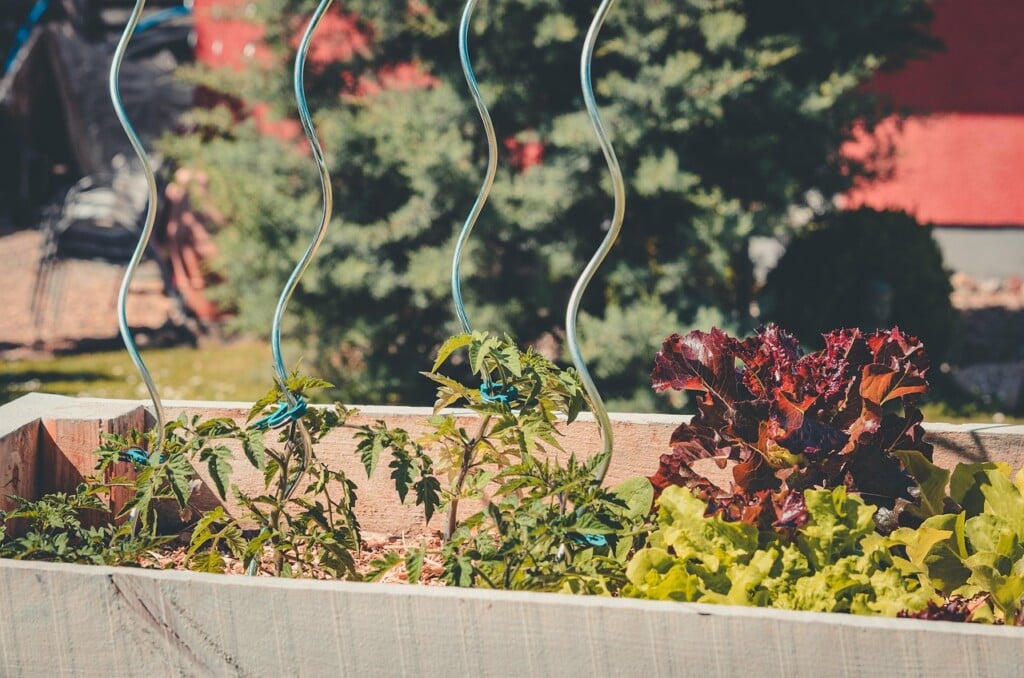
Young plants need steady moisture while their roots are still establishing. At this stage, root systems are small and shallow, which means they dry out quickly if soil moisture drops too far. Letting soil swing between wet and dry during early growth slows development and adds stress that plants may never fully recover from.
Gentle, consistent watering supports early root expansion without washing soil away or compacting the surface. The goal is to keep moisture available in the upper soil layers while roots are spreading outward. This is especially important for transplants and newly emerged seedlings, which rely on a narrow moisture zone.
As plants mature, watering can gradually shift toward deeper applications. Allowing the soil surface to dry slightly between watering sessions encourages roots to follow moisture downward. This transition helps plants move from dependence to stability.
Deeper watering later in the season builds resilience. Plants with well developed root systems handle heat, wind, and missed watering days more effectively. That early attention to consistent moisture pays off long after seedlings are established.
Adjusting watering and irrigation through the seasons
Spring watering needs are lighter because cooler soil holds moisture longer and evaporation rates stay low. Early in the season, it is easy to assume plants need more water simply because growth has started. Overwatering during this period is common and often goes unnoticed until roots weaken or disease appears. Paying attention to soil moisture early helps plants establish healthier root systems before temperatures rise.
Summer requires closer monitoring and regular adjustments. Heat, wind, and longer days pull moisture from the soil much faster, especially in raised beds and containers. Watering and irrigation schedules that worked in spring often need to change, sometimes weekly, to keep up with demand. Consistency matters more than volume during this stretch.
Fall watering tapers as temperatures drop and growth slows, but it does not disappear entirely. Perennials and overwintering plants still need moisture to store energy and protect roots going into cold weather. Dry soil going into winter can cause more damage than many gardeners expect.
Watering and irrigation do not need to be perfect to work well. They need to be consistent, intentional, and suited to the garden you actually manage. When water reaches the roots reliably and moisture stays within a reasonable range, most other garden problems become easier to handle and far less urgent.


