
Every canning season seems to put one bad pot decision on the stove. The jars sit too high, the base is wider than the burner, or the whole thing becomes nearly impossible to move once it is full. The best stockpot for canning gives your jars enough room for a rack and the required water above them, works with your cooktop, and still earns its shelf space when you are simmering broth or cooking down tomatoes.
In a small homestead kitchen, bigger is not always better. A 24 quart stainless pot may be the right everyday workhorse, while a lighter water bath canner with a fitted rack may be easier to use during jam season. If you want shelf stable broth, meat, or plain vegetables, you need a true pressure canner. The picks below cover each of those jobs, along with the drawbacks worth knowing before another oversized pot takes over the pantry.
Our Stockpot and Canner Picks at a Glance
If you want one versatile pot for broth, soup, blanching, and possible water-bath canning, start with the Tramontina Gourmet 24-Quart Stainless Steel Covered Stock Pot. The smaller 16- or 20-quart versions are easier to lift and store for everyday cooking. For a dedicated, low-cost water-bath setup, the Granite Ware 21-Quart Canner with Jar Rack is the straightforward choice. If you need to preserve low-acid foods, the Presto 23-Quart Induction Compatible Pressure Canner is the specialized tool on this list.
Key Takeaways
- A multipurpose stainless stockpot is useful for broth and high-acid canning only when it is deep enough for your jars, rack, and required water coverage.
- A dedicated enamel water-bath canner costs less and includes a rack, but it may not work on a glass or induction cooktop.
- Low-acid foods such as plain vegetables, meat, and broth require a real pressure canner and a tested process.
Best All-Around: Tramontina Gourmet 24-Quart Stainless Steel Stockpot
The Tramontina Gourmet Stainless Steel Covered Stock Pot comes in sizes up to 24 quarts. Tramontina lists 18/10 stainless steel, a magnetic tri-ply base, riveted handles, a lid, and compatibility with gas, electric, ceramic glass, and induction cooktops. That combination makes the 24-quart size our most flexible pick for a kitchen that needs one large pot to earn its shelf space year-round.
It is a sensible choice for stock, soup, corn on the cob, tomato sauce, and blanching. It can also serve as a boiling-water canner if your chosen rack and jars fit with the required water depth and safe headroom. A rack is not included, so measure before buying one. The pot also becomes heavy when full, which matters if you have a small sink, a smooth-top range with weight limits, or a sore back.
Best for: A multipurpose homestead kitchen, induction users, quart jars after careful measuring, and large batches of broth or soup.
Skip it if: You want a complete canning kit with a fitted rack or you rarely cook in large batches.

Best Manageable Everyday Size: Tramontina 16- or 20-Quart Stockpot
The 16- and 20-quart sizes in the same Tramontina line are easier to lift, wash, and store. They make sense for chicken broth, soup for the freezer, blanching vegetables, and modest batches of jam or tomatoes. They also fit more ordinary burners than a very wide pot.
There is one catch: capacity alone does not tell you whether a pot will work for your canning jars. Put the rack in the pot, set an empty jar on it, and measure. The National Center for Home Food Preservation says boiling water must cover jar tops by at least 1 inch, or 2 inches when the processing time is longer than 30 minutes. You also need room for a full rolling boil without water sloshing over the rim.
Best for: Broth, soup, blanching, small-batch preserves, and cooks who value a pot they can move without help.
Skip it if: Your quart jars and rack do not leave enough room for the required water coverage.

Best Budget Water-Bath Canner: Granite Ware 21-Quart Canner with Rack
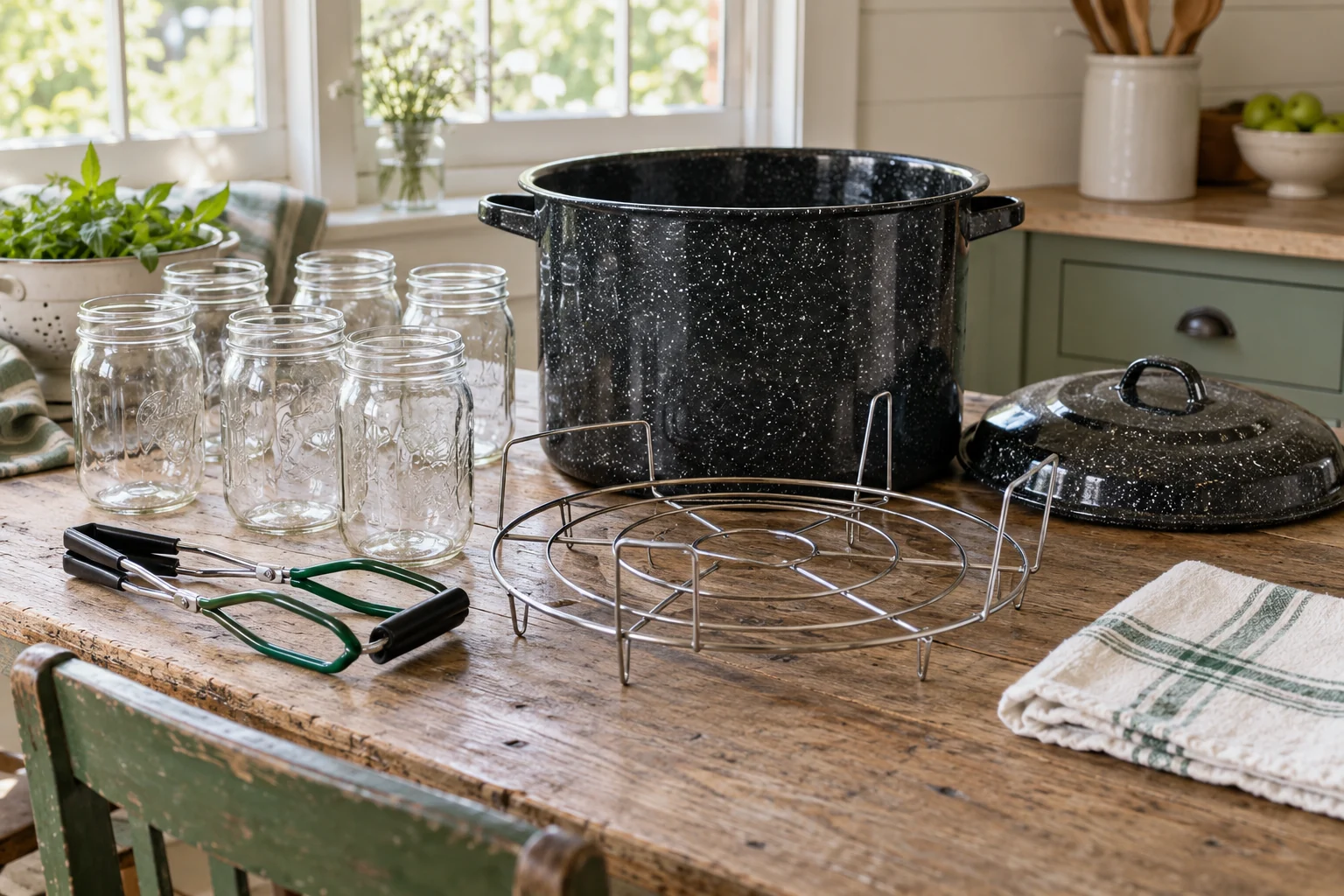
The Granite Ware 21-quart canner is the familiar black speckled pot many of us picture when we think of summer canning. It includes a jar rack and is made for boiling-water canning.
This is the simplest pick if you want a separate pot for jams, jellies, pickles, fruit, and properly acidified tomatoes. The porcelain-on-steel body heats quickly and is much lighter than a similarly sized pressure canner. It is also inexpensive enough that you do not have to turn your favorite soup pot into canning equipment every August.
The tradeoff is cooktop compatibility. The listed model is intended for gas and electric coil ranges and is not recommended for glass cooktops. It is not an induction pick. If you have a smooth-top stove, check your stove manual before putting any full canner on it.
Best for: Beginners using gas or electric coil burners who want a dedicated water-bath canner with a fitted rack.
Skip it if: You use induction or a glass cooktop, or you need to can low-acid food.

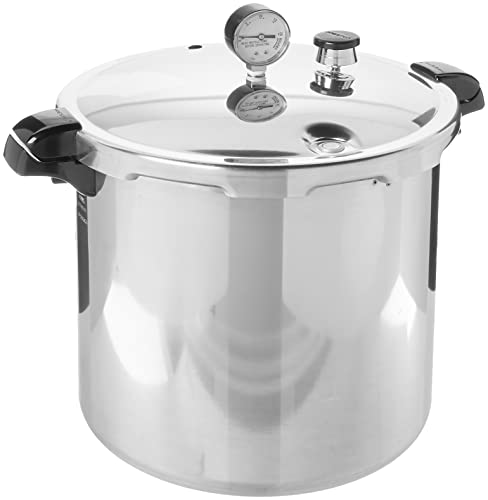
Best for Pressure Canning and Induction: Presto 01784 23-Quart Pressure Canner
The Presto 01784 23-Quart Pressure Canner has a stainless-clad base designed for induction, gas, electric coil, and smooth-top ranges. Presto says it holds 7 quart jars, 20 pint jars, or 26 half-pint jars for pressure canning. It includes a canning rack and can double as a boiling-water canner for pints and half-pints.
This is the right category of equipment when you want to can plain vegetables, meat, poultry, seafood, or other low-acid foods. Those foods require pressure canning because boiling water cannot reach the temperature needed for safe processing. A pressure cooker and a pressure canner are not automatically interchangeable.
The downside is weight, storage, and cost. It is more equipment than you need for a few jars of strawberry jam. The dial gauge also needs the care and checks described by the manufacturer and your local Extension guidance. If you do not use induction, compare it with Presto’s standard aluminum 23-quart model before paying extra for the stainless-clad base.
Best for: Induction kitchens, pressure canning, large preserving seasons, and households that want one canner to cover both pressure and boiling-water jobs.
Skip it if: You only preserve high-acid foods or need a lightweight everyday soup pot.
Presto 01784 23-Quart Induction Compatible Pressure Canner, Silver, Aluminum
Stockpot, Water-Bath Canner, or Pressure Canner?
These pots overlap, but they are not identical. A stockpot is built for cooking. With enough depth and a separate rack, it may also work for boiling-water canning. A dedicated water-bath canner is designed around jars and usually comes with a rack. A pressure canner has a locking lid, vent, and pressure controls that let it process low-acid foods at higher temperatures.
Use a boiling-water canner only for foods and recipes approved for that method, including many fruits, jams, pickles, and properly acidified tomato products. Our water-bath canning guide for beginners walks through the basic setup. For a wider view of freezing, dehydrating, fermenting, and canning, see our beginner’s guide to food preservation methods.
What to Check Before You Buy
Measure for jars, water, and boiling room
Set your tallest jar on the rack you plan to use and measure from the bottom of the pot. Add the water depth required by the tested recipe, then leave headroom for boiling. A quart capacity printed on a box cannot answer that question for you.
Match the base to your stove
Induction requires a magnetic base. Smooth-top ranges may limit canner diameter, weight, or contact with the glass. Electric coil burners work best when the pot base is not dramatically wider than the element. Check both the pot specifications and the stove manual.
Plan for the full weight
A 24-quart pot filled with water, jars, and food is heavy. Make sure the handles feel secure with oven mitts on. Think about how you will fill it, empty it, wash it, and store it. You do not need to carry a full canner across the kitchen, and in many cases you should not try.
Do not forget the rack
Jars should not sit directly on the bottom of the pot. A rack keeps them off the hottest surface and lets water circulate. Dedicated canners include one. Most stockpots do not, so include the rack in your budget and measurements.
Which Size Is Most Useful?
A 12-quart pot is useful for pasta, blanching, and a modest batch of broth, but it is often too shallow for quart-jar canning. A 16- or 20-quart pot is a comfortable middle size for soup and smaller preserving jobs. A 21- to 24-quart vessel gives more room for jars, broth, corn, and tomato season, but it also demands more from the burner and the person washing it.
If canning is your main goal, shop by jar capacity and internal depth first. If cooking is the main job, choose the size you will actually reach for on a Tuesday night. There is no savings in buying a giant pot that stays in the basement because it does not fit the sink.
How to Use One Pot for More Than Canning
A stainless stockpot can simmer broth, cook soup for a crowd, blanch garden vegetables, boil corn, make applesauce, and hold a large batch of tomatoes. A removable rack lets the same pot shift between cooking and high-acid canning. Once the equipment is dry, our homestead pantry organization guide can help you make room for the jars and tools that follow.
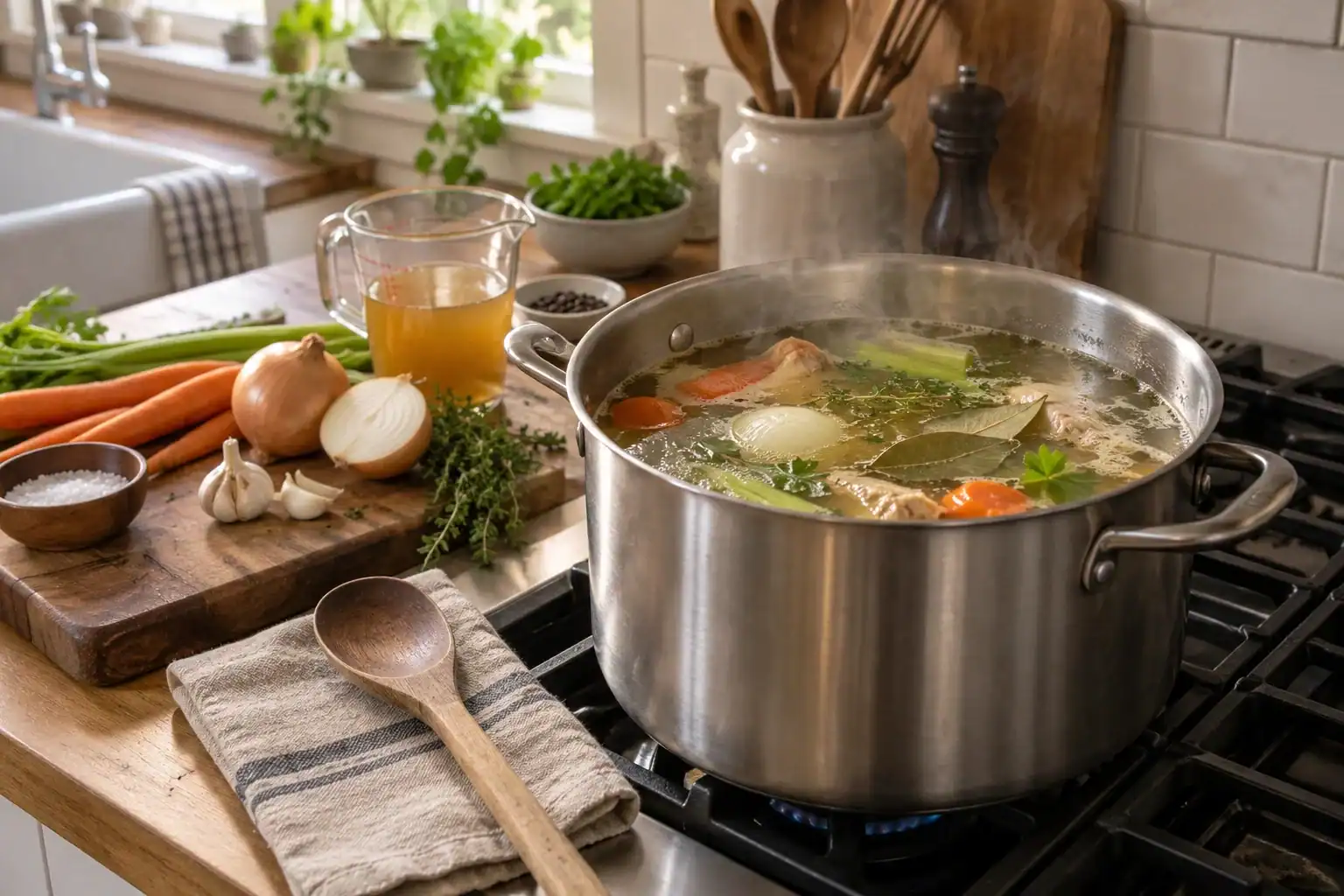
One caution: making broth in a stockpot and canning broth are two different tasks. You may cook broth in any suitable pot, but shelf-stable broth is a low-acid food and must be processed in a pressure canner using a tested recipe.
Our Practical Recommendation
For the broadest everyday usefulness, choose the Tramontina 24-quart stainless stockpot if it fits your stove, sink, and storage. Add a properly sized rack only after checking the internal measurements against your jars. Choose the 16- or 20-quart version when lifting and storage matter more than maximum batch size.
If you want an inexpensive tool devoted to high-acid canning on a gas or coil stove, the Granite Ware canner is easier and comes ready with a rack. If low-acid foods are on your preservation list, buy a true pressure canner such as the induction-compatible Presto 01784 and follow its manual along with a current tested recipe.
The best stockpot for canning is the one that fits the process safely and still makes sense in your kitchen when canning season is over. Tell us what you preserve most often, and which pot has earned a permanent place on your stove.
Frequently Asked Questions About the Best Stockpot for Canning
What size stockpot is best for canning?
A 21- to 24-quart pot often gives enough room for a useful batch, but dimensions matter more than the printed capacity. Measure your rack and tallest jars, then allow for the required water coverage and safe boiling room.
Can any stockpot be used for water-bath canning?
No. It must be deep enough to cover the jars by the amount required in the tested recipe, leave room for a rolling boil, and hold a rack that keeps jars off the bottom.
Can I pressure can in a regular stockpot?
No. Low-acid foods require a purpose-built pressure canner that can maintain and control the pressure specified in a tested recipe.
Is stainless steel good for a canning stockpot?
Yes. Stainless steel is durable, nonreactive, and useful for broth, soup, acidic preserves, and general cooking. Confirm cooktop compatibility and add a rack for boiling-water canning.
Do I need a rack in a canning pot?
Yes. A rack keeps jars off the bottom and allows water to circulate around them. It also reduces direct contact with the hottest surface of the pot.