

Every mouse your barn cat catches comes with a few passengers. That is the whole story with worms in a working cat, and it is why a cat dewormer belongs on the supply shelf next to the feed rather than in a cabinet you open once a year. She is good at her job, so she keeps reinfecting herself all season long. The only real question is how often you step in and break the cycle.
House cat advice will steer you wrong here. A pet cat who never leaves the living room carpet might go years without needing anything, while your barn cat eats her body weight in mice between spring and fall. The Companion Animal Parasite Council says it plainly, that infection rates are likely to be higher in pets kept outdoors or allowed to consume prey species that may harbor larvae in their tissues. That is a polite way of describing exactly what you are paying your cats to do.
What You’ll Learn
What Worms Do Hunting Cats Actually Get?
You will run into four worms out here, and telling them apart is what keeps you from buying the wrong bottle. Roundworms are the most common by a wide margin. Cats pick them up from eating infected rodents and from contaminated soil, and kittens get them straight from their mother’s milk. A heavy load in a kitten produces the classic pot-bellied look with a dull coat, while adults often show nothing at all and still shed eggs into your soil every day.
Tapeworms come in two varieties, and this distinction matters more than any other detail in this. The rodent tapeworm comes from eating mice and voles, which makes it the working cat’s default problem. The flea tapeworm comes from swallowing an infected flea during grooming, and it has nothing to do with hunting at all. Both announce themselves the same way, as small pale rice-grain segments around the cat’s rear end or in her bedding, sometimes still moving when fresh.
Hookworms are less common in cats than in dogs, but they turn up in warm damp conditions and they are more serious than their profile suggests. They feed on blood, so a heavy load causes anemia, and in a small cat that is genuinely dangerous rather than merely unpleasant. Whipworms are rare enough in cats that you can stop worrying about them, though it helps to know the name so you recognize it on a label.
How Do You Know a Cat Has Worms?
Often you do not, and that catches people out. A well-fed adult barn cat carrying a fair number of worms frequently looks completely normal. She is still hunting, still eating, still meeting you at the feed dish every evening. Waiting for symptoms means waiting until the load is heavy enough to make her visibly sick, which is far later than you want to be starting.
When signs do appear, watch for a coat that has gone dull and rough over a few weeks, weight loss despite a normal or increased appetite, and a belly that looks distended out of proportion to the rest of her. Intermittent vomiting or loose stool belongs on the list, as does scooting or excessive grooming at the rear end. None of these is conclusive on its own, but two or three together in a cat who was thriving last month is worth acting on.
The rice-grain segments are the one sign you can act on with real confidence. If you find dried pale flecks that look like sesame seeds stuck to the fur around the tail or scattered in a favorite sleeping spot, that is tapeworm and you can skip straight to treatment. Fresh ones still move, which is unpleasant to watch and leaves no doubt about what you are looking at.
For everything else, run a fecal test. The Companion Animal Parasite Council recommends adult cats be tested at least twice a year depending on health and lifestyle, and kittens at least four times in their first year. You do not need to catch the cat to do this, since you can collect a fresh sample and drop it at the vet. For a barn full of cats, testing one or two representative animals gives you a workable read on the whole group.

The Deworming Schedule for a Working Cat
For grown cats, dose year-round with something broad-spectrum, or hit them four times a year if you know a monthly routine will not stick. On a homestead that translates into two workable approaches. Either one beats the schedule most barns actually run, which is nothing at all until somebody notices segments in the bedding.
Monthly is the stronger cat dewormer schedule. A broad-spectrum topical preventive applied once a month typically handles roundworms, hookworms, fleas, and often ear mites in the same dose. It costs more per year, but it is one habit instead of four calendar reminders you will forget, and the flea coverage prevents one of the two tapeworms as a side effect. For a cat you can get hands on, this is the arrangement that holds up.
Quarterly is the realistic option for most barns. A broad-spectrum cat dewormer four times a year, timed roughly to each season change, is cheaper and achievable in a barn where handling every cat monthly is not going to happen. Pair it with separate flea control, or you will be fighting the flea tapeworm the entire time and blaming the dewormer.
Kittens run on a different clock entirely. The recommended schedule starts treatment at two weeks of age, repeats every two weeks until they reach four to eight weeks old, then moves them onto monthly preventive. If a barn queen has a litter in the hay, those kittens need treating on that schedule rather than the adult one, and getting to them early is one of the highest-value things you will do all season.
Which Cat Dewormer Actually Covers What
Read the active ingredient, not the brand. This is where most people waste their money. Pyrantel pamoate covers roundworms and hookworms, and it is the active ingredient in most inexpensive over-the-counter products at farm stores. It does absolutely nothing to tapeworms, and tapeworms are what rodent-eaters carry.
Praziquantel is the tapeworm drug. If tapeworm is what you are dealing with, and for a rodent-eating cat it usually is, this is the ingredient that has to appear on the label. You can buy it over the counter as a standalone tablet or spot-on. Fenbendazole is broader, covering roundworms, hookworms, and some tapeworm species, though it typically requires dosing on consecutive days, which is a real obstacle with a cat you cannot handle.
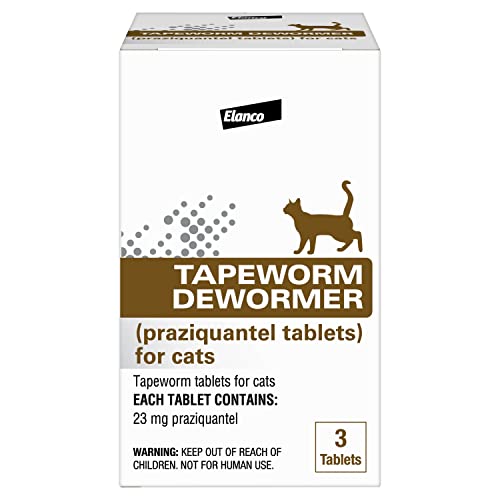
Combination products, usually prescription, pair praziquantel with something like emodepside or milbemycin to cover the whole range in a single dose. For a working cat you get one shot at, this is generally the right cat dewormer to buy despite the higher price. A treatment you complete beats a cheaper one you abandon on day two.
The most common failure in the whole category looks like this. Somebody sees rice-grain segments, buys the cheapest cat dewormer on the shelf, treats the cat, and finds segments again a week later. The product was pyrantel and it never had a chance. Read the active ingredient panel rather than the front of the box, every time, and the problem disappears.
One safety point applies to every parasite product you will ever put on a cat. Never use a canine formulation. Many dog products contain permethrin, cats cannot break it down, and the result can be fatal. We give the same warning about flea and tick prevention for outdoor cats, and it applies here with equal force. Weight-based dosing matters too, so weigh the cat or get a reasonable estimate rather than guessing from across the barn.
Why Flea Control Is Half of Worm Control
People miss this connection all the time, and it is behind nearly every tapeworm that keeps coming back. The flea tapeworm runs its life cycle through the flea itself. Flea larvae living in bedding eat tapeworm eggs, those larvae mature into adult fleas carrying the tapeworm, and the cat swallows an infected flea while grooming. No rodent appears anywhere in that chain.
So a cat with fleas and no flea prevention will keep producing tapeworm segments no matter how many times you deworm her. You are treating the symptom while the source sits in the hay, and it looks for all the world like the cat dewormer failed. If you are seeing repeat tapeworm in a cat you have already treated, check her for fleas before you blame the product or the dose.
A single monthly product covering both parasites is the workhorse choice rather than the luxury one. On a barn with any flea pressure at all, it is usually the only arrangement that holds. The quarterly cat dewormer plus separate flea control is the budget version of the same idea and it works, provided you actually run both halves.
Deworming a Cat You Cannot Catch
Here is the part nobody plans for. A semi-feral mouser will not take a pill, and chasing her with one costs you the trust you spent months building while setting up and training a working cat. Any plan that depends on restraining her is a plan that will not survive contact with the actual cat.
Topical spot-on products are the answer wherever you can manage them. A cat focused on food at feeding time will often tolerate a hand at the back of the neck for two seconds, and you build that tolerance deliberately over weeks by being predictable and boring near the dish. Treatment day then becomes routine rather than a rodeo, and you keep the relationship you spent all that time on.
Some tablets can be crushed into a small amount of strongly flavored wet food, offered separately from the communal bowl so you know exactly who ate what. Check with your vet first, because a few formulations should not be crushed and lose effectiveness when they are. For a cat who will not allow any handling whatsoever, a humane trap is a legitimate tool rather than a cruelty. Trap, treat, release, and if she is also due for a spay, neuter, or vaccination, combine everything into one trip and spend her patience once.
The Human and Livestock Side
Most people start taking the schedule seriously once they hear this next part. Regular deworming keeps roundworm eggs out of your soil, which pose a genuine public health risk to children. Those eggs stay viable in soil for a long time, and the exposure route is hands-to-mouth after playing in dirt. If children play anywhere near where your barn cats do their business, this stops being purely a cat health decision and becomes a household one.
There is also a resistance angle that will be familiar to anyone running livestock. Blanket treatment on a fixed calendar with no testing is exactly the pattern that produced drug-resistant barber pole worm in sheep. Cats are not at that stage of the problem yet, but the principle holds. Test where you reasonably can, treat based on what you find, and rotate active ingredients rather than running the identical product forever.
Fitting Deworming Into the Routine
A cat dewormer works best when you attach it to something you already do. Tie it to the seasonal walkthrough you make anyway, the same round where you check ears, assess body condition, and decide whether the feeding program for your working farm cats is holding weight on everybody. Four dates a year is not a burden, but four dates a year you never write down is how a barn ends up three years behind without anyone noticing.
A cat carrying a heavy parasite load is not hunting at full capacity, is not holding condition through winter, and is seeding your soil with eggs the whole time. Set against that, a quarterly dose of the right active ingredient is one of the cheapest things you will ever do for the animals on your place. If you are still building out the basics of keeping working cats on the homestead, put the cat dewormer schedule on the list directly after food and shelter, because it protects everything else you are spending money on.
Frequently Asked Questions About Cat Dewormers
How Often Should You Deworm a Barn Cat?
Cats that hunt rodents need year round broad spectrum parasite control, or at minimum treatment four times a year with a broad spectrum product. Indoor cat schedules do not apply, because a hunting cat reinfects herself with every successful catch.
What Is the Best Cat Dewormer for Tapeworms?
Praziquantel is the active ingredient that kills tapeworms, available over the counter as a tablet or spot on and in prescription combination products. Pyrantel pamoate, which is what most inexpensive farm store products contain, has no effect on tapeworms at all.
How Do I Know If My Cat Has Tapeworms?
Look for small, pale, rice grain sized segments around the cat’s rear end, in bedding, or in favorite sleeping spots. They sometimes move when fresh and dry into flecks resembling sesame seeds. This is the one sign you can act on straight away.
Can I Use a Dog Dewormer on a Cat?
No. Many canine parasite products contain permethrin, which cats cannot break down and which can kill them. Use only products labeled for cats, dose by the cat’s actual weight, and read the active ingredient panel rather than trusting shelf placement.
Why Does My Cat Keep Getting Tapeworms After Deworming?
Usually fleas. One of the two common feline tapeworms passes to the cat when she swallows an infected flea while grooming, so with no flea prevention in place she gets reinfected continuously. Treat the fleas and the tapeworms stop coming back.
Do I Need a Fecal Test or Can I Give a Cat Dewormer Anyway?
Testing is better where it is practical. The Companion Animal Parasite Council recommends adult cats be tested at least twice a year and kittens at least four times in their first year. For a barn full of cats, testing one or two representative animals gives you a workable read on the whole group.