

The cat curled on a feed sack in the corner of your barn is losing heat straight into the concrete underneath her. An outdoor cat house fixes that, and the good ones do it with almost nothing: a box small enough to hold her own warmth, a door she can defend, and a floor lifted off the ground. You can buy one for forty dollars or build one in an afternoon out of a tote and a bale of straw. What you cannot do is give her an open lean-to and count it as shelter.
Key Takeaways
What Makes an Outdoor Cat House Work
Your cat is the heat source. Nothing in the box generates warmth, so the whole job is trapping what she gives off and keeping the wind and wet away from her. Every design decision follows from that, and it is why the shelters that look most generous to a person work worst for a cat.
Size is the piece people get wrong first. A box around 20 by 20 inches on the floor and 18 inches tall holds one or two cats at a body temperature they can maintain. Double that footprint and she is heating a room instead of a nest, and on a hard night she will leave it for the gap behind your hay stack. If you keep several cats, build two or three small houses rather than one big one.
The door does more work than you expect. Cut a single opening about six inches across, which fits a cat and turns back most dogs and raccoons, and put it on the side away from your prevailing wind. A flap of heavy rubber or a strip of carpet over the opening cuts the draft, though a cat new to the shelter may need it tacked open for a week before she trusts it.
Straw, Not Hay, and Never Blankets
Fill the floor with loose straw about four inches deep and let her burrow into it. Straw is hollow, so it traps air and wicks moisture away from her coat, and it stays springy for a whole season if the box stays dry. Hay is a grass crop, it packs down flat, it holds water, and it grows mould in a closed box within weeks.
Leave the blankets and old towels in the house. Fabric soaks up whatever moisture comes off a wet cat or condenses on a cold night, and a damp blanket pulls heat out of her faster than bare board would. The same goes for the fleece beds that look right in a photograph. If you want something washable, a straw-filled feed sack is closer to correct than anything soft.
Buying an Outdoor Cat House
A bought shelter saves you an afternoon and gets you a moulded plastic shell that will not rot. Look for double-walled construction with insulation between the layers, a floor you can raise, and an opening you can fit a flap to. Check the interior dimensions rather than the outside ones, because a chunky insulated wall can leave a box that is barely big enough for a kitten.
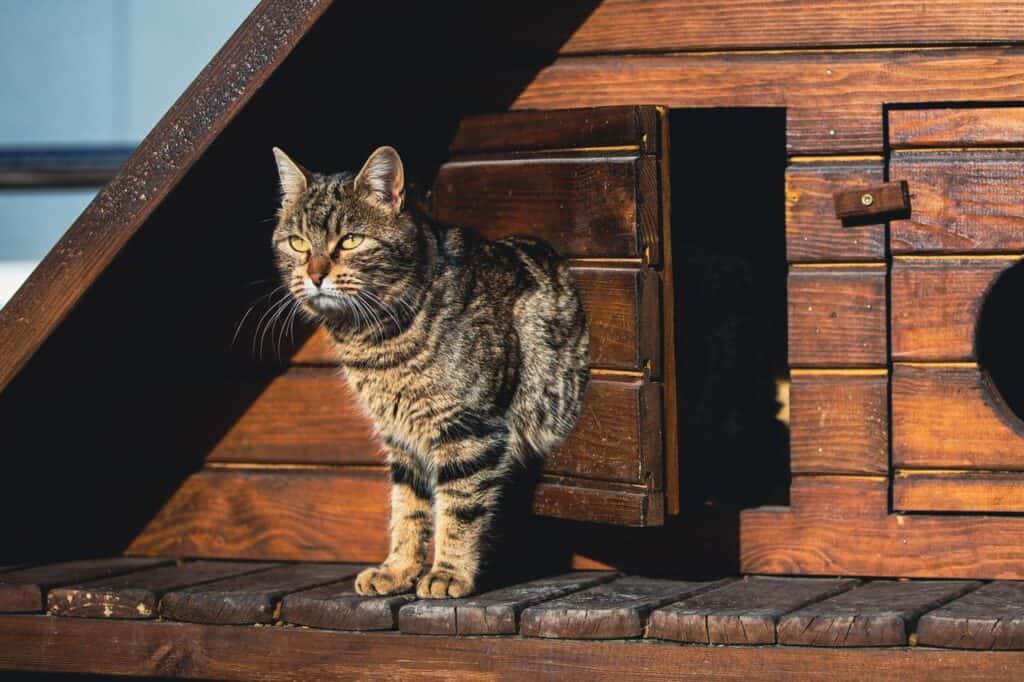
Skip the wooden cottage-style houses sold as garden ornaments. Thin cedar panels with a decorative pitched roof shed rain for one season, soak up ground moisture from below, and come apart at the joints by the second winter. If you want the look of wood, build it yourself out of exterior plywood and seal it properly.
A heated cat house is worth the electricity only after the box itself is right. A heat source in a leaky oversized shelter is money going out through the walls, so get the size, the door, and the straw sorted first and treat the heated pad as the upgrade rather than the fix. Save it for the cats who genuinely need it: elderly cats, thin cats, and any cat coming through her first winter outside.
Elevated Weatherproof Insulated Heated Outdoor Cat House for Winter - Feral Cat Shelter for Outside Cats - Outdoor Heated Cat House (Green)

How to Build an Outdoor Cat House in an Afternoon
The tote build is the one most homesteads land on, because it costs about twenty dollars and survives being kicked over by a cow. You need two plastic storage totes, one a size smaller than the other, a sheet of rigid foam board, a bale of straw, and a utility knife.
- Cut a six inch doorway in one long side of the large tote, about four inches up from the floor so straw does not spill out.
- Line the floor and all four walls of the large tote with foam board cut to fit.
- Set the smaller tote inside, mark the doorway through both, and cut a matching opening.
- Pack straw into the gap between the two totes and fill the inner one about four inches deep.
- Snap both lids on, and weight the top with a paving slab so the wind cannot take it.
Raise the finished box onto a pallet, two bricks, or a couple of scrap two-by-fours. Heat pulled out through the ground is the single largest loss in a shelter sitting on dirt or concrete, and two inches of air underneath removes most of it. The lift also keeps snowmelt and run-off from wicking up into your straw.
Alley Cat Allies publishes a gallery of tested shelter designs if you want plans at a few different budgets and skill levels. Several of them use the same nested-container principle with different materials, so pick whichever one matches what you already have in the shop. A wooden build with rigid foam between two skins of exterior plywood lasts longest if you want something permanent.
Where to Put It
Set the shelter against a building, under an overhang, or inside an open-sided barn where a wall already breaks the wind. Face the door toward the structure rather than out into the open, which gives her a short protected run to the opening. Two houses with their doors facing each other a couple of feet apart make a sheltered pocket that works well in an exposed yard.
Keep the shelter away from your feeding station and well away from the water. Spilled food draws raccoons and possums straight to where your cats sleep, and splashed water in a box is exactly what you spent the afternoon preventing. Put food and water on the far side of the barn and let her walk between the two.
A cat you have just brought home will not find the shelter on her own. Our guide to taming a feral cat covers the confinement period that teaches her where home is, and a DIY catio gives you a way to hold her near the shelter until she settles. Put her food beside the box during that period so she connects the two, then move the food away once she is using the shelter on her own.
Keeping It Working Through the Season
Check the straw in late autumn and again after any stretch of wet weather. Push your hand to the bottom of the box, and if the straw at floor level feels cold and heavy rather than dry and springy, pull it all out and refill. One damp refill in November undoes the whole build by January.
Watch the doorway for ice after freeze-thaw days, since a flap frozen shut leaves her outside. Clear snow away from the opening after a storm and make sure the drift has not sealed her in. We cover the rest of the cold season in our guide to barn cats in winter, and warm shelter only does its job if she is also carrying condition, which comes back to what you feed a working cat through the cold months.
Judge the shelter by whether she uses it. A cat sleeping in her box on a cold night has told you the size, the door, and the bedding are right. A cat who keeps choosing the gap behind the hay stack is telling you something in the build is wrong, and the answer is almost always that the box is too big or the floor is too cold.
Frequently Asked Questions About Outdoor Cat Houses
How Big Should an Outdoor Cat House Be?
About 20 by 20 inches of floor and 18 inches tall suits one or two cats. A cat heats the box with her own body, so a larger space never reaches a comfortable temperature and she will abandon it on the coldest nights. For a group, build several small houses instead of one large one.
What Is the Best Bedding for an Outdoor Cat House?
Loose straw about four inches deep. The stems are hollow, so straw traps air and pulls moisture away from a cat’s coat. Avoid hay, which packs flat and moulds, and avoid blankets and towels, which hold damp and draw heat out of a cat once wet.
Do Outdoor Cats Need a Heated House?
Not if the box is built correctly. Correct size, a small door, deep straw, and a floor raised off the ground keep a healthy adult cat comfortable through most winters. A heated pad helps elderly, thin, or sick cats and is worth adding in sustained sub-zero weather, but it does not fix a shelter that is too large or sitting on cold ground.
Where Should You Put an Outdoor Cat House?
Against a building or under an overhang, with the door facing the structure and away from prevailing wind, and raised on a pallet or bricks. Keep it well away from the feeding and watering station so spilled food does not draw raccoons and possums to where your cats sleep.
Can You Make an Outdoor Cat House From a Storage Tote?
Yes, and it is the most common homestead build. Nest a smaller tote inside a larger one, line the gap with rigid foam board and straw, cut a six inch door through both, and weight the lid. It costs roughly twenty dollars and lasts several seasons.