

There’s something deeply comforting about wrapping your hands around a warm mug of chai tea latte on a chilly morning. The aroma alone—that heady blend of cinnamon, cardamom, and ginger—has a way of making everything feel a little more settled, a little more right with the world.
I’ve been making chai at home for years now, and I can’t imagine going back to the overpriced, overly sweet versions at the coffee shop. Don’t get me wrong, I love a good café experience, but there’s real magic in creating this spiced, soul-warming drink in your own kitchen. It’s become one of those small rituals that grounds my day, and I think you’ll find the same once you give it a try.

Why Make Chai Tea Latte at Home?
Before we dive into the recipe, let’s talk about why homemade chai is worth your time. First, there’s the cost savings. A single chai latte at most coffee shops runs anywhere from four to six dollars. When you make it at home, you’re looking at maybe fifty cents per cup, if that. The spices last forever, tea is inexpensive, and you’re using milk you probably already have in the fridge.
But beyond the economics, there’s the quality. Store-bought chai concentrates are often loaded with sugar and artificial flavors. When you make your own, you control exactly what goes in. Want it less sweet? Done. Prefer a stronger ginger kick? Add more. Like it creamy and mild? You’re in charge.
There’s also something to be said for the process itself. In our rushed, convenience-driven world, taking ten minutes to simmer spices and brew tea feels almost rebellious. It’s a small act of self-sufficiency that connects us to generations of people who’ve been brewing chai long before it became a trendy coffee shop offering.
The Heart of Chai: Understanding the Spices
Traditional chai, or masala chai as it’s properly called in India, is all about the spices. Each one brings something unique to the cup. Cardamom adds that floral, slightly eucalyptus-like note that makes chai distinctive. Cinnamon brings warmth and natural sweetness. Cloves contribute depth and a subtle numbing spiciness. Ginger provides heat and aids digestion. Black pepper might seem unusual, but it enhances all the other flavors and adds a pleasant tingle.
The beauty of making chai at home is that you can adjust these ratios to suit your palate. Some mornings I want a gentler cup, so I go easy on the ginger and pepper. Other times, especially when I’m fighting off a cold, I double the ginger and add an extra clove or two. The recipe I’m sharing is a wonderful middle ground, but I encourage you to experiment.
The Complete Recipe for a Chai Tea Latte
Ingredients:
- 1 cup water
- 2 black tea bags (or 2 tsp loose black tea—I prefer Assam or Ceylon)
- 1 cup milk (whole milk creates the creamiest result, but oat milk and almond milk work beautifully too)
- 2-3 tablespoons sugar or honey (start with 2 and adjust from there)
- 4 whole cloves
- 4 cardamom pods, lightly crushed with the side of a knife
- 1 cinnamon stick
- 1/4 teaspoon ground ginger (or a thumbnail-sized piece of fresh ginger, sliced)
- Small pinch of black pepper (about 3-4 peppercorns, crushed)
Instructions:
Start by bringing your water to a boil in a small saucepan. While you’re waiting, crush your cardamom pods slightly—you want to break them open so they release their oils, but you don’t need to pulverize them. If you’re using whole peppercorns, give them a gentle crush too.
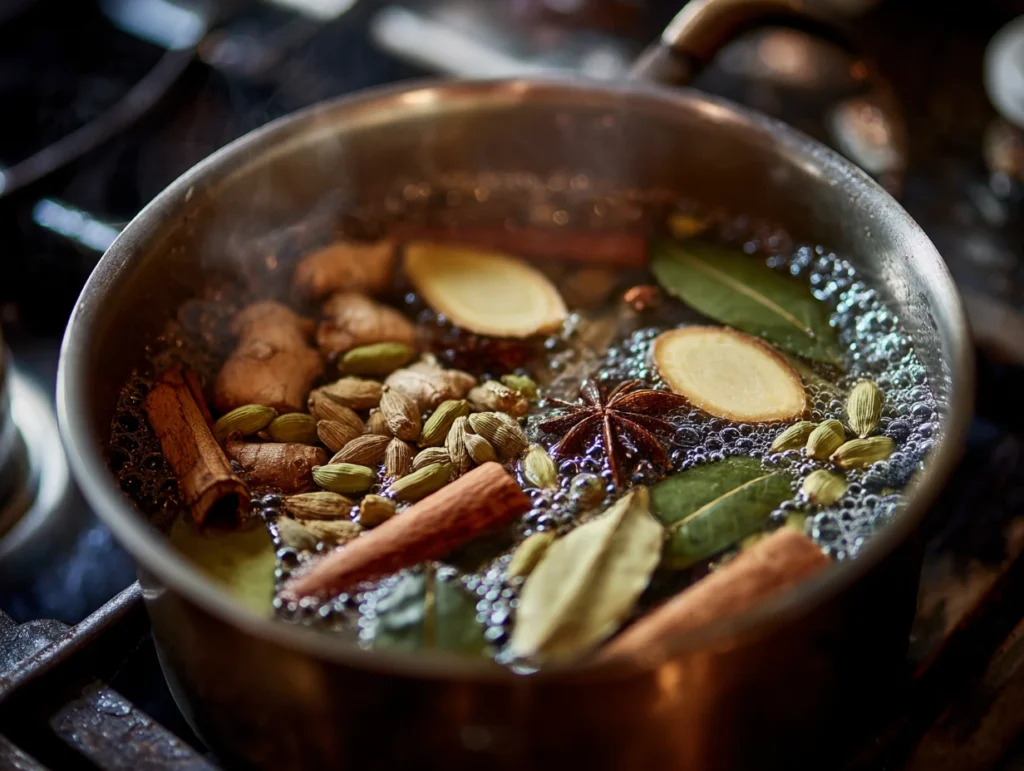
Once the water is boiling, add all your spices: the cloves, crushed cardamom, cinnamon stick, ginger, and pepper. Reduce the heat to a gentle simmer and let these spices dance together for about two to three minutes. Your kitchen will start to smell absolutely incredible at this point. This simmering step is crucial because it extracts all those essential oils and flavors from the spices.
After the spices have had their moment, add your tea bags. Let them steep for three to four minutes. I know the temptation is to steep longer for a stronger flavor, but resist it. Over-steeped black tea gets bitter, and we want bold, not bitter.
Remove the tea bags and stir in your sweetener. I use honey most mornings because I love how it plays with the spices, but plain sugar works perfectly fine. Stir until it’s completely dissolved.
While your tea is steeping, heat your milk in a separate small pot or in the microwave. If you have a milk frother, now’s the time to use it—frothed milk creates that luxurious, café-quality texture. No frother? No problem. Just heat the milk until it’s steamy and starting to form tiny bubbles around the edges.
Strain your spiced tea into your favorite mug to catch all those whole spices. Then pour in your hot milk, stirring gently to combine. If you frothed the milk, use a spoon to hold back the foam while you pour, then spoon that beautiful foam on top.
Tips for the Best Chai Tea Latte
Here are a few things I’ve learned from making countless cups of chai:
Use whole spices when possible. The difference between whole and pre-ground spices is night and day. Whole spices release their flavors more slowly and taste fresher. If you only have ground spices, you can absolutely use them—just reduce the quantities by about half since ground spices are more potent.
Don’t skip the simmering step. I know it’s tempting to just dump everything in and call it done, but those few minutes of simmering the spices really do make a difference. This is where the flavors develop and meld together.
Experiment with your milk ratio. Some people like their chai with equal parts tea and milk, others prefer a 2:1 ratio of tea to milk. Try different proportions until you find what makes you happiest.
Make a concentrate. If you drink chai regularly, consider making a larger batch of the spiced tea base (just multiply the water, spices, and tea). Store it in the fridge for up to a week, then heat and add hot milk whenever you want a cup. It’s nearly as convenient as those store-bought concentrates, but infinitely better.
Making It Your Own
Once you’ve mastered the basic recipe, the world of chai opens up. Try adding a star anise for a subtle licorice note. Throw in a few fennel seeds for a slightly sweet, herbal quality. In the fall, I sometimes add a tiny pinch of nutmeg or allspice. In summer, I’ll make a batch and serve it iced, poured over ice cubes with a splash of cold milk.
You can also adjust the tea base. While traditional chai uses strong black tea, I’ve had wonderful results with rooibos for a caffeine-free evening version. Green tea makes a lighter, more delicate chai that’s perfect for afternoons.
The Ritual Matters
In the end, making homemade chai tea latte isn’t just about saving money or controlling ingredients, though those are wonderful benefits. It’s about creating a small pocket of calm in your day. It’s about filling your home with the scent of warming spices. It’s about knowing exactly what goes into something you’re putting in your body and taking pride in making it yourself.
Every time I stand at my stove, watching those spices simmer and smelling that unmistakable aroma, I’m reminded that the best things often require just a little bit of effort and intention. A homemade chai latte is one of those small luxuries that makes ordinary mornings feel a little more special, a little more intentional.
So brew yourself a cup, find a cozy spot, and savor it slowly. You’ve earned it.
You might also like our Lavender Latte for something unique and different. Sweeten it with herbal infused honey.
Print
Chai Tea Latte
A comforting homemade chai tea latte made by simmering black tea with warming spices like cinnamon, cardamom, and ginger, then mixing with sweetened hot milk for a cozy drink that’s better than any coffee shop version.
Ingredients
- 1 cup water
- 2 black tea bags (or 2 tsp loose black tea—I prefer Assam or Ceylon)
- 1 cup milk (whole milk creates the creamiest result, but oat milk and almond milk work beautifully too)
- 2–3 tablespoons sugar or honey (start with 2 and adjust from there)
- 4 whole cloves
- 4 cardamom pods, lightly crushed with the side of a knife
- 1 cinnamon stick
- 1/4 teaspoon ground ginger (or a thumbnail-sized piece of fresh ginger, sliced)
- Small pinch of black pepper (about 3-4 peppercorns, crushed)
Instructions
- Start by bringing your water to a boil in a small saucepan. While you’re waiting, crush your cardamom pods slightly—you want to break them open so they release their oils, but you don’t need to pulverize them. If you’re using whole peppercorns, give them a gentle crush too.
- Once the water is boiling, add all your spices: the cloves, crushed cardamom, cinnamon stick, ginger, and pepper. Reduce the heat to a gentle simmer and let these spices dance together for about two to three minutes. Your kitchen will start to smell absolutely incredible at this point. This simmering step is crucial because it extracts all those essential oils and flavors from the spices.
- After the spices have had their moment, add your tea bags. Let them steep for three to four minutes. I know the temptation is to steep longer for a stronger flavor, but resist it. Over-steeped black tea gets bitter, and we want bold, not bitter.
- Remove the tea bags and stir in your sweetener. I use honey most mornings because I love how it plays with the spices, but plain sugar works perfectly fine. Stir until it’s completely dissolved.
- While your tea is steeping, heat your milk in a separate small pot or in the microwave. If you have a milk frother, now’s the time to use it—frothed milk creates that luxurious, café-quality texture. No frother? No problem. Just heat the milk until it’s steamy and starting to form tiny bubbles around the edges.
- Strain your spiced tea into your favorite mug to catch all those whole spices. Then pour in your hot milk, stirring gently to combine. If you frothed the milk, use a spoon to hold back the foam while you pour, then spoon that beautiful foam on top.