

Chinese geese are the geese to study when you want a bird that works. They are lighter, more active, and usually more productive than many heavy goose breeds. They graze hard, move with purpose, notice everything, and have a long-necked, upright look that makes them easy to pick out in a mixed flock.
For small homesteads, Chinese geese are most interesting as weeder geese. That does not mean you can turn them loose in a vegetable garden and expect perfect manners. It means they have the body size, appetite, and grazing drive to help manage grass and tender weeds when you rotate them thoughtfully. Used well, they can trim orchard lanes, clean up fence lines, patrol between established plantings, and turn green growth into eggs and manure.
The Livestock Conservancy lists Chinese geese as a Watch heritage breed and notes their use for meat, watchdog work, and weeding, along with large white eggs and a generally docile temperament. Their breed profile is a solid outside reference for the facts behind this guide: The Livestock Conservancy Chinese Goose profile.
What You’ll Learn
What Chinese Geese Look Like
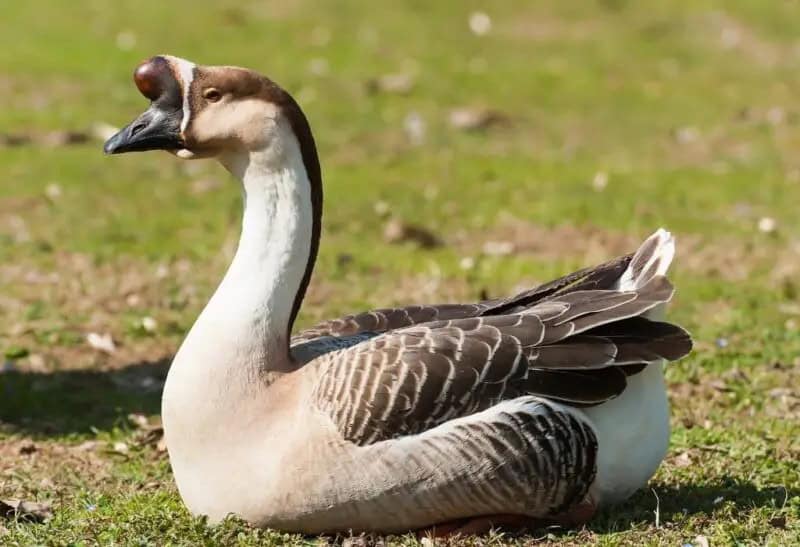
Chinese geese are elegant birds with long, slender necks, compact bodies, upright carriage, and a rounded knob at the base of the bill. That knob is one of the easiest ways to recognize them. They descend from the Asian wild swan goose, which gives them a different outline than heavier European-derived breeds.
There are two common varieties: brown Chinese geese and white Chinese geese. Brown Chinese geese often have rich brown and fawn coloring with a dark stripe down the back of the neck. White Chinese geese are pure white with orange bills, knobs, legs, and feet. Both varieties are useful; color is mostly a matter of preference unless you are breeding to a standard.
They are lighter than African, Toulouse, and Embden geese. Mature ganders are often around 12 pounds and females around 10 pounds, though size varies by strain. That moderate size is part of what makes them useful weeders. They are active enough to move through areas without flattening everything the way a heavy goose might.
If you are still comparing breeds, read our rundown of the goose breeds kept on homesteads before choosing goslings.
Why Chinese Geese Are Called Weeder Geese
Chinese geese earned the weeder-goose reputation because they are active grazers. They eat grasses and many tender herbaceous plants, and they spend a lot of the day foraging when good green feed is available. In orchards, vineyards, berry rows, and larger garden paths, that can be useful.
The key phrase is managed access. Chinese geese do not know which plant you paid for. They may ignore tough mature stems and go straight for tender seedlings. They may sample low fruit, young greens, herbs, and anything succulent. Do not put them into a freshly planted garden and expect them to read labels.
They work best around established plants, trees, and sturdy rows where the crop is above goose height or protected. In an orchard, they can graze grass between trees, though young trunks need tree trunk guards for young orchard trees. Around berries, they may be useful after plants are established and fruit is protected. In a vegetable garden, they are more useful before planting, after harvest, or in fenced lanes than loose among delicate crops.
For a garden-minded homesteader, think of them as a living mowing crew for the right areas, not a precision hand-weeding tool. Pair this with our list of weekend homestead projects if you want to build better rotations, fencing, or water stations before adding geese.
Eggs and Production
Chinese geese are among the better egg-laying domestic goose breeds. Many good females lay 40 to 100 large white eggs per year under good management, with season, age, nutrition, and strain making a big difference. That is far more than many heavy meat breeds.
Do not expect chicken-style laying. Geese are seasonal. Most production comes in spring and early summer, and young birds may not hit their stride the first season. If you are trying to understand laying age and season, our guide to when geese start laying eggs is the natural next read.
Those eggs are large, rich, and useful for baking or hatching. If you plan to hatch Chinese goslings, keep records of parent birds, egg dates, fertility, and hatch results. Active breeds can have good fertility when they have enough space, sound legs, and water access.
Temperament and Noise
Chinese geese are often called docile, but they are also famously vocal. They are alert birds and will announce visitors, dogs, feed buckets, strange noises, and sometimes nothing obvious at all. That makes them useful as watchdog-style geese and difficult in tight suburban settings.
If you have close neighbors, be honest. Chinese geese are not a low-noise choice. A small flock can make a lot of sound, especially during breeding season or when routines change. If you need a calmer breed, look at ones known for lower-volume temperaments.
With their own keepers, well-raised Chinese geese can be personable and manageable. They respond well to routines. Feed at the same times, move calmly, and do not chase them unless you want them to distrust you. Use a herding stick or sorting board to guide movement instead of grabbing birds every time you need them somewhere. Our guide to raising friendly geese covers the handling side in more detail.
Breeding season still matters. Ganders can become protective. Give nesting birds space. Teach children not to run at geese, wave sticks, or turn chore time into a contest.
Male or Female Chinese Geese
Searchers often ask about Chinese geese male or female differences because the knob can be confusing. Ganders usually develop a larger knob and may carry themselves more boldly, but sexing by appearance is not perfect, especially in young birds. Voice, behavior, body size, vent sexing by an experienced person, or DNA testing may be needed if the sex matters.
If you are buying goslings, do not assume the biggest or loudest gosling is male. If you need a specific breeding ratio, buy sexed birds from a reliable source or be prepared to adjust your flock later.
For small flocks, one gander with several females is often calmer than multiple competing ganders, but individual temperament matters. Too many males create fighting and stress. Too few males for too many females can reduce fertility.
Housing, Water, and Fencing
Chinese geese need a dry night shelter, secure fencing, shade, and water deep enough to clean their nostrils. They do not require a pond, but they do need water they can use like waterfowl. A kiddie pool, lightweight stock tank for goose bathing water, or properly drained tub can work if you keep it clean and place it where mud will not take over.
Because they are active, they benefit from rotation. Move them through grass before they scalp it. Keep them out of newly seeded areas. Protect young trees with guards if bark damage is possible. Use fencing to make the right choice easy for the birds.
They may be lighter and more agile than heavy breeds, so fence height and wing clipping may matter depending on your birds and property. Many Chinese geese stay home when their needs are met, but a bored, underfed, or startled goose is more likely to test boundaries.
Feeding Chinese Geese
Pasture is the starting point. Chinese geese are economical because they use grass well. In the growing season, good pasture can carry much of the adult diet, especially outside laying and breeding pressure.
Supplement when pasture is short, birds are growing, females are laying, or weather is hard. Use an appropriate poultry or waterfowl ration. Provide grit when birds eat anything besides complete feed. Offer oyster shell separately for laying females if needed. Our guide to what geese eat breaks down the full diet.
Avoid turning them into grain-dependent birds. Too much grain can reduce grazing effort and add unnecessary weight. Their value is in movement and forage use. Let them work, then support them with feed when the season requires it.
Best Uses on a Small Homestead
Chinese geese make sense for orchards, larger gardens with protected beds, pasture lanes, small livestock areas, and homesteads that want an alert bird. They are useful where grass grows faster than you want to mow and where their noise will not cause trouble.
They are less ideal for decorative ponds beside close neighbors, tiny urban lots, delicate garden spaces, or families that want silent pets. A goose can be friendly and still be loud. A bird can be useful and still need management.
If your homestead has room, fencing, and a real use for grazing birds, Chinese geese may be one of the most practical breeds you can keep. They give you eggs, alarms, weed pressure, manure, and daily entertainment in one long-necked package.
Frequently Asked Questions About Chinese Geese
Are Chinese Geese Good Weeders?
Yes. Chinese geese are active grazers and can help manage grass and tender weeds in orchards, lanes, and established areas when rotated carefully.
Are Chinese Geese Loud?
Yes. Chinese geese are known for being vocal and alert. They are not the best breed for close neighbors.
How Many Eggs Do Chinese Geese Lay?
Good Chinese geese may lay 40 to 100 large white eggs per year, mostly seasonally in spring and early summer.
Are Chinese Geese Friendly?
Many are manageable and personable with steady handling, but they remain geese. Ganders can become protective during breeding season.
Do Chinese Geese Need a Pond?
They do not need a natural pond, but they do need clean drinking water deep enough for their bills and regular bathing water if possible.