
The Short Answer
For a cozy fall harvest tablescape, use a simple base layer, add natural seasonal pieces, keep the centerpiece low, repeat two or three colors, and leave enough space for plates and serving dishes. Pumpkins, squash, apples, pears, herbs, dried flowers, beeswax candles, linen napkins, cutting boards, and baskets can all work. The goal is a warm table that feels gathered, not a craft-store display.
If you have a garden, pantry, or chicken coop, you already have more fall table material than you think. A few clean squash, a jar of dried herbs, a bowl of eggs, a stack of cloth napkins, and a loaf of bread can say fall better than a dozen plastic decorations.
What You’ll Learn
Start With the Meal, Not the Decor
A tablescape should serve the meal. Before choosing pumpkins or candles, decide what the table needs to do. Is this a full dinner with serving dishes? A soup night? A Thanksgiving-style meal? A brunch? A porch supper? A kids-and-family meal where elbows and refills matter more than fragile glass?
The more food you plan to put on the table, the simpler the center should be. If dinner is served buffet-style, you can build a fuller centerpiece. If every casserole, bread basket, gravy boat, and salad bowl needs space, use smaller clusters instead of one long arrangement.
Walk around the table once it is set. Can people see each other? Can they pass food? Can they set down a glass? Can a child reach a roll without knocking over a candle? A beautiful fall table that gets in the way of eating is not a good table.
If your harvest meal needs a practical main-dish anchor, Waddle and Cluck’s harvest sheet pan dinner fits the same seasonal mood without demanding a formal dinner service.
Choose a Simple Fall Color Palette
Fall tables can easily get loud: orange pumpkins, red leaves, yellow napkins, plaid runners, brown chargers, copper cups, and patterned plates all competing at once. Pick a tighter palette and let texture do some of the work.
Try one of these combinations:
- Cream, sage, copper, and pale orange.
- Linen, wheat, brown, and deep green.
- White pumpkins, wood, beeswax yellow, and dried herbs.
- Burgundy, brass, cream, and dark foliage.
- Rust, charcoal, ivory, and natural wood.
You do not need everything to match. You need it to repeat. If you use copper candlesticks, echo the warmth with amber glasses or a wooden board. If you use white dishes, repeat white with small pumpkins or linen napkins. Repetition makes a mixed table look intentional.
Use the Harvest as Decor
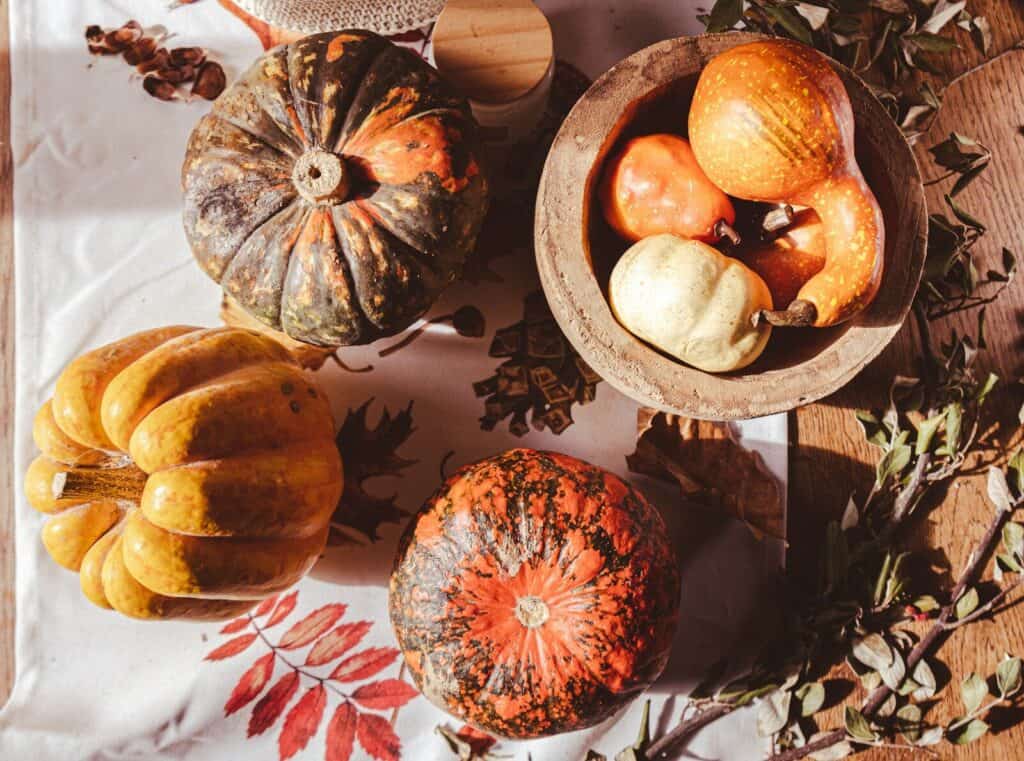
The most natural fall tablescape ideas come from real seasonal materials. Pumpkins, winter squash, gourds, apples, pears, walnuts, chestnuts, dried corn, herbs, rosemary sprigs, sage bundles, and late flowers can all work. Keep food-safe items clean and dry, and do not use anything treated with chemicals where it will touch plates or napkins.
Small pumpkins and squash are useful because they sit low. A line of mini pumpkins down the table, broken up with herbs and candles, often works better than a tall centerpiece. Pears in a shallow bowl can be beautiful. Apples tucked into a basket with linen are simple and useful. A bundle of rosemary tied to each napkin smells good and looks seasonal without taking over the table.
If you are also storing pumpkins and squash for later use, keep the display pieces separate from long-term pantry storage. Waddle and Cluck’s guide to storing pumpkins and winter squash is a good companion for readers who want decor that can still become dinner.
Layer Linens Without Making Laundry Miserable
Linens soften a fall table. They also create laundry, so be realistic. A table runner, cloth napkins, or a simple folded kitchen towel at each place setting may be enough. You do not need a full tablecloth if your table is pretty and practical on its own.
Natural fabrics look right for harvest tables: linen, cotton, muslin, ticking stripe, chambray, burlap used sparingly, or a vintage quilt folded as a bench layer. Avoid fabrics that shed fibers near food or catch easily on chairs.
If your table is busy, use plain linens. If your dishes are plain, a subtle patterned napkin can add interest. Fold napkins simply. A knot, loose roll, or fold under the fork feels more relaxed than a complicated fan.
Keep Centerpieces Low and Movable
A harvest centerpiece should be low enough to talk over and easy to move when the food arrives. Instead of one heavy arrangement, build several small clusters. Use a breadboard with pumpkins and candles, a shallow bowl of pears, a small jar of herbs, and a few votives. You can move one piece without dismantling the whole table.
Use odd numbers if you like the design rule, but do not be stiff about it. Three small pumpkins, two candlesticks, and one bowl can look balanced. So can a long row of mismatched jars if they are similar in height.
For flowers, keep stems short. Dried hydrangeas, mums, marigolds, zinnias, grasses, seed heads, and clipped herbs can all work. If you enjoy flower arranging, keep notes on which late-season blooms held up best so next year’s table starts in the garden, not the store.
Add Warm Light Safely
Candles make a fall table feel cozy fast, but safety matters. Keep flames away from dried leaves, napkins, low branches, sleeves, kids’ reach, and crowded serving areas. The National Fire Protection Association warns that candles should be kept away from anything that can burn and should not be left unattended.
If that makes you nervous, use battery candles. Good flameless candles are practical for long meals, porches, kids’ tables, and homes with pets. You can still get warm light without babysitting every wick.
Lanterns are another option. A low lantern with a battery candle, a few acorns around the base, and a linen runner can look calm and seasonal. Just keep sightlines clear.
Make Place Settings Feel Personal
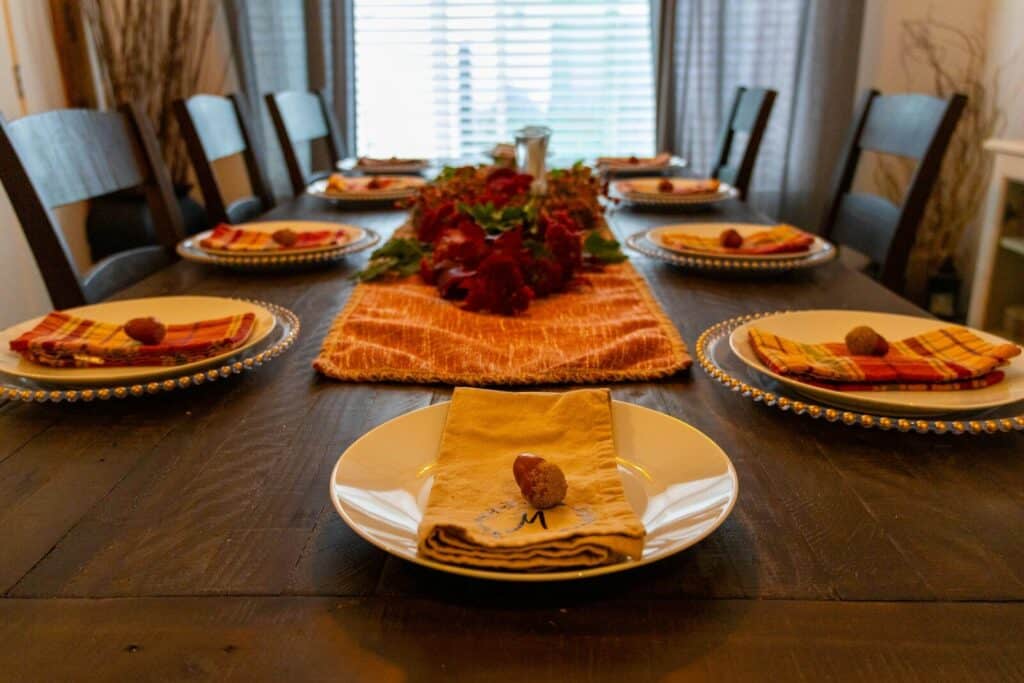
Place settings do not need to be elaborate. A folded napkin, a sprig of rosemary, a small pear, a handwritten name card, or a tiny bundle of dried herbs is enough. If you have chickens, a small bowl of clean eggs nearby can add homestead charm, but do not put eggs directly on plates unless they are clean and intended as decor only.
For a family meal, place cards may feel too formal. Instead, use small practical touches: a butter knife at each setting, a mug for soup, a folded towel for messy hands, or a small card with the menu. For Thanksgiving or a harvest supper, handwritten names can help people settle in without awkward chair shuffling.
Do not overthink chargers, layers, and extra forks. If the meal is rustic, the place setting can be rustic. A fork, knife, napkin, plate, and glass may be all you need.
Use Scent Carefully
Fall scent belongs near the home, but not always directly on the dinner table. Strong cinnamon candles, heavily scented pinecones, and overpowering potpourri can fight with food. If you want scent, keep it gentle: rosemary, thyme, orange peel, unscented beeswax, or the food itself.
A simmer pot before guests arrive can make the house smell welcoming without putting fragrance on the table. Waddle and Cluck’s autumn simmer pot recipes are a natural fit if readers want that cozy fall feeling before the meal starts.
Once dinner is served, let the food be the scent. Bread, soup, roasted squash, cider, herbs, and pie do not need competition.
Fall Tablescape Formula
Use this simple formula when you do not want to fuss.
- Start with a clean table or plain runner.
- Choose two main colors and one accent.
- Add low harvest items: pumpkins, squash, apples, pears, herbs.
- Add warm light with safe candles or flameless candles.
- Use cloth napkins or simple folded towels.
- Keep serving space open.
- Add one personal detail at each place setting.
- Remove anything that blocks conversation.
Frequently Asked Questions About Cozy Fall Harvest Tablescape Ideas
What can I use for a fall tablescape without buying new decor?
Use pumpkins, squash, apples, pears, herbs, branches, baskets, cutting boards, jars, cloth napkins, candles, and everyday dishes. Real harvest items often look better than new decorations.
How do I make a fall table look cozy but not cluttered?
Keep the centerpiece low, repeat a small color palette, use natural textures, and leave empty space for food and glasses.
Are real pumpkins safe to use on the table?
Yes, if they are clean, dry, uncut, and not moldy. Keep them off plates unless they are food-safe and clean.
Should candles be scented on a dinner table?
Usually no. Unscented candles are better for meals because strong fragrance can compete with food.
What is the easiest fall centerpiece?
Place a wooden board or runner down the center, add three small pumpkins, a few herb sprigs, and two low candles or flameless candles. Simple works.