
The Short Answer
The best portable electric fencing for goats is a goat-rated electric netting system paired with a strong enough energizer, good grounding, and regular voltage checks. For many homesteads, Premier1 goat/sheep netting or Starkline sheep and goat netting are practical product categories to compare. Choose taller, sturdier netting for goats that push or jump, positive/negative netting for dry or rocky soil, and a solar or battery energizer only if it has enough output for your fence length and vegetation load. Train goats to the fence inside a secure area before trusting it for rotational grazing.
Portable fencing can be a very useful tool. It is not a replacement for judgment.
Key Takeaways
When Portable Electric Fencing Makes Sense
Portable electric fencing shines when you need flexibility. It lets you rotate goats across brushy areas, protect garden edges, rest permanent pastures, set up short-term grazing strips, and test how goats use a new area before building permanent fence.
It is especially helpful for:
- Rotational grazing.
- Brush management.
- Temporary daytime paddocks.
- Garden or orchard protection.
- Separating groups for a short time.
- Moving goats through seasonal forage.
- Adding a second layer inside permanent fence.
It is less ideal when goats are untrained, hungry, panicked, chased, or placed beside a road. Electric netting can be strong, but it is still a movable system. If the goats run through it once and learn the fence gives way, the job gets harder.
If you are just starting with goats, build the full setup first. Waddle and Cluck’s how to start raising goats guide is a better first read before relying on portable systems.
How Electric Netting Actually Holds Goats
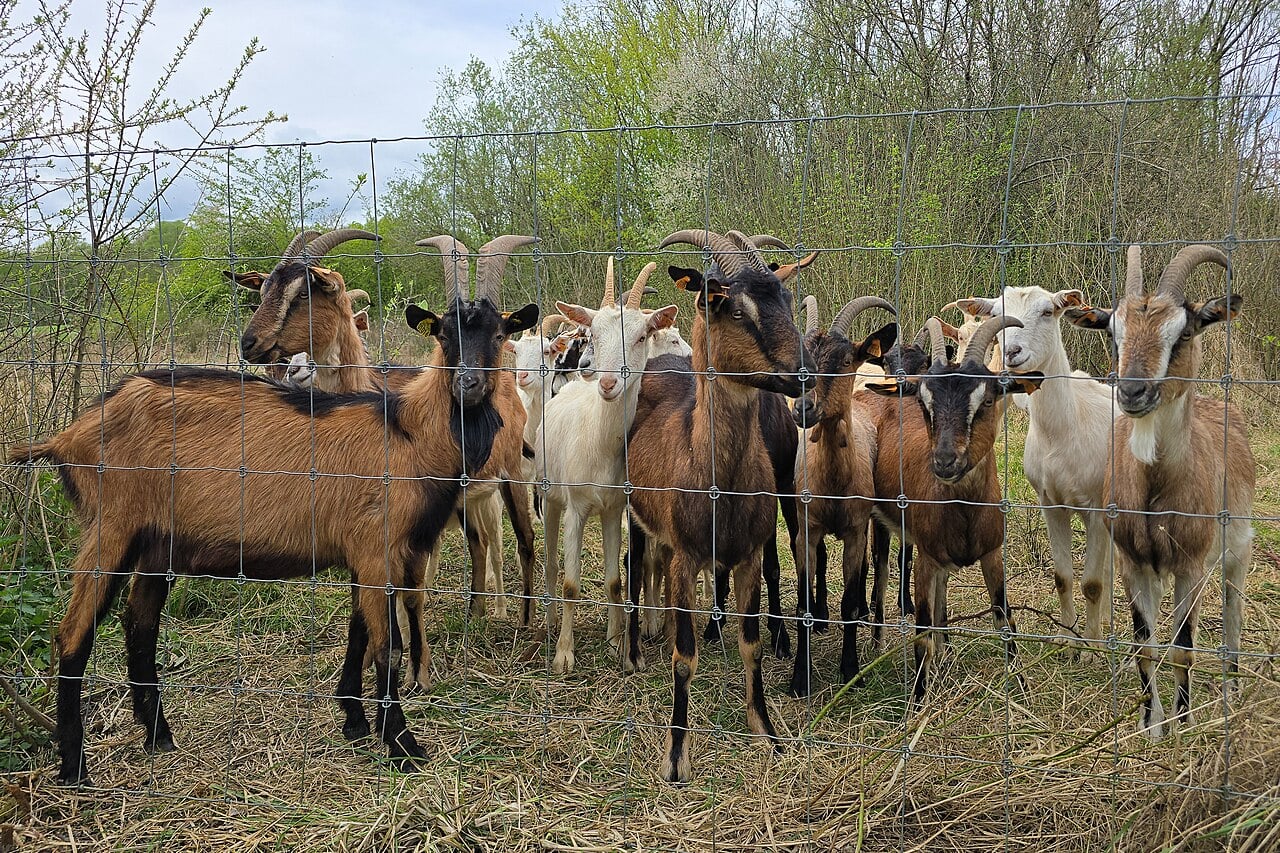
Electric netting works because the goat touches a charged strand and receives a short, unpleasant shock. The goat then learns to avoid the fence. That means the fence must be live, visible, and respected.
The net itself is not the whole system. You need:
- Electric netting rated for goats or sheep/goats.
- Energizer sized for the total fence length.
- Ground rod or positive/negative setup.
- Lead-out wire or connectors.
- Fence tester.
- Extra posts for corners and dips.
- Mower, trimmer, or grazing plan for vegetation.
- Training area for first exposure.
Missouri Extension’s goat housing guidance notes that electric fence can work when vegetation does not short wires and grounding is adequate: https://extension.missouri.edu/publications/g3990
Product Types to Compare
Goat and Sheep Electric Netting
This is the common portable choice. It comes as a roll with built-in posts and electrified horizontal strands. It sets up faster than individual wire strands and gives goats a visible barrier.
Look for height, post strength, conductor quality, mesh spacing, repair options, and whether the design fits goats rather than only poultry. Goats push harder than chickens and are more likely to test the fence.
Positive/Negative Netting
Standard electric netting depends on soil moisture to complete the shock circuit through the ground. In dry, sandy, rocky, or frozen conditions, that can be unreliable. Positive/negative netting alternates hot and ground strands in the fence itself, so the animal completes the circuit by touching both.
This can be useful in dry country, but it still needs proper setup. It also needs the correct connection method. Read the manufacturer’s instructions.
Reel-and-Post Wire Systems
Some keepers use step-in posts and polywire instead of netting. This can be lighter and less bulky, but it is usually better for goats that already respect electric fence. Multiple strands are often needed, and spacing matters.
Netting is usually easier for beginners because it creates a more obvious barrier.
Solar Energizer Kits
Solar energizers are convenient for rotational grazing away from outlets. The downside is that small solar units are often underpowered for long netting runs, heavy weed load, cold weather, or cloudy stretches. Match output to the fence, not to wishful thinking.
Plug-In or Battery Energizers
Plug-in energizers can be stronger and more economical per joule when power is available. Battery systems can work well but need charging and protection from weather. Whichever you choose, use a low-impedance intermittent pulse energizer intended for electric fencing.
Product Options Worth Comparing
These are product opportunities checked from current product pages. They are not presented as personal field tests.
| Option | Best Fit | Notes |
|---|---|---|
| Premier1 PermaNet Standard or Pro | Semi-permanent seasonal goat setups | Goat-focused netting with sturdy options and positive/negative choices |
| Premier1 Goat & Sheep Net 10/42/7 | Budget-conscious goat/sheep netting | Useful category, but Premier cautions buyers to think carefully about fit |
| Starkline Premium Sheep & Goat Netting | Portable homestead goat paddocks | Goat/sheep netting with fiberglass posts and positive/negative version |
| Starkline Utility Netting | Multi-use temporary fencing | Works across several homestead jobs, but match height and strength to goats |
| Fence tester and extra posts | Every setup | Voltage checks and corner support prevent many failures |
Do Not Skip Training
Training goats to electric fence should happen in a secure place, not the first time you turn them into roadside brush. Set up the net inside a permanent fence or other safe boundary. Power it properly. Let goats learn what the barrier means while you are present.
Do not put scared, starving, or newly hauled goats straight into electric netting and walk away. Goats that panic can run into the net and tangle. If a goat gets caught, turn off the power before freeing it.
Good care inside the fence matters too. Waddle and Cluck’s goat care essentials article covers the feed, water, minerals, and daily routines that reduce fence pressure.
Setup Mistakes That Make Electric Fence Fail
Most portable fence failures come from simple problems.
Weak Energizer
A tiny charger may not power multiple rolls of netting, especially through weeds. Buy for the full system you plan to use, not only the first roll. A weatherproof case and a decent battery charger cost less than one afternoon spent walking the fence line looking for the break.
Poor Grounding
Bad grounding means weak shock. Dry soil, shallow rods, loose clamps, and incorrect connections all matter. Positive/negative netting may help in dry conditions, but it still has to be connected correctly.
Vegetation on the Fence
Grass and weeds touching hot strands drain power. Mow before setting netting, move often, or trim along the line. If you cannot manage vegetation, netting may disappoint you.
Sagging Corners
Netting sags at corners, dips, and ends unless supported. Extra step-in posts are cheap compared with chasing goats.
Wrong Height or Weak Posts
Small goats may stay in shorter netting, but athletic or motivated goats may need taller, sturdier options. Bucks, goats reaching for brush, or goats near grain storage need more serious containment.
No Voltage Testing
If you do not test, you are guessing. A fence can look fine and be nearly dead.
Rotational Grazing With Portable Fence
Portable electric fencing is useful for rotational grazing because it lets you control where goats browse and how long they stay. The goal is not to scalp every plant. Move goats before they overgraze, expose parasite-heavy low growth, or start fighting the fence.
A practical rotation looks like this:
- Walk the new paddock for toxic plants, holes, debris, and fence hazards.
- Feed hay first if forage is questionable or goats are hungry.
- Set netting with straight lines where possible.
- Add extra posts at corners and dips.
- Connect energizer and ground correctly.
- Test voltage before turnout.
- Stay and watch the goats settle.
- Provide water, shade, and minerals.
- Move before forage is grazed too low.
- Check the fence daily.
Rotational grazing can improve pasture use, but it still needs stockmanship. Portable fence gives you control only if you use it actively.
Safety Around Kids, Pets, and Visitors
Electric netting is meant to be unpleasant. Children, visitors, and pets should know the fence is live. Mark it where people walk. Keep gates clear. Do not let dogs chase goats inside netting. Keep extension cords, chargers, and batteries protected from weather and curious hands.
Do not use electric netting with continuous-output energizers unless manufacturer instructions allow it. Follow the fence and energizer manuals. Electric fencing is a system, and mismatched parts create risk.
Is Portable Electric Fence Worth It?
Portable electric fence is worth it if you will use it often, maintain it, and train goats well. It is not worth it if you want to set it once, never weed it, never test it, and hope goats stay put.
It may be a good fit if:
- You rotate goats through brush or pasture.
- You have a permanent perimeter as backup.
- You can move fence regularly.
- You own or will buy a proper energizer and tester.
- Your goats are trained to electric.
It may not fit if:
- Goats are beside traffic.
- Predators or loose dogs are heavy pressure.
- You cannot manage weeds.
- Soil is dry and you do not want positive/negative netting.
- You need permanent overnight containment for untrained goats.
Goats can add a lot to a homestead, but fencing is part of the cost. Waddle and Cluck’s benefits of raising goats helps readers weigh that bigger picture.
Frequently Asked Questions About Portable Electric Fencing for Goats
Does portable electric fencing work for goats?
Yes, portable electric fencing can work for goats when they are trained, the netting is goat-rated, the energizer is strong enough, grounding is correct, vegetation is controlled, and voltage is checked regularly.
What height electric netting is best for goats?
Many goat netting options are around 35 to 48 inches tall. Choose taller and sturdier netting for athletic goats, bucks, uneven ground, or high-pressure situations.
Do goats need to be trained to electric fence?
Yes. Training is strongly recommended. Let goats learn the fence inside a secure area before relying on portable electric netting as the main boundary.
Is solar electric fencing strong enough for goats?
It can be, but only if the solar energizer is sized for your netting length, weed load, and conditions. Many small solar units are too weak for serious netting setups.
What else do I need besides electric netting?
You need an energizer, grounding or positive/negative setup, connectors, fence tester, extra posts, water inside the paddock, and a plan to control vegetation.