
Robber flies are insects you tend to notice once you learn what to look for. They move with purpose and rarely seem surprised by anything around them. Most of the time, they sit still on a fence post or tall stem, watching. When they take off, it happens fast.
These insects are aerial predators. They catch other insects while flying, often intercepting prey in midair. Their eyesight is sharp enough to track movement from a distance, which is why they are often compared to falcons. The comparison makes sense once you have watched one hunt.

Why Robber Flies Are Such Effective Hunters
Robber flies rely heavily on vision. Their large eyes give them a wide field of view, and they seem to notice even small movements. They wait quietly, then launch with precision. There is no chase. The catch is quick and final.
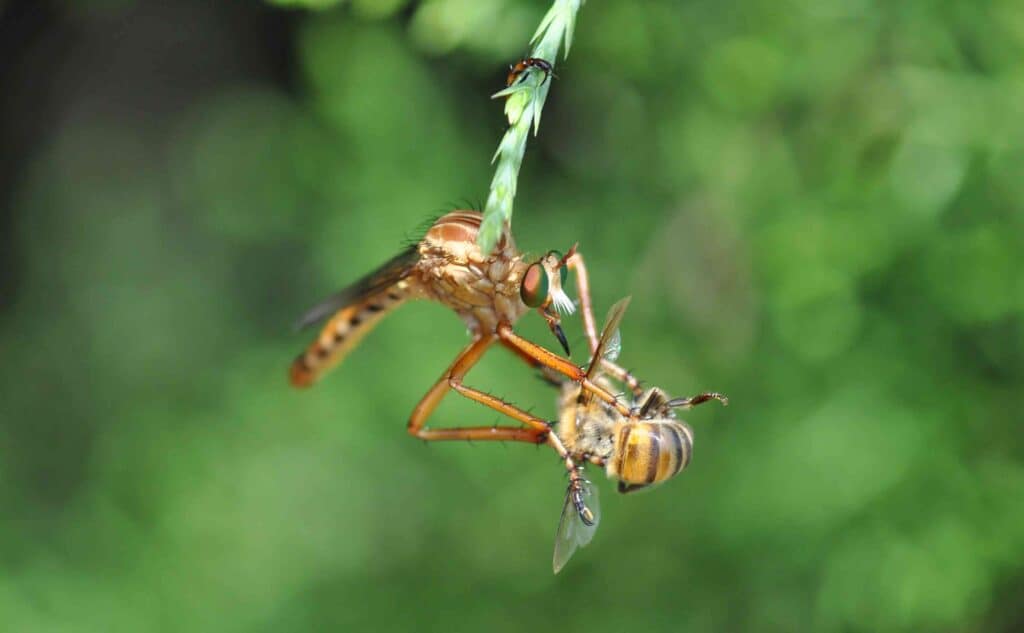
After capturing an insect, a robber fly uses a short, strong proboscis to pierce its prey. It injects enzymes that break down internal tissues, then feeds on the liquefied contents. The process is efficient and leaves little behind.
Identifying Common Robber Fly Features
There are nearly a thousand species of robber flies in North America, so appearance can vary. Many species share a few noticeable traits. A bristled or bearded face is common and helps protect the fly while it feeds. The head is often slightly indented between the eyes, giving it a distinct shape.
Eye color can be striking, with some species showing green or bronze tones when the light hits just right. Their bodies are usually sturdy and built for speed rather than delicacy.
When and Where You Will See Robber Flies
Robber flies are most active from early summer through fall. They favor open areas with good visibility. Meadows, gardens, pastures, and fence lines all make good hunting grounds. Anywhere insects are moving through open air, robber flies are likely nearby.
They often return to the same perch after hunting. If you see one once, it is worth checking the same spot again.
Why Beekeepers Pay Attention to Robber Flies
Beekeepers sometimes call robber flies bee killers. Some species do prey on honeybees, especially where bees are abundant. While this can be frustrating near hives, robber flies are part of the natural balance in insect populations.
They also hunt many other insects, including pests. Like most predators, they take what is easiest and most available. Their presence is a sign of an active and diverse ecosystem.
Robber flies may look intimidating at first, but they are not aggressive toward people. They keep to their work and move on. Once you start noticing them, they become another small reminder of how much is happening just above the grass.
Read more Nature Notes. For the other aerial hunters out there, see dragonflies and damselflies. They are not the only ones fighting it out — see four insect matchups of predator versus prey.