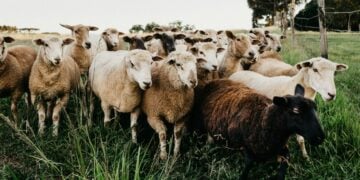

What do sheep eat is one of the first questions new sheep keepers ask, and the honest answer is reassuring: mostly grass. Sheep are ruminants built for a forage-based diet, and a well-managed homestead flock can meet almost all of its nutritional needs through good pasture, quality hay, and the right minerals. There are a few rules worth knowing before you buy your first bag of feed, and one of them is non-negotiable — but the day-to-day feeding of sheep is one of the more straightforward things about keeping them.
What You’ll Learn
Sheep Eat Grasss and Hay
Sheep are grazers, and good pasture is the best feed you can offer them. A mature ewe in good body condition on adequate grass needs nothing else during most of the year. That simplicity is one of the things that makes sheep such a practical homestead animal.
When pasture runs short in winter or dry spells, hay takes over as the primary feed. Sheep do well on quality grass hay. Timothy, orchard grass, and brome are all solid choices. Mixed grass-legume hay adds extra protein that ewes in late pregnancy and early lactation genuinely need.
Alfalfa is the high-octane option. It is rich in calcium, protein, and energy, which makes it ideal for ewes in the final six weeks of pregnancy and nursing ewes with lambs at their side. For dry ewes and rams just maintaining condition, alfalfa is too rich as a regular diet and can contribute to urinary stones in rams over time.
Feed hay in racks or feeders, not on the ground. Sheep will not touch hay that has been soiled, and letting it pile on wet ground is just expensive waste. A good hay rack that lets several animals eat at once without crowding keeps the peace in the flock and the hay off the dirt.

When Sheep Need Grain
Most homestead sheep do not need grain as a routine part of what they eat. Grain is a tool for specific situations where forage alone cannot keep up with elevated nutritional demands.
Those situations are late pregnancy, especially the final four to six weeks when twin and triplet lambs are growing fast and the ewe’s rumen is literally crowded by developing lambs; early lactation, when milk production peaks in the first weeks after lambing; lamb finishing, when you are pushing market-weight lambs toward slaughter condition; and body condition recovery in thin ewes coming off a difficult winter or late weaning.
A simple whole grain ration of corn, oats, or barley works well, or a commercial grain mix formulated for sheep. Start at 0.25 to 0.5 pounds per head per day and increase slowly over two weeks. Sheep that have been on forage only cannot handle a sudden grain load — rumen acidosis from abrupt introduction of starchy feed is a real risk and entirely avoidable.
Minerals and Copper
Sheep need minerals year-round. Pasture and hay rarely supply everything a flock needs, and deficiencies in selenium, zinc, and copper develop slowly before you see any visible signs.
Never feed sheep minerals, feeds, or supplements formulated for goats or cattle. Sheep are highly sensitive to copper. The levels that are perfectly safe and beneficial for goats build up in sheep liver tissue over time and release in a hemolytic crisis that kills within hours. This is not a guideline with exceptions. It applies every time, with every product.
Use loose minerals specifically formulated for sheep, offered free choice in a covered feeder year-round. Sheep self-regulate mineral intake well when it is consistently available. Mineral blocks are less effective because sheep do not lick them enough to meet their actual requirements.
A weather-protected mineral feeder keeps sheep-safe minerals available without letting rain turn them into an expensive brick.
Selenium deserves special attention if you are in the Pacific Northwest, Northeast, or other selenium-deficient regions of North America. Selenium-deficient lambs develop white muscle disease, a condition affecting heart and skeletal muscle that is often fatal. If your region is known for low selenium soils, use selenium-containing sheep minerals and talk to your vet about whether additional supplementation makes sense for your flock.
How Much Water Sheep Actually Need
Fresh water available at all times is non-negotiable. A dry mature ewe drinks 0.5 to 1.5 gallons per day depending on heat and how much moisture is in her forage. A nursing ewe with lambs drinks 1.5 to 2.5 gallons daily. In summer heat those numbers go up, and a flock without consistent clean water will drop feed intake and lose body condition faster than most people expect.
Clean waterers matter as much as full ones. Sheep that find their water source dirty or slimy will reduce their intake significantly before switching to a fouled source — they are not dramatic about it, they just quietly drink less, and you may not notice until the condition losses show up. Clean troughs weekly and keep biofilm from building up.
Domivans animal drinking water bowl measures up to 47.2"*12.4"*5.3", holding up to 12 gallons of water.It is suitable for large animals such as cattle, horses, sheep, pigs, dogs and goats.

Toxic Plants That Can Kill Sheep
Part of knowing what sheep eat is knowing what they must not eat. Sheep are less selective grazers than goats and will occasionally consume plants they should not, especially when pasture is thin.
The plants that cause the most serious problems are yew in any form, which causes sudden cardiac death from very small amounts; rhododendron and azalea, which cause vomiting, weakness, and death; bracken fern, which suppresses bone marrow with chronic consumption; nightshade family plants; lupine, which is toxic in quantity and causes birth defects in lambs; and water hemlock and poison hemlock, both of which are rapidly fatal.
Walk your pastures and fence lines before your flock arrives and regularly after that. Newly grazed areas and recently purchased properties deserve extra attention. Ornamental shrubs along fence lines are a common source of yew and rhododendron exposure that catches new sheep keepers off guard.
Preventing Bloat on Spring Pasture
Bloat is the rapid accumulation of gas in the rumen that cannot escape normally, and frothy bloat on lush legume-heavy spring pasture is one of the most dangerous situations a sheep keeper will face. The foam that forms on rich spring grass prevents the animal from belching normally. A bloated sheep that is not treated within a few hours can suffocate from the pressure on its diaphragm.
The prevention is straightforward. Transition sheep onto new spring pasture gradually over one to two weeks, starting with just two to three hours of access per day and building from there. Feed a full serving of dry hay before turning sheep onto lush pasture so they arrive with rumen fill rather than empty and hungry. Avoid turning sheep onto wet or frost-covered legume-heavy pasture, which is the highest-risk combination for rapid frothy bloat.
According to Penn State Extension, sheep in moderate body condition on adequate pasture or good grass hay require no grain supplementation outside of late pregnancy and lactation. The most common nutrition mistakes in homestead flocks are overfeeding grain to dry animals and underfeeding minerals across the entire flock.
For more on getting started with sheep on the homestead, see our beginner’s guide to raising sheep.
Frequently Asked Questions About What Sheep Eat
How much hay does a sheep eat per day?
A mature sheep eats approximately 2 to 4 pounds of hay daily, roughly 2 to 3% of its body weight in dry matter. A 150-pound ewe needs 3 to 4.5 pounds when pasture is unavailable. Offer hay free choice rather than measuring precisely — sheep self-regulate well and individual needs vary with size, condition, and weather.
Can sheep eat goat feed?
No. Goat feed contains copper at levels that are toxic to sheep with repeated exposure. Even a single bag of goat minerals fed over time can initiate copper accumulation that causes liver damage. Always use feed and minera
Do sheep need grain every day?
Dry ewes and rams in good body condition on adequate pasture or hay do not need grain. Grain is a targeted supplement used during late pregnancy, lactation, and lamb finishing. Feeding grain to dry sheep unnecessarily causes obesity and metabolic problems, and excess body condition going into lambing increases the risk of pregnancy toxemia.
What minerals do sheep need?
Sheep need a sheep-specific loose mineral blend offered free choice year-round. Key minerals include selenium, zinc, and manganese, which are commonly deficient in hay and pasture across many regions. Selenium is particularly important and deficient in significant portions of North America. Never use goat or cattle minerals, which contain copper at levels toxic to sheep.
Can sheep eat vegetables and garden scraps?
Yes, in moderation. Root vegetables including turnips, beets, and carrots are safe and well-liked. Brassica family vegetables including cabbage, kale, and turnip tops are fine in moderate amounts but should not make up the bulk of the diet as they can affect thyroid function in large quantities. Avoid rhubarb, nightshade family plants, and anything from yew or rhododendron.