
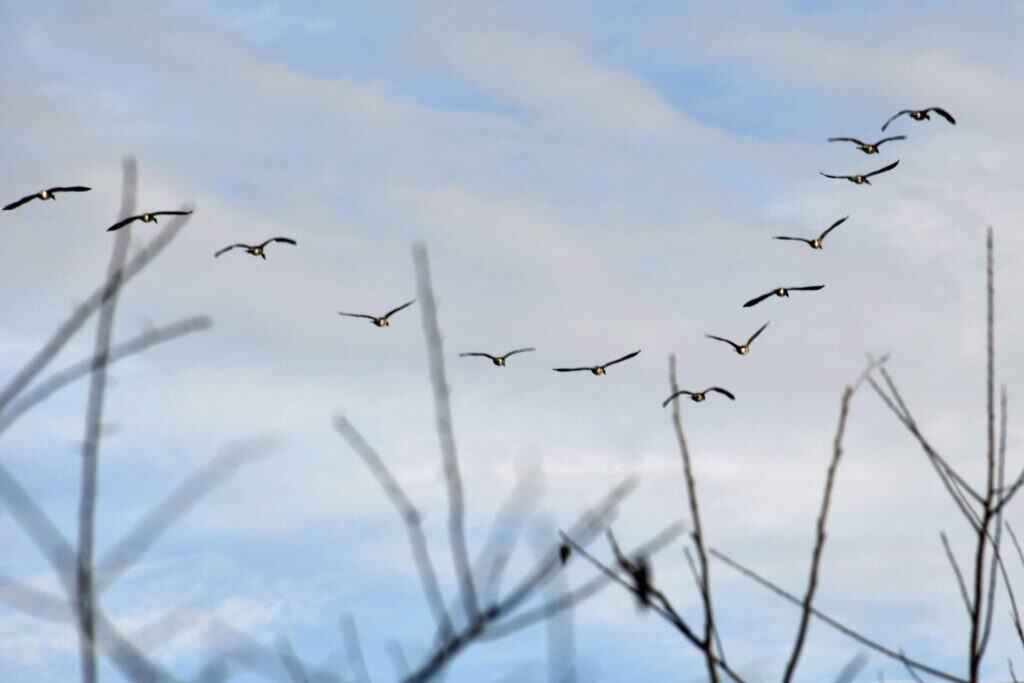
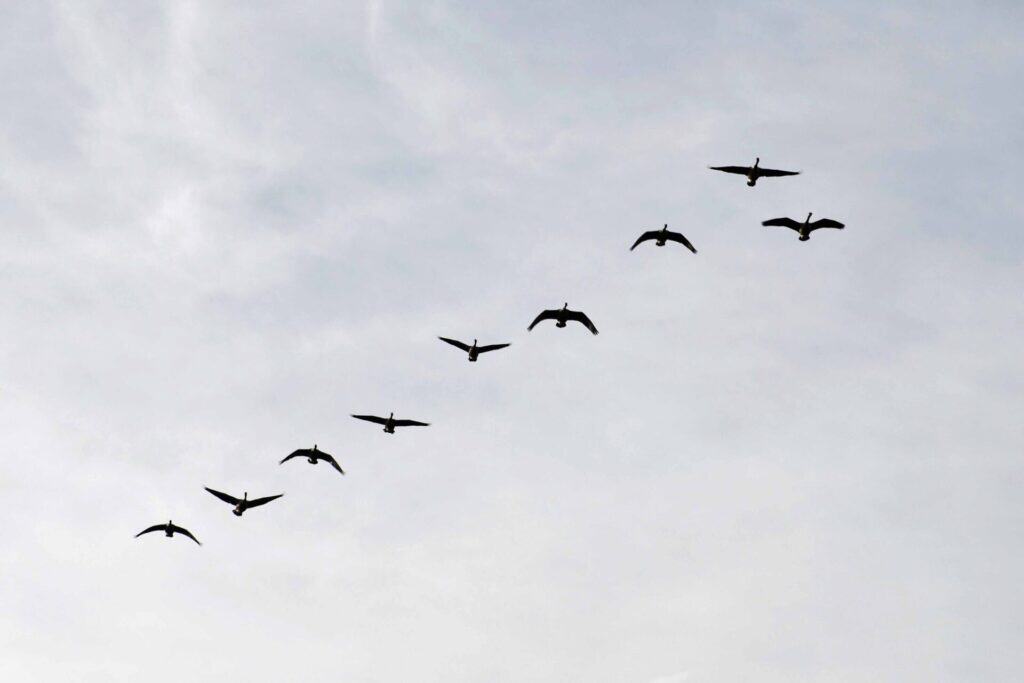
If you’ve ever looked up at the sky in the fall or spring, you’ve probably seen a flock of geese flying in a perfect V formation. It’s a fascinating sight, but have you ever wondered why do geese fly in a V formation? This isn’t just a random pattern—it’s an essential survival technique that helps geese migrate over long distances efficiently.
Geese, like many migratory birds, travel thousands of miles each year, searching for warmer climates in the winter and returning to their breeding grounds in the spring. This journey requires an incredible amount of energy, and flying in formation helps them conserve as much as possible.
Why do geese fly in a V formation?: Energy Conservation
The primary reason geese fly in a V formation is to conserve energy. Flying takes a lot of effort, and the more efficiently they can travel, the farther they can go without needing to stop and rest. The secret lies in aerodynamics.
Each goose in the formation flies slightly above and behind the bird in front of it. This positioning reduces wind resistance and creates an updraft from the wings of the leading bird. As a result, the birds further back in the formation don’t have to work as hard to stay in the air. This technique is similar to the drafting method used in cycling or race car driving, where competitors stay close behind one another to reduce air resistance.
The goose at the front of the V is the one doing the most work. It breaks through the air, creating the uplift that benefits the others. But geese don’t let just one bird do all the heavy lifting. When the leader gets tired, another goose will take its place, allowing the flock to continue flying without stopping. This rotation system ensures that no single bird becomes too exhausted, and the entire group can cover long distances more efficiently.
Studies have shown that by flying in this formation, geese can increase their flight range by as much as 70% compared to flying alone. That’s a huge advantage when traveling hundreds or even thousands of miles.
Read more about Canadian Geese.
Communication and Coordination
Beyond energy conservation, flying in a V formation helps geese maintain visual contact with one another. Migration requires constant communication to ensure the flock stays together, and the V shape makes it easier for each bird to see the others.
If geese flew in a scattered group, it would be much harder for them to coordinate movements. The formation allows them to make quick adjustments, avoid obstacles, and stay on course. If a bird strays too far from the formation, it will quickly fall behind and expend more energy trying to catch up. By keeping a tight, organized group, they reduce the risk of getting lost or separated.
Geese also communicate through honking. If you’ve ever heard them flying overhead, you’ve probably noticed they’re quite vocal. Scientists believe this honking helps the flock stay in sync, giving cues for when to speed up, slow down, or change direction. Some theories suggest the honking might even serve as encouragement, keeping the group motivated during their long journey.
The Role of Leadership in a Flock
Since the front position of the V is the hardest to maintain, geese take turns leading. When the leader tires, it will fall back into the formation, and another bird will take over. This cooperative strategy benefits the entire group and ensures that the strongest birds aren’t overworked while the weaker ones struggle to keep up.
This natural teamwork is a great example of how animals rely on one another for survival. Geese instinctively understand that their best chance of reaching their destination is by working together and sharing the burden of flight.
Interestingly, this kind of cooperation isn’t limited to geese. Other migratory birds, including pelicans, swans, and even some species of cranes, use similar formations to conserve energy during long-distance flights.
What Happens When a Goose Falls Behind?
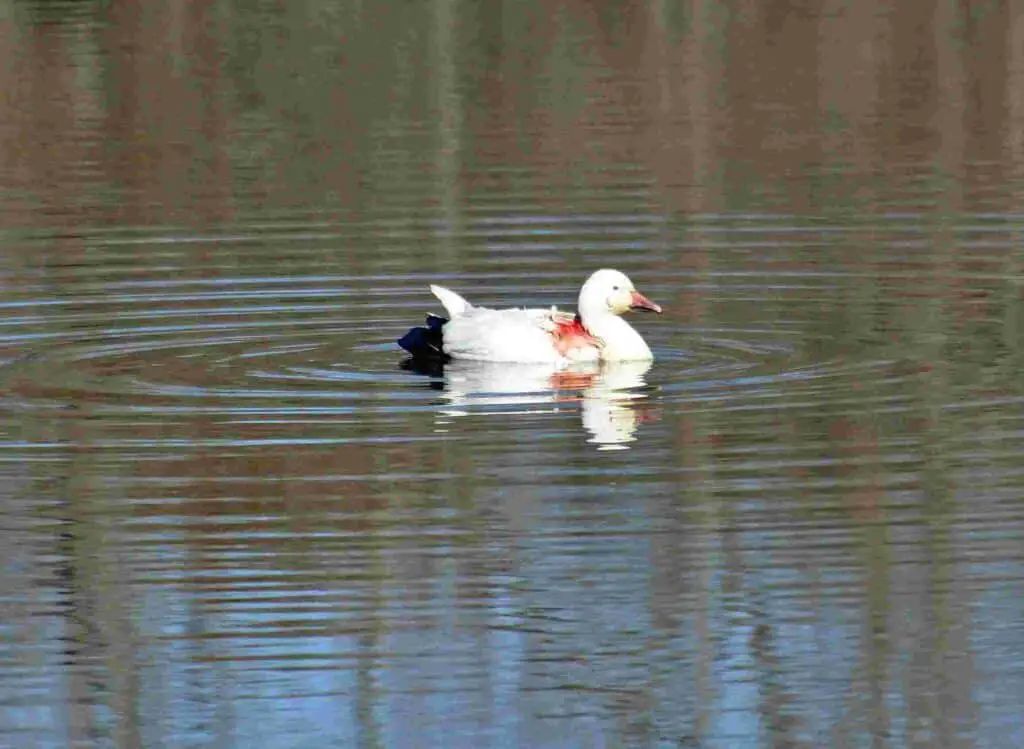
Not all geese make it through migration without difficulty. Sometimes, a goose will become too tired, sick, or injured to keep up with the flock. When this happens, it doesn’t get left behind alone. Instead, at least one other goose—sometimes two—will drop out of formation to stay with it.
These geese will remain with their struggling companion until it either recovers or dies. If the goose is able to regain its strength, they will rejoin another flock passing by. If not, the accompanying geese will continue their journey alone or find a new group.
This behavior shows an incredible level of social responsibility among geese. They don’t abandon one another, which reinforces the idea that their survival depends on teamwork.
How Scientists Discovered the Benefits of the V Formation
The advantages of flying in formation were long suspected, but it wasn’t until relatively recently that scientists were able to study it in detail. Using GPS trackers and heart rate monitors attached to birds, researchers have found direct evidence that birds flying in a V formation use less energy than those flying solo.
One groundbreaking study involved ibises, a bird species that also flies in a V pattern. Scientists found that these birds not only positioned themselves to maximize the updraft from the bird in front but also synchronized their wingbeats to further increase efficiency.
This precise coordination suggests that geese and other migratory birds are far more sophisticated in their flight strategies than previously thought. It’s not just a random arrangement—it’s a carefully maintained system that ensures the best possible energy savings.
Other Birds That Use V Formations
While geese are the most well-known example, they’re not the only birds that fly in this pattern. Many other species use similar formations, including:
- Swans – These large birds also migrate long distances and rely on the same aerodynamic principles.
- Pelicans – Frequently seen flying in V formations over coastal areas, especially when traveling between feeding grounds.
- Cranes – Some crane species migrate over thousands of miles and depend on formation flying to conserve energy.
- Flamingos – Though not as commonly observed, flamingos also use group formations during migration.
Even some military aircraft formations mimic this natural strategy. Fighter jets often fly in a V shape to take advantage of similar aerodynamic benefits, reducing drag and improving efficiency in long-distance flights.
A Lesson from Geese
There’s a lot humans can learn from geese. Their teamwork, communication, and mutual support make their long migrations possible. In a way, their behavior reflects many principles that apply to teamwork in our own lives. By working together, sharing responsibilities, and supporting those who struggle, we can achieve more than we could alone.
Next time you see geese flying overhead, take a moment to appreciate the incredible coordination and strategy at play. It’s more than just a beautiful sight—it’s a lesson in survival, efficiency, and cooperation.
Read more Nature Notes. They make that trip for years. Here is how long geese live. Geese are not the only ones covering that distance — see monarch migration. If you keep them rather than watch them, here is when geese lay eggs. If you would rather keep them than watch them, see raising geese. The birds flying beside each other are often a bonded pair, since geese mate for life.