Countertop gardens promise fresh herbs and greens year round with no dirt, no window, and almost no effort, and two names dominate the category. If you are weighing AeroGarden vs Click and Grow, you are looking at the two most popular smart indoor gardens, and while they do the same basic job, they take genuinely different approaches that suit different people. One is built around simplicity, the other around yield.
Here is how they actually compare, from the growing method that drives everything else to maintenance, cost, and one important piece of recent brand news you should factor in before you spend the money.
Key Takeaways
The Core Difference: Hydroponic vs Smart Soil
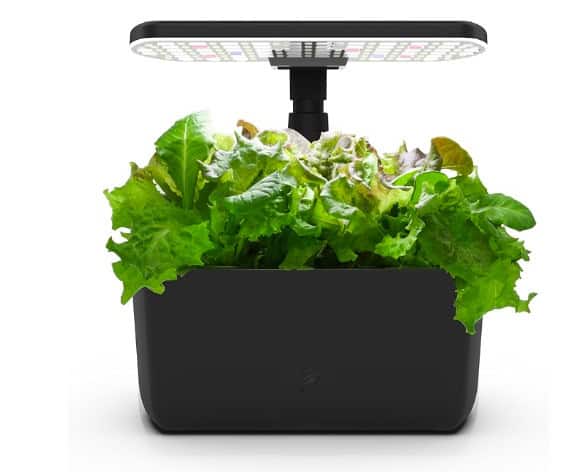
Everything else follows from this one distinction, so start here. AeroGarden is a hydroponic system: the plant roots grow directly in water, and you add a measured dose of liquid nutrients on a regular schedule to feed them. Click and Grow uses what it calls Smart Soil, a soil-like growing medium packed into each pod with the nutrients already built in, so all you ever add is water.
That difference shapes the whole experience. Hydroponics tends to grow plants faster and larger, which is why AeroGarden generally out-yields Click and Grow. But it asks a bit more of you, mainly remembering to add nutrients and keeping the water right. Click and Grow’s soil pods take that decision away entirely, trading some growth speed for near-total simplicity. If the whole idea of hydroponics is new to you, our our hydroponic garden check-in gives a real-world sense of what growing in water is like day to day.
Neither approach is better in the abstract. They are optimized for different priorities, and knowing which one you care about, maximum harvest or minimum effort, tells you most of what you need to decide between them.
Maintenance and Ease of Use
For a lot of buyers, this is the deciding factor, because a countertop garden that becomes a chore ends up unplugged in a cupboard. Here Click and Grow has the clear edge in simplicity.
With Click and Grow, you drop in the pods, fill the reservoir, and top up the water when a float or indicator tells you to. The nutrients are in the soil, the light runs on a timer, and that is genuinely most of it. It is about as close to foolproof as indoor growing gets, which makes it a strong pick for a beginner or anyone who wants herbs without a hobby attached.
AeroGarden is not difficult, but it does ask for a little more attention: adding liquid nutrients roughly every two weeks, and keeping an eye on the water and pump. In return you get faster, bigger growth. If you enjoy being a bit more involved and want more to show for it, that trade is easy to accept, and it fits naturally alongside other indoor gardening for beginners projects. If you want to set it and barely think about it, Click and Grow wins this round.
Smart Garden for Home Kitchen Windowsill | Easier Than Hydroponics Growing System | Vegetable Gardening Starter (3 Basil Pods Included), White

Yield, Capacity, and Flexibility
If your goal is to actually put a meaningful amount of food on the table, rather than just a few garnishes, the picture shifts toward AeroGarden. Its hydroponic method grows plants faster and larger, and it offers a wider range of sizes, from small units up to a 24-pod model, so you can scale to how much you want to grow. Click and Grow’s lineup runs from a 3-plant garden up to a larger unit around 27 plants, which is plenty for herbs but generally yields less per plant.
AeroGarden is also the more flexible system for anyone who does not want to be locked into buying pods forever. It openly sells grow-sponge and basket kits so you can plant your own seeds, which saves money over time and opens up varieties the pod catalog does not offer. Click and Grow is more oriented around its own pods, though determined growers do refill them. For growing your own seed and getting the most food out of the machine, AeroGarden is the stronger choice, and it pairs well with a broader plan to grow vegetables you can grow indoors.

Design, Cost, and the Pod Question
Click and Grow leans into a cleaner, more minimalist look that many people are happier to leave out on a counter, while AeroGarden is more utilitarian and, in its bigger models, frankly bulkier. If the garden has to earn its place in a visible spot in your kitchen, aesthetics may matter more than you expect, and Click and Grow tends to win on looks.
On cost, compare two numbers, not one. The upfront price is only half of it: both brands make most of their money on proprietary pods, so the ongoing cost of refills matters as much as the sticker. AeroGarden’s own-seed kits give you a cheaper long-term path if you use them, while Click and Grow’s convenience comes with a steady pod habit unless you refill. Whichever you choose, price out a year of pods for the varieties you actually want before you buy.
You can compare current models and pod options directly at AeroGarden and Click and Grow, which is the most reliable way to check present pricing and availability, since both lineups change. And remember that neither machine replaces a sunny sill entirely, our roundup of windowsill herb options covers the no-electricity alternative for simple herbs, and both smart gardens shine most in the darker months covered in indoor gardening in winter.
One Thing to Know: AeroGarden’s Recent Shakeup
There is a piece of news that belongs in any honest AeroGarden vs Click and Grow comparison right now. In late 2024, AeroGarden’s former parent company shut the brand down, and it stopped selling for a stretch around the start of 2025. A private investment group then bought AeroGarden and relaunched it in 2025 with a refreshed lineup and pods and support available again.
The practical upshot is not that you should avoid AeroGarden, the gardens themselves work well and are selling again, but that you should go in aware of the disruption. A brand that just changed hands after a shutdown carries a little more uncertainty around long-term pod supply and warranty support than one that has operated steadily. Click and Grow, by contrast, has been a more consistent presence. If that kind of stability weighs on you, factor it in. If you mainly care about the machine in front of you, it is a minor footnote.
Put simply: choose Click and Grow for the lowest-maintenance, best-looking, most set-and-forget experience, and AeroGarden for bigger yields, faster growth, larger capacity, and the freedom to grow your own seeds, with the recent ownership change noted. Both will keep fresh herbs on your counter through the winter, which is the whole point.
Frequently Asked Questions About AeroGarden vs Click and Grow
What is the difference between AeroGarden and Click and Grow?
The main difference is how they grow plants. AeroGarden is hydroponic: the roots sit in water and you add liquid nutrients on a schedule. Click and Grow uses Smart Soil pods, a soil-like medium with nutrients built in, so you only add water. That single design choice drives most of the other differences, with AeroGarden leaning toward bigger yields and Click and Grow toward lower maintenance.
Which is easier to use, AeroGarden or Click and Grow?
Click and Grow is easier day to day. Because the nutrients are already in the Smart Soil pods, you just top up the water and let the light timer do its work, which makes it close to foolproof. AeroGarden asks a little more of you, mainly measuring and adding liquid nutrients every couple of weeks, in exchange for faster growth and larger harvests. Neither is hard, but Click and Grow is the more hands-off of the two.
Is AeroGarden still in business?
Yes, but with a recent gap. AeroGarden’s former parent company shut the brand down in late 2024, and it stopped selling for a period around the start of 2025. A private investment group then acquired AeroGarden and relaunched it in 2025 with a refreshed lineup and renewed pod and support availability. It is operating again, but the disruption is worth keeping in mind when you think about long-term parts and warranty support.
Can you use your own seeds in these gardens?
Yes, with both, though AeroGarden makes it easier. AeroGarden sells grow-sponge and basket kits specifically so you can plant your own seeds instead of buying pre-seeded pods, which saves money over time. Click and Grow is more oriented around its own pods, but people do refill spent pods with their own soil and seeds. If growing from your own seed matters to you, AeroGarden is the more openly flexible system.
Which grows more food, AeroGarden or Click and Grow?
AeroGarden generally grows more, and faster. Hydroponic systems tend to push quicker growth and bigger plants than soil-based ones, and AeroGarden also offers larger units, up to a 24-pod model, versus Click and Grow’s lineup that tops out around 27 plants in its largest garden. For sheer output, especially of leafy greens and herbs, AeroGarden usually comes out ahead.