
Cattle terminology trips up almost every new owner, usually at the worst moment: reading a sale listing, filling in a form, or standing at a ring trying to work out why two apparently identical animals have very different prices. The vocabulary is old, precise, and genuinely useful once you have it. Here is what each term actually means, why the distinctions exist, and the ones people get wrong most often.
Key Takeaways
Bull vs Steer: The Difference That Matters Most
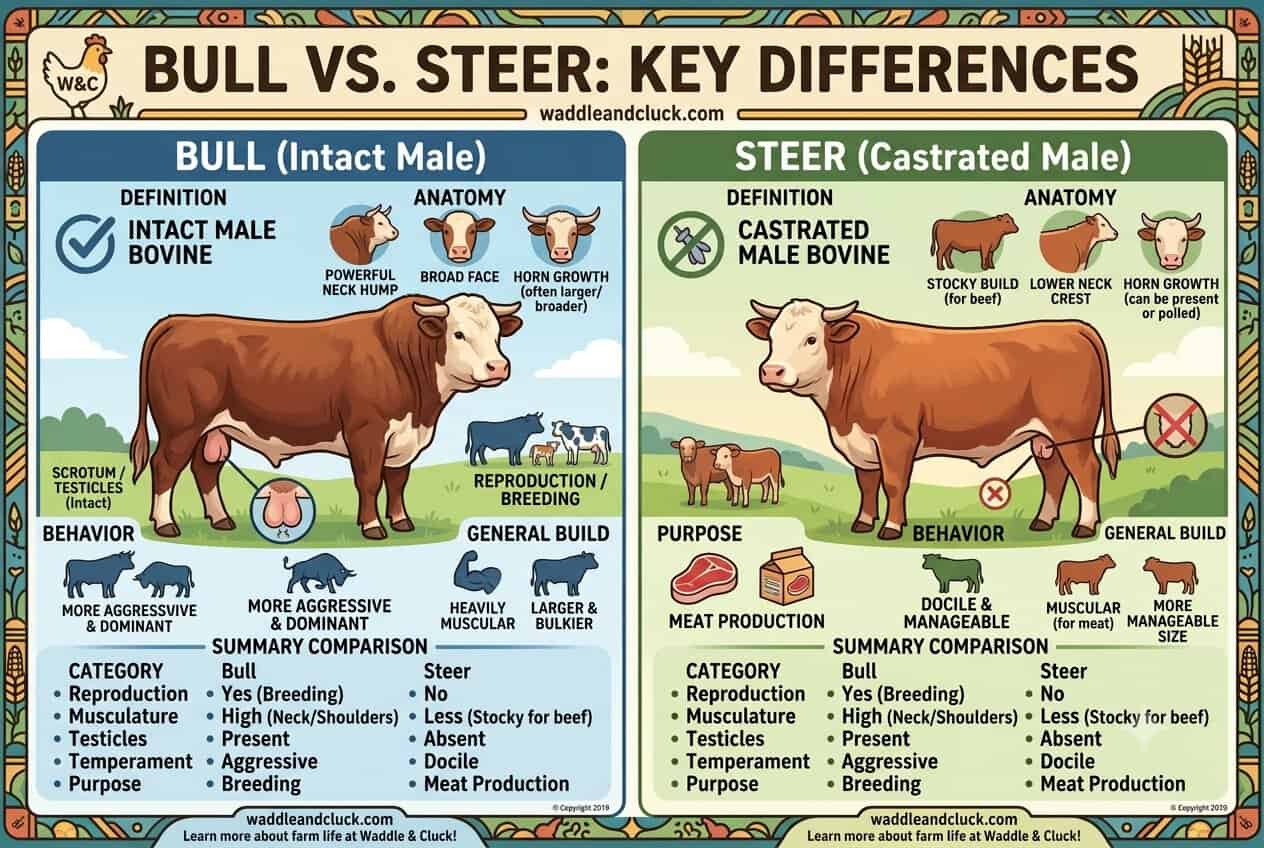
This is the pair people confuse most, and the distinction is entirely about castration.
A bull is, in Cornell University’s definition, “a male bovine with testicles intact.” He is intact, he is fertile, and he carries the temperament and physical development that go with that.
A steer is “male cattle that are castrated before reaching sexual maturity.” Same animal, castrated early enough that he never develops secondary sex characteristics: no heavy crest on the neck, no thickened shoulders, and, importantly, no bull temperament.
That timing matters, which is why a third term exists. A stag is “male cattle that were castrated after secondary sex characteristics developed.” A stag looks part bull and part steer, and he grades and sells differently from both. If you buy a bull calf intending to raise beef, castrate early and you get a steer; leave it too long and you get a stag.
The practical consequences are large. Steers are what almost every homesteader raising freezer beef should keep, because they are safer, easier to handle, and produce better-quality meat than an intact bull. Bulls are for breeding, they are the most dangerous animal on most farms, and keeping one for a couple of cows is rarely worth the risk or the fencing. Our guide to beef cattle breeds covers how breed choice interacts with raising a steer for the freezer.
Heifer vs Cow: A Calf, Not a Birthday
The second most confused pair, and the answer is simpler than people expect.
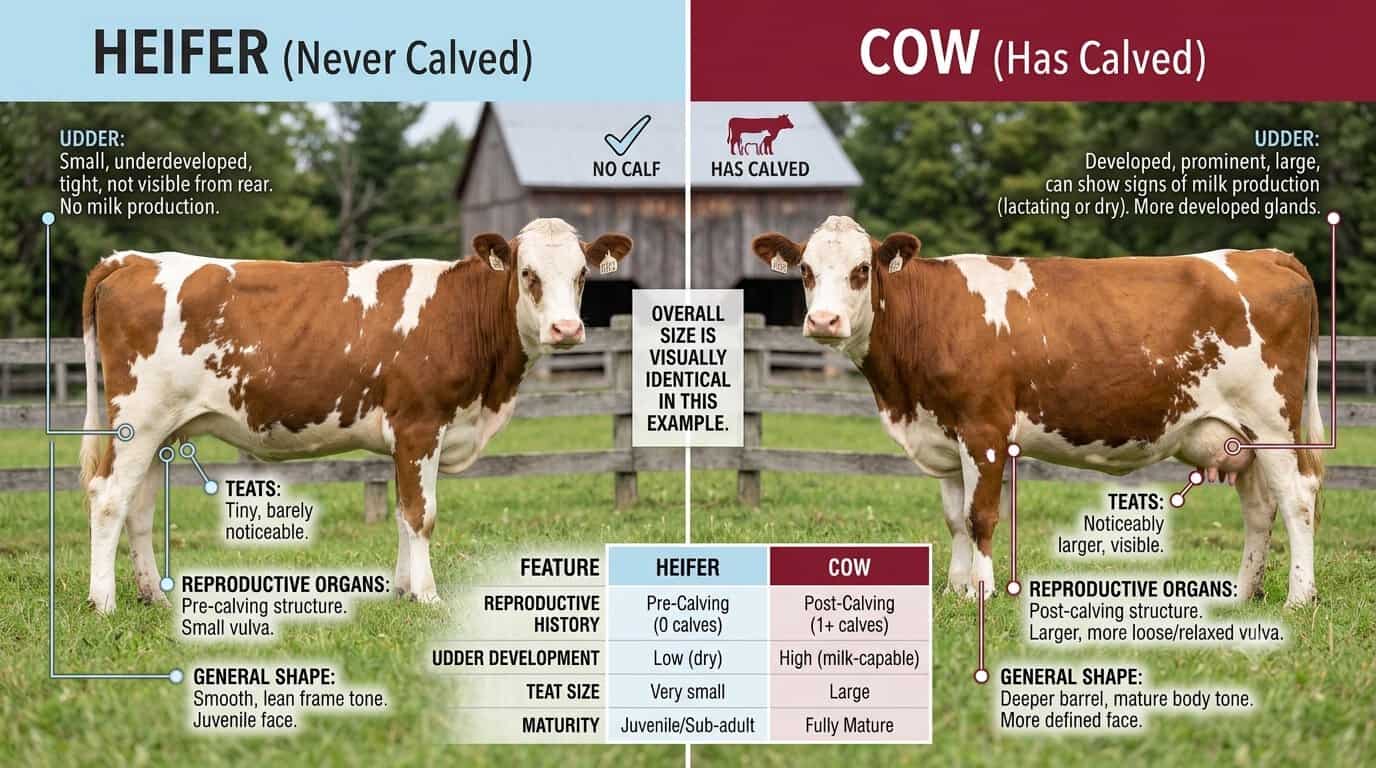
A heifer is “female cattle under 2 years of age, that have not calved.” A cow is “female cattle that have produced one or more calves.” The transition happens at her first calf, not on a birthday.
You will also meet compound terms that carry real information:
– A bred heifer is pregnant but has not calved yet. This is the most commonly sold class of female on a small operation and usually the best buy for a first-time owner, since you get a young animal with a calf on the way.
– An open heifer or open cow is not pregnant. “Open” simply means not bred, and it is the single most important word in a sale listing.
– A first-calf heifer has just had her first calf. She is technically a cow now, but the term persists because she still needs different management: she is still growing herself while feeding a calf, and she is the animal most likely to need help calving.
– A springer is a female close to calving, showing an obviously filling udder.
If you are buying a bred female, our guide to how long a cow is pregnant covers how to turn a stated breeding date into a calving window you can actually plan around.
Calves, Weanlings, and Yearlings
The age ladder, which governs almost all sale terminology.
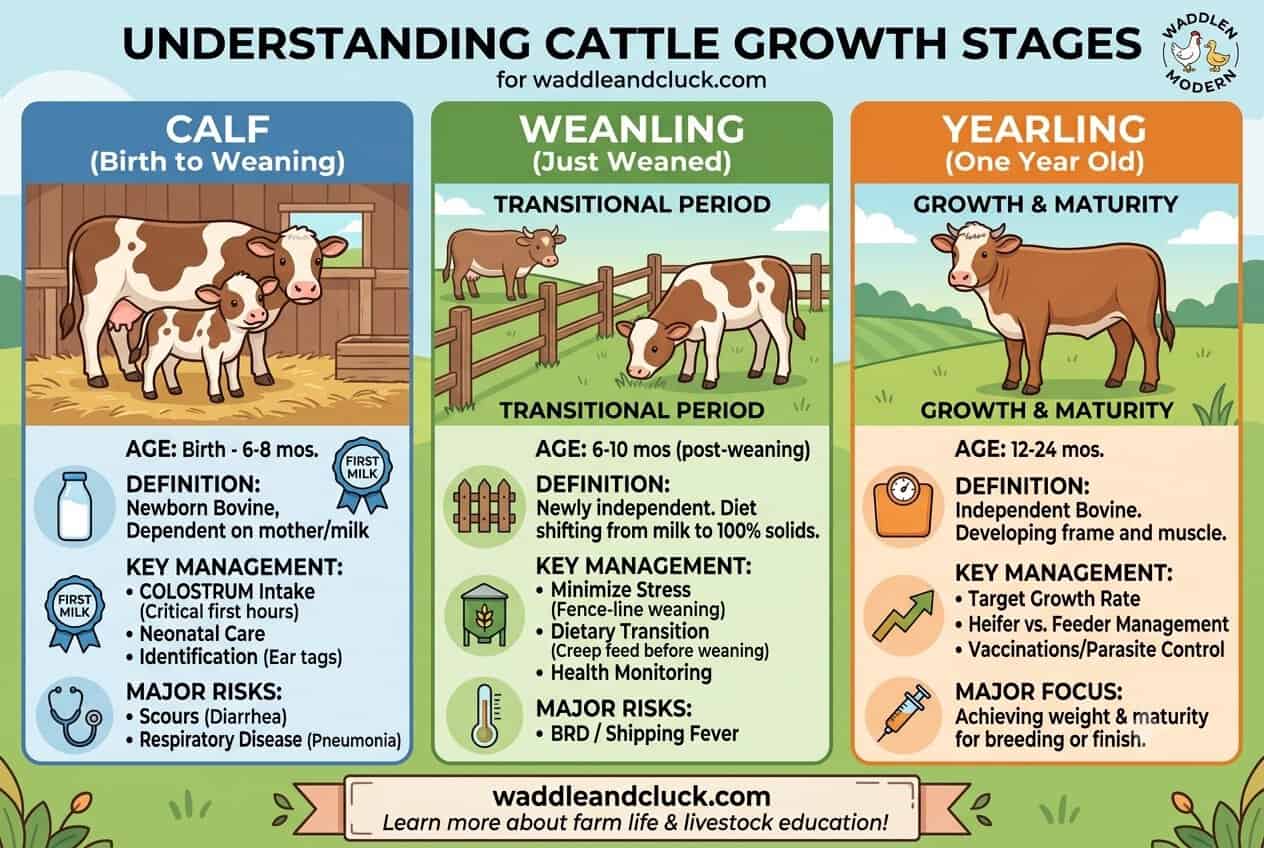
A calf is “young cattle of either sex, less than one year of age.” Sex-specific versions are common: a bull calf is an intact male calf, a heifer calf a female.
A weanling is “a young calf of either sex, usually 6 to 9 months of age, that had been separated or weaned from its mother.” This is roughly what the market calls a feeder calf, and it is the cheapest entry point into cattle ownership.
A yearling is a “heifer steer or bull between one and two years old.”
A bottle calf is not an age class but a management situation: a calf being raised on a bottle rather than nursing, whether because the dam died, rejected her, or cannot feed her. Our guide to raising a bottle calf covers what that commitment actually involves, and it is a substantial one.
Dairy Terms You Will Meet
If you are keeping a family milk cow, a second vocabulary applies.
A dry cow is “a non lactating female.” Every dairy cow spends roughly 60 days dry before her next calving so her udder can rest and rebuild, so “dry” is a normal stage rather than a problem.
Fresh, or freshening, describes a cow who has just calved and come into milk. A listing for a “recently freshened Jersey” means she has calved and is milking now, which is exactly what a buyer wanting immediate milk is looking for.
Lactation is the whole milking period from freshening to dry off, typically around ten months.
Colostrum is the first milk after calving, thick and antibody-rich, which belongs to the calf rather than to your kitchen.
Butterfat is the fat percentage in her milk, and it varies substantially by breed. Our Jersey cow guide covers where Jerseys sit and why that matters for butter and cheese.
Terms for Groups, Genetics, and Paperwork
A herd is the general term for a group of cattle. A cow-calf pair is a cow with her nursing calf, sold and counted as a single unit, and it is the unit most stocking rate calculations use.
Polled means naturally hornless through genetics rather than dehorned. Horned is self-explanatory, and dehorned or disbudded describes an animal whose horns were removed or prevented. Polled genetics are heritable, which is why breed registries flag them: a “P” suffix for an animal with one polled parent, “PP” for a homozygous polled animal that will always pass the trait on.
Purebred means both parents are the same registered breed. Registered means the animal is recorded with a breed association and has papers, which is a separate thing from being purebred: plenty of purebred animals were never registered. Grade describes an animal of largely one breed without papers, and a grade animal is often the sensible buy for a homesteader who wants milk or beef rather than a breeding program.
A freemartin is a heifer born twin to a bull calf. Roughly nine out of ten such heifers are infertile due to hormone exchange in the womb, so a freemartin is worth knowing about before you pay a breeding price for one. This term catches out more first-time buyers than any other on this list.
The Terms People Get Wrong
Calling every bovine a cow. In casual speech it is harmless. In a sale listing or a conversation with a vet it is genuinely ambiguous, since “I have three cows” tells nobody whether you have three lactating females, three steers, or a mixed group.
Assuming a heifer is just a young cow. She is not a cow at all until she calves, and the price difference between an open heifer, a bred heifer, and a proven cow reflects real differences in risk.
Missing “open” in a listing. An open cow being sold cheap is often being sold because she failed to breed. That may be fine if you know it, and expensive if you do not.
Confusing polled with dehorned. A dehorned animal will still throw horned calves. A polled animal may not.
Assuming steer means small. A mature steer is a large animal. Castration changes temperament and growth pattern, not whether he needs proper fencing, which our guide to cattle fencing covers in detail.
Once the vocabulary is second nature, sale listings become readable and the questions worth asking become obvious. If you are still deciding what to buy in the first place, our guide to choosing cow breeds for milk, meat, or both is the place to start.
Frequently Asked Questions
What is the difference between a bull and a steer?
Castration, not size or age. Cornell defines a bull as a male bovine with testicles intact, and a steer as a male castrated before reaching sexual maturity. A male castrated after secondary sex characteristics develop is a stag, which grades and sells differently from both.
What is the difference between a heifer and a cow?
A heifer is a female under two years old that has not calved. She becomes a cow when she produces her first calf, not when she reaches a certain age. A first-calf heifer is technically a cow but keeps the name because she still needs different management.
What does open mean when buying cattle?
Open means not pregnant. It is the single most important word in a sale listing, because an open cow being sold cheaply is often being sold precisely because she failed to breed.
What is a freemartin?
A heifer born twin to a bull calf. About nine out of ten are infertile because of hormone exchange in the womb, so it is worth identifying before you pay a breeding price for one. This catches out more first-time buyers than any other cattle term.
What is the difference between polled and dehorned?
Polled means naturally hornless through genetics, so the trait passes to offspring. Dehorned means the horns were physically removed, and that animal will still throw horned calves. Registries mark polled genetics with a P suffix for one polled parent and PP for homozygous polled.