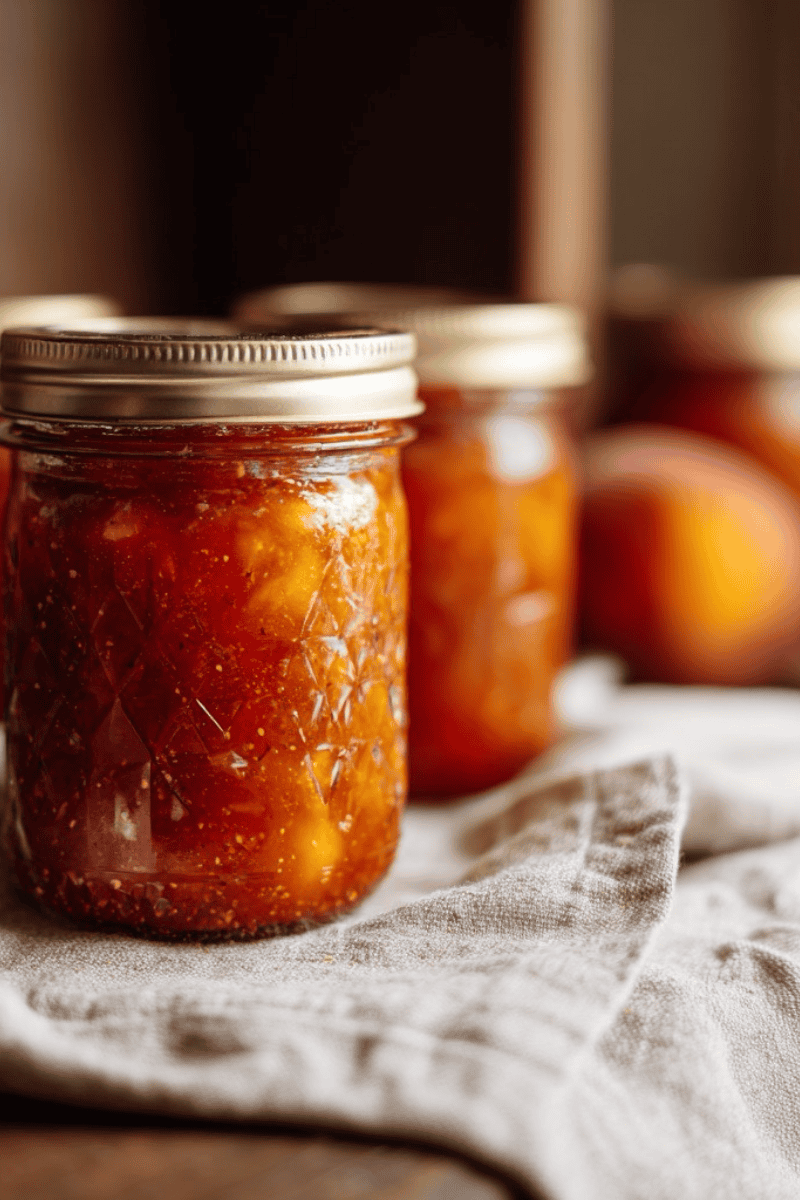

This canned tomato sauce recipe turns fresh tomatoes into a plain, shelf-stable base for later meals. Shelf-stable sauce needs more care than a pot headed for tonight’s dinner, so the measurements and processing directions matter.
This method follows the National Center for Home Food Preservation recipe for Standard Tomato Sauce. It is plain tomato sauce, without onions, garlic, peppers, oil, meat, or herbs. That gives us a flexible base to season after opening, and it keeps the canning recipe within the tested procedure.
You may process this sauce in a boiling-water canner or a pressure canner. The two methods have different processing directions. Whichever one you choose, you must acidify every jar. If you are new to preserving tomatoes, start with our broader guide to how to can tomatoes before choosing a method.
Before you begin
Find your elevation before heating the canner. Processing times and pressures change with elevation. If you are unsure, use the NCHFP guidance for finding your elevation for home canning.
Read the full method and the table for your canner before you start. Choose one processing option and follow it from beginning to end. Do not mix a time from one row with a pressure from another.
Expected yield
Tomato variety, moisture, and how far you reduce the sauce will affect the final yield. NCHFP gives these averages:
- Thin sauce: 35 pounds of tomatoes for 7 quarts, or 21 pounds for 9 pints. A 53-pound bushel yields about 10 to 12 quarts.
- Thick sauce: 46 pounds of tomatoes for 7 quarts, or 28 pounds for 9 pints. A 53-pound bushel yields about 7 to 9 quarts.
If you have fewer tomatoes, keep the preparation, acidification, headspace, jar sizes, and processing directions the same.
Key Takeaways
Ingredients
- Fresh tomatoes
- Bottled lemon juice from concentrate, citric acid, or vinegar labeled 5% acidity, in the exact amount listed below
- Canning salt, optional
- Sugar, optional, to balance the acid taste in the finished sauce
Use bottled lemon juice from concentrate rather than fresh lemon juice. The NCHFP tomato acidification directions specify bottled juice, citric acid, or 5% acidity vinegar in measured amounts.
Do not add onions, garlic, peppers, mushrooms, oil, meat, flour, cornstarch, or other thickeners before canning this recipe. Add those ingredients when you open the jar, or use a separate research-tested canning recipe that includes them.
Equipment
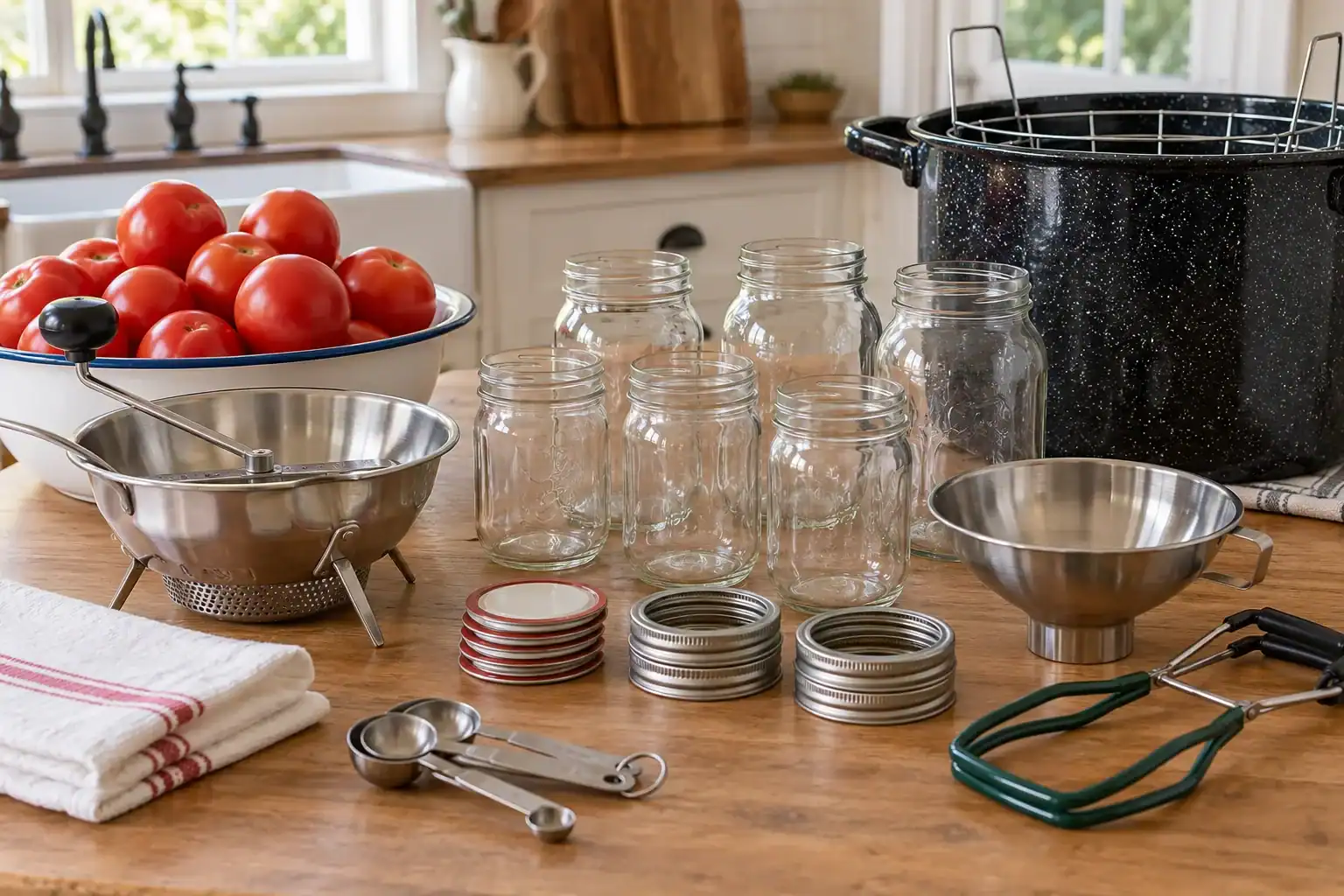
- Boiling-water canner or a true pressure canner with a rack
- Pint or quart canning jars
- New lids and compatible bands, prepared according to the lid manufacturer’s directions
- Jar lifter and canning funnel
- Large saucepan, preferably wide for quicker reduction
- Food mill or fine sieve
- Clean towels and measuring spoons
A small pressure cooker or pressure saucepan is not a pressure canner. Our guide to water bath canning for beginners explains the basic setup and workflow for the boiling-water method. If you use a dial-gauge pressure canner, have the gauge checked for accuracy before the canning season. Review the NCHFP instructions for using boiling-water and pressure canners before beginning.

Acidify every jar
Add one of the following acid options directly to each empty jar before filling it with hot sauce. Use the full amount for every jar, including jars that will go into a pressure canner.
| Acid option | Per pint jar | Per quart jar |
|---|---|---|
| Bottled lemon juice from concentrate | 1 tablespoon | 2 tablespoons |
| Citric acid | 1/4 teaspoon | 1/2 teaspoon |
| Vinegar labeled 5% acidity | 2 tablespoons | 4 tablespoons |
You may add sugar to balance the acidic taste, but do not reduce or omit the acid. Vinegar is allowed at the stated strength and amount, though NCHFP notes that it may change the flavor.
Make the tomato sauce
- Wash the tomatoes. Remove the stems and trim away bruised or discolored portions.
- Choose one of the two NCHFP preparation paths:
- For less juice separation, quickly quarter about 1 pound of tomatoes and put them in a saucepan. Heat them immediately to a boil while crushing. Keep the mixture boiling vigorously as you slowly add and crush the remaining freshly cut tomato quarters. After all the tomatoes are in the pan, simmer for 5 minutes.
- If separation is not a concern, slice or quarter all the tomatoes into a large saucepan. Crush them, heat to a boil, and simmer for 5 minutes.
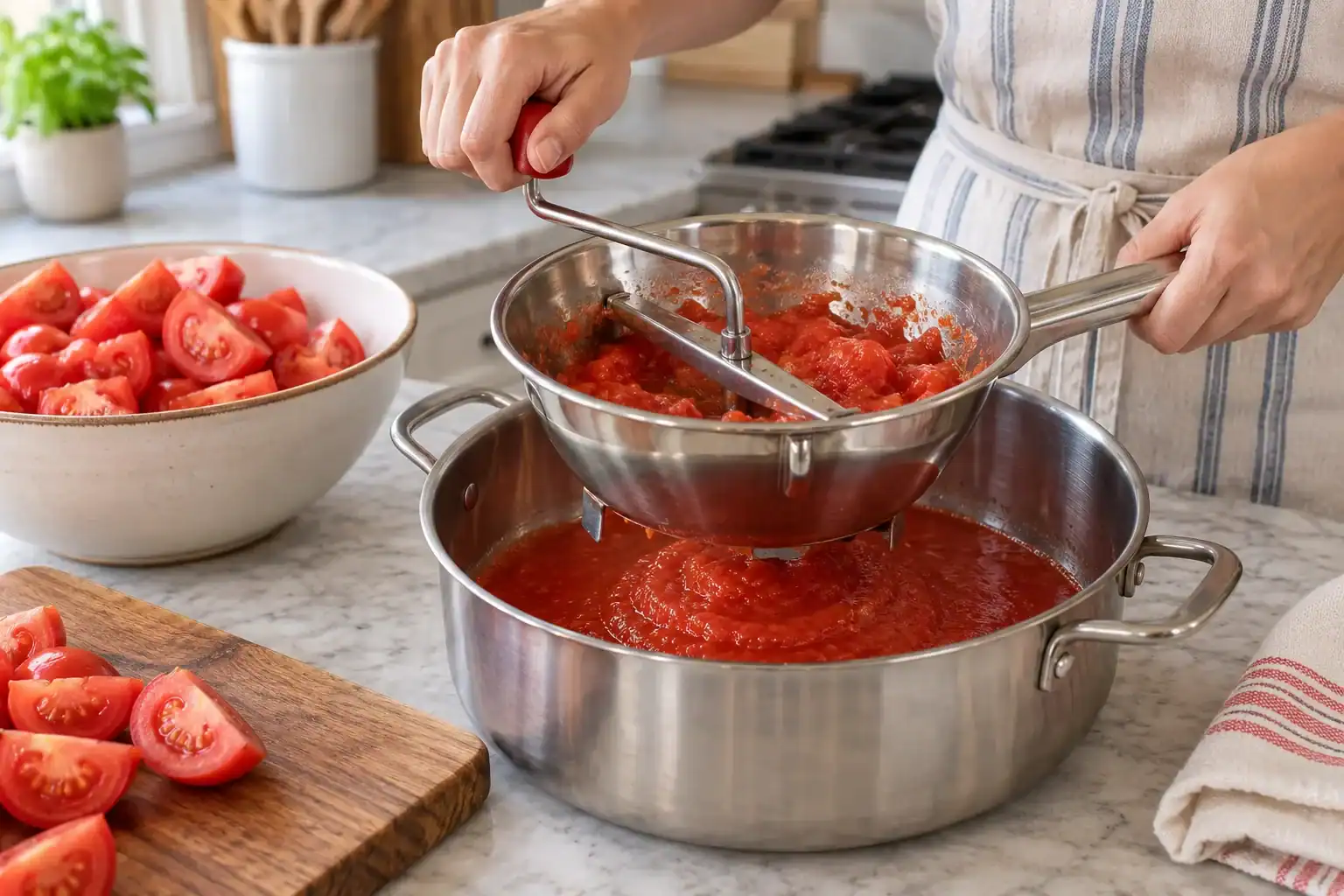
- Press the hot tomatoes through a food mill or sieve to remove the skins and seeds.
- Return the tomato pulp and juice to a large, wide saucepan. Simmer until it reaches the consistency you want. For thin sauce, reduce the volume by about one-third. For thick sauce, reduce it by one-half. Stir often enough to prevent scorching.
- While the sauce reduces, prepare the canner and jars for a hot pack according to the canner and jar manufacturers’ directions.
- Measure the required acid into each jar. If you want salt, NCHFP lists 1 teaspoon per quart. Salt is optional, so you may leave it out.
- Ladle hot sauce into the jars, leaving exactly 1/4 inch headspace.
- Remove air bubbles. Recheck the headspace and add hot sauce if needed. Wipe the jar rims, center the lids, and apply the bands as directed by the lid manufacturer.
- Process the filled jars by one of the methods below. Keep the jars upright when moving them.
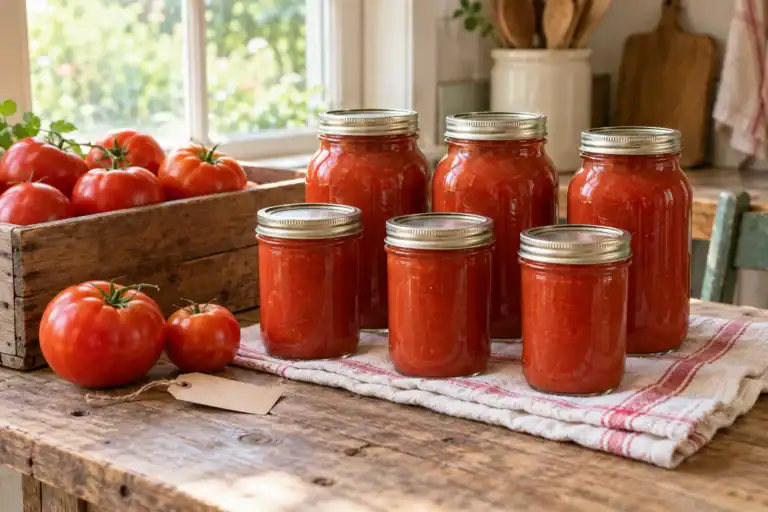
Standard Canned Tomato Sauce From Fresh Garden Tomatoes
A plain canned tomato sauce recipe based on the NCHFP Standard Tomato Sauce method, with mandatory jar acidification and tested boiling water or pressure canning options.
- Total Time: Varies
- Yield: About 7 quarts, depending on tomato quantity and reduction 1x
Ingredients
- Fresh tomatoes: 35 pounds for about 7 quarts of thin sauce, or 46 pounds for about 7 quarts of thick sauce
- For each pint jar, choose one: 1 tablespoon bottled lemon juice from concentrate, 1/4 teaspoon citric acid, or 2 tablespoons vinegar labeled 5% acidity
- For each quart jar, choose one: 2 tablespoons bottled lemon juice from concentrate, 1/2 teaspoon citric acid, or 4 tablespoons vinegar labeled 5% acidity
- Canning salt, optional
- Sugar, optional, to balance the acid taste after using the full required acid
Instructions
- Find your elevation and choose one complete NCHFP processing option before beginning.
- Wash tomatoes, remove stems, and trim bruised or discolored portions.
- Heat and crush the tomatoes following one of the two preparation paths in the full article, then simmer for 5 minutes.
- Press the hot tomatoes through a food mill or fine sieve to remove skins and seeds.
- Return the pulp and juice to a wide saucepan. Reduce by about one-third for thin sauce or one-half for thick sauce, stirring to prevent scorching.
- Prepare the selected canner and jars for a hot pack.
- Add the full required acid amount directly to each empty pint or quart jar.
- Ladle in hot sauce, leaving exactly 1/4 inch headspace. Remove bubbles, recheck headspace, wipe rims, and apply lids and bands.
- Process using one complete boiling water or pressure canner table in the full article. Do not mix time and pressure rows.
- Cool and check seals as directed. Remove bands before storing sealed jars in a clean, cool, dark, dry place.
Notes
Publication and safety note: This editorial adaptation follows the NCHFP Standard Tomato Sauce procedure. Confirm every amount, time, pressure, altitude adjustment, and step against the linked NCHFP source before use. Do not use the recipe card without the full processing tables in the article.
Acidification is mandatory for both boiling water and pressure canning. Do not add onions, garlic, peppers, herbs, oil, meat, flour, cornstarch, or other thickeners before canning this recipe.
- Prep Time: 45 minutes
- Cook Time: Varies by reduction, canner, and elevation

Option 1: Boiling-water canner
This is the water-bath option. The processing time begins only after the canner returns to a vigorous boil.
Because every listed process is longer than 30 minutes, keep at least 2 inches of boiling water above the jar tops throughout processing. Cover the canner and maintain a full boil. If the water stops boiling at any point, bring it back to a vigorous boil and restart the full processing time from the beginning.
Boiling-water processing times
| Jar size | 0 to 1,000 ft | 1,001 to 3,000 ft | 3,001 to 6,000 ft | Above 6,000 ft |
|---|---|---|---|---|
| Pints | 35 minutes | 40 minutes | 45 minutes | 50 minutes |
| Quarts | 40 minutes | 45 minutes | 50 minutes | 55 minutes |
When the processing time is complete, turn off the heat and remove the canner lid. Wait 5 minutes. Lift the jars out without tilting them and place them on a towel with at least 1 inch of space between jars.
Option 2: Pressure canner
Pressure canning is an alternative tested process for this acidified tomato sauce. It does not replace the acid. Add the full amount of bottled lemon juice, citric acid, or 5% acidity vinegar to every jar.
Use a pressure canner, not a boiling-water canner and not a small pressure cooker. Vent the canner with a steady flow of steam for 10 full minutes before pressurizing. Start the processing time only when a dial gauge reaches the listed pressure or the weighted gauge begins to jiggle or rock as its manufacturer describes.
Maintain the listed pressure for the entire processing time. If the pressure drops below the listed amount, return the canner to pressure and restart the full processing time from the beginning.
The NCHFP recipe provides more than one tested time and pressure combination. Choose one complete row that your canner can hold steadily. Do not shorten a processing time unless you are using the matching higher pressure from the same row.
Dial-gauge pressure canner options
Use the same jar size and processing option for the full canner load. These options apply to pints or quarts.
| Processing time | 0 to 2,000 ft | 2,001 to 4,000 ft | 4,001 to 6,000 ft | 6,001 to 8,000 ft |
|---|---|---|---|---|
| 20 minutes | 6 lb | 7 lb | 8 lb | 9 lb |
| 15 minutes | 11 lb | 12 lb | 13 lb | 14 lb |
Weighted-gauge pressure canner options
These options apply to pints or quarts.
| Processing time | 0 to 1,000 ft | Above 1,000 ft |
|---|---|---|
| 20 minutes | 5 lb | 10 lb |
| 15 minutes | 10 lb | 15 lb |
| 10 minutes | 15 lb | Not recommended |
After processing, turn off the heat and let the canner depressurize naturally. Do not force-cool it or open the vent early. Once it is fully depressurized, remove the weight or open the petcock. Wait 10 minutes, then unfasten the lid and open it away from your face. Lift the jars out upright and place them on a towel with at least 1 inch of space between jars.
Cool, check, and store
Leave the jars undisturbed at room temperature for 12 to 24 hours. Do not retighten the bands while the jars are hot.
After the jars have cooled, remove the bands and check the seals. The center of a properly sealed two-piece lid should curve slightly downward and should not spring up when pressed. Wash and dry sealed jars, label them with the contents and date, and store them without the bands in a clean, cool, dark, dry place. The same shelf-planning principles used in homestead pantry organization apply here: keep jars visible, rotate the oldest forward, and avoid overcrowding. The NCHFP has full instructions for cooling jars and testing jar seals and storing home-canned food.
If a jar does not seal, do not put it on the shelf. Follow current NCHFP directions for refrigerating, freezing, or reprocessing an unsealed jar.
How to use it
This sauce is deliberately plain. For a broader look at when to can, freeze, dry, or ferment a harvest, see our guide to food preservation methods for beginners. After opening a jar, turn it into pasta sauce with sautéed onion, garlic, herbs, and olive oil. Simmer it into soup, spoon it over braised vegetables, or use it anywhere you would reach for a can of tomato sauce.
Frequently Asked Questions About Canned Tomato Sauce
Do I still need lemon juice or citric acid if I use a pressure canner?
Yes. The NCHFP Standard Tomato Sauce procedure requires acidification for both the boiling-water and pressure-canning options. The pressure options were developed for acidified tomato sauce.
Can I use fresh lemon juice?
Not for this procedure. Use bottled lemon juice from concentrate in the measured amount, or choose the listed citric acid or 5% acidity vinegar option.
Can I add basil, garlic, onions, or peppers before canning?
Not to this Standard Tomato Sauce procedure. Those ingredients are not part of the tested formula. Season the sauce after opening, or follow a different current research-tested recipe that includes the ingredients you want.
Can I make the sauce as thick as tomato paste?
Follow the tested reduction for this recipe: reduce by about one-third for thin sauce or by one-half for thick sauce. If you want shelf-stable tomato paste, use a tested tomato paste procedure rather than reducing this sauce beyond its directions.
Can I use any size jar?
No. The tested process covers pints and quarts. Do not use a larger jar. If you want a smaller jar, check a current authoritative source for an approved process before proceeding rather than guessing at a time.
When does processing time start?
For a boiling-water canner, start timing when the water reaches a vigorous boil after the filled jars are loaded. For a pressure canner, start when the dial gauge reaches the selected pressure or the weighted gauge begins to jiggle or rock as the manufacturer describes.
What if the water stops boiling or the pressure drops?
For a boiling-water canner, return the water to a vigorous boil and restart the full time. For a pressure canner, return the canner to the selected pressure and restart the full time.
Why did the sauce separate in the jar?
NCHFP provides a preparation method that helps limit separation: heat and crush the first pound of quartered tomatoes immediately, then keep the mixture boiling as you slowly add the rest. Separation can still be a quality issue, but it does not change the required acidification or processing method.