
Key Takeaways
Direct Answer
Colony raising meat rabbits can work, but it is not automatically easier than individual cages. Colonies are best for keepers who have secure space, good observation habits, compatible rabbits, and flexible production goals. Individual cages are usually better for beginners, planned litters, accurate records, disease control, and predictable meat-rabbit timelines.
If you are raising rabbits mainly for a dependable freezer supply, individual cages or a hybrid setup are usually the most practical place to start. If your priority is giving rabbits more social and movement space, a carefully built colony can be worth testing, but it needs stronger fencing, better predator planning, and closer herd management than most people expect.
Why This Choice Matters
Housing is not just a preference. It affects breeding, kit survival, feed cost, chores, manure handling, predator risk, parasite control, and how quickly you notice a sick rabbit. A colony that looks charming in photos can become a mess if rabbits dig out, does fight, kits are hard to find, or one sick rabbit exposes the whole group. A cage setup can also fail if cages are cramped, poorly shaded, hard to clean, or built with rough floors and no resting area.
Before choosing a system, be honest about your goal. A family raising a few fryers each year has different needs than someone keeping several does on a steady breeding schedule. If you are still estimating costs, feed, equipment, and processing timelines, start with The Real Cost of Raising Meat Rabbits before building housing you may outgrow.
How Colony Raising Works
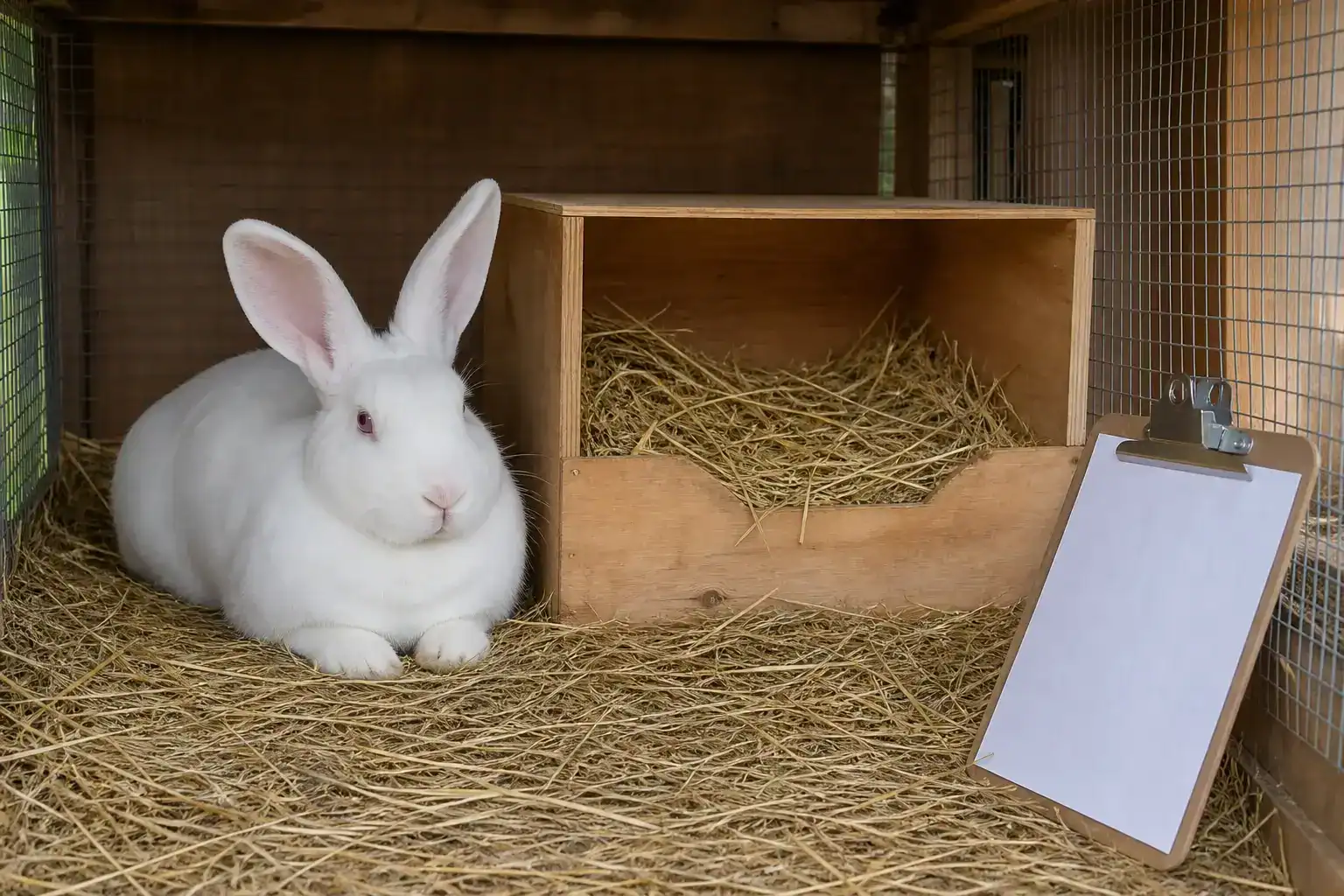
A meat rabbit colony is a shared space where multiple rabbits live together instead of each rabbit living in its own cage. The setup might be a fenced ground pen, a shed with deep bedding, a converted stall, or a large enclosed run with shelters and nest areas.
A functional colony needs:
- Secure perimeter fencing
- Dig-proof skirting or buried wire
- A covered top or strong predator barrier
- Dry shelter from rain and wind
- Deep shade in hot weather
- Multiple hiding places
- Multiple feed and water stations
- Removable nest boxes or protected nesting zones
- A plan for catching rabbits without panic
- A quarantine area outside the colony
The big appeal is space. Rabbits can hop, stretch, dig if allowed, interact, and choose resting areas. You may also spend less time opening and closing individual cages. The tradeoff is control. In a colony, it is harder to know exactly who bred, who ate how much, which doe kindled, which kits belong to which dam, and which rabbit started a fight.
How Individual Cages Work
Individual cages keep breeding rabbits separated, usually in wire cages, hutches, or modular rabbitry rows. Each doe has her own cage. Bucks are kept separately. Grow-outs may be kept individually, in pairs, or in small groups depending on age, sex, and space.
A good cage system is not just a row of boxes. It should include enough floor space, good ventilation, shade, easy manure handling, secure latches, chew-resistant materials, water that does not freeze or spill, and a solid resting mat or board to reduce foot strain. If you need practical dimensions and layout thinking, the Rabbit Hutch guide is the better next build-planning piece.
The main advantage is management. You know which doe is bred, when she is due, whether she is eating, whether her droppings look normal, and whether her litter is gaining. You can isolate a rabbit quickly without dismantling the system.
Colony vs. Cages: Quick Comparison
| Factor | Colony raising | Individual cages |
| Breeding control | Harder unless bucks are separated | Easier and more predictable |
| Records | More difficult | Straightforward |
| Predator protection | Must be extremely strong | Still important, but easier to inspect |
| Sanitation | More area to manage | Easier to clean cage by cage |
| Disease control | One issue can expose the group | Easier isolation |
| Rabbit movement | More natural movement | Less movement unless enriched |
| Kit tracking | Can be difficult | Easier by doe and litter |
| Feed tracking | Group intake can hide problems | Individual appetite is obvious |
| Startup cost | Can be low or high depending on fencing | More cage hardware upfront |
| Labor | Fewer doors, more observation | More repetitive chores, more control |
Breeding and Litter Management
Breeding control is where many colony systems start to wobble. If a buck runs full-time with does, you may get unplanned litters, back-to-back breeding, uncertain due dates, and does that lose condition. You may also have trouble knowing which buck sired which litter if more than one male is present.
For meat rabbits, planned breeding matters because it lets you manage doe recovery, nest boxes, feed, grow-out space, and processing dates. If you need predictable litters, review How to Breed Rabbits and decide whether your housing system makes those steps easier or harder.
In individual cages, the usual approach is simple: bring the doe to the buck, record the date, return her to her cage, and add a nest box before kindling. In a colony, you need a plan for controlled breeding. That may mean keeping the buck separate except for scheduled breeding, using breeding pens, or moving does before kindling. Without that control, you may save chore time but lose production clarity.
Fighting and Compatibility
Rabbits are social, but they are not automatically peaceful. Does can be territorial. Bucks can fight. Newly introduced adults can injure each other. A colony works best when rabbits are raised together, introduced carefully, watched closely, and given enough room to avoid each other.
Warning signs include chasing that does not settle, torn ears, bite wounds, rabbits hiding constantly, one rabbit blocking feed, or a doe guarding a nesting area aggressively. If you see blood or one rabbit being repeatedly targeted, separate them.
Individual cages avoid many compatibility problems, but they do not remove the need for enrichment and calm handling. A cage rabbit still needs hay, chew material, clean water, proper feed, good airflow, and protection from heat.
Predator and Escape Risk
A colony must be built like something is trying to get in and something else is trying to get out, because both are true. Rabbits dig. Predators dig, climb, squeeze, and reach through gaps. Chicken wire is not enough for serious predator pressure.
Colony protection should include hardware cloth or welded wire sized appropriately, buried wire apron or floor barrier, secure gates, tight corners, roof or overhead cover, and latches that cannot be bumped open. If the colony sits on soil, check the fence line often for tunnels.
Individual cages also need predator protection. A rabbit can be killed through weak wire, loose doors, or an unprotected hutch. The difference is that escape tunnels and hidden nests are usually less of a problem in cages.
Sanitation and Parasite Pressure
Sanitation looks different in each system. In cages, manure drops below the rabbit or into trays, and you can clean one cage at a time. In colonies, manure is spread through bedding, corners, tunnels, or outdoor soil. Rabbits may choose latrine areas, which helps, but you still need a cleaning plan.
Merck Veterinary Manual’s rabbit housing guidance notes that outdoor enclosures need predator protection, protection from tunneling, shade, ventilation, clean conditions, and attention to sore hocks and fly risk. It also emphasizes that sanitation is especially important in rabbit production. You can read its housing overview here: rabbit housing guidance.
In a colony, watch for damp bedding, ammonia smell, flies, muddy feed areas, and rabbits sitting in waste. In cages, watch for manure buildup under hutches, dirty trays, leaking waterers, rough wire, and mats that trap urine if not cleaned.
When a Colony Makes Sense
A colony may be a good fit when:
- You have secure enclosed space.
- You can build against digging and predators.
- You are comfortable observing herd behavior.
- You are not trying to track every litter with precision.
- You have room for quarantine and separation cages.
- You are willing to remove aggressive rabbits.
- Your climate allows dry bedding and reliable shade.
- You want rabbits to have more movement and social contact.
A colony is not a shortcut around management. It is a different kind of management.
When Individual Cages Make Sense
Individual cages may be the better choice when:
- You are new to meat rabbits.
- You need dependable freezer production.
- You keep pedigreed breeding stock.
- You want exact breeding records.
- You have limited space.
- Predator pressure is high.
- You need fast isolation when a rabbit looks off.
- You want clear feed and water monitoring.
- You plan to sell breeding stock or track lines.
Cages are not automatically cruel and colonies are not automatically humane. Good care depends on space, cleanliness, shade, airflow, feed, water, handling, and how quickly you respond when something goes wrong.
A Practical Hybrid Setup
For many homesteads, the strongest answer is a hybrid. Keep breeding does and bucks in individual cages for controlled breeding and health monitoring. Use larger grow-out pens for weaned rabbits that are close in age and size. Add supervised exercise pens if you want more movement without giving up records.
A hybrid can give you:
- Predictable breeding dates
- Cleaner records
- Easier nest box management
- More movement for grow-outs
- Backup separation space
- Better control during illness or fighting
- Flexibility as your herd changes
The key is to build separation into the system from the beginning. Even if you want a colony, keep spare cages ready. Sick rabbits, new rabbits, aggressive rabbits, pregnant does, and injured rabbits all need somewhere to go.
Decision Checklist
Choose colony raising meat rabbits if you can say yes to most of these:
- I can predator-proof the sides, top, and bottom.
- I have extra cages for quarantine and emergencies.
- I can inspect every rabbit regularly.
- I can tolerate less precise breeding records.
- I can manage manure and bedding in a larger area.
- I am willing to separate rabbits that fight.
Choose individual cages if you can say yes to these:
- I want planned litters and accurate due dates.
- I need to track feed, weight, and health closely.
- I have limited space.
- I want simple sanitation and isolation.
- I am still learning meat rabbit management.
- I need production to be predictable.
Frequently Asked Questions About Colony Raising and Rabbit Cages
Is colony raising meat rabbits easier than cages?
Not always. A colony may reduce some cage chores, but it adds work in predator-proofing, behavior monitoring, sanitation, breeding control, and catching rabbits when needed.
Can bucks and does live together in a colony?
They can, but it often leads to unplanned breeding and unclear due dates. Most meat rabbit keepers do better keeping bucks separate and breeding does intentionally.
Do meat rabbits grow better in cages or colonies?
Growth depends on genetics, feed, health, temperature, and stress. Cages make individual feed and health monitoring easier, while colonies provide more movement but can hide problems longer.
How do you stop rabbits from digging out of a colony?
Use buried wire, a hardware cloth apron, a secure floor barrier, or a raised colony system. Check fence edges often because rabbits can start tunnels quickly.
What is the best setup for beginners?
Most beginners are better off starting with individual cages or a hybrid system. It is easier to learn breeding, feeding, records, and health checks when each rabbit can be monitored separately.