
Getting the rabbit hutch right before your rabbits arrive shapes almost everything that follows. Cage size determines how comfortably animals can move, rest, and access food and water. Flooring determines sore hock risk. Ventilation determines respiratory health. Position determines heat stress exposure and predator vulnerability. A rabbit hutch that is poorly sized, poorly ventilated, or poorly positioned creates a cascade of management problems that proper design prevents entirely. The good news is that effective rabbit hutch design for a homestead meat operation is not complicated or expensive.
Once the basic structure is settled, choose rabbit hutch gear that makes feeding, watering, and kindling easier to manage.
What You’ll Learn
Rabbit Hutch Size Requirements
The minimum rabbit hutch size for adult meat rabbit breeds is determined by the animal’s body weight. A rabbit needs 0.75 square feet of floor space per pound of body weight as an absolute minimum, with 1 square foot per pound preferred for breeding animals. A 10-pound New Zealand White doe requires a minimum cage of 30 by 36 inches, which provides approximately 7.5 square feet of floor space. A cage of 36 by 48 inches, providing 12 square feet, is more comfortable and strongly preferred for does raising litters.
Bucks can be housed in slightly smaller hutches than does because they do not need the additional space for kindling and nursing. A cage of 24 by 36 inches is adequate for a buck of 8 to 10 pounds used only for breeding.
Fryers being grown out for meat require less space than breeding stock because their tenure in the cage is short and the focus is efficient growth rather than long-term welfare. Litters can be kept together in a grow-out pen until 8 to 12 weeks of age, with approximately 1 square foot per kit as they approach fryer weight.
Hutch height should allow rabbits to stand upright on their hind legs without their ears touching the roof. A minimum of 18 inches of interior height is appropriate for most meat rabbit breeds. Taller is better for rabbit comfort and easier for human access during daily management.

Wire Floors vs. Solid Floors
Wire-floored rabbit hutches are the standard for homestead meat rabbit operations and commercial rabbitries alike. A 14-gauge or heavier wire floor with 1/2 by 1 inch mesh allows droppings to fall through into a catch pan or onto the ground below, which is the primary sanitation advantage of wire flooring. Droppings removed from the living space continuously reduce ammonia buildup, decrease fly pressure, and dramatically lower the disease transmission that occurs when rabbits live in contact with their own waste.
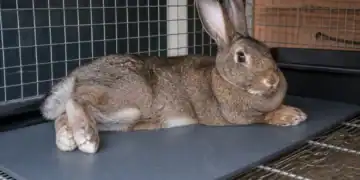
The tradeoff for wire flooring is sore hocks, technically called ulcerative pododermatitis, a condition where the skin on the bottom of the rear feet breaks down under the pressure of wire contact. Sore hocks range from mild redness to open, infected wounds that significantly impair rabbit welfare and production. Preventing sore hocks in a wire-floor rabbit hutch requires providing a solid resting area.
Floor design matters, particularly when preventing sore hocks in rabbits housed on wire.
A resting mat of untreated pine board, ceramic tile, woven grass mat, or commercially available plastic resting board at least 12 by 12 inches in size gives rabbits a surface to rest on that relieves pressure from the wire. Position the resting mat in the corner of the cage the rabbit prefers, which is usually beneath the water source or in the corner opposite the feeder. Replace wood mats when they become soiled and warped.
Solid-floor hutches with bedding are used in some operations and allow more natural behavior including burrowing and digging. They require significantly more frequent cleaning than wire-floor cages to maintain hygiene. Deep litter systems using straw or pine shavings can work in outdoor hutch setups with sufficient space, but require rigorous management to prevent ammonia accumulation and parasite pressure.
Housing does not have to mean separate cages for every animal, but colony raising and individual cages create very different management problems.
Spacious & Well‑Ventilated Small Pet Enclosure: Measuring 62"L x 22.6"W x 33.5"H with 10.93 square feet living space, this large rabbit hutch accommodates rabbits, guinea pigs, chinchillas and ferrets. Durable wire mesh ensures safety and steady airflow, creating a cozy ventilated habitat for small pets all year round

Outdoor Rabbit Hutch Positioning and Weather Management
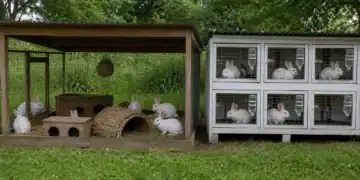
An outdoor rabbit hutch positioned correctly provides natural ventilation, shade, and protection without the expense of a climate-controlled building. Position the hutch under a roof overhang, a shade structure, or deciduous trees that provide shade during summer afternoons. In the northern hemisphere, the south-facing side of an outbuilding provides excellent winter sun exposure with natural wind protection from the prevailing north and northwest winds.
The most dangerous weather condition for outdoor rabbits is summer heat. Rabbits begin experiencing heat stress above 85 degrees F and can die of heat exhaustion above 90 degrees F, particularly in humid conditions where evaporative cooling is less effective. Signs of heat stress include rapid breathing, stretched-out body posture, and lethargy. Preventive measures include shade, frozen water bottles placed in the cage for rabbits to lie against, and wet burlap hung on the south-facing side of hutches to create evaporative cooling.
Cold winter temperatures are less dangerous to healthy adult rabbits than heat. Adult meat rabbits are comfortable in temperatures well below freezing when provided with dry bedding, protection from wind and moisture, and adequate food and water. The primary winter management challenges are frozen water sources and does kindling in cold temperatures. Heated water bottles or twice-daily water changes address frozen water. A warm nest box with deep straw prevents kit losses from cold during winter kindling.
Predator Proofing a Rabbit Hutch
Predator-proofing is the most critical safety feature of any outdoor rabbit hutch. Rabbits have no shortage of predators including dogs, foxes, coyotes, raccoons, weasels, mink, hawks, owls, and snakes. Each has different physical capabilities and entry methods. A rabbit hutch that stops a dog will not necessarily stop a weasel. A hutch that stops a weasel may not stop a determined raccoon.
The floor of an outdoor rabbit hutch is as important to predator-proof as the sides and roof. Predators dig under hutches, reach through the bottom of elevated cages to grab feet and legs, and push under doors and latches. Use 14-gauge or heavier welded wire on all surfaces. Do not use chicken wire, which is too flexible to resist determined predators and has openings large enough for weasels and juvenile rats to enter.
Latches on hutch doors must be secured with a carabiner clip or a barrel bolt with a locking mechanism. Raccoons have enough dexterity to open simple hook-and-eye latches and slide bolts. Any latch a human can open with one hand in the dark can be opened by a determined raccoon given time.
Elevate outdoor rabbit hutches at least 18 to 24 inches off the ground. Elevation reduces moisture contact, improves air circulation under the hutch, and creates a clear visual zone around the structure that reduces snake and rodent access. Aprons of hardware cloth extending outward from the base of hutch legs further deter digging predators.
Indoor Rabbit Hutch Setups
An indoor rabbitry in a shed, garage, or barn provides more consistent temperature management, better predator security, and more comfortable working conditions than outdoor hutches. The primary management challenge of an indoor rabbit hutch setup is ventilation. Rabbit manure produces significant ammonia, which causes respiratory illness in rabbits and is unpleasant for the keeper. Adequate ventilation that moves air through the building without creating direct drafts on cages is the central design requirement.
Suspended wire cages in a barn allow manure to drop below the cage onto composting bedding or into collection trenches. Stack hutch designs with sliding manure trays under each tier are practical for smaller indoor operations. Whichever indoor rabbit hutch configuration you use, plan manure management before setup. A 10-doe operation produces a significant volume of manure and urine daily that must be managed consistently to maintain healthy air quality.
According to the American Rabbit Breeders Association, proper cage size, adequate ventilation, and solid resting surfaces are the three most important design elements for a productive and humane meat rabbit housing system.
For more on what to feed the rabbits in your hutch, see our guide to what rabbits eat.
Frequently Asked Questions About Rabbit Hutches
How big should a rabbit hutch be for a meat rabbit?
An adult meat rabbit needs a minimum of 0.75 square feet of floor space per pound of body weight. A 10-pound New Zealand White doe needs at least 30 by 36 inches of cage space, with 36 by 48 inches preferred when she has a litter. Bucks can be housed in slightly smaller hutches of 24 by 36 inches.
What is the best flooring for a rabbit hutch?
Wire flooring with 1/2 by 1 inch mesh in 14-gauge or heavier wire is the most practical choice for meat rabbit hutches. It keeps rabbits away from their droppings, simplifies cleaning, and reduces disease pressure. Provide a solid resting mat of at least 12 by 12 inches to prevent sore hocks on the wire surface.
How do you predator proof a rabbit hutch?
Use 14-gauge or heavier welded wire on all surfaces including the floor. Secure doors with carabiner clips or locking barrel bolts that raccoons cannot manipulate. Elevate the hutch 18 to 24 inches off the ground. Extend hardware cloth aprons outward from the base to deter digging. Never use chicken wire, which is too flexible and has gaps large enough for weasels and rats.
Can rabbits live outside in winter?
Yes. Healthy adult rabbits tolerate cold temperatures well below freezing when provided with dry bedding, wind protection, and adequate food and water. The main winter management challenges are preventing water from freezing and protecting newborn kits during winter kindling. Provide a warm, deeply bedded nest box for does due to kindle in cold weather.
How do you prevent sore hocks in a wire-floor rabbit hutch?
Provide a solid resting mat of at least 12 by 12 inches in every wire-floor cage. Pine board, ceramic tile, woven grass mats, and commercial plastic resting boards all work. Position the mat where the rabbit naturally rests, replace it when it becomes soiled, and keep cage wire clean and free of sharp edges or protruding wire ends that increase foot pressure and abrasion.