Learning how to breed rabbits for consistent meat production is the skill that separates a homestead that always has fresh pork from one that is always running out. The rabbit breeding cycle is fast, the management requirements are straightforward, and a well-run operation of four to six does can supply a family with rabbit meat year-round at a fraction of the cost of purchasing it. Getting the timing, records, and doe management right from the beginning makes the whole cycle run predictably rather than reactively.
Key Takeaways
Understanding the Rabbit Breeding Cycle
Rabbits are induced ovulators, meaning does do not have a fixed reproductive cycle the way most mammals do. Instead, ovulation is triggered by the act of mating. A doe can theoretically be bred at almost any time, but receptivity and conception rates are highest when the doe is in optimal condition and the environmental signals of season and light are favorable.
The most reliable indicator of receptivity in a doe is vulva color. A receptive doe has a reddish or deep purple vulva. A doe with a pale pink or white vulva is not in receptive condition and will typically resist mating or fail to conceive even if mating occurs. Checking vulva color before introducing a doe to the buck saves time and prevents unsuccessful breeding attempts.
Does reach sexual maturity at different ages depending on breed size. Medium breeds like New Zealand Whites and Californians reach breeding age at 5 to 6 months. Small breeds mature earlier, at 3 to 4 months. Allow does to reach full physical maturity before breeding for the first time. Breeding too young reduces litter size, increases kindling complications, and shortens the doe’s productive lifespan.
Bucks reach sexual maturity at 5 to 7 months depending on breed. A proven buck that has successfully sired litters is more reliable than an untested one. When introducing a young buck to breeding, allow him two or three successful matings before relying on him as the sole sire for your operation.
How to Breed Rabbits: The Mating Process
Always bring the doe to the buck’s cage for mating. A buck introduced into a doe’s territory is frequently attacked, often severely, as does are territorial animals that respond aggressively to cage intrusions. A doe placed in the buck’s cage is in unfamiliar territory and is more likely to accept the buck’s advances.
Place the doe in the buck’s cage and observe the mating. A receptive doe will raise her hindquarters and allow the buck to mount without resistance. Successful mating is confirmed by the buck falling to one side or off the doe after ejaculation, often accompanied by a grunt or squeal. This is called a fall-off and is the reliable visual confirmation of successful mating.
Allow two successful matings within the same session for improved conception rates. After two confirmed fall-offs, return the doe to her own cage. Note the date and time of breeding in your records.
If the doe resists aggressively, running from the buck, growling, or turning to bite, remove her immediately and return her in a few days. Forced mating in unreceptive does rarely results in conception and can injure the buck.
Re-breed the doe 8 to 12 hours after the first successful mating for double-mating, which improves conception rates by increasing the probability of fertilization. This is optional but practiced by many productive homestead rabbitries.

Rabbit Breeding Records
Keeping records is essential for how to breed rabbits effectively at a production scale. Without records, kindle dates are unknown, litter performance cannot be assessed, and individual doe productivity cannot be evaluated. A simple breeding record for each doe includes:
- Breeding date
- Buck used
- Expected kindle date (breeding date plus 31 days)
- Nest box addition date (breeding date plus 28 days)
- Actual kindle date
- Litter size at birth
- Litter size at weaning
- Weaning date
- Any notes on doe behavior, kit losses, or health observations
This record, maintained on an index card or simple spreadsheet, gives you the information to cull poor performers, identify productive does worth retaining for replacement breeding, and plan production schedules to ensure consistent fryer availability throughout the year.
Ear tattoos applied to all breeding animals allow clear identification that does not depend on physical markers that can be confused or lost. The American Rabbit Breeders Association uses a tattoo system that places a herd identifier in the left ear and an individual animal number in the right ear.
Managing Breeding Frequency
A sustainable homestead operation breeds does 4 to 5 times per year. This produces 4 to 5 litters annually per doe, providing a reasonable supply of fryers without depleting the doe’s body condition. Does bred more than 5 times annually show declining litter sizes, increasing kit mortality, and shortened productive lifespans that do not justify the additional output.
Two common breeding schedules for homestead meat rabbit operations:
The 35-day production cycle re-breeds does approximately 14 days after kindling, when most does have returned to receptive condition while still nursing their current litter. This produces a new litter every 5 weeks and generates 10 litters per doe per year when fully implemented. The 35-day cycle is demanding on doe body condition and requires excellent nutrition management to maintain performance.
The 70-day production cycle weans the current litter at 6 to 8 weeks, rests the doe for 2 to 4 weeks, then re-breeds. This produces 4 to 5 litters per year and is more sustainable for does over a long productive career. For most homestead operations focused on quality over maximum output, the 70-day cycle is the better starting point.

What to Do When a Doe Does Not Breed
A doe that repeatedly fails to conceive despite mating, or that consistently produces small litters, should be evaluated before continuing to invest feed and housing resources. Common causes of breeding failure include:
- Poor body condition: a doe that is too thin lacks the reserves to support conception and pregnancy; a doe that is too fat has impaired hormonal function
- Inadequate lighting: does need 14 to 16 hours of light per day for consistent reproductive cycling, particularly in winter months with short days
- Heat stress: ambient temperatures above 85 degrees F reduce both doe receptivity and buck fertility
- Age: does are most productive between 5 months and 3 years of age; older does show declining conception rates and litter sizes
A doe that fails to conceive after two or three successive attempts under good conditions is typically culled from the breeding program in well-managed meat rabbit operations. Retaining non-productive does as breeding stock consumes resources without contributing production.
According to the University of Florida IFAS Extension, does produce their largest litters in their second and third litters, with production peaking between 12 and 24 months of age and declining gradually through their fourth and fifth years.
A well-managed rabbit breeding program running four to six does on a 70-day cycle can produce 150 to 250 fryers per year from a very modest physical footprint. The combination of fast reproduction, efficient feed conversion, and minimal infrastructure investment makes learning how to breed rabbits one of the most productive skills in the homestead food production toolkit.
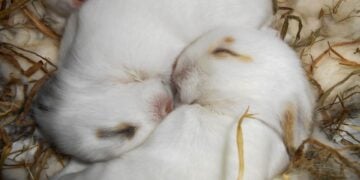
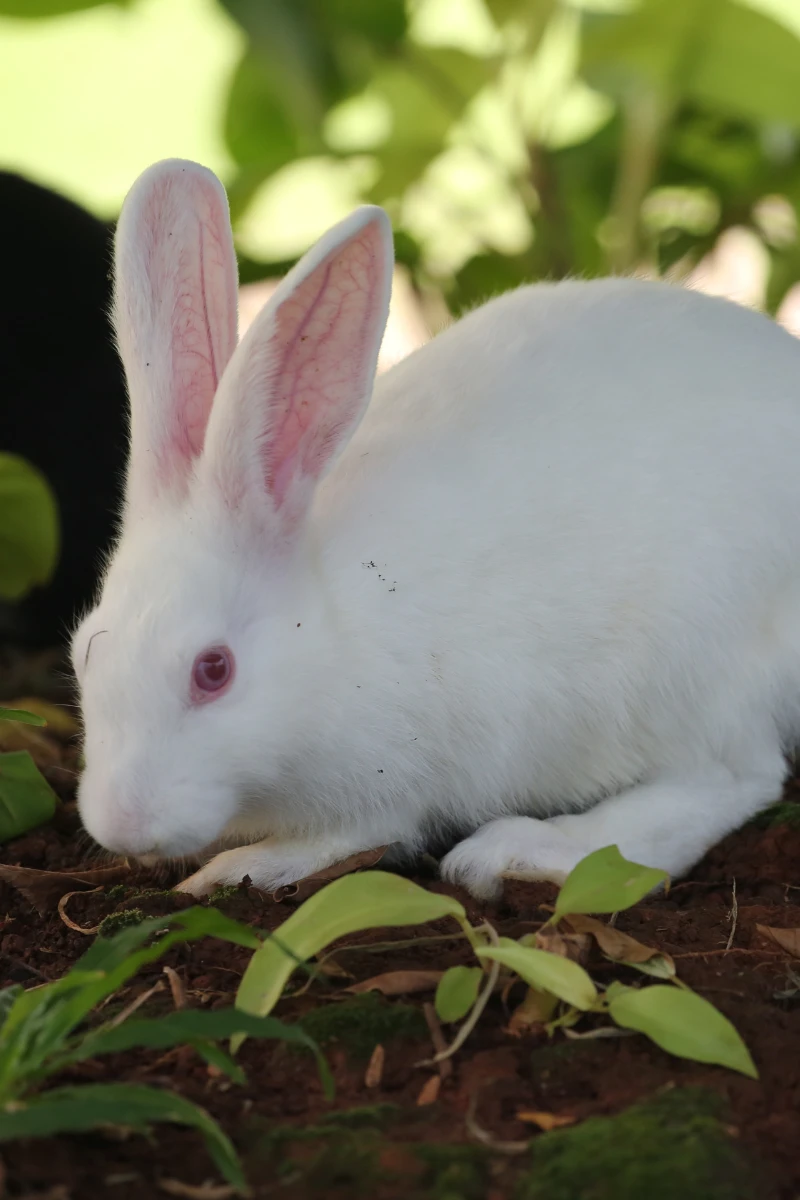
For more on caring for the litters your breeding program produces, see our guide to baby rabbits. They are not the same animal. Here is what separates rabbits and hares.
Frequently Asked Questions About How to Breed Rabbits
How do you know when a rabbit doe is ready to breed?
Check vulva color. A receptive doe has a reddish or deep purple vulva. A pale pink or white vulva indicates the doe is not in receptive condition. Does in receptive condition will also raise their hindquarters when stroked along the back, a behavior called lordosis, which is another reliable receptivity indicator.
How long is a rabbit pregnant?
Rabbit gestation is 28 to 32 days, with most does kindling on day 31. Add the nest box to the doe’s cage on day 28 of gestation to ensure it is in place for early kindlers. Record the breeding date for every doe so you can anticipate kindle dates and prepare accordingly.
How many times can you breed a rabbit doe per year?
A sustainable homestead operation breeds does 4 to 5 times per year. More frequent breeding reduces doe body condition, decreases litter size over time, and shortens the productive lifespan. Does bred on a 70-day cycle, which includes a rest period between weaning and re-breeding, maintain better long-term production than does on maximum breeding schedules.
At what age should you start breeding rabbits?
Medium breeds like New Zealand Whites and Californians are ready to breed at 5 to 6 months of age. Breeding before physical maturity reduces litter size and increases kindling complications. Bucks are reliable breeders from 6 to 7 months. Allow both does and bucks to reach full physical maturity before entering them into the breeding program
Do you need more than one buck for a rabbit breeding operation?
For a small homestead operation of 4 to 6 does, one proven buck is sufficient. A single healthy buck can service 10 to 12 does with two to three matings per week without performance decline. Having a backup buck is advisable in case of illness, injury, or death, but one primary buck is adequate for most homestead-scale operations.