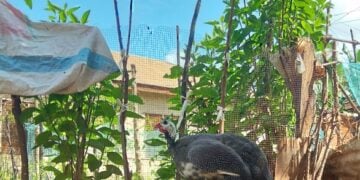

Guinea fowl predators are a real risk, even for birds that seem tough, fast, and loud. Guineas can alarm at danger, run well, and fly better than chickens, but they are not predator-proof. A flock that roosts outside, ranges without cover, or sleeps behind weak wire is vulnerable to losses from the ground and the air.
The best way to protect guinea fowl is to use layers: a secure night shelter, a covered training run, predator-resistant wire, good latches, controlled ranging, clean feed storage, and a routine that gets birds locked up before dark. You do not have to keep guineas in a tiny pen forever, but you do need to understand where the danger comes from and close the gaps before a predator finds them for you.
Key Takeaways
Common Guinea Fowl Predators
| Predator | When risk is highest | Signs to watch for | Best protection |
| Dogs and coyotes | Day, dusk, night | Missing birds, scattered feathers, panic in flock | Secure fencing, electric netting, night lockup |
| Foxes | Dusk, dawn, night | Missing birds, feathers near fence lines | Tight coop, buried wire, covered run |
| Raccoons | Night | Birds injured through wire, missing heads, opened latches | Hardware cloth, two-step latches, lock coop |
| Weasels and mink | Night | Multiple dead birds, small entry gaps | Small mesh, sealed openings, tight doors |
| Snakes | Warm seasons, eggs/keets | Missing eggs or keets, shed skins | Small mesh, clean feed area, sealed gaps |
| Hawks | Day | Sudden attack, missing or injured bird | Covered run, range cover, shrubs, overhead netting |
| Owls | Dusk/night | Losses near roost time or outside roosts | Lock birds before dark, covered pens |
Guineas Are Alert, Not Invincible
Guineas have a reputation as alarm birds, and they deserve some of it. A flock of guineas will often call when a strange vehicle, animal, person, or shadow crosses their attention. That sound can alert the rest of the barnyard. It can also give a homesteader a little warning that something is off.
But warning is not the same as defense. A guinea can shout at a threat and still be taken by it. Young birds, broody hens on hidden nests, injured birds, and birds that choose outdoor roosts are especially vulnerable. Even healthy adult guineas can be caught by dogs, coyotes, foxes, owls, and hawks when conditions favor the predator.
The Extension predator management guide for small and backyard poultry lists common poultry predators and emphasizes prevention through exclusion, housing, fencing, and habitat management. It also notes that most poultry can be trained to go indoors at night by feeding or watering inside at dusk. That point is especially important for guineas. You can review the full Extension guide here: predator management for small and backyard poultry flocks.
The Night Shelter Is Your First Defense

If your guineas sleep outside, every other protection decision becomes weaker. Tree roosting may look natural, and guineas may prefer it if they were not trained well, but outdoor roosting exposes them to owls, climbing predators, bad weather, and nighttime panic.
A good guinea shelter should be dry, ventilated, and secure enough to close every evening. Use hardware cloth over windows and vents. Check around the roofline. Look at the corners. Inspect the bottom edge. If you can slide fingers through a gap, a predator may be able to work at it. If the door latch can be bumped open, upgrade it.
Roost placement matters too. Do not put roost bars directly against wire walls where a predator can reach through. Move roosts toward the center of the shelter when possible. Guineas like high roosts, but those roosts should still be inside the protected structure.
If you are using a chicken coop as your guinea shelter, think through space and ventilation with the same seriousness you would for chickens. The planning questions in How Big of a Chicken Coop Do I Need? can help you judge whether an existing building is realistic for the number of birds you want to keep.
Covered Runs Protect During Training and Bad Weather
A covered run is not just for people who want confined birds. It is one of the best tools for training guineas to recognize home base. New adults and growing keets need a period where they can see the property, hear the routine, and return to the same feeder without being given full freedom too soon.
The top matters. Guineas fly well, and an open-top pen is not reliable containment for adult birds. A covered run also helps against hawks and owls. Use welded wire, poultry-safe netting, or a strong overhead system that does not sag into the birds’ space. Loose netting can become a hazard if birds get tangled or if snow and debris weigh it down.
The lower edge matters just as much. Predators dig at fence lines. A buried vertical section or an outward apron of hardware cloth can stop many digging attempts. Ordinary chicken wire may keep birds in, but it is not enough for serious predator exclusion in vulnerable areas.
For ideas you can adapt to a guinea setup, use Chicken Run Ideas: 15 Practical Setups for Every Backyard as a starting point, then add a top and stronger lower protection for the way guineas move.
Electric Netting for Daytime Range Protection
Portable electric poultry netting can be useful for guinea fowl, especially when you want them to work a particular area without giving them the whole property. It can slow down dogs, foxes, coyotes, and other ground predators when it is properly energized and maintained.
The key phrase is properly energized. A fence with a weak charger, poor grounding, weed pressure, or no tester is not reliable protection. Walk the fence before you trust it. Make sure the bottom strand is not buried in grass. Use a voltage tester instead of guessing. Keep gates and corners tight.
Electric netting does not solve aerial predator risk. Hawks and owls can still come from above. It also does not guarantee adult guineas will stay inside if they are motivated to fly out. Treat it as a useful layer, not a single solution.
If your flock ranges with chickens or other poultry, mixed flock behavior can change the risk. Shared feeders, crowding, and male aggression may push birds toward fence lines or outdoor roosts. Review Can Guinea Fowl Live With Chickens? What Works and What Doesn’t before assuming one setup will fit every bird.
Aerial Predators: Hawks and Owls
Guineas are quick, but hawks and owls hunt for a living. Open pasture, short grass, and isolated perches can make attacks easier. Your best protection depends on whether birds are confined or ranging.
In a run, use overhead coverage. In a ranging system, give birds places to break line of sight: shrubs, orchard rows, low shelters, brushy cover, or moveable shade structures. Do not count on decoys for long-term protection. Predators often learn what is real and what is not.
Time of day matters. Hawks are a daytime concern. Owls are most concerning around dusk, night, and early morning. Guineas that resist bedtime are at higher risk. Close birds in before full dark, not after you hear trouble.
Also remember that many raptors are legally protected. Do not trap, shoot, or harm hawks or owls. Focus on exclusion, cover, routine, and local wildlife guidance.
Ground Predators: Dogs, Coyotes, Foxes, and Bobcats
Ground predators are often the reason homesteaders upgrade from casual fencing to serious perimeter control. Dogs may be the biggest risk in some areas because they can attack during daylight and may kill more birds than they eat. Coyotes and foxes are skilled at testing weak spots. Bobcats can climb and jump.
For free-ranging guineas, there is always some risk. You can reduce it by locking birds up at night, using electric netting for specific areas, limiting range time during heavy predator activity, and keeping the flock near cover. Guardian animals may help in the right setup, but they require training, fencing, and management of their own.
Do not rely on the guineas’ speed. A panicked bird may fly the wrong direction, hit a fence, separate from the flock, or hide instead of returning to shelter.
Small Predators: Raccoons, Weasels, Snakes, and Rats
Small predators find small openings. This is where many coops fail. Raccoons can manipulate simple latches and reach through wire. Weasels and mink can squeeze through gaps that look too small to matter. Snakes and rats are drawn by eggs, feed, and small birds.
Use hardware cloth on vents and windows. Choose small mesh for lower run areas. Seal holes around doors, floors, and roof edges. Store feed in rodent-resistant containers, clean spilled grain, and collect eggs regularly. If you brood keets in an outbuilding, inspect it like a predator would: low gaps, corners, drains, loose siding, and door thresholds.
A clean setup is not just about looking tidy. Feed waste and hiding cover bring predators closer. Keep grass and weeds short around the coop perimeter. Move scrap piles, broken boards, and unused equipment away from poultry housing.
Broody Guinea Hens and Hidden Nests
Broody guinea hens are especially vulnerable because they often choose hidden nests outside the coop. A hen tucked into weeds may be hard for you to find and easy for a predator to discover. Even if she survives incubation, keets hatching in a hidden outdoor nest face weather, snakes, cats, and ground predators.
During laying season, watch where hens disappear. If you want eggs, keep hens confined until later in the morning so they are more likely to lay inside. If a hen goes missing and you suspect a nest, look carefully before mowing, moving equipment, or letting dogs through tall cover.
For hatching, a controlled setup is usually safer than trusting a hidden nest. That may mean collecting eggs for an incubator, using a secure broody area, or moving keets as soon as they hatch if the situation allows and you know what you are doing.
Daily Predator-Prevention Routine
Predator protection works best as a habit, not a one-time build. Walk the run after storms. Check latches. Look for digging at the fence line. Notice feathers where they should not be. Listen when the flock alarms, but do not assume every call means danger or every quiet moment means safety.
Close the coop before dark. Refresh water in daylight so you are not fumbling with doors after dusk. Pick up feed spills. Store scratch and ration in secure containers. If you use electric netting, test it regularly and move it before weeds make it weak.
A practical guinea fowl predator routine looks like this:
- Morning: open shelter, check head count, scan for injuries, inspect feed and water.
- Midday: check range area, shade, water level, and fence charge if using netting.
- Late afternoon: offer feed near the shelter so birds begin gathering.
- Dusk: close and latch the coop before birds settle outside.
- Weekly: inspect wire, roof, apron, latches, vents, and brush around housing.
What to Do After a Predator Attack
First, secure the remaining birds. Do not leave the flock out while you investigate. Lock them in a safe place, check for injuries, and separate any bird that needs quiet observation.
Next, identify the entry point or pattern. Was a door open? Did something dig under the fence? Did a bird refuse to go inside? Were feathers found under a tree, near the run, or at the edge of the property? The answer tells you what to fix.
Then make the repair before returning to normal. Add hardware cloth, improve latches, cover the run, move roosts away from wire, strengthen netting, clean attractants, or temporarily confine the flock. Predators often come back once they have found food.
If trapping, relocation, or lethal control is being considered, contact local wildlife authorities or Extension first. Rules vary by state and species, and some animals are protected.
Frequently Asked Questions About Guinea Fowl Predators
What predators attack guinea fowl?
Common guinea fowl predators include dogs, coyotes, foxes, raccoons, weasels, mink, snakes, rats, hawks, and owls. Local risk depends on your region, habitat, and housing.
Will guinea fowl protect themselves from predators?
They can alarm, run, and fly, but they cannot reliably protect themselves. Secure housing and good routines are still necessary.
Should guinea fowl be locked up at night?
Yes. Locking guinea fowl inside a secure shelter before dark is one of the best ways to prevent predator losses.
Does electric netting protect guinea fowl?
Electric netting can help deter ground predators when properly powered, grounded, and maintained. It does not stop hawks, owls, or every determined guinea from flying out.
How do I protect guinea fowl from hawks?
Use covered runs, overhead netting, shrubs, orchard rows, and other cover that helps birds break line of sight. Close birds in before dusk if owls are a concern.
What should I do if a predator kills a guinea?
Secure the remaining flock first, identify how the predator reached the bird, repair the weak point, and contact local wildlife authorities before trapping or removal.