
How long do chickens live? Most backyard chickens live five to ten years, with heritage breeds regularly reaching ten to twelve years under good management. How long any individual chicken lives depends on breed, housing, diet, predator pressure, and a degree of genetic luck, but the practical range for a well-kept flock is wider than most new keepers expect.
What You’ll Learn

Average Chicken Lifespan by Type
The kind of chicken you keep sets the baseline for how long it will live. Commercial breeding has pushed production breeds hard in one direction — more eggs or more meat, faster — and that intensity has real costs to longevity.
Management does as much work as genetics here. Our backyard chickens guide covers the housing, feed, and predator protection that decide whether a bird reaches its potential lifespan.
| Type | Average Lifespan |
|---|---|
| Cornish Cross (meat breed) | 6 to 8 weeks |
| Commercial layer (Leghorn strains) | 3 to 5 years |
| Production dual-purpose breeds | 5 to 8 years |
| Heritage and traditional breeds | 8 to 12 years |
| Bantam breeds | 8 to 10 years |
| Backyard pet chickens (mixed heritage) | 8 to 15 years |
Peanut, a bantam hen from Michigan, was certified by Guinness World Records as the world’s oldest living chicken and later died at least 21 years and 238 days old. Outside of exceptional cases, many backyard chickens live about 5 to 10 years, while heritage breeds with good care may reach 8 to 12 years or longer.
How Long Do Chickens Live and Produce Eggs?
Egg production and lifespan follow separate but related tracks. A hen does not stop laying because she is old. She slows because her body is aging out of peak reproductive condition. Understanding the timeline helps you plan flock rotation without being caught off guard.
- Year one: Pullets begin laying at 18 to 24 weeks. Production builds through the first laying season and approaches peak by the end of year one.
- Years one to two: Peak production. High-production breeds average five to six eggs per week; heritage breeds average three to five.
- Year three onward: Production declines roughly 15 to 20 percent per year. A hen who laid 280 eggs at peak may lay 220 in year three, 170 in year four, and so on.
- Years five to seven and beyond: Many hens still lay occasionally, particularly heritage breeds. The eggs come less frequently but are often larger.
Commercial laying operations cull hens at 18 to 24 months because the economics of declining production don’t work at scale. For a backyard keeper, a hen in her fourth or fifth year who lays two eggs a week is still a productive, low-maintenance flock member and a useful one for broodiness, pest control, and flock social structure.
Which Breeds Live the Longest
Heritage and dual-purpose breeds consistently outlive their production-focused counterparts. The difference comes down to what they were bred for: heritage breeds were developed to be hardy, self-sufficient, and productive over years. Production breeds were optimized for output per unit of feed in a compressed time frame, and the reproductive strain shows in their longevity.
Longest-lived breeds for backyard flocks:
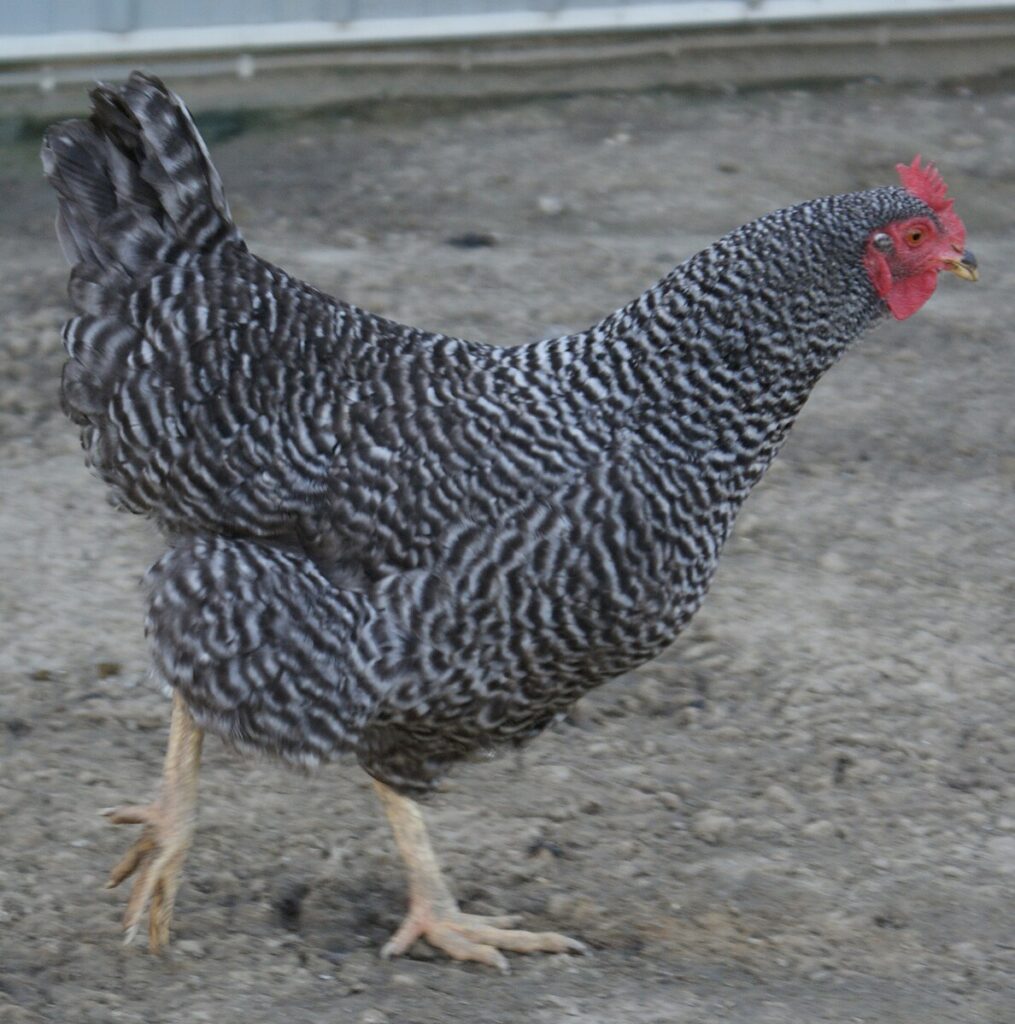
- Plymouth Rock: 10 to 12 years
- Wyandotte: 10 to 12 years
- Orpington: 8 to 12 years
- Rhode Island Red: 8 to 10 years
- Australorp: 8 to 10 years
- Dominique: 8 to 12 years
- Cochin: 8 to 11 years
- Easter Egger / Ameraucana: 8 to 10 years
Shorter-lived breeds:
- White Leghorn (commercial strains): 3 to 5 years — reproductive cancers and laying-related disorders are common causes of early death
- Golden Comet and other sex-link hybrids: 3 to 6 years — high production rate takes a significant toll on the body over time
- Cornish Cross: not a practical backyard layer; life expectancy in weeks without processing
If longevity is a priority for your flock, dual-purpose heritage breeds give you the best combination of productive years and overall lifespan.
How Housing Affects Chicken Lifespan
Housing quality is the most controllable variable after breed selection. Poor housing doesn’t kill chickens quickly in most cases — it shortens their lives gradually through chronic stress, respiratory disease, parasites, and predator exposure.
What adequate housing requires:
- Dry floors. Wet bedding produces ammonia, which damages the respiratory system over time. Deep litter managed correctly stays drier than frequently-cleaned shallow bedding.
- Ventilation without drafts. Chickens need fresh air exchange year-round. Closed, humid coops in winter cause more respiratory problems than cold temperatures do. Ridge vents and high sidewall openings ventilate without creating cold drafts at roost level.
- Predator security. Hardware cloth (not chicken wire, which most predators can tear through) on all openings. Buried apron or concrete footing on runs. Latches that require opposable thumbs. A secure coop at night eliminates the most common cause of premature death in backyard flocks.
- Adequate space. Four square feet of indoor floor space and eight to ten square feet of outdoor run per standard bird is the minimum. Below that, chronic stress suppresses immune function and increases aggression injuries.
- Roost height and design. Flat 2×4 boards installed wide-side up allow hens to cover their feet at night, preventing frostbite in cold climates. Roosts set at a reasonable height with ramps for older birds reduce joint injuries.
Free-range chickens generally live happier lives than confined ones, but face meaningfully higher predator risk. Supervised ranging or well-secured large runs offer a practical middle ground.
How Diet Affects How Long Chickens Live
Nutritional deficiencies accumulated over years shorten chicken lifespans in ways that are hard to trace back to a single cause. A hen eating slightly inadequate feed doesn’t get visibly sick — she just ages faster, lays less, and dies younger than she otherwise would have.
The basics:
- Age-appropriate feed. Chick starter through eight weeks, grower or developer through point of lay, layer feed thereafter. Layer feed’s higher calcium content can damage kidneys in non-laying birds, so flock raiser with separate oyster shell is a better choice for mixed flocks that include roosters or non-laying hens.
- Free-choice oyster shell. Actively laying hens cannot get enough calcium from feed alone to sustain both eggshell production and their own skeletal health. Oyster shell offered separately lets each hen regulate her own intake.
- Clean water, always. Dehydration accelerates organ stress. Waterers should be checked and refreshed daily in summer; heated waterers prevent freezing in winter.
- Protein through molt. Molt is a nutritional drain. Temporarily increasing protein to 18 to 20 percent during molt shortens its duration and reduces the body condition loss that compounds as hens age.
Treats should stay under 10 percent of total diet. Scratch grains, kitchen scraps, and mealworms are fine as supplements — not substitutes for a balanced layer ration.
Predators and Accidents
The leading cause of death in backyard chickens that don’t die of old age is predation. This is worth being direct about: most backyard flocks that experience losses have a security gap that can be identified and fixed.
Common predator threats by type:
- Nocturnal ground predators (raccoons, opossums, foxes): most likely to exploit latches, gaps in hardware cloth, or unsecured pop doors. Raccoons in particular can manipulate simple hook latches.
- Daytime aerial predators (hawks, eagles): most dangerous during free range periods for smaller breeds and young birds. Overhead netting or covered runs eliminates aerial risk.
- Digging predators (foxes, dogs, skunks): an apron of hardware cloth laid flat on the ground extending 12 inches outward from the run perimeter deters most digging without full burial.
- Rodents: rats kill chicks and carry diseases transmissible to adult birds. Rodent-proof feed storage and hardware cloth with half-inch or smaller mesh on coop openings close to ground level controls the problem.
Accidents — egg binding, impacted crop, internal laying complications — are the next most common causes of premature death. Monitoring flock behavior daily catches most problems early enough to intervene.
Signs of Aging in Chickens
Chickens age gradually and the signs are easy to miss in a busy flock. Knowing what to look for allows you to adjust care before a senior bird declines sharply.
Common aging indicators:
- Reduced or ceased laying
- Slower movement; reluctance to roost at height
- Dull or ragged feather quality that doesn’t fully recover after molt
- Pale comb and wattles
- Increased time spent resting
- Reduced appetite or difficulty competing at the feeder
- Gradual weight or muscle loss, particularly visible at the keel bone
None of these signs require intervention on their own — they are normal aging. What they indicate is that the bird needs closer monitoring and some care adjustments.
Supporting Older Chickens
Senior hens don’t need much — mostly small accommodations that reduce the physical demands of daily flock life.
Practical adjustments for older birds:
- Move feed and water to ground level if roosting or mobility is difficult
- Add low ramps to coop entrances to reduce joint stress
- Provide extra-depth bedding for cushioning at roost and on the floor
- Serve chopped greens rather than whole leaves for easier eating
- Consider temporarily separating a senior bird who is being displaced at the feeder
- Increase protein slightly to help maintain muscle condition
- Watch molt more closely — older hens take longer to complete molt and need more nutritional support through it
A hen who is no longer laying but is otherwise healthy and active earns her place in the flock. Senior hens often serve as experienced flock members who reduce conflict and help integrate younger birds.
Chicken Lifespan by Breed
Breed is the single biggest genetic lever on how long a chicken lives, so it is worth choosing with longevity in mind if a long-lived flock matters to you. Here is a realistic range for common backyard breeds, assuming a secure coop and steady care.
| Breed | Typical lifespan | Notes |
|---|---|---|
| Silkie | 7 to 9 years | Popular bantam and broody favorite, but vulnerable to damp and predators |
| Orpington | 8 to 12 years | Calm, cold hardy, a classic long lived dual purpose bird |
| Plymouth Rock (Barred Rock) | 8 to 12 years | Sturdy and forgiving, a homestead workhorse |
| Rhode Island Red | 8 to 10 years | Very hardy heritage layer, adaptable to most climates |
| Wyandotte | 8 to 12 years | Cold hardy and robust, ages well |
| Australorp | 8 to 10 years | Steady layer with good longevity |
| Leghorn | 6 to 8 years | Prolific white egg layer, lighter framed, moderate lifespan |
| Easter Egger | 8 to 10 years | Mixed breed hardiness, often long lived |
| Most bantams | 8 to 12 years | Small size often correlates with a long life |
| Production hybrids (ISA Brown, sex links) | 3 to 5 years | Bred for maximum eggs, reproductive wear shortens life |
Individual birds vary, and a single hen can beat or miss her breed’s range for reasons no one can predict. But the pattern holds: pick a heritage or dual purpose breed and you are choosing a bird more likely to be with you for a decade. People ask how long Silkies live because they are such a common first flock choice, and the answer is a solid seven to nine years, as long as they stay dry and safe. If you want to understand the laying side of these breed differences, our guide on how many eggs chickens lay a day breaks down what is normal across breeds.
Natural Lifespan vs. Commercial Lifespan
There is a real gap between how long a chicken can live and how long most chickens are allowed to live, and it is why lifespan figures online vary so wildly. A backyard hen with a secure coop lives five to ten years or more. A commercial broiler, the meat bird, is typically processed at six to seven weeks old, because that is when it reaches market weight. A commercial laying hen is usually kept for around eighteen months and then replaced once her peak production drops, even though she could physically lay for years more.
None of those farm numbers describe a natural lifespan. They describe a business decision. This matters in a practical way for backyard keepers: if you take in ex commercial hens, often sold as spent layers at around eighteen months, you are getting a bird with most of her life still ahead of her.
Why Production Hybrids Often Live Shorter
If you have kept a hybrid layer like an ISA Brown or a golden sex link, you may have noticed they are wonderful for a few years and then decline fast. This is not bad luck, it is biology meeting selective breeding. These birds are bred to convert nearly everything they eat into eggs, laying close to 300 or more per year at their peak, and that output is hard on the body.
Hens that lay at that rate are far more prone to reproductive problems as they age, including egg binding, internal laying, and reproductive cancers, any of which can end a life early. A heritage hen laying 150 to 200 eggs a year works her body far less hard, and it shows in how long she lasts. Many of these late life issues show up in our roundup of common chicken diseases and their symptoms, which is worth knowing before they appear.
The Oldest Chickens on Record
If you want proof of how long a chicken can go when nothing cuts the life short, look at the record holders. According to Guinness World Records, the oldest chicken ever was a hen named Muffy, a Red Quill Muffed American Game from the United States, who lived to 23 years and 152 days before passing in 2011. More recently, a Michigan hen named Peanut was verified as the world’s oldest living chicken at around 20 years of age. These are outliers, not targets, but they make the point: the three year figure so many people carry around has nothing to do with a chicken’s real potential.
Frequently Asked Questions About Chicken Lifespan
How long do chickens live in a backyard flock?
Most backyard chickens live five to ten years. Heritage breeds kept in secure housing with quality feed regularly reach ten to twelve years. The upper end of the range — twelve to fifteen years — is achievable but requires good genetics, attentive management, and s
How long do hens lay eggs?
Hens lay most productively in their first two years, then decline gradually each year after. Most hens continue laying at reduced rates through years three, four, and five. Heritage breeds often lay occasionally well into their sixth or seventh year. There is no fixed age at which laying stops entirely. It tapers rather than ends.
Do roosters live as long as hens?
Roosters from the same breeds live roughly as long as hens, and in some cases longer. They don’t carry the reproductive burden of egg production. The main risk factor for roosters is aggression-related injury, either from other roosters or from handling. A well-managed rooster in a secure flock has no reason to live a shorter life than his hens.
What is the most common cause of death in backyard chickens?
Predation is the most common cause of premature death. Among birds that survive predation, reproductive disorders — internal laying, egg yolk peritonitis, ovarian cancer — are the most common causes of death in laying hens, particularly in high-production breeds. These conditions are partly genetic and partly a consequence of the intensity of modern egg-laying genetics. Heritage breeds have meaningfully lower rates of reproductive cancer.
Can chickens die of old age?
Yes, though it looks different than most keepers expect. A chicken dying of old age typically shows a gradual decline over weeks or months — reduced activity, weight loss, reduced intake rather than a sudden death. Some hens simply slow down and stop one day. Others develop age-related organ failure. A hen who has lived eight or more years and declines gradually without obvious illness or injury is most likely dying of old age, and comfort care rather than intervention is usually the appropriate response.
How long do Silkie chickens live?
Silkies typically live seven to nine years, and some pass ten with good care. Because they have poor eyesight and feathers that are not waterproof, they are especially vulnerable to predators and damp, so a secure, dry coop matters even more for this breed.
Do backyard chickens live longer than farm chickens?
Yes, by a wide margin. Backyard hens commonly live five to ten years, while commercial broilers are processed at six to seven weeks and commercial laying hens are usually replaced around eighteen months. Those short figures reflect business decisions, not a chicken’s natural lifespan.
What is the longest a chicken has ever lived?
The oldest chicken on record, per Guinness World Records, was a hen named Muffy who lived 23 years and 152 days. Living chickens verified at around 20 years show that with the right genetics and care, well past a decade is realistic.
Chickens kept well can be long-term members of a homestead — not livestock cycled in and out on a two-year rotation. Breed selection, secure housing, and consistent feed quality are the three decisions that determine most of what follows. Get those right and the rest is management.
For more on choosing breeds that will serve your flock long-term, see our guide to top chicken breeds for egg production. For keeping hens producing through the years, see how many eggs do chickens lay. Reproductive problems like an egg bound chicken can cut a hen’s life short, so it helps to know the warning signs early.