
A homestead blackout kit is the box I wish I had built before our first long outage instead of after. When the grid went down for days that winter, I spent the first frantic hour digging through drawers for flashlights with dead batteries, and I swore I would never scramble like that again. Now everything we need to run the place without power lives in one labeled spot, and anyone in the family can find it in the dark. If you have not put yours together yet, let me show you exactly what goes in it and why.
A homestead blackout kit is different from a standard emergency kit, because a homestead has jobs a suburban house does not. Livestock still need water, a full freezer of meat is on the line, and you may be a long way from the nearest open store. So this kit is built around keeping animals, food, water, and warmth going through an outage that could last hours or a week. Here is how I put ours together, organized so you can build your own this weekend.
Key Takeaways
What should be in a homestead blackout kit?
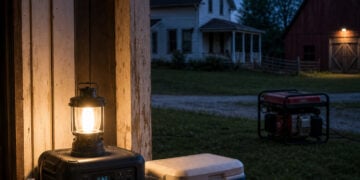
A homestead blackout kit should be built in five layers: light, power, water, food, and warmth. Start with light, because it is the first thing you lose and the first thing you will reach for. I keep a headlamp for every family member so hands stay free for chores, plus several battery or rechargeable LED lanterns for lighting a room, and a big stash of batteries stored in a cool, dry spot. Candles are a nice backup but a poor primary, because open flame around a barn or a tired family in the dark is a risk you do not need.

Next comes power. A couple of large power banks keep phones and radios alive, and a battery-powered or hand-crank radio keeps you tied to weather and emergency broadcasts when the internet is down.
1070Wh LiFePO4 Battery,1500W AC/100W USB-C Output, 1 Hr Fast Charge, Solar Generator for Camping, Emergency, RV, Off-Grid Living(Solar Panel Optional)

If your budget allows, a generator or a solar generator changes the whole outage from survival to routine, because it can run a freezer, a well pump, and lights on rotation. Round the kit out with water storage, a way to cook off-grid, warm layers and blankets, a solid first aid kit, and any critical medications. The federal Ready.gov build-a-kit checklist is a good baseline to start from, and then you layer the homestead-specific gear on top.

The homestead jobs a normal emergency kit forgets
Here is where a homestead kit parts ways from the suburban version, because your animals do not care that the power is out. If your livestock water runs on an electric pump, an outage cuts their water supply instantly, so your kit needs a plan for that: stored water in barrels or jugs, a manual or solar backup for the pump, and buckets to haul with. I keep several hundred gallons of stored water partly for exactly this, since a herd or flock goes through water fast and dehydration in an animal moves quicker than you would think.
The freezer is the other big one. A full chest freezer of garden produce and home-raised meat is a serious investment, and it will hold safe temperature for only a day or so once the power stops. My kit includes a plan, not just gear: keep the freezer shut, run the generator a few hours a day to hold it cold, and know your canning and dehydrating options if an outage runs long enough that you need to preserve food a different way. Losing a freezer full of a season’s work is the kind of loss a little planning prevents.
Convertible Chest Freezer offers 7 cu. ft. of storage for frozen or fresh foods, and its Garage Ready design makes it a convenient second freezer for your basement or garage. It also includes a removable storage basket that keeps small items organized without blocking access to the larger items below.

How to organize and store your kit so you can find it in the dark
A blackout kit only works if you can find it without light, so storage and labeling matter as much as contents. I keep ours in clearly labeled weatherproof totes in one consistent spot that every family member knows, and I put a headlamp right at the top of the first tote so the very first thing your hand finds is a way to see. Group the layers so light is together, power is together, and first aid is its own clearly marked container, because digging through a jumbled box in the dark is exactly the scramble you are trying to avoid.
Rotation is the part people skip and regret. Batteries self-discharge, stored water gets stale, fuel degrades, and medications expire, so put a reminder on your calendar to check the kit twice a year, ideally at the daylight-saving time changes so it is easy to remember. Test the flashlights, top off the fuel, rotate the water, and refresh any expired supplies. A kit you built once and forgot is a kit that fails you at the worst moment.
Tying the kit into your bigger off-grid plan
A blackout kit is your bridge, and the more off-grid systems you have, the shorter that bridge needs to be. If you already run solar with battery storage, a wood stove for heat, and stored water, an outage barely registers, and your kit is just the gap-filler for the few things still on the grid. If you are earlier in the journey, the kit is what buys you time while you build those permanent systems. Either way, pairing the kit with a stored-water plan like the one in our rainwater harvesting guide means your animals and your family are covered even when the pump is dead.
Build your homestead blackout kit around light, power, water, food, and warmth, add the livestock and freezer plans a homestead demands, store it where you can find it blind, and rotate it twice a year. Do that, and the next multi-day outage is a story you tell later instead of a crisis you barely got through.
Frequently Asked Questions About Homestead Blackout Kits
What should be in a homestead blackout kit?
Cover five layers: light (headlamps, lanterns, batteries), power (power banks, a radio, ideally a generator), water storage, off-grid cooking and food preservation, and warmth. Then add homestead-specific gear for watering livestock and holding your freezer cold.
How is a homestead blackout kit different from a regular emergency kit?
A homestead kit adds the jobs a house does not have: watering livestock when the electric pump is down, holding a full freezer of home-raised food, and operating far from open stores. It plans for animals and food preservation, not just people.
How much water should I store for a blackout?
Plan at least one gallon per person per day for several days, then add far more for livestock, which drink heavily. Many homesteaders store hundreds of gallons in barrels because an electric well pump stops the moment the power does.
Do I need a generator for a homestead blackout kit?
It is not required, but a generator or solar generator turns an outage from survival into routine by running a freezer, well pump, and lights. If a generator is out of budget, focus on stored water, layered lighting, and a food-preservation plan.
How often should I check my blackout kit?
Twice a year, ideally at the daylight-saving time changes so it is easy to remember. Test flashlights, rotate water and fuel, replace dead batteries, and refresh expired medications and supplies.