
Langstroth top bar or Warre hive questions usually show up right after someone decides they want bees. You read a little, watch a few videos, and suddenly realize there are strong opinions everywhere. Most of them sound confident. Many of them contradict each other. That is usually when things get confusing.
The truth is that most people do not struggle with bees because they picked the wrong hive. They struggle because the hive they chose does not match how they actually live, move, or think. Beekeeping looks simple from the outside. In practice, your body, your schedule, and your tolerance for hands on work all matter more than theory.
Langstroth Top Bar or Warre Hive Comes Down to How You Want to Keep Bees
At its core, the Langstroth top bar or Warre hive decision is about management style. Each hive design asks something different from the beekeeper. None of them are wrong. They are just better or worse fits depending on the person.
Some people want flexibility and standard equipment. Some want minimal lifting. Others want to interfere as little as possible and accept tradeoffs that come with that choice. If you start by being honest about how you want to interact with your bees, the decision gets easier.
Choosing a Langstroth Hive if You Want Standard Equipment and Flexibility
Langstroth hives are the most common hive style in North America. That matters more than it sounds. Equipment, replacement parts, mentors, and local advice are all easier to find when you use the same system as most other beekeepers around you.
Langstroth hives use stacked boxes with removable frames. This makes inspections straightforward and predictable. If you want to monitor brood patterns, check for disease, or split colonies, this system supports that kind of management well.
The downside is weight. Full honey supers are heavy. Even medium boxes can strain backs, shoulders, and knees. This becomes more noticeable over time, especially as colonies grow stronger and honey yields increase.
Langstroth hives work well for people who want honey harvests, clear inspection routines, and compatibility with standard tools. They are less forgiving if lifting is an issue or if you prefer a slower, lower intervention approach.
Coated with 100% Beeswax Includes Beehive Frames and Waxed Foundations (2 Deep Boxes & 2 Medium Boxes)

When a Top Bar Hive Makes Sense for a Hands On Keeper
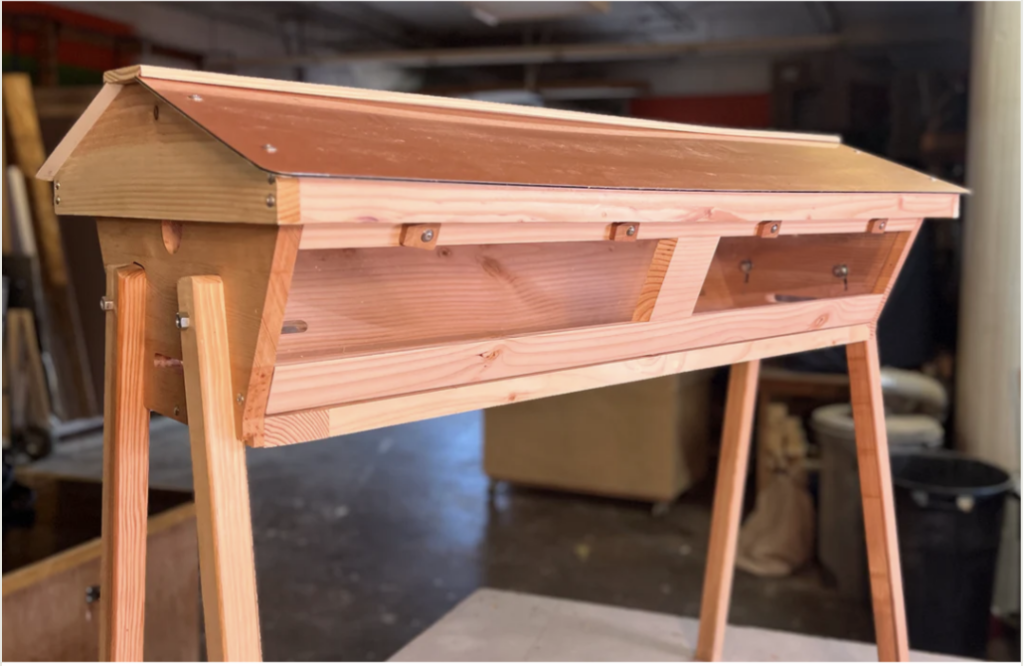
Top bar hives appeal to people who want to work horizontally instead of vertically. Everything happens at waist height. There is no box lifting, only individual bars. For many beekeepers, this alone makes top bar hives appealing.
Management feels more intimate. You handle one comb at a time and spend more time observing individual frames of activity. This can be rewarding if you enjoy slow inspections and hands on learning.
Honey harvests are typically smaller and less frequent. Comb is usually crushed rather than extracted, which means more wax handling and less total yield. This is not a drawback for everyone. Some people value wax and simplicity over volume.
Top bar hives require more skill to manage comb straightness and spacing. Bees do not always cooperate with human expectations. If you are patient and observant, this can be part of the appeal. If you want quick inspections and standardized outcomes, it can feel frustrating.
Bee Built has some beautiful Top Bar Hives. (not sponsored)
Warre Hives and the Appeal of Minimal Intervention
Warre hives attract beekeepers who want to step back and let bees lead. This hive style focuses on minimal disturbance, natural comb, and vertical growth that mimics hollow trees.
Management is intentionally limited. Inspections are fewer. Boxes are added to the bottom rather than the top. Honey harvests happen less often and usually involve removing whole boxes.
This approach works best for people who are comfortable not knowing everything that is happening inside the hive. You trade control for simplicity. You also trade honey production for reduced interference.
Warre hives are not hands off, despite how they are sometimes described. They still require attention, feeding when needed, and observation. They just ask for a different kind of patience.
Bee Built also has complete Warre Hive kits. (not sponsored)
How Physical Ability and Time Commitment Affect Hive Choice
One of the most overlooked parts of choosing between a Langstroth top bar or Warre hive is physical ability. Beekeeping involves lifting, bending, standing for long periods, and repetitive motion.
If lifting heavy boxes will become a burden, Langstroth hives can turn into a problem over time. Even people who feel strong now may feel differently after a few seasons.
Time matters too. Langstroth hives reward frequent inspections. Top bar hives ask for careful handling. Warre hives require patience and comfort with limited access.
None of these systems are maintenance free. They just distribute the work differently. Choosing a hive that fits your energy level makes beekeeping sustainable instead of exhausting.
Honey Goals Versus Bee Experience
If your main goal is honey, Langstroth hives usually win. They are designed for efficient extraction and expansion. You can scale production more easily and manage multiple colonies with consistency.
If your goal is learning, observation, or connection with bees, top bar and Warre hives often feel more satisfying. They slow you down and keep your attention on bee behavior rather than output.
Some people start with honey goals and later realize they care more about the bees themselves. Others start slow and later want more production. Switching systems is possible, but it involves cost and learning curves.
Being honest about your priorities upfront saves frustration later.
Cost and Availability Over the First Few Years
Startup cost is only part of the picture. Replacement parts, expansion, and mistakes add up over time.
Langstroth equipment is widely available and often cheaper in the long run due to standardization. You can borrow equipment, buy used boxes, or replace damaged parts easily.
Top bar and Warre equipment can be harder to source locally. Many beekeepers build their own, which saves money but requires time and tools.
Mistakes cost different amounts depending on the system. Replacing frames or boxes is easier in Langstroth systems. Rebuilding comb in top bar and Warre hives takes more patience.
Common Regrets Beekeepers Share After Their First Season
Many Langstroth keepers regret underestimating the weight of honey boxes. They love the bees but dread harvest day.
Top bar keepers often regret not learning enough about comb management early on. Crooked comb creates long term problems if not corrected.
Warre keepers sometimes regret expecting the hive to need less attention than it actually does. Minimal intervention does not mean no responsibility.
These regrets are not failures. They are signs that expectations did not quite match reality.
Choosing the Hive That Fits How You Actually Live
The best hive is the one you will continue to manage year after year. Not the one that sounds ideal online. Not the one someone else insists is superior.
Langstroth hives suit people who like structure, flexibility, and measurable outcomes. Top bar hives suit people who enjoy hands on work and slower rhythms. Warre hives suit people who value restraint and observation.
Langstroth top bar or Warre hive decisions are less about bees and more about you. When the hive matches your life, beekeeping feels steady. When it does not, even healthy bees can feel like a burden.
If you choose with honesty instead of aspiration, you are far more likely to enjoy the work and stick with it.


