
Winter birds of Oklahoma bring a different kind of movement to the yard, pasture, and pond. Some are year round residents that become easier to see after the leaves fall. Others travel hundreds or thousands of miles and appear here only for the colder months.
We put out seed because we enjoy watching the birds, and a feeder gives us a close look at species that might otherwise pass unnoticed. The feeders are only one part of the winter landscape, though. Ponds draw diving ducks, open fields attract harriers, and bare tree trunks reveal birds that were hidden by summer foliage.
Which winter birds of Oklahoma visit feeders?
The birds at a feeder depend on the food, feeder height, nearby cover, and the weather. Sunflower seed draws cardinals, chickadees, nuthatches, and several sparrows. Suet and peanuts appeal to woodpeckers, nuthatches, and brown creepers. Seed scattered on the ground attracts juncos and ground feeding sparrows.
Feeders do not replace natural food. Birds continue to search bark, seed heads, shrubs, and leaf litter for insects and seeds. During ice or deep snow, however, a dependable feeder can make food easier to find.
Harris’s Sparrow is a Great Plains winter specialty
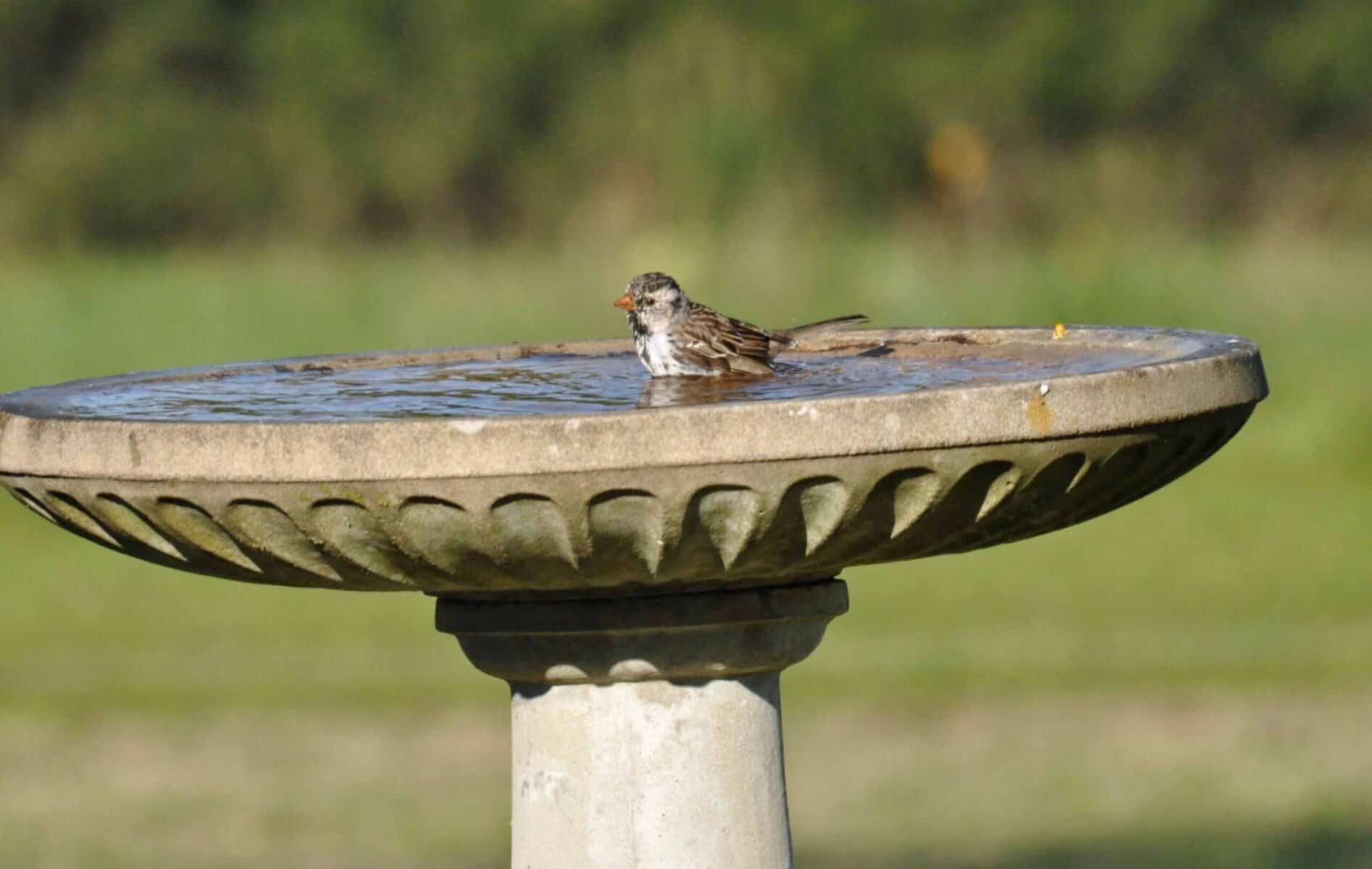
Harris’s Sparrow breeds in northern Canada and winters mainly through the central Great Plains. Oklahoma lies near the heart of that winter range, making this one of the birds I look forward to seeing each year.
It is a large sparrow with a pink bill and dark markings on the face, throat, and crown. Winter adults may show less black than birds in breeding plumage, and young birds are browner. They spend much of their time on the ground or near low platform feeders. Cornell’s winter sparrow identification guide is useful when several brown birds arrive together.
White crowned sparrows work the ground
Adult White crowned Sparrows have bold black and white stripes on the head. Juveniles carry the same basic pattern in reddish brown and tan. Their pinkish or yellowish bills help separate them from some similar sparrows.
These birds often scratch through leaves and feed beneath a platform rather than clinging to a tube feeder. Leaving some undisturbed leaf litter and brushy cover gives them a place to forage and retreat.
Nuthatches and creepers search every inch of bark
The White breasted Nuthatch lives here year round, but I notice it more in winter. It moves down a trunk headfirst, probing bark for insects and seeds. Its larger size, white face, and black or gray crown separate it from the smaller Red breasted Nuthatch.
Red breasted Nuthatches are irregular winter visitors. Some years bring many south, while other winters bring few. They have a dark eye stripe, pale eyebrow, and rusty wash below.

A Brown Creeper is easier to miss. Its streaked brown back nearly disappears against a tree trunk. The bird typically works upward in a spiral, using stiff tail feathers as a brace, then flies to the base of another tree and starts again.
Downy Woodpeckers also become easier to spot on bare trees. The Downy is smaller and shorter billed than the similar Hairy Woodpecker. The white outer tail feathers of a Downy usually show small black spots. For more comparisons, see our guide to seven woodpeckers you may see.
Winter birds away from the feeder
Some of the most memorable winter visitors will never come for seed. Hooded Mergansers favor ponds, lakes, and rivers, where they dive for fish, crayfish, and aquatic insects. The male’s white crest opens like a fan, while the female has a warm brown crest.
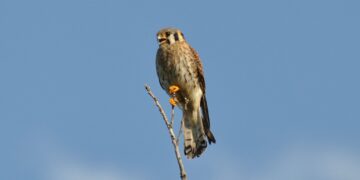
Merlins are compact falcons that hunt small birds. We have seen them only a few times in many years, which makes each sighting memorable. A Merlin is larger and more heavily built than an American Kestrel, with fast, direct flight. Our American Kestrel Nature Note shows the smaller falcon many people see on wires and fence posts.
Northern Harriers patrol open fields with their wings held in a shallow V. The white rump patch is often the easiest field mark. Their owl like facial disk helps them use sound as well as sight while hunting mice, voles, and other small animals.
Sharp shinned Hawks may appear near feeders because songbirds gather there. That can be difficult to watch, but the hawk is also trying to survive. Move feeders closer to dense cover if birds need a quick escape route, and avoid placing them beside a window where startled birds may collide with glass.
Snow geese and snowy owls are uncommon prizes
Snow Geese pass through Oklahoma in large numbers, but an individual on a small farm pond is still a surprise. One injured bird stayed on our pond several years ago. It could not fly, and after several days a Bald Eagle killed it. Nature does not always give us the ending we want.
Snowy Owls are far less predictable. They breed in the Arctic and sometimes move south in winter, especially during irruption years. A pale owl perched in an open field deserves a second look, but most Oklahoma winter owl sightings will involve one of the species in our guide to owls of Oklahoma.
How to make a winter yard safer for birds
- Clean feeders regularly and discard wet or moldy seed.
- Offer fresh water in a shallow birdbath and scrub it often.
- Keep seed dry and store it where rodents cannot reach it.
- Leave seed heads, native shrubs, and some leaf litter for natural food.
- Place feeders either very close to windows or much farther away to reduce dangerous collision speed.
- Keep cats indoors or in a secure outdoor enclosure.
Winter birding rewards patience. Start with one feeder or one view across a field, then learn the birds that return. A change in posture, flight, or feeding place is often the clue that tells you a new visitor has arrived.
Frequently asked questions about winter birds in Oklahoma
What birds come to Oklahoma only in winter?
Common winter visitors include Harris’s Sparrows, White crowned Sparrows, Dark eyed Juncos, some Red breasted Nuthatches, Hooded Mergansers, Merlins, and several hawks. Exact numbers vary from year to year.
What is the best birdseed for Oklahoma winter birds?
Black oil sunflower seed attracts a wide range of birds. White millet is useful for ground feeding sparrows, while unsalted peanuts and suet appeal to nuthatches and woodpeckers.
Do birds need feeders to survive winter?
Most birds rely mainly on natural food and can survive without feeders. A clean, dependable feeder can help during severe weather and gives people a valuable way to observe local birds.
Which winter bird are you watching for this year? Tell us what has arrived at your feeder, pond, or pasture.