
The best farm dogs for protection are not always the biggest dogs or the loudest dogs. They are the dogs that match the actual job on your land. A dog protecting goats from coyotes needs a different temperament than a dog that barks when a truck pulls into the driveway. A dog living full-time with sheep needs different instincts than a dog that walks chores with you and sleeps on the porch.
That distinction matters because farm protection can mean several things. It can mean livestock guardian work, poultry predator deterrence, property alerting, family companionship, or all-around presence. One breed rarely does all of those jobs perfectly. The better question is: what do you need protected, and from what?
If you are still sorting out guardian, herding, and all-around working roles, start with our overview of farm dog breeds. Then use this guide to narrow protection-focused choices.
What You’ll Learn

Start With the Threat
Predator pressure should drive the decision. Coyotes, loose dogs, raccoons, foxes, bobcats, hawks, and human trespassers are not the same problem. The USDA APHIS guidance on protecting livestock from predators emphasizes integrated predator management, including husbandry, habitat practices, and other tools, rather than relying on a single fix. That is the right way to think about farm dogs too: USDA APHIS livestock predator protection.
A farm dog is one layer. Fencing is another. Night housing, clean feed storage, lighting in the right places, human presence, and good routines all matter. The dog should fit into that system, not carry the whole thing alone.
1. Great Pyrenees
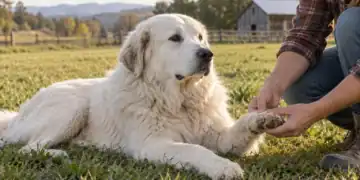
For small homesteads with poultry, goats, sheep, and moderate predator pressure, the Great Pyrenees is often the most practical first livestock guardian dog. It is large, visible, vocal, and usually close-working. A mature Pyr can deter many predators without escalating to a fight.
The tradeoffs are real. Great Pyrenees bark often, especially at night. They roam if fencing is weak. They shed heavily. They mature slowly. Still, for homesteaders who can handle those traits, they are one of the best farm dogs for protection where livestock is the main concern.

2. Maremma Sheepdog
The Maremma Sheepdog is another strong protection breed for homesteads with poultry and small ruminants. Many Maremmas stay closer to their flock and work with a calm, steady presence. They are protective without needing to be constantly busy.
Maremmas still require rural space, fencing, and careful socialization. They are not pet-only dogs for high-traffic neighborhoods. On the right property, though, they can protect birds, goats, and sheep while fitting naturally into the daily rhythm of a working place.

3. Anatolian Shepherd
The Anatolian Shepherd is a better fit for heavier predator pressure and larger acreage. It is athletic, serious, territorial, and more intense than many first-time owners expect. If you have regular coyote packs, feral dogs, or larger predators, an Anatolian may be worth considering.
This is not the breed I would choose just because it looks impressive. Anatolians need strong fencing, confident handling, and early socialization. They are excellent protection dogs when the job is real and the owner is ready.

4. Kangal and Akbash
Kangal and Akbash dogs belong in the experienced-owner category. Both are capable livestock guardians with strong instincts and serious size or intensity. They can be excellent on large properties with meaningful predator challenges.
For a small mixed homestead, they may be more dog than needed. Bigger and harder is not always better. A dog that overwhelms your setup creates management problems and liability.

5. German Shepherd
A German Shepherd is not a livestock guardian dog, but it can be a useful farm protection and alert dog around the home place. Shepherds are intelligent, trainable, and naturally watchful. They may bark at strange vehicles, patrol with you, and provide a strong deterrent presence near the house or barn.
The caution is prey drive. Some German Shepherds are fine around chickens and small stock with training; others are not trustworthy. Treat them as alert and utility dogs, not pasture guardians.

6. Australian Shepherd and Border Collie
These are herding dogs, not protection dogs in the livestock guardian sense. They can help move animals, alert to changes, and stay busy around the farm, but they are usually not the right choice for predator control. Their instinct is to control movement, which can stress chickens and small livestock if unmanaged.
Choose a herding breed if you need to move stock. Choose an LGD if you need a dog to live with and protect stock.

7. Mixed Farm Dogs
Do not overlook a good mixed farm dog for alert work. Many homesteads have a porch dog or chore dog that knows the routine, barks when something is off, and discourages casual trouble. That can be valuable.
The question is trust. A mixed dog with unknown prey drive should be tested carefully around poultry and small animals. Good farm dogs are made through temperament, training, and routine, not just breed labels.

Matching Dog to Job
If your main losses are chickens, start with poultry-safe guardian breeds and coop security. If your main concern is goats or sheep, consider Great Pyrenees, Maremma, Anatolian, or crosses from proven working lines. If you mostly want someone to bark at the driveway, a trained alert dog may be enough.
For livestock guardians, sourcing is critical. Buy from working parents that guard the kind of animals you keep. Ask what the pups have seen, where they are raised, and how the breeder handles early bonding. Our guide to buying and caring for livestock guardians walks through those questions in more detail.
Fencing and Tracking
Protection dogs need boundaries. A roaming guardian can create neighbor problems, road danger, and liability. A dog that leaves the property is not protecting the farm you meant it to protect.
Build fences first. Check gates, low spots, and corners. For wide-ranging dogs, tracking can be a useful backup. Our guide to the best GPS collars for farm dogs explains how to choose between cellular and off-grid tracking systems.
The Best Farm Protection Dog Overall
For most homesteads, the best farm dogs for protection are Great Pyrenees or Maremma Sheepdogs if livestock and poultry are the priority. Anatolians fit heavier predator pressure. German Shepherds and mixed farm dogs can be useful alert dogs near the house, but they should not be confused with LGDs.
Choose the dog that fits the job you actually have. A well-matched dog becomes part of the farm’s safety system. A mismatched dog becomes another chore, and sometimes another risk.
Frequently Asked Questions About Best Farm Dogs for Protection
What is the best dog to protect a farm?
For livestock protection, Great Pyrenees and Maremma Sheepdogs are strong choices for many homesteads. For heavier predator pressure, Anatolian Shepherds may fit better.
What is the difference between a guard dog and a livestock guardian dog?
A guard dog may protect people or property. A livestock guardian dog bonds with animals and protects them from predators while living near or with them.
Are German Shepherds good farm protection dogs?
They can be good alert and utility dogs, but they are not livestock guardian dogs. Their prey drive must be managed around poultry and small stock.
Do farm protection dogs need fencing?
Yes. Even excellent protection dogs need boundaries for safety, liability, and consistent work.