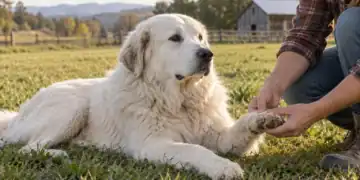

Choosing the right farm dog breeds for your homestead is one of the more consequential animal decisions you will make. A well-matched working dog protects your livestock, manages your flock, deters predators, and becomes a reliable partner in daily operations. A poorly matched one creates more work than it saves, damages your animals, or simply cannot perform the job you brought it home for. The right choice depends on what you are raising, how much land you manage, and what kind of working relationship you want with your dog.
What You’ll Learn
What Kind of Farm Dog Does Your Homestead Actually Need?
Before looking at specific farm dog breeds, the most useful question is what job you need the dog to do. The three working categories serve distinct purposes and require different management approaches.
Livestock guardian dogs live with the animals they protect. They are not pets that go out to check on the flock and then come inside. They bond to their livestock, patrol their territory, and deter or confront predators on their own initiative. If you are running sheep, goats, or poultry in an area with significant predator pressure from coyotes, foxes, or large birds of prey, a livestock guardian dog is the appropriate tool. If poultry is the main job, our guide to the best guard dogs for chickens narrows the choice to breeds suited to flock work.
Herding dogs work in partnership with a handler to move and manage livestock. They respond to commands and use controlled pressure, eye contact, and movement to direct animals where the handler wants them. If you are managing cattle, sheep, or ducks that need to be moved regularly between pastures, a herding dog saves significant time and labor.
All-around farm dogs are generalists. They deter strangers and predators with their presence, alert to unusual activity, and serve as daily companions. They are not specialized livestock guardians or precision herding dogs, but on a small mixed homestead where the primary need is a capable, alert, versatile dog, they are often the most practical choice.
Livestock Guardian Dog Breeds
Livestock guardian dog breeds have been developed over centuries to work independently, bond closely to livestock, and make their own decisions about when and how to respond to threats. They are not suited to tight obedience training in the way herding dogs are. Their value lies in their instinct, their territorial nature, and their physical presence.
Great Pyrenees
The Great Pyrenees is the most widely kept livestock guardian breed in North America. Adults reach 80 to 120 pounds with a thick white double coat that insulates well in cold conditions. They are calm, patient dogs that bond strongly to their charges and are typically gentle with lambs, kids, and poultry. Their primary deterrent strategy is presence and vocalization rather than aggression, which makes them appropriate for homesteads near neighbors or roads.
Great Pyrenees tend to be nocturnal in their working patterns, which is when most predator activity occurs, and they will bark through the night when they detect threats. Managing that barking in a neighborhood setting requires careful placement and sometimes additional training. They also have a strong independent streak and will roam if fencing is inadequate. A minimum of four to five foot fencing that they cannot push under is necessary for any Great Pyrenees in a working situation.

Anatolian Shepherd
The Anatolian Shepherd is a larger, faster, and more assertive livestock guardian than the Great Pyrenees. Adults reach 90 to 140 pounds and are built for speed as well as power, which makes them more effective against determined predators like coyotes and stray dogs that a Great Pyrenees might deter but not physically stop. Anatolians are more suspicious of strangers and have a higher territorial drive, which requires more careful management around visitors and children.
For homesteaders in areas with heavy coyote pressure or who are running goats and sheep on larger acreage where a more actively defensive guardian is appropriate, the Anatolian Shepherd is a strong choice. They are less prone to roaming than Great Pyrenees but no less independent in their decision-making.

Kangal
The Kangal is a Turkish breed with exceptional speed and one of the strongest bite forces of any domestic dog. They are used in Turkey specifically to protect sheep from wolves, and that heritage shows in their working behavior. Kangals are confident, self-possessed dogs that assess threats with precision and respond proportionally. They are not aggressive without cause, but when they determine a response is warranted, it is decisive.
Kangals require experienced handlers and secure fencing. They are not a first-livestock-guardian choice for a new homesteader, but for a property with serious predator pressure and an experienced owner, they are among the most capable livestock guardian dog breeds available.

Herding Dog Breeds
Herding dog breeds are among the most intelligent and driven working dogs in existence. That intelligence and drive are assets in a working environment and significant management challenges outside one. A herding dog without a job will create its own, often at the expense of your children, your cats, or your other animals.
Border Collie
The Border Collie is the premier herding breed and one of the most intelligent dog breeds overall. They work cattle, sheep, ducks, and virtually any livestock with a combination of intense focus, precise movement, and sensitivity to handler commands that no other breed matches at the highest levels. For a homesteader who wants to move livestock efficiently and is willing to invest significant time in training and daily working activity, a Border Collie is exceptional.
Border Collies are not suited to homesteads where they will spend most of their time in a kennel or yard without work. They need a job, daily mental engagement, and a handler who understands their drive. An under-stimulated Border Collie is a destructive, anxious, difficult dog. A properly worked one is one of the most rewarding farm dog breeds you can own.

Australian Shepherd
The Australian Shepherd is a versatile herding breed that is somewhat more adaptable than the Border Collie. Aussies herd effectively, are strong working dogs, and have enough off-switch to function reasonably well as daily companions when not actively working. They are medium-sized, typically 40 to 65 pounds, and come in a range of coat colors including merle, black, and red.
Australian Shepherds are a strong choice for homesteaders who want a dog capable of herding work but also want a dog that integrates into family and farm life more fluidly than a Border Collie. They still require significant activity and mental stimulation but are generally more manageable for a first-time working dog owner.

Australian Cattle Dog
The Australian Cattle Dog, also called the Blue Heeler or Red Heeler, is a compact, extremely durable herding breed developed specifically for moving cattle across long distances in rough Australian terrain. They herd by nipping at heels, which is effective with cattle but requires management around other livestock and people. Australian Cattle Dogs are tenacious, high-energy, and exceptionally loyal to their primary handler.
They are a particularly good choice for homesteaders managing cattle on medium to large acreage who want a dog that can work hard in demanding physical conditions. Their compact size, 35 to 50 pounds, belies their endurance and toughness. They are not ideal for homesteads with young children or small animals unless well-managed, as their heeling instinct can be indiscriminate.

All-Around Farm Dog Breeds
Not every homestead needs a specialized guardian or herding dog. Many small to medium homesteads benefit most from a capable, intelligent, alert dog that serves as a general-purpose partner: deterring predators and strangers through presence, alerting to unusual activity, and integrating into the daily rhythm of farm life.
Labrador Retriever
The Labrador Retriever is one of the most adaptable farm dog breeds for homesteaders who want a capable, biddable dog without the intense working drive of guardian or herding breeds. Labs are large, athletic, easy to train, and genuinely versatile. They can be trained to leave livestock alone, retrieve waterfowl, serve as reliable alert dogs, and function as family dogs simultaneously. Their even temperament makes them manageable around children and visitors.
Labs are not livestock guardians or precision herders, but as an all-around homestead dog for a family operation, they are hard to beat for ease of management, trainability, and adaptability.

German Shepherd
The German Shepherd is a highly capable all-around working dog with enough intelligence, drive, and physical presence to deter predators and intruders effectively. They have been used historically as herding dogs, and some lines retain strong herding instinct. Modern German Shepherds vary considerably by breeding line, with working lines being higher-drive and more demanding than show or companion lines.
For a homesteader who wants a dog with serious deterrent value, trainability, and the capacity for multiple working roles, a working-line German Shepherd from a reputable breeder is a strong option. They require consistent training, daily activity, and clear structure but respond exceptionally well to both.

Bernese Mountain Dog
The Bernese Mountain Dog is a large, calm, drafting and farm dog breed that originated in Switzerland as an all-purpose working farm dog. They are affectionate, patient, and adaptable, good with children, livestock, and poultry when properly introduced. Bernese are not high-drive working dogs in the herding or guardian sense, but their size, calm presence, and alert nature make them effective general homestead dogs on smaller properties.
Their lifespan is shorter than most breeds, typically seven to nine years, and they are prone to joint and cancer issues that require attentive veterinary care as they age. For a family homestead looking for a large, gentle, capable all-around dog, the Bernese Mountain Dog is worth serious consideration.

How to Choose the Right Farm Dog Breed for Your Property
Start with an honest assessment of what you are asking the dog to do, then work backward to the breed. A homesteader running 20 sheep on 10 acres with regular coyote activity needs a livestock guardian dog, probably a Great Pyrenees or Anatolian Shepherd. A homesteader managing cattle across 100 acres who needs to move animals between paddocks needs a herding breed, probably an Australian Shepherd or Australian Cattle Dog. A homesteader on five acres with a mixed flock, young children, and no specific working role in mind probably needs a versatile all-around breed, not a specialized working dog.
Consider your experience level honestly. Livestock guardian dogs are relatively independent and do not require the intensive obedience training that herding breeds do, but they do require a proper bonding protocol with livestock and clear fencing. Herding breeds require significant training investment and daily mental engagement. First-time working dog owners often do better starting with an all-around breed and adding a specialist once they understand working dog management.
According to the American Kennel Club Working Dog Group, working dog breeds were developed to perform specific tasks and retain the instincts and drive that make them effective, which means they require appropriate outlets for those traits regardless of the farm setting.
Whatever farm dog breed you choose, the fundamentals remain the same. A dog that is well-matched to the job, properly socialized with your livestock, given consistent training and adequate activity, and receiving regular veterinary care will serve your homestead reliably for a decade or more.
For more on keeping working dogs healthy year-round, see our guide to livestock guardian dogs. A working dog with a sensitive stomach may do better on a novel protein diet.
Frequently Asked Questions About Farm Dog Breeds
What is the best all-around farm dog breed?
For a small to medium homestead without a specific herding or guardian role, the Australian Shepherd and Labrador Retriever are consistently reliable choices. Both are trainable, adaptable, and capable of integrating into mixed farm and family life. The Australian Shepherd is better suited to properties with livestock that may occasionally need moving. The Labrador is the more straightforward management choice for a first-time working dog owner.
Can you keep a herding dog without livestock to herd?
A herding dog without livestock will redirect its working drive onto whatever is available: children, other pets, bicycles, or anything that moves. Border Collies and Australian Cattle Dogs are particularly challenging without adequate outlets for their energy and instinct. If you own a herding breed without livestock, daily structured exercise, training, and dog sports like agility or flyball are essential management strategies.
How many farm dogs does a homestead need?
Most small homesteads operate effectively with one dog. Larger properties with multiple outbuildings, significant predator pressure, or both livestock guarding and herding needs may benefit from two dogs in different roles. More dogs mean more feeding, veterinary care, and management. Start with one, assess the gaps, and add a second only when the specific need is clear.
Do farm dog breeds need special veterinary care?
Working farm dogs face higher exposure to ticks, fleas, intestinal parasites, and environmental hazards than indoor dogs. Regular deworming every three to six months, tick and flea prevention applied consistently through warm seasons, annual heartworm testing, and core vaccinations are the baseline for any outdoor working dog. Large guardian breeds are also prone to joint problems as they age and benefit from joint support supplements starting around age five.
What is the difference between a livestock guardian dog and a herding dog?
A livestock guardian dog lives with its animals, bonds to them, and protects them from predators by deterrence and confrontation. It works independently without handler direction. A herding dog works alongside a handler to move and direct livestock through a combination of controlled pressure, eye contact, and response to commands. The two roles are fundamentally different, and most farm dog breeds are suited to one or the other, not both.