

There was a checkout-line moment when I realized our grocery bill had turned into something we could not keep ignoring. It was not one fancy dinner or one holiday shop that did it. It was the steady drip of big weekly trips, the kind where the receipt looked practical but the fridge still felt empty three days later. We were spending around $250 a week, and somehow we were still scrambling midweek and ordering pizza.
It took about six months to cut that grocery spending nearly in half. We did not do it with extreme couponing, a bare-bones rice-and-beans plan, or a color-coded system that required more energy than dinner itself. We did it by changing how we used the food already in the house.
If you are trying to figure out how to save money on groceries, start there. Before you download another app or chase another complicated meal plan, look at what is getting wasted, what is being bought twice, and what meals your household will actually eat on a normal Tuesday night. That is where the real savings usually hide.
What You’ll Learn
Start With the Food You Already Bought
I used to sit down on Sunday with a blank page and plan seven dinners from scratch. It felt organized, but it was backwards. I would pick a few new recipes, build a long grocery list, and then discover on Wednesday that we were out of bread, the kids hated the casserole, and the vegetables I bought the week before were turning sad in the drawer.
The better habit was pantry-first planning. Now the plan starts in the kitchen, not on Pinterest. I check the fridge first because that is where food gets expensive fast. What needs to be used in the next day or two? What cooked ingredients are already waiting? What produce is close to the edge? Then I check the pantry and freezer before I write the list.
That one change saved us about $40 a week because we stopped treating leftovers and half-used ingredients like clutter. Half a jar of salsa goes into rice and black beans. A lone sweet potato gets cubed, roasted, and served with eggs or greens. A few cups of cooked chicken become soup, quesadillas, or a quick lunch salad. The plan is not perfect. It is more like a sketch. But it works because it is based on real food in the house.
If your pantry is thin or chaotic, build it slowly instead of trying to fix it in one giant shop. Our guide to beginner pantry staples walks through a practical starter shelf with dry goods, baking basics, canned foods, oils, and seasonings that make low-cost meals easier.

Shop Once a Week and Make the List Count
Shopping once a week was one of the biggest levers for us. Before that, we were always running in for just a few things. Those quick trips were never just milk or bread. They turned into snacks, a drink, something from the bakery, and three extra items that looked useful in the moment.
At first, weekly shopping was clumsy. I forgot milk. I misjudged toilet paper. I bought too much lettuce and not enough fruit. But the discipline improved the list. It forced us to scan the kitchen properly, think through breakfasts and lunches, and build in backups.
Now we keep shelf-stable milk in the pantry, freeze an extra jug of milk when it makes sense, and keep enough simple basics to get through a short gap. That does not mean stockpiling everything. It means knowing the few items your household depends on and making sure they are not the reason for an extra store trip.
A weekly shop also makes impulse spending visible. If you are in the store four times a week, it is easy to shrug off another small cart. If you are shopping once, the list has to carry the week, and the receipt tells the truth.
Treat Leftovers Like Ingredients, Not Obligations
Leftovers used to be the container in the back of the fridge that nobody wanted to claim. Now they are part of the plan.
The trick is to stop thinking of leftovers as a repeat meal. A roast chicken does not have to become the same plate again. It can become soup, sandwiches, fried rice, pot pie filling, or a tray of nachos. Leftover taco meat can go into breakfast burritos. Rice can be fried with eggs, garlic, frozen peas, and whatever vegetables need using. Roasted vegetables can be folded into omelets, grain bowls, soups, or a simple side with sausage.
We also started freezing single portions of meals. That small stash of homemade frozen dinners has saved us from takeout more times than any budget lecture ever could. It helps on late nights, split schedules, and days when one person needs dinner after everyone else has eaten.
If you want another budget habit that pairs well with this, learn to preserve food before the garden is overflowing. You can practice on grocery-store produce and farmers market deals first. Start with the guide on how to start preserving food so preserving becomes a skill before harvest season starts shouting at you.
Stop Letting Snacks Eat the Budget
Packaged snacks were harder to give up than I expected. Granola bars, crackers, chips, cereal, and little convenience foods made the cart feel normal. They also disappeared almost immediately.
We did not remove snacks from the house. We changed what counted. On Sundays, we might bake muffins, make energy bites, boil eggs, cut vegetables, or pop a big pot of popcorn. We keep fruit where it can be seen. Cheese sticks, yogurt, toast, peanut butter, and leftovers are fair game.
This saved money, but it also changed how everyone ate. When the pantry was not packed with expensive snack boxes, the kids were more likely to eat fruit or something with protein. They were also hungrier for dinner, which made simple meals work better.
Do this gradually. If your household is used to a snack-heavy pantry, replacing everything at once can backfire. Pick one or two homemade or lower-cost options each week. Keep the snacks people genuinely rely on and drop the ones that vanish without satisfying anyone.
Buy in Bulk, But Only With Rules
Bulk buying can reduce a grocery bill, but only if you are honest about what your family uses. We used to walk into warehouse stores and lose all sense of scale. A giant container looked cheaper, so we bought it. Then it sat in the pantry, took up space, or spoiled before we finished it.
Now bulk buying has rules:
- We buy it in bulk only if we use it weekly or nearly weekly.
- We buy it only if we have a real place to store it.
- We check the unit price against the regular size.
- We do not buy giant packages of foods we are still testing.
- We do not buy bulk perishables unless there is a plan to cook, freeze, preserve, or share them.
That means yes to oats, rice, flour, peanut butter, beans, and toilet paper. It means no to oversized tubs of dip, novelty snacks, or bulk produce that will become compost before we can use it.
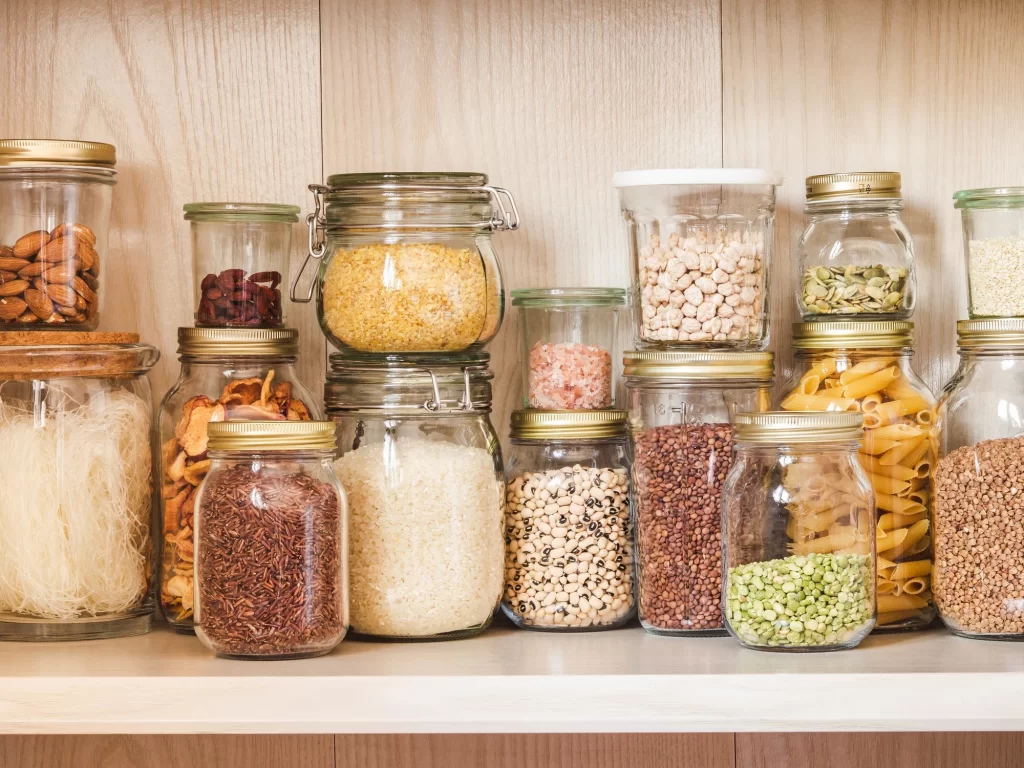
A pantry and freezer inventory makes this much easier. The system can be simple: a notebook, a whiteboard, a spreadsheet, or a Notion page. Track what is in the freezer, what meals you can make from current ingredients, and what needs to be used first. The point is not perfection. The point is not buying the same thing three times because you forgot what was behind the frozen peas.
Let Simple Meals Be Enough
This was the hardest shift for me. I had to stop acting like every dinner needed to be impressive. Simple meals are not a failure. They are the backbone of a grocery budget that actually holds.
A pot of beans and cornbread. Eggs and toast. Soup with homemade bread. A sheet pan of sausage and vegetables. Rice bowls with whatever needs using. Baked potatoes with leftovers on top. These meals are inexpensive, flexible, and usually more welcome than a complicated recipe on a tired night.
We still enjoy food. We still make special meals. The difference is that special is not the daily standard. One new recipe a week is plenty. One nicer cut of meat, one baking project, or one weekend meal that takes more time can scratch the creative itch without turning the whole grocery list into a project.
This is especially true on a homestead, where food work already takes time. If you are growing, preserving, raising poultry, baking bread, or cooking from scratch, you do not need dinner to perform. You need dinner to feed people.
Use Real Budget Benchmarks
It helps to compare your spending to something more grounded than social media. The USDA publishes monthly food-plan cost reports that estimate what it costs to feed households at different budget levels. Their May 2026 Thrifty Food Plan listed a reference family of four at $1,018.20 per month, and the broader USDA food plans show how food-at-home costs vary by age, sex, household size, and budget level. You can use the USDA monthly cost of food reports as a reality check, not a rule.
That matters because grocery budgets are personal. A family with teenagers will not look like a two-adult household. A household that cooks nearly every meal at home will spend differently than one that eats several meals away from home. Food allergies, regional prices, distance from stores, livestock chores, freezer space, and garden seasons all change the math.
The goal is not to copy someone else’s number. The goal is to know your number, lower the waste, and build habits that make the food you buy turn into meals.
Grow or Regrow What Makes Sense
You do not have to grow a giant garden to save money on groceries. A few high-use items can help, especially if they are things you buy often and waste quickly. Herbs, lettuce, green onions, microgreens, and a few container crops can stretch meals and make simple food feel fresher.
If outdoor space is limited, start small indoors. Our guide to vegetables you can grow indoors covers lettuce, radishes, microgreens, green onions, spinach, peppers, and carrots with container and light notes.
This is not a magic fix for a grocery budget. Seeds, soil, lights, and containers cost money too. But once the setup is in place, growing small fresh foods can reduce little purchases and help you use what is already in the kitchen. A plain pot of beans feels different with fresh green onions. Eggs and toast feel more like dinner with a handful of lettuce or herbs.
What Our Grocery Budget Looks Like Now
We used to spend $1,000 or more a month on groceries. These days we are closer to $500 to $600, including teenagers and the occasional baking project. Some months are higher. Stock-up months, holidays, and preserving season change the numbers. But the baseline is much lower than it was.
The biggest difference is emotional. I no longer dread grocery day. I do not open the fridge and see a pile of random ingredients judging me. I see meals. I see pieces that can be combined. I see food we meant to buy and know how to use.
That is what actually helped us cut the grocery bill: less waste, fewer impulse trips, better use of leftovers, simpler meals, and a pantry that works like a tool instead of a storage problem.
If you are overwhelmed, do not overhaul everything this week. Start with one habit. Plan from the fridge before you shop. Skip one extra store trip. Freeze one portion instead of letting it drift to the back of the fridge. Make one simple meal and let it be enough.
Small changes are how this worked for us. They added up slowly, then all at once.
Frequently Asked Questions About How to Save Money on Groceries Without Extreme Couponing
What is the fastest way to save money on groceries?
The fastest change is to shop from your own kitchen before making a list. Check the fridge, pantry, and freezer first, then plan meals around food that needs to be used. This reduces waste and keeps you from buying duplicates.
How often should I grocery shop to spend less?
For many households, once-a-week grocery shopping helps reduce impulse buys and extra trips. It may take a few weeks to build a better list, but fewer store visits usually means fewer unplanned purchases.
Is bulk buying always cheaper?
No. Bulk buying helps only when the item is something you use regularly, can store safely, and is actually cheaper per unit. Bulk perishables are risky unless you have a plan to cook, freeze, preserve, or share them.
How can I save money on groceries with kids or teenagers?
Plan snacks instead of letting packaged snacks run the budget. Keep simple, filling options available: popcorn, muffins, boiled eggs, fruit, yogurt, peanut butter toast, leftovers, and cut vegetables. Also build meals around filling staples like potatoes, rice, beans, oats, eggs, and soups.
How long does it take to lower a grocery bill?
You may see small savings in the first week or two, especially from reducing extra store trips. Bigger changes take time. In our case, it took about six months to move from around $1,000+ per month to roughly $500-$600.