
What You’ll Learn
Direct Answer
You can keep pigs warm in winter without a heated barn by giving them a dry, draft-free shelter, deep clean bedding, constant unfrozen water, enough feed for the weather, and a pen layout that blocks wind while still allowing fresh air. The goal is not to make the shelter feel warm to you. The goal is to help the pigs stay dry, conserve body heat, and avoid cold stress.
That distinction matters on a homestead. A tight, damp shed can be worse than an open-front shelter with deep bedding and good airflow. Pigs do not need a fancy barn to do well through winter, but they do need a sleeping area that stays dry through rain, snow, manure, and spilled water.
Why Winter Is Hard on Pigs
Pigs are not built like sheep or cattle. They do not have a heavy wool coat, and they do not handle temperature swings well without good management. Cold weather makes pigs burn more energy just to maintain body temperature. That can slow growth, increase feed costs, and make already-stressed animals more vulnerable to illness.
Penn State Extension explains that pigs housed outside or in unheated shelters can experience cold-stress problems when housing is not managed well, including reduced growth and poorer feed efficiency. Their cold temperature guidance also stresses dry bedding, draft protection, insulation, air exchange, and matching expectations to the pig’s size and stage of growth. You can read their full guidance on cold temperature management for pigs.
On a small homestead, you may not be trying to push commercial growth rates. Still, cold stress shows up in the feed bill, the manure load, the pigs’ behavior, and the final finish on a meat pig. If pigs are using feed to stay alive instead of grow, winter gets expensive fast.
Start With the Pig You Have
Before changing the shelter, look at the pigs themselves. A mature pig carrying good condition handles cold better than a small feeder pig, a newly weaned pig, a sick pig, or a sow with piglets. Body size, age, coat, health, bedding habits, and whether pigs can sleep together all change how much protection they need.
A pair or small group of pigs will usually handle cold better than one pig alone because they pile together and share heat. If you are still planning your setup, read Raising Pigs for Meat before buying winter feeder pigs. Timing, breed choice, pen layout, and slaughter schedule all affect how hard winter will be.
Watch for cold-stress signs instead of relying only on the thermometer. A cold pig may shiver, pile tightly with others, refuse to leave the bedding, tuck legs under the body, eat aggressively but fail to gain, or lose body condition. In young pigs, poor growth and illness can show up before the situation feels dramatic.
Build a Dry Sleeping Area First
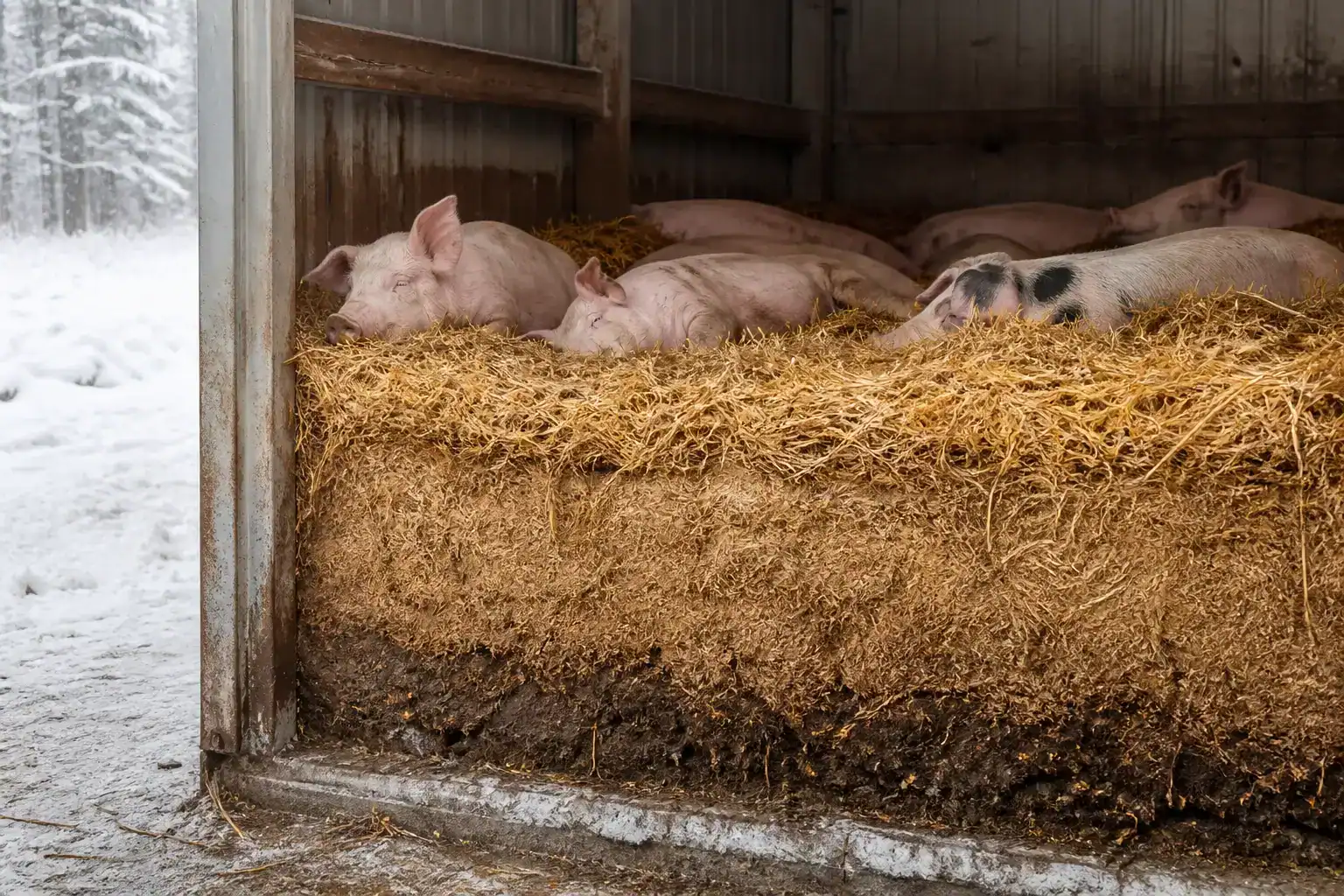
If you only fix one thing, fix moisture. Wet pigs get cold much faster than dry pigs because moisture pulls heat away from the body. A pig shelter can be simple, but the sleeping area needs to stay dry from above, below, and inside.
Place the winter shelter on high ground if you can. If the only available pen is low, add drainage before winter. Water should not run through the bedding pack during rain or snowmelt. If the entrance faces the prevailing winter wind, turn it, add a windbreak, or use panels to redirect drafts.
A good winter pig shelter usually needs:
- A solid roof that does not drip into the sleeping area
- Three protected sides or equivalent wind protection
- An entrance that does not funnel wind directly into the bedding
- A floor or base that drains instead of holding mud
- Enough room for all pigs to lie down together
- Not so much open space that their body heat disappears
For many homesteads, a three-sided shed, calf hutch, modified run-in, or low hoop shelter can work. The details matter more than the label. If the bedding is dry, the wind is blocked at pig level, and the pigs choose to sleep inside, you are on the right track.
Use Deep Bedding the Right Way
Deep straw is one of the most practical answers to how to keep pigs warm in winter without a heated barn. Straw traps air, gives pigs something to nest in, and lifts them off cold ground. Pigs will often burrow into it and make their own warm pocket.
Start with more bedding than looks necessary. A few flakes tossed on bare ground will not do much once the pigs root it around. Build a thick bed, then keep adding clean dry straw as it packs down. If the bedding smells sharp, feels wet, or clumps heavily with manure, it needs attention.
Straw usually works better than hay for insulation, though hay can be used in a pinch if it is dry and not moldy. Wood shavings can help manage moisture, but they do not always give pigs the same nesting structure as straw. Avoid dusty, moldy, or treated materials. Pigs spend too much time with their noses in the bedding for poor bedding to be worth the risk.
A useful winter habit is to separate the sleeping zone from the bathroom zone. Pigs naturally tend to choose a manure corner if the pen gives them room and the feed and water are placed thoughtfully. Keep water outside the bedded sleeping area whenever possible. A tipped bucket can ruin a warm bed in one afternoon.
Block Drafts Without Sealing the Shelter Tight
A winter pig shelter needs wind protection, but it still needs ventilation. This is where many small setups go wrong. A shed that is closed up tight can collect moisture, ammonia, and stale air. Damp air makes pigs colder and can irritate their lungs.
Think about air at pig height. Stand or crouch where they sleep. If wind cuts across the bedding at that level, add a panel, gate, plywood sheet, hay-bale wall, or tarp on the windward side. If condensation drips from the roof or the shelter smells strong when you open it, you need more air exchange.
The sweet spot is calm, dry air around the pigs with enough ventilation above them to let moisture escape. Open-front shelters often work well because they block the worst weather without trapping everything inside. Face the opening away from prevailing winter winds when you can.
Keep Water From Freezing
Warm bedding will not help enough if pigs stop drinking. Pigs need water in winter, and they eat more dry feed when it is cold. If water freezes, feed intake drops, digestion suffers, and the whole system gets harder.
Your water plan depends on power access, climate, and pen location. In mild cold, swapping buckets often may be enough. In real winter, plan for heated buckets, insulated water lines, tank de-icers, or frost-free systems. Check electric equipment carefully, keep cords protected from pigs, and use outdoor-rated products with GFCI protection. Pigs chew, root, flip, and test everything.
Do not assume a waterer is working because you filled it in the morning. Check it with your hand. Nipples can freeze. Buckets can crust over. A pig may learn to break thin ice, but that is not a reliable watering system.
If your winter setup is still rough, make water chores easier on yourself. Put the water station where you can reach it safely in snow and mud. Frozen fingers and a long hose across ice are how winter systems fail in real life.
Adjust Feed for Cold Weather
Cold pigs burn more calories. Mature pigs in good condition may only need a modest adjustment, but growing pigs can need noticeably more feed as temperatures drop. The worse the shelter, the more feed they burn just trying to keep warm.
Do not make feed changes blindly. Watch body condition, appetite, manure, growth, and behavior. If pigs are eating well but getting ribby, the pen is probably too cold, too wet, too drafty, underfed, or some combination of those. More feed can help, but feed alone cannot fix soaked bedding and a windy sleeping area.
Use a complete swine ration as the base, then manage scraps and extras carefully. Winter is not the time to dilute a growing pig’s diet with too many low-value leftovers. If you need a refresher on what belongs in the feed pan, use What Do Pigs Eat? as a practical starting point.
For small herds, the most useful winter feed habit is consistency. Feed at predictable times, keep feed dry, and avoid letting timid pigs get pushed out. If one pig is always losing at the feeder, cold weather will punish that pig first.
Make the Pen Work in Bad Weather
A good winter pen is not just a shelter. It is a chore system. You need to feed, water, bed, check fences, remove manure, and inspect pigs when it is dark, slick, windy, or snowing.
Place gates where they will still open after snow piles up. Keep a bedding path you can reach with a wheelbarrow, sled, or fork. Store straw where it stays dry. Put feed in a rodent-resistant container close enough that chores are not miserable but far enough that pigs cannot break into it.
Winter fencing also deserves attention. Frozen ground can make posts heave, mud can loosen corners, and hungry pigs test weak spots. If pigs learn they can push through a sagging winter fence, cold chores get much worse. Review Pig Fencing before the ground freezes if your current setup already feels temporary.
Electric fencing can work in winter, but snow, poor grounding, dead batteries, and buried lower wires can reduce reliability. Walk the fence often. A pig loose in winter is harder to move, harder to contain, and more likely to tear up ground while looking for feed.
Be Careful With Heat Lamps
Heat lamps are common, but they are also one of the highest-risk tools in a barn or shelter. Pigs are strong, curious, and rough on equipment. Bedding is flammable. A lamp that looks safely hung to a person may be reachable by a pig standing, rubbing, or rooting.
For most feeder pigs, better bedding and shelter design are safer than trying to add lamps. If you must use supplemental heat for piglets or a vulnerable animal, mount equipment securely, use proper guards, keep cords out of reach, avoid contact with bedding, and check it often. Do not rely on twine, temporary clamps, or wishful thinking.
For farrowing and piglets, winter becomes a different level of management. Piglets need much warmer conditions than adult pigs. If you are breeding sows through winter, plan that setup separately with veterinary or extension guidance rather than assuming the feeder-pig shelter is enough.
A Practical Winter Pig Setup
For a small homestead group of feeder pigs, a workable no-heated-barn setup might look like this:
- A three-sided shelter on high ground with the opening away from the prevailing wind.
- A deep straw bed in the back half of the shelter.
- Feed and water placed outside or near the front so spills do not soak the sleeping area.
- Windbreak panels on the exposed side of the pen.
- Extra straw stored close by and kept dry.
- A heated bucket or reliable twice-daily water replacement plan.
- Daily checks for wet bedding, frozen water, coughing, shivering, and body condition.
That setup is not fancy, but it addresses the real problems: wind, wet, water, calories, and access.
Winter Pig Chore Checklist
Use this quick check during cold snaps:
- Water is open, clean, and unfrozen.
- Bedding is dry where pigs sleep.
- No wind is cutting across pigs at bedding level.
- Pigs come out to eat and move normally.
- No pig is shivering, isolated, coughing, or losing condition.
- Feed stays dry and every pig gets access.
- Fence is tight and gates still work after snow, mud, or freeze-thaw.
- Cords, heaters, buckets, and panels are protected from chewing and rooting.
- Manure and wet bedding are removed before ammonia or moisture builds.
Winter success usually comes from doing these ordinary things consistently, not from one expensive piece of equipment.
When to Get Help
Call a livestock veterinarian or your local extension office if pigs are shivering heavily, not eating, coughing, showing labored breathing, losing weight quickly, or if piglets are chilled. Also get advice before using supplemental heat in farrowing areas or when caring for very young pigs in severe cold.
Cold weather can move from inconvenient to dangerous quickly, especially when moisture and wind are involved. If you are choosing between buying more bedding and hoping for the best, buy the bedding.
Frequently Asked Questions About Keeping Pigs Warm in Winter
Do pigs need heat in winter?
Most healthy mature pigs do not need a heated barn if they have dry bedding, wind protection, adequate feed, and unfrozen water. Young pigs, sick pigs, thin pigs, and piglets need more protection.
What bedding keeps pigs warmest?
Clean, dry straw is one of the best practical bedding choices for winter pig shelters because pigs can nest into it and it traps insulating air. Replace wet or manure-heavy bedding promptly.
Can pigs stay outside all winter?
Pigs can live outside in winter when they have a dry shelter, draft protection, good drainage, enough feed, and reliable water. Outdoor winter pigs still need daily checks and a realistic plan for severe weather.
How cold is too cold for pigs?
It depends on age, size, condition, wind, moisture, and shelter. Small pigs and piglets need much warmer conditions than mature feeder pigs. If pigs are shivering, losing condition, refusing to move, or piling tightly all day, the setup is too cold for them.
Should I use a heat lamp for pigs?
Use heat lamps only with extreme caution. They can start fires when used near bedding, and pigs can knock them down or reach them. Better shelter, deep bedding, and safe water systems are usually the first fixes.