
Off grid food storage works best when it does not depend on a second freezer. I like a freezer as much as anybody who puts up meat, broth, berries, and garden extras, but a homestead food plan gets stronger when the freezer is only one layer. Shelves, jars, dry goods, root crops, water, and a written rotation system keep feeding the house even when power is out, fuel is short, or the freezer is already full.
A second freezer looks like an easy answer. Sometimes it is. But it also adds another appliance to power, monitor, defrost, organize, and protect during storms. Before I buy more cold storage, I want the pantry doing its share first. That usually means fewer emergency grocery trips, less spoiled food hiding in the bottom of a chest freezer, and a food system that fits real homestead life.
Why Off Grid Food Storage Should Not Start With Another Freezer
A freezer is storage, but it is storage with a cord attached. If the power stays on, it is useful. If the power goes out, the timer starts. FoodSafety.gov says a full freezer can hold safe temperatures for about 48 hours when the door stays closed, while a half-full freezer is closer to 24 hours. That is good information, but it is not a permanent plan.
This is why I treat freezer space like a tool, not the foundation. Our power outage preparedness homestead guide covers generators, water, animals, and food safety from the broader homestead angle. For food alone, the goal is to keep the freezer from carrying every bit of risk.
If every chicken, soup, berry, tomato, and freezer meal lives behind one lid, then every storm becomes a food emergency. If half that food is on shelves, in jars, dried, fermented, or stored as ingredients, the freezer becomes helpful instead of fragile. That shift matters more than the size of the appliance.

Key Takeaways
Start With the Meals You Actually Cook
The fastest way to waste money on food storage is to buy ingredients for an imaginary household. A pantry full of wheat berries, powdered eggs, and dried beans might look impressive, but it will not help much if nobody knows how to cook from it on a Tuesday night. I start with meals we already eat and then ask which parts can move out of the freezer.
For us, that means soups, chili, beans, rice bowls, breakfast staples, pasta nights, skillet meals, and simple suppers built around meat, vegetables, and something filling. Some of that still belongs in the freezer. The rest can be held as canned tomato products, pressure-canned meat or beans, dry rice, oats, flour, cornmeal, pasta, dehydrated herbs, broth, potatoes, onions, winter squash, and shelf-stable fats.
If you are new to preserving, start smaller than your ambition. Our guide to how to start preserving food is built around beginning before you grow everything yourself. That is the right mindset here too. A working pantry beats a heroic pantry that nobody maintains.
Build the Shelf-Stable Layer First
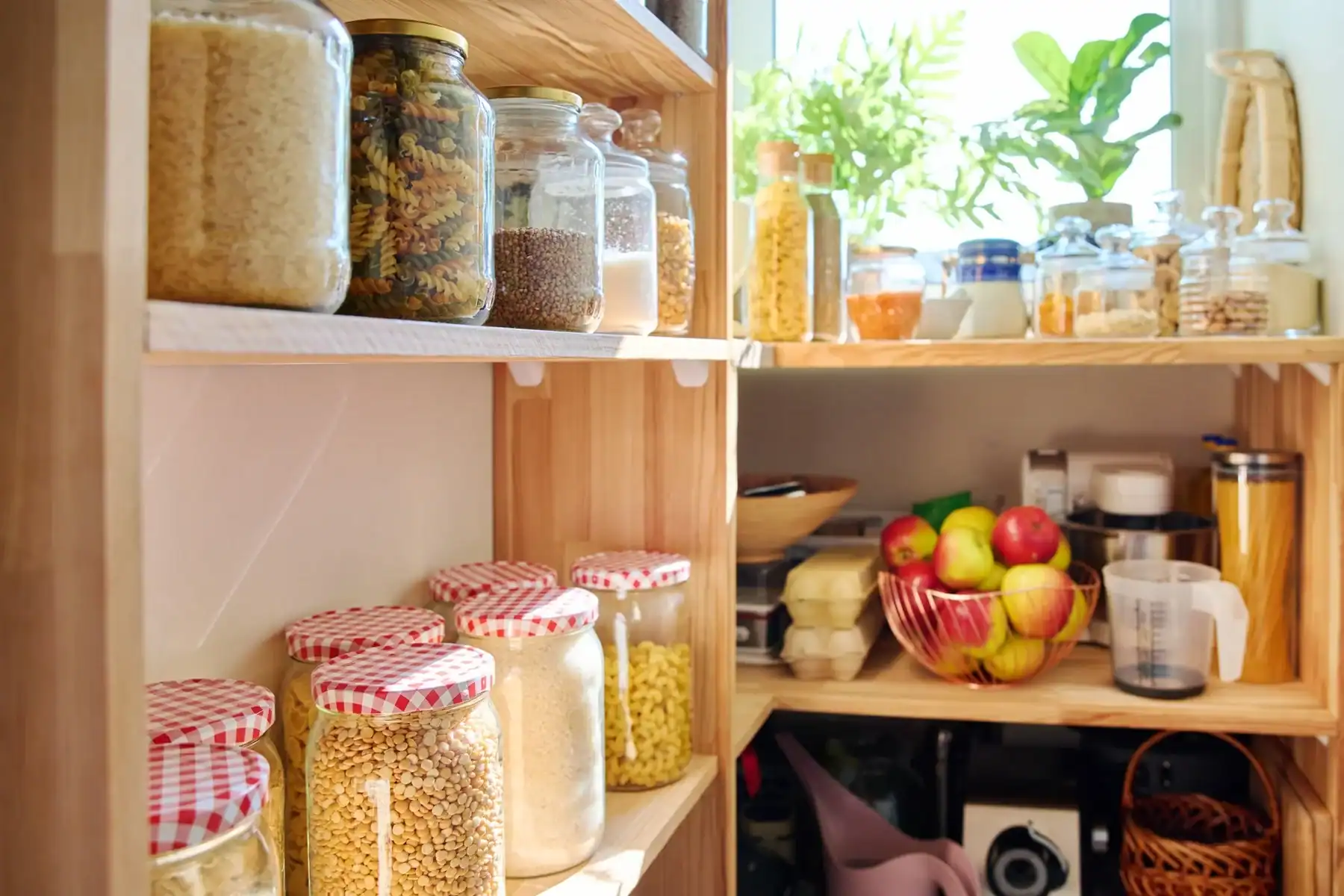
The shelf-stable layer is the part that still works when the lights are out. It includes store-bought staples, home-canned food, commercially canned food, dried herbs, dehydrated vegetables, powdered milk if you use it, vinegar, salt, sugar, honey, oil, and the basic seasonings that make plain food worth eating.
I like to organize this layer by meal use instead of by grocery-store category. Breakfast shelf, baking shelf, beans and rice shelf, quick supper shelf, canning overflow shelf, and storm meals shelf all make more sense to tired people than a perfect alphabetized pantry. When the weather is rough, you want to know what you can cook, not admire tidy labels.
For home-canned food, the National Center for Home Food Preservation recommends storing jars in a clean, cool, dark, dry place, ideally between 50 and 70 degrees F for best quality. That one sentence should guide where you put shelves. A hot garage, damp cellar, sunny mudroom, or wall beside a heat source can shorten quality and cause problems.
Remove canning rings after jars cool and seals are checked, label every jar with food and date, and avoid stacking jars so high that lower seals get disturbed. If a jar loses its seal, leaks, spurts, smells wrong, shows mold, or looks suspicious, do not taste it. Food storage is supposed to reduce risk, not invite it.
Use Cool Storage for Foods That Do Not Need Freezing
Cool storage is the middle ground between pantry shelves and freezer space. Potatoes, sweet potatoes, winter squash, onions, garlic, apples, cabbage, and some root crops can store well without freezing when temperature, airflow, humidity, and separation are handled correctly. A true root cellar is wonderful, but it is not the only option.
A basement corner, insulated closet, crawl-space access area, mudroom cabinet, unheated room, buried cooler, or well-vented outbuilding may help with some crops depending on your climate. The trick is to match the crop to the conditions. Potatoes want dark and cool, but not freezing. Onions and garlic need dryness and airflow. Winter squash prefers warmer, drier storage than potatoes. Apples can share ethylene with other foods, so I do not crowd them next to everything else.
This is where observation beats gear. Put a thermometer and humidity gauge where you want to store food, then watch it for a couple of weeks before trusting it with a harvest. Check both mild afternoons and cold mornings. An off-grid plan that ignores actual temperatures is just wishful thinking with shelves.

Keep a Smaller Freezer, But Make It Work Harder
I am not arguing against freezers. I am arguing against using a freezer as the only serious food plan. If you already have one, make it earn its footprint. Keep it full enough to hold cold better, leave room for air movement where the manufacturer requires it, and keep a written inventory so you know what is inside without holding the lid open.
FoodSafety.gov advises keeping freezers at 0 degrees F or below and refrigerators at 40 degrees F or below, with appliance thermometers in place so you can judge safety after an outage. I like a thermometer inside the freezer and a simple inventory outside it. The inventory can be a notebook, clipboard, dry erase sheet, or spreadsheet. The method matters less than using it.
Put high-value foods together: meat in one zone, broth and soups in another, fruit in another, garden overflow in another. Freeze water jugs in empty spaces to add thermal mass. Keep a cooler and ice plan for short outages. If the outage may run long, know ahead of time whether you have safe generator capacity for the freezer or whether you need to cook, can, share, or move food.
A backup kit makes this easier. Our homestead blackout kit covers the practical gear side, but the food piece still comes back to planning. A freezer packed with mystery bags is harder to save than a freezer with a current list and clear priorities.
Add Water to the Food Plan
Food storage without water is only half a system. Dry beans, rice, oatmeal, pasta, powdered milk, and dehydrated vegetables all need water. So do people, pets, livestock, cleanup, handwashing, and sometimes cooking fuel systems. If the well pump depends on electricity, the pantry can be full and still leave you stuck.
Store drinking water where it is protected from heat and contamination, and separate it from fuel, chemicals, and animal supplies. Keep some water in small containers that anyone can lift, and use larger containers only if you have a realistic way to move and dispense them. Rotate water on a schedule you will remember.
Ready.gov includes food and water in its basic emergency supply list and recommends enough supplies for several days. On a homestead, that number needs to account for animals and chores too. I do not want my food storage plan depending on a working tap when the same storm could take out power to the well.
What I Would Store Before Buying Another Freezer
If I were starting from scratch, I would build a thirty-day working pantry before adding a second freezer. Not a bunker pantry. A working pantry. The point is to create a food buffer made from things the household already uses.
- Base starches: rice, oats, pasta, flour, cornmeal, potatoes, winter squash, and shelf-stable bread ingredients.
- Proteins: beans, lentils, peanut butter, canned fish, canned meat, pressure-canned beans or meat if you preserve safely, and shelf-stable broth options.
- Vegetables and fruit: home-canned tomatoes, pickles, jams, applesauce, dehydrated herbs, dried fruit, and commercially canned vegetables you actually like.
- Cooking support: salt, sugar, vinegar, oil, spices, yeast, baking powder, baking soda, powdered milk, coffee, tea, and comfort foods.
- Emergency meals: a few no-cook or low-cook meals for the days when the weather is bad and nobody wants to make bread from scratch.
If canning is part of the plan, use tested recipes and the correct method. Our water bath canning for beginners guide explains why high-acid foods and low-acid foods are handled differently. Freezer space should never be replaced by unsafe shelf storage.
Rotation Is the System
A pantry is not off grid food storage just because it has a lot of food in it. It becomes a system when food moves through it. New items go behind older items. Jars and packages get dates. Meals pull from storage every week. Gaps go on the grocery list or the garden plan. Old food does not become a museum.
I like a simple three-column inventory: food, amount, and use-by goal. The use-by goal is not always a hard safety deadline. It is a practical quality and rotation target. Flour, oils, nuts, whole grains, and spices can go stale faster than people expect, especially in heat. Canned goods need seal checks and common sense. Dry goods need pest protection.
Use containers that protect food from moisture, rodents, insects, and accidental spills. Five-gallon buckets with gasket lids, glass jars, lidded bins, metal trash cans for animal feed, and original packaging inside larger pest-resistant containers can all have a place. Label containers plainly. A beautiful pantry that hides its contents is less useful than a plain one that tells the truth.
When a Second Freezer Does Make Sense
After the pantry is working, a second freezer may still be a good buy. If you raise meat animals, buy beef by the quarter, fish or hunt, batch-cook heavily, or preserve a lot of berries and sweet corn, freezer space can save money and labor. The question is not whether freezers are bad. The question is whether your food system can survive one failing.
If you do add another freezer, give it a job. One freezer for meat and one for produce. Or one daily freezer and one deep-storage freezer. Keep both on thermometers. Keep both inventoried. Put them on the generator priority list only if your backup power can handle them safely. Do not let the second freezer become a second mystery box.
For garden overflow, think through preservation methods before harvest panic hits. Our guide to ways to use and preserve zucchini is a good example of spreading one crop across fresh eating, freezing, drying, baking, and shared meals rather than asking one appliance to hold everything.
A Simple Weekend Setup
You can make real progress in one weekend. First, write down the meals your household would actually eat for one week without shopping. Second, circle which ingredients can live on a shelf, in jars, or in cool storage. Third, clean one pantry zone and label it for those foods. Fourth, put a thermometer in any cool-storage area you are considering. Fifth, inventory the freezer without reorganizing it into a three-hour ordeal.
After that, choose one gap to fix at a time. Maybe you need more rice and beans. Maybe you need tested canning recipes for tomatoes. Maybe you need a better place for potatoes. Maybe you need to stop freezing broth because shelf-stable canned broth would be more useful. Small decisions make the system stronger.
Off grid food storage should feel practical, not dramatic. The best version is ordinary enough to use every week and sturdy enough to help when the power is out. Build shelves before panic. Label jars before you forget what is in them. Eat from the pantry often enough that it stays alive. Then, if you still need another freezer, you will be adding it to a system instead of asking it to be the whole system.
Frequently Asked Questions About Off Grid Food Storage
What is off grid food storage?
Off grid food storage is a layered food system that can keep feeding a household with little or no electricity. It usually includes dry goods, canned food, cool storage crops, water, cooking supplies, and a smaller amount of frozen food.
Can I store food off grid without a root cellar?
Yes. A root cellar helps, but you can still use pantry shelves, dry goods, home-canned food, dehydrated foods, commercially canned food, and carefully monitored cool spaces such as a basement corner or insulated storage room.
Is a freezer bad for off grid food storage?
No. A freezer is useful, especially for meat and garden produce, but it should not be the only food storage layer. It needs power, temperature monitoring, and an outage plan.
How much pantry food should a homestead store?
Start with one to four weeks of meals your household already eats, then build from there. A smaller pantry that rotates well is usually safer and more useful than a large pantry full of unfamiliar food.
Where should home-canned food be stored?
Home-canned food should be stored in a clean, cool, dark, dry place. The National Center for Home Food Preservation recommends 50 to 70 degrees F for best quality.
Image Credits
Images are public domain materials from the National Archives and Records Administration and the USDA Extension Service, accessed through Wikimedia Commons.