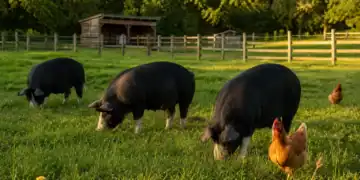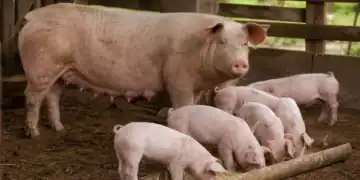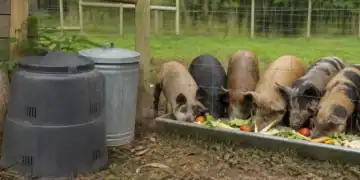

Pig fencing is one of the most important infrastructure decisions you will make before bringing pigs home. Pigs are strong, intelligent, and highly motivated to test boundaries, particularly when they can smell food, a wallow, or another pig on the other side. A fence that works for sheep or goats will not necessarily work for pigs. Getting pig fencing right before the animals arrive saves weeks of frustration and prevents the kind of escapes that damage relationships with neighbors, put pigs on roads, and create genuine safety hazards. The good news is that effective pig fencing does not require expensive materials. It requires understanding how pigs interact with fences and designing accordingly.
What You’ll Learn
Why Standard Farm Fencing Fails for Pigs
Most standard farm fencing options that work reliably for other livestock fail with pigs for predictable reasons. Woven wire without an electric deterrent will be rooted under within days by motivated pigs. Traditional barbed wire does not provide a meaningful deterrent against a determined 200-pound animal pressing through it. High-tensile smooth wire spaced for horses or cattle has gaps wide enough for young pigs to walk through and lacks the contact deterrent that stops rooting behavior at the fence line.
The core difference between pig fencing and other livestock fencing is that pigs interact with the bottom of the fence rather than the top or middle. Sheep and goats push over or through fencing at body height. Pigs root under it at ground level. Any pig fencing system that does not address the ground-level rooting pressure is a fencing system that will fail. If the fence is holding but the pasture is disappearing, our guide to stopping pigs from rooting up pasture explains rotation, enrichment, and ground protection.
Electric Fence for Pigs
Electric fence for pigs is the most practical and widely used option on homesteads for good reason. A properly set up electric fence for pigs is inexpensive to install, effective at deterring both rooting and pushing behaviors, and easy to move for rotational grazing systems.
A basic two-strand electric fence for pigs uses:
- Strand 1 at 6 to 8 inches from ground level, positioned at nose height for adult pigs
- Strand 2 at 18 to 24 inches, positioned at shoulder height
A three-strand setup adds a middle strand at 12 inches, which provides additional deterrence for larger pigs and extra insurance against jumping behavior in younger animals.
The nose-height strand is the critical element in electric fence for pigs. When a pig roots toward the fence line and contacts the low strand with its nose, the shock is delivered to one of the most sensitive areas of the pig’s body. Pigs learn to associate that nose-height contact with pain quickly and reliably, which is what makes the system work. A fence positioned too high allows rooting under the wire without contact, which trains the pig that the fence is crossable rather than deterrent.
The charger powering your electric fence for pigs needs to maintain at least 2,000 volts at the fence line under load. Check voltage with a fence tester regularly, not just at the charger. A fence that reads 5,000 volts at the charger but drops to 500 volts at the far corner due to vegetation contact and poor grounding is not functioning as pig fencing. Maintain clear grass and vegetation along the fence line, particularly in wet conditions when grounding is most critical.
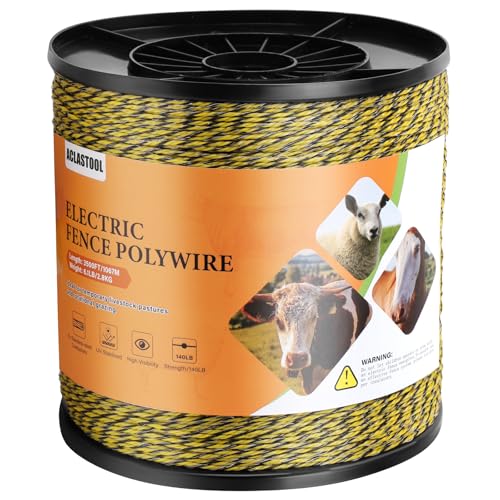
Posts for electric pig fencing can be step-in plastic posts spaced 10 to 12 feet apart for temporary or rotational setups, or wooden T-posts for permanent perimeters. Fiberglass or poly posts work well as corner and strain posts in lightweight systems. A reel and polywire or polytape system allows rapid setup and reconfiguration for rotational grazing, which is the most practical management approach for pigs on pasture.
3500ft 1067m, Polywire for Portable Livestock Fencing, 6 Stainless Steel Strands for Reliable Conductivity and Rust Resistance, UV Resistant
How to Train Pigs to Electric Fence
Never release pigs directly into a large pasture enclosed by electric fence for pigs without first training them in a small area. A pig that has never encountered electric fence will walk through it on first contact because the shock, while unpleasant, is not immediately associated with the barrier. The training process creates the association.
Set up a small holding pen, 10 by 10 feet or similar, using electric fence for pigs before the animals arrive. Put something attractive inside: feed, water, a wallow if possible. When pigs are placed in the pen and begin exploring, they will contact the wire and receive a shock. After two to four contact experiences, most pigs learn to respect the fence boundary. Allow two to three days of holding pen training before releasing into a full pasture.
Pigs that have been trained to electric fence for pigs in a small pen will generally respect the same fence across a larger perimeter. The training is durable, but the fence must remain consistently charged to maintain it.
Permanent Pig Fencing Options
For permanent pig enclosures, housing areas, or anywhere that pigs will be managed long-term, a more robust pig fencing system provides additional security and does not require the maintenance of an electric charger.
Woven wire hog panels are the most secure permanent pig fencing option. These rigid galvanized steel panels are available in 16-foot lengths, 34 to 36 inches tall, with horizontal wire spacing that is tighter at the bottom than the top. Combined with a single strand of electric wire at 6 to 8 inches from the ground mounted inside the woven wire, hog panels create a pig fencing system that is nearly escape-proof for any size pig.
Cattle panels (also called livestock panels or stock panels) are a less expensive alternative with slightly larger wire spacing, which makes them appropriate for adult pigs but requires monitoring with younger or smaller animals. Mount a single electric strand inside at nose height to address the rooting pressure.
Chain link fencing is a secure permanent option for holding pens and farrowing areas but is significantly more expensive than hog panels or cattle panels for equivalent area coverage.
Whatever permanent pig fencing material you use, bury or pin the bottom edge to the ground at 6 to 12 inch intervals using ground staples, landscape staples, or stakes. A fence with a free bottom edge will be rooted under within days by a pig that discovers the gap.
Fencing for Rotational Grazing Systems
Rotational grazing for pigs improves pasture recovery, reduces parasite pressure, and produces better pig health outcomes than continuous grazing in a fixed pen. Electric fence for pigs is the most practical tool for rotational systems because it can be set up, moved, and reconfigured in minutes.
Divide your total pig pasture area into two or three paddocks. Move pigs to a fresh paddock every two to four weeks, allowing each vacated paddock four to six weeks of rest before reuse. The rest period allows pasture recovery, solar exposure, and microbial activity to reduce parasite egg viability in the soil. Rotation also helps interrupt parasite cycles; our guide to internal parasites and roundworms in pigs covers warning signs, testing, treatment, and prevention.
A reel of polywire or polytape and a bag of step-in posts allow a single person to set up a new paddock in under 30 minutes. Temporary internal dividers combined with a permanent outer perimeter of woven wire or robust electric fence for pigs creates a rotational system that is both flexible and secure.
According to the Penn State Extension, electric fencing is the most widely recommended pig fencing method for small farms and homesteads due to its low cost, effectiveness, and adaptability to rotational management systems.
For more on setting up a complete pig management system, see our guide on how much space pigs need.
Frequently Asked Questions About Pig Fencing
How many strands of electric wire do pigs need?
A two-strand electric fence for pigs with the lower strand at 6 to 8 inches and the upper strand at 18 to 24 inches is sufficient for most adult homestead pigs. A three-strand setup adds a middle strand at 12 inches for additional security. The most important strand is always the lowest one, positioned at pig nose height.
Will pigs respect electric fence?
Yes, after a brief training period. Pigs learn to respect electric fence for pigs quickly once they have experienced two to four contact events. The training is durable as long as the fence remains consistently charged. A fence that loses charge or drops below effective voltage will be tested and eventually breached by pigs that have learned the charge is intermittent.
How deep should pig fence posts be set?
Permanent pig fencing posts should be set a minimum of 18 to 24 inches in the ground, with 30 inches for corner and strain posts that bear tension load. Step-in posts for temporary electric fence for pigs do not need to be deeply set but must be pushed firmly enough to hold the wire taut without flexing under contact pressure.
Can pigs jump over fences?
Adult pigs are not natural jumpers and rarely attempt to go over fences of adequate height. Young piglets are more agile and can scale low barriers. A fence height of 32 to 36 inches is sufficient for adult pigs. Any gaps or low points in the fence line are more likely to be rooted under than jumped over. Address ground-level security before worrying about fence height.
How do you stop pigs from rooting under a fence?
The most effective method is a nose-height electric strand at 6 to 8 inches from the ground, positioned so that a pig rooting toward the fence base contacts the wire with its snout. A pig that receives a nose shock while attempting to root under a fence stops that behavior quickly. Without this deterrent, pigs will root under most fixed fencing given enough motivation and time.