
Raising pigs for meat is one of the most efficient and satisfying food production projects a homesteader can take on. Two feeder pigs started at 50 pounds in spring and managed well through summer can fill a chest freezer with high-quality pork by fall, all within a 5 to 6 month timeline. The inputs are straightforward: space, water, feed, and consistent daily attention. The returns are a year or more of pastured pork, significant savings over retail prices, and the clear knowledge of how your meat was raised. Getting the basics right from the beginning makes the whole process run smoothly.
What You’ll Learn
Choosing Feeder Pigs
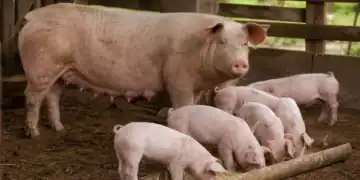
Feeder pigs are weaned pigs sold at 6 to 8 weeks of age, typically weighing 40 to 60 pounds, ready to be raised to market weight. Sources include local farms and homesteads, livestock auctions, agricultural classifieds, and farm supply store bulletin boards. Buying directly from a small farm where you can see the conditions the pigs were raised in is preferable to auction purchases, where health history is unknown and stress from transport and handling increases disease risk.
Look for feeder pigs that are alert and active, with bright eyes, clean skin, no nasal discharge, and legs that track straight without obvious lameness. Pigs that are thin, lethargic, or showing any respiratory symptoms should be avoided. A healthy feeder pig arriving on your property has the best possible start for the 5 to 6 months ahead. If marbled pork is the goal, our guide to raising Berkshire pigs covers their growth rate, pasture needs, temperament, and processing expectations.
Buy at least two pigs. The buddy system rule in raising pigs for meat is not optional. For the fuller behavior and management tradeoff, our guide to keeping a single pig versus two pigs explains why companionship matters and what a pair changes. Pigs are herd animals whose natural behavior is oriented around social interaction. A single pig without a companion becomes stressed, vocalizes excessively, and often refuses to eat consistently. Two pigs together are calmer, eat better, grow faster, and are significantly easier to manage. The cost difference between one and two pigs is modest compared to the management headaches of raising a single pig.
Setting Up for Raising Pigs for Meat
Before feeder pigs arrive, the enclosure, shelter, water supply, and feed storage must be fully in place. Pigs that arrive to an unprepared setup immediately test boundaries and create problems that are difficult to resolve once the animals are already stressed and exploring.
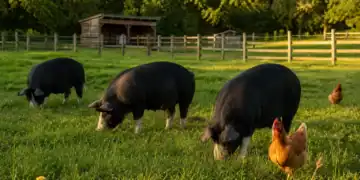
The enclosure for raising pigs for meat needs a minimum of 80 to 100 square feet of outdoor space per pig in a dry lot setup, or a quarter acre of pasture for a pair on a rotational system. The fence must address rooting at ground level. A two-strand electric fence with the lower strand at 6 to 8 inches is the most practical option for most setups.
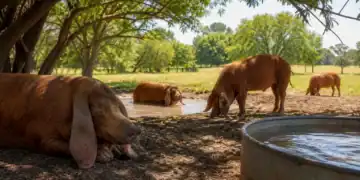
Shelter must be available before pigs arrive. A three-sided shed, a hoop structure with straw bedding, or a simple wooden structure with a roof provides adequate protection from sun, rain, and wind. Pigs in warm climates or during summer heat also require a wallow, a shallow depression or tub filled with water and mud where they can cool themselves. Pigs cannot sweat and rely on external cooling to regulate body temperature. For hot climates, Red Wattle pigs offer a heat-tolerant heritage option, provided they still have shade, water, and a dependable wallow.
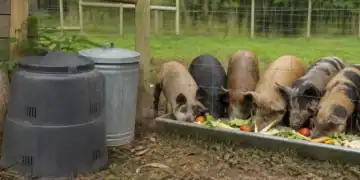
Feed Storage should be in a rodent-proof metal bin (we use metal drums). Pigs attract rodents, and open feed bags in the pig area invite pest pressure that undermines the cleanliness of the whole operation. A metal garbage can with a tight lid is sufficient for small-scale pig feed storage.

Feeding a Timeline for Raising Pigs for Meat
Raising pigs for meat follows a three-stage feeding program that shifts protein levels as the pig grows.
Starter feed at 18 to 20% protein suits pigs from weaning through approximately 50 to 75 pounds. Most feeder pigs arrive already transitioned off starter, but some younger or lighter pigs benefit from continuing starter for the first few weeks after arrival.
Grower feed at 14 to 16% protein takes pigs from 75 pounds through approximately 125 to 150 pounds. This is the longest phase of raising pigs for meat and where the majority of frame development occurs.
Finisher feed at 13 to 14% protein takes pigs from 150 pounds through processing weight. The lower protein in finisher reduces the cost per pound of gain in the final phase and shifts the pig’s nutritional energy toward fat deposition, which improves carcass quality and eating experience.
Each pig consumes roughly 3 to 4 times its body weight in feed across the full grow-out. A pig raised from 50 to 250 pounds requires approximately 700 to 800 pounds of commercial feed, more if growth is slower or the feed conversion ratio is high. Pasture, dairy supplementation, and garden surplus reduce purchased feed costs meaningfully on a working homestead.
Feed pigs twice daily in amounts they clean up within 20 to 30 minutes. Monitor feed intake closely, as a pig that suddenly stops eating is often showing the first signs of illness. Adjust portions as pigs grow and increase water delivery in warm weather.
Processing Timing and Weight
The standard processing weight for raising pigs for meat is 250 to 280 pounds of live weight, which produces a hanging weight (carcass weight after slaughter and evisceration) of approximately 165 to 185 pounds and a final take-home weight of 130 to 150 pounds of packaged pork once cut and wrapped.
Processing below 200 pounds produces a smaller carcass with thinner backfat and less developed flavor. Processing above 300 pounds increases fat deposition significantly and reduces the ratio of lean meat to fat in the final product, though some homesteaders and heritage breed raisers prefer the flavor of a heavier hog.
Schedule your USDA-inspected processor or local custom-exempt butcher at least 4 to 6 weeks before your intended processing date. Processing slots at quality facilities book out quickly, particularly in fall when most homestead meat pig projects come to completion. Confirm the appointment as your pigs approach 225 to 230 pounds so you have a firm date to work toward.
Transporting Pigs to Processing
Moving pigs for the first time to a trailer or truck can be one of the more challenging moments in raising pigs for meat. Pigs that have never been loaded into a vehicle are often reluctant, and a stressed pig that has fallen or been injured during loading produces lower quality meat due to stress hormones released at slaughter.
Begin acclimating pigs to the trailer or loading area one to two weeks before processing. Open the trailer in the pig pen and let them investigate it freely. Feed them in and near the trailer so they associate it with a positive experience. On loading day, use a solid sorting board rather than your hands to guide pigs calmly forward. Avoid shouting, rushing, or striking pigs, which increases stress and makes loading harder, not easier.
According to the Iowa State University Extension and Outreach, proper handling at loading and during transport is one of the most underappreciated factors in homestead pork quality, with stressed pigs producing measurably different meat texture and color than calmly handled animals.
Raising pigs for meat is one of the most direct and satisfying connections you can make between your homestead and your table. The process rewards attention to the basics: healthy animals from a good source, appropriate space and shelter, consistent feeding and water, and calm daily handling.
For help setting up your pig enclosure, see our complete pig fencing guide. The fat is worth as much as the chops. Here is how to render lard and put it to use in the kitchen. Curious exactly how long the process takes? See our full breakdown of how long it takes to raise a pig for slaughter. Pigs are a seasonal commitment rather than a standing one, which sets them apart from most of the barn. If a whole hog is more than you want to take on, meat rabbits and quail give you a freezer return on a much smaller footprint.
Frequently Asked Questions About Raising Pigs for Meat
How long does it take to raise a pig for meat?
Commercial breeds like Duroc crosses and Yorkshire crosses raised on a standard grower and finisher program reach 250 to 280 pounds in 5 to 6 months from a 50-pound feeder pig start. Heritage breeds like Berkshire and Tamworth take longer, typically 7 to 9 months, and produce different fat profiles and flavor. Pasture-raised pigs on limited grain may take 9 to 12 months or more.
How much does it cost to raise a pig for meat?
A rough budget for raising pigs for meat includes the feeder pig purchase price (typically $50 to $150 per pig depending on breed and region), feed costs of $150 to $250 per pig for commercial feed from 50 to 250 pounds, and processing costs of $200 to $400 per pig depending on facility and cut choices. Total cost per pig typically runs $400 to $800, producing 130 to 150 pounds of take-home pork.
What is the ideal slaughter weight for a homestead pig?
The standard target for raising pigs for meat is 250 to 280 pounds of live weight. This produces a well-balanced carcass with good lean meat coverage and adequate but not excessive backfat. Heritage breeds are sometimes processed at slightly lower weights, 200 to 240 pounds, to reduce fat deposition, while some homesteaders prefer heavier hogs at 300 or more pounds for maximum yield.
Do you need two pigs or can you raise one?
Always raise at least two pigs when raising pigs for meat. A single pig without a companion is consistently more stressed, eats less reliably, grows more slowly, and is more difficult to manage than a paired pig. The small additional cost and feed requirement of a second pig is worth it in every practical respect.
When should you switch from grower to finisher feed?
Transition pigs from grower to finisher feed when they reach approximately 150 pounds of live weight. The switch reduces feed protein from 14 to 16% down to 13 to 14%, which is appropriate for the final phase of growth when energy is directed more toward fat deposition and less toward lean muscle development. Make the transition gradually over one week to avoid digestive disruption.