
Sugar syrup for bees is useful when a colony does not have enough natural stores to meet a specific seasonal need. It can help a new colony build comb, support bees through a nectar shortage, or add weight to a light hive before winter. The recipe changes with the season, and knowing when to stop matters as much as knowing how to mix it.
Feeding every colony by habit can hide other problems and create unnecessary robbing pressure. Before reaching for the sugar bag, look at the colony’s strength, available forage, stored honey, weather, and the reason you are feeding.
What Is Sugar Syrup for Bees?
Sugar syrup is a temporary carbohydrate supplement made from plain white granulated sugar and clean water. It stands in for nectar when flowers are scarce or when a colony needs more food than the landscape can provide.
The two common mixtures are called 1:1 and 2:1 syrup. These ratios refer to sugar and water, usually measured by weight. Light 1:1 syrup contains roughly equal amounts of sugar and water. Heavy 2:1 syrup contains twice as much sugar as water.
The purpose of the two mixtures is different. Light syrup resembles thin nectar and is commonly used during spring buildup or to help a new colony draw comb. Heavy syrup contains less water and is usually used in fall, when bees need to store food quickly before cold weather limits their ability to remove moisture.
What You’ll Learn
Sugar Syrup Ratios by Season
1:1 Sugar Syrup for Spring
A 1:1 ratio means equal weights of sugar and water. A simple small batch uses:
- 5 pounds of white granulated sugar
- 5 pounds of water, which is about 2.4 quarts
Warm the water enough to dissolve the sugar, remove it from the heat, and stir in the sugar. Let the syrup cool completely before placing it in a feeder.
Spring syrup can support a newly installed package or nucleus colony while it draws foundation. It can also help an established colony during a cold, wet stretch when brood rearing has increased but flowers are not yet producing reliable nectar.
Do not assume that every spring colony needs feed. If bees have plenty of capped honey and a strong nectar flow has begun, added syrup may be unnecessary. Some colonies stop taking syrup when better forage becomes available.
Our guide to starting a beehive covers the equipment and early inspections that help you decide whether a new colony needs support.
2:1 Sugar Syrup for Fall
A 2:1 ratio means two parts sugar to one part water by weight. A practical batch uses:
- 10 pounds of white granulated sugar
- 5 pounds of water, which is about 2.4 quarts
Heavy syrup helps bees add stores without having to evaporate as much water. That matters as nights cool and the colony has fewer warm flying days left.
Feed 2:1 syrup when a fall inspection shows that the hive is too light for local winter conditions. The amount of stored honey a colony needs varies widely by region, hive size, winter length, and colony population. Local beekeeping associations and extension specialists can give a better target than a national rule.
Cornell’s overwintering guidance recommends a 2:1 fall mixture and emphasizes finishing liquid feeding while bees are still active.
How to Mix Sugar Syrup Safely
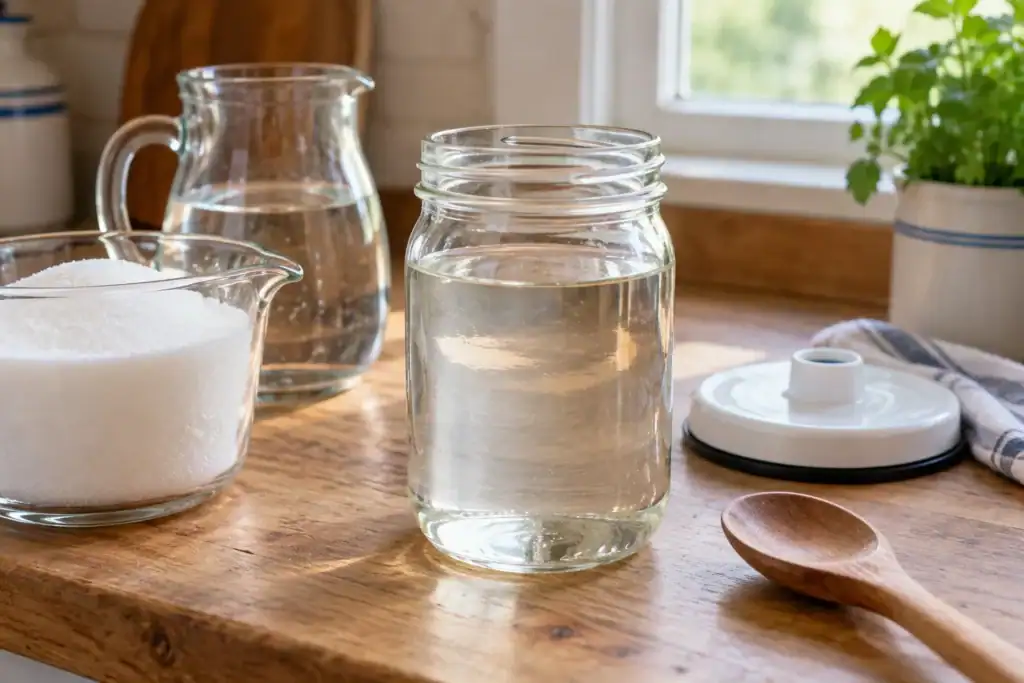
Use a clean pot or food safe bucket that has never held chemicals. Heat the water, then remove it from the heat before adding sugar. Stir until the crystals dissolve.
Do not boil sugar syrup. Excessive heat can caramelize sugar and create compounds that are harmful to bees. Do not feed syrup that smells fermented, looks moldy, or has changed color.
Allow the mixture to cool to room temperature before filling the feeder. Store extra syrup in a clean sealed container in a cool place and use it promptly. Small batches are easier to keep fresh than a large container that sits for weeks.
Use Plain White Granulated Sugar
Choose refined white cane or beet sugar. Avoid:
- Brown sugar
- Molasses
- Raw sugar with visible minerals
- Confectioners sugar containing starch
- Artificial sweeteners
- Corn syrup unless it is a product made specifically for honey bee feeding
- Honey from an unknown colony
Brown sugar and molasses contain minerals that bees do not handle well. Unknown honey can carry disease spores from another apiary. Artificial sweeteners provide no useful carbohydrate energy.
Do Not Add Unnecessary Ingredients
A basic syrup needs only sugar and water. Essential oils, supplements, medications, vinegar, and flavorings can change how bees use the feed and may cause harm when mixed incorrectly.
If a veterinarian, apiary inspector, or product label directs a treatment through feed, follow those exact instructions. Otherwise, keep the recipe simple.
How to Decide Whether a Colony Needs Feeding
Feeding should answer a problem you can describe. Start by checking the colony rather than the calendar.
Heft the Hive
Stand behind the hive and gently lift the back a few inches. A hive that feels unexpectedly light may lack stores. Hefting becomes more useful when you compare the same colony over time or compare it with a hive of similar equipment and strength.
A hive scale gives better numbers, but consistent observations are still valuable. Record what the hive feels like at the end of a strong nectar flow so you have a reference for future seasons.
Inspect Stored Honey
During suitable weather, look at how many frames contain capped honey and where those frames sit in relation to the cluster. Bees need access to food as the cluster moves through the hive.
Do not break apart a winter cluster in cold weather. The best time to correct low stores is before temperatures fall and before the colony settles into winter.
Consider Colony Strength
A very weak colony may have problems that syrup cannot fix. Queen failure, heavy Varroa pressure, disease, or too few bees can prevent a colony from processing feed and surviving winter.
Feeding is only one part of fall management. Our guide to maintaining a healthy beehive explains why population, queen condition, pests, and nutrition need to be assessed together.
Watch the Landscape
A nectar dearth can occur in summer as well as fall. Hot, dry weather may stop flowers from producing nectar even when blooms remain visible. If a strong colony becomes light during a dearth, temporary feeding may prevent starvation.
Remove harvest supers before feeding. Syrup stored in a super can be mistaken for honey and should not enter the crop intended for people.
Choosing a Bee Feeder
The best feeder lets your own colony reach syrup without advertising it to every bee and wasp nearby.
Top Feeders
A top feeder sits above the brood boxes and holds a relatively large volume. It keeps feed inside the hive and can be filled without disturbing the brood nest. Check seals and screens carefully because a leak can soak bees and bedding.
Frame Feeders
A frame feeder replaces one or more frames inside the hive. It stays warm and close to the bees, which can be useful in cool weather. Use a model with ladders or a rough interior that helps prevent drowning.
Inverted Jar or Pail Feeders
A jar or pail with small holes can sit over the inner cover inside an empty box. This setup keeps the feeder protected and makes consumption easy to see. Confirm that the lid seals well before placing it over the colony.
Entrance Feeders
Entrance feeders are easy to watch, but the scent of syrup at the entrance can invite robbing. They also become too cold for bees to use effectively as temperatures fall. An internal feeder is usually a better choice during a dearth or fall buildup.
The parts of a beehive guide can help you picture where each feeder fits.
Preventing Robbing While Feeding
Sugar syrup can trigger robbing, especially when natural nectar is scarce. Strong colonies may overwhelm weaker hives, and the fighting can kill bees and spread mites or disease between colonies.
Reduce the risk by:
- Feeding inside the hive
- Avoiding spills around the apiary
- Filling feeders near evening
- Reducing entrances so colonies can defend them
- Feeding colonies at the same time when practical
- Closing open syrup containers immediately
- Keeping inspections short during a dearth
- Removing empty or leaking feeders promptly
If robbing begins, reduce entrances, cover exposed syrup, and stop opening colonies unnecessarily. Do not place an open pan of syrup near the hives.
When to Stop Feeding Sugar Syrup to Bees
Stop liquid feeding when daytime temperatures remain around 50°F, when bees stop taking the syrup, or when freezing weather is close. Regional guidance varies because bee activity depends on weather, sun, wind, feeder location, and colony strength.
Illinois Extension advises that bees can take fall syrup until temperatures fall below about 50°F. Oregon State Extension notes that liquid feed adds moisture the colony may no longer be able to remove once cool weather settles in.
Do not leave unused liquid syrup in a hive for long periods. It can ferment, grow mold, leak, or increase moisture inside the colony.
When a colony needs emergency winter food after liquid feeding season has ended, use a dry sugar method, fondant, or a candy board appropriate for your climate. Place emergency food above the cluster where bees can reach it during a warm spell. Avoid opening the hive longer than necessary.
Our guide to winterizing bee hives brings feeding, ventilation, stores, and cold weather preparation into one plan.
Common Sugar Syrup Mistakes
Feeding With Harvest Supers On
Syrup can be stored in comb that you planned to harvest. Remove honey supers intended for human food before feeding, unless a local expert gives a specific reason to do otherwise.
Feeding by Calendar Alone
Weather and colony condition matter more than a date. One hive may be heavy while the colony beside it needs help. Inspect and record each colony separately.
Using the Wrong Ratio in Fall
Thin syrup contains more water for bees to remove. A 2:1 mixture is better suited to building fall stores when time and warmth are limited.
Making More Than Bees Can Use
Old syrup spoils. Mix an amount the colony can take within a reasonable period, inspect the feeder, and discard syrup that is moldy, fermented, or discolored.
Assuming Feed Solves Every Weak Colony
Syrup cannot replace mite control, a laying queen, adequate population, dry housing, or disease management. Diagnose the whole colony before treating low weight as the only problem.
Frequently Asked Questions About Sugar Syrup for Bees
What is the best ratio of sugar syrup for bees?
Use 1:1 sugar to water by weight for spring feeding and comb building. Use 2:1 sugar to water by weight in fall when a light colony needs to store food for winter.
Can I measure bee syrup by volume?
You can, but weight is more consistent because sugar and water occupy space differently. A kitchen scale makes batches easier to repeat.
Should I boil sugar water for bees?
No. Warm the water, remove it from the heat, and stir in the sugar. Boiling the finished syrup can overheat the sugar. Cool it fully before feeding.
Can I feed bees sugar syrup all year?
Feed for a clear need rather than continuously. Avoid liquid feeding when honey supers intended for harvest are installed, during cold weather when bees cannot process syrup, and when natural stores are already adequate.
At what temperature should I stop feeding bees sugar water?
Many extension programs use about 50°F daytime temperature as the point to stop liquid feeding. Switch to an appropriate solid emergency feed if a light colony still needs food in cold weather.
Feed With a Purpose
Sugar syrup for bees works best as a measured response to a colony that needs help. Match the ratio to the season, keep the mixture clean, prevent robbing, and finish liquid feeding before cold weather locks the cluster in place.
Sign up for the Waddle & Cluck newsletter for more seasonal beekeeping checklists and practical homestead routines.