
If you are raising heritage turkeys and waiting on eggs, the timing can be confusing, because it is not really about age. So when do heritage turkeys start laying eggs? Heritage turkeys usually start laying in their first spring, at around 7 to 11 months old, because laying is triggered by lengthening daylight rather than by the calendar of the bird’s birthday. A hen that reaches maturity in the fall will simply wait until spring to begin.
That daylight connection explains almost everything about turkey eggs: why they arrive in a seasonal burst, why the hen stops in late summer, and how to plan if you want to hatch your own poults. Here is the full picture.
What You’ll Learn
When Do Heritage Turkeys Start Laying Eggs?
Heritage turkey hens reach sexual maturity at about 7 months of age, but reaching maturity and actually laying are two different things. A turkey’s reproductive system is switched on by increasing day length, so a hen only begins laying once the days start getting longer in late winter and spring.
In practice, that means most heritage hens lay their first eggs the spring after they hatch. A poult that hatched in April or May reaches 7 months around November or December, deep in the short days of winter, so she holds off and starts laying the following spring at roughly 9 to 11 months old. A hen from a very early hatch that matures just as the days are already lengthening might begin closer to that 7 month mark.
This is the same mechanism that governs laying in most poultry, and it is why daylight drives laying in chickens too. If you are new to turkeys altogether, our guide on what you need before bringing home turkey poults covers the setup you need well before any of this becomes relevant.
Turkeys Are Seasonal Layers
Once a heritage hen starts, she lays through spring and into early summer, then tapers off and stops as the days shorten again. Across a full year, expect somewhere in the range of 50 to 100 eggs from a heritage hen, though this varies by breed, individual, and whether she goes broody.
That seasonal pattern is worth planning around. Unlike chickens, which many keepers push toward year-round laying with supplemental light, turkeys give you a concentrated spring and summer supply and then nothing. For most homesteaders that lines up perfectly with hatching season anyway, since spring eggs mean spring poults with a full warm season ahead of them to grow.
If you want to stretch or shift the laying window, adding artificial light to extend the perceived day length can encourage earlier laying, the same trick used with chickens. Most people raising heritage turkeys let nature set the schedule, though, because the natural spring timing works so well with the rest of the turkey year.

Why Heritage Turkeys Lay Fertile Eggs (and Broad-Breasted Don’t)
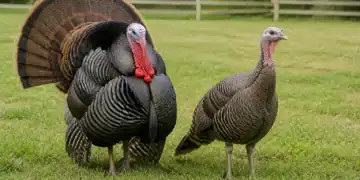
One of the defining features of heritage turkeys is that they can reproduce naturally, and that has everything to do with their eggs. Because heritage toms and hens can actually mate, the eggs a heritage hen lays are usually fertile and can be hatched, either by the hen herself or in an incubator.
Breeding season changes the behavior of the whole flock, particularly when male turkeys begin fighting over access to hens.
This is the sharpest line between heritage and commercial birds. As The Livestock Conservancy explains, heritage turkeys are defined in part by their ability to mate naturally and maintain a long productive lifespan, which is exactly what makes a self-sustaining flock possible. Broad-breasted turkeys, the kind raised for most commercial meat, have been bred so heavy-chested that the toms physically cannot mount and mate, so those birds are reproduced almost entirely by artificial insemination. Our full comparison of heritage versus broad-breasted turkeys digs into the tradeoffs, but for anyone who wants eggs they can hatch, heritage is the only real option.
Should You Eat Turkey Eggs or Hatch Them?
Turkey eggs are perfectly good to eat. They are larger than chicken eggs, richer, and taste much the same, and a single turkey egg makes a substantial breakfast. So why does hardly anyone sell them?
The answer is simple math. A hen that lays only 50 to 100 eggs a year, all in one season, and that you also want to breed from, is not going to leave many eggs spare for the kitchen. Each turkey egg is also a potential poult worth far more than an egg. So most keepers save the eggs for hatching, either letting a broody hen sit them or running them in an incubator for about 28 days.
If your goal is a self-sustaining flock, this is where the heritage advantage really pays off: spring eggs become spring poults, and you raise those birds through the warm months toward the table. Getting the harvest timing right at the other end matters too, which we cover in our guide to timing the butchering of your turkeys.
Frequently Asked Questions About Heritage Turkeys Laying Eggs
At what age do heritage turkeys start laying eggs?
Heritage turkey hens reach laying age at around 7 months, but they only actually begin laying when spring daylight increases. In practice that means a hen hatched in spring or summer lays her first eggs the following spring, at roughly 9 to 11 months old. A very early hatched hen might lay closer to 7 months if she reaches maturity as the days are already lengthening.
How many eggs do heritage turkeys lay?
A heritage turkey hen lays about 50 to 100 eggs in a year, concentrated in spring and early summer. That is far fewer than a laying chicken, and they come in a seasonal burst rather than a steady year-round supply. Individual hens and breeds vary, and a hen that goes broody will pause laying to sit.
Do turkeys lay eggs year round?
No. Turkeys are strongly seasonal layers. Laying kicks off with the lengthening days of late winter and spring, continues through early summer, and shuts down as daylight shortens. Through fall and winter a heritage hen does not lay at all, which is normal and not a sign of a problem.
Can heritage turkeys hatch their own eggs?
Yes. Heritage breeds retain their natural instincts, and hens commonly go broody, sit a clutch, and hatch their own poults after about 28 days. This is one of the biggest advantages of heritage turkeys over commercial broad-breasted birds, which are too heavy to mate naturally and must be bred by artificial insemination.
How can you tell a turkey egg from a chicken egg?
Turkey eggs are noticeably larger than chicken eggs, usually more pointed at one end, with a cream to tan shell that is often speckled with brown. They taste much like a chicken egg, just larger, and are perfectly good to eat, though most keepers save them for hatching since a hen lays so few.