

I resisted a composting toilet for years because I assumed it would be gross, and I was wrong. After running one through two full winters at our off-grid cabin, I can tell you the best composting toilet for off-grid living is one of the least fussy pieces of equipment we own. No septic, no plumbing, no water hauled just to flush it away, and honestly less odor than the porta-potty setup we used before. If you are weighing your options, let me save you the trial and error I went through.
A composting toilet separates and breaks down human waste on site, usually by keeping liquids and solids apart and letting the solids dry and decompose with a carbon material like peat moss or coconut coir. For an off-grid property with no sewer and no easy septic, it solves a real problem cheaply. Below I will walk through the types, the specific models I would actually buy, and the honest downsides nobody mentions in the glossy listings.
Key Takeaways
What is the best type of composting toilet for off-grid use?
For most off-grid cabins and tiny homes, a self-contained urine-diverting toilet is the best choice, because it needs no plumbing and no water and the liquid separation is what actually controls odor. These are the units where liquid drains into a front jug and solids drop into a rear bin with a hand crank that mixes them into your carbon medium. The two names that come up again and again are the Nature’s Head and the Air Head, and after using one for years I understand why they have such loyal owners.
The alternative is a central or batch system, where the toilet sits above a large composting chamber, sometimes in a basement or crawlspace. Those units, like the larger Sun-Mar models, handle more volume and are better for a full-time family home, but they are bulkier, pricier, and need more vertical space than a cabin usually has. For a weekend place or a small full-time off-grid build, the self-contained diverting unit is the sweet spot, and it is what I would buy again without hesitation.
The GTG composting toilet features two chambers that easily separate solid and liquid waste. Unlike other urine diverting toilets that require frequent dumping or complex installation, the GTG installs in minutes, uses only a small 12V fan and offers unlimited capacity.

The models I would actually put my money on
If I were outfitting a cabin tomorrow, the Nature’s Head would be my default pick, and I say that as someone who has emptied one more times than I can count. It is stainless hardware, a solid crank agitator, and a design simple enough that there is almost nothing to break. It runs around 1,000 dollars, which stings next to a hardware-store toilet, but set it against the cost of trenching and installing a septic system and it is a bargain for a small property.
Huge Capacity. 2 people using it full-time will empty it every 4-6 weeks. Easy to empty in 5 minutes.
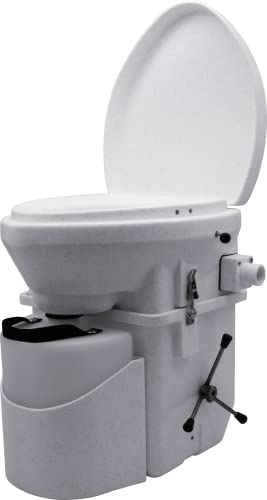
The Air Head is the close competitor, with a slightly nicer-looking bowl and a removable liquids tank that some people find easier to carry to the dump spot. For a larger or full-time household, a Sun-Mar continuous-composting unit handles more capacity, though you trade simplicity for size. Whatever you choose, buy the urine-diverting design. The cheap all-in-one bucket-style units that skip liquid separation are the ones that earn composting toilets their bad reputation, because mixing liquids and solids is exactly what creates the smell.
The downsides nobody puts in the product listing
A composting toilet is not maintenance-free, and anyone who tells you otherwise has not lived with one. You have to empty the liquids jug every couple of days for a family, and the solids bin every three to six weeks depending on use, and that solids emptying is a hands-on job you do yourself. It is not disgusting if the unit is working right, because properly composted solids look and smell like dark soil, but it is not a chore you can ignore or hand off to a flush.
You also need two supplies on hand at all times: a carbon medium like coconut coir or peat moss to cover the solids, and power for the small vent fan. That fan is what keeps air moving and moisture leaving, and it draws a trickle of 12-volt power around the clock, which is easy on a solar setup but means the toilet is not truly power-free. Plan a spot to finish-compost or dispose of the solids too, and check your local rules, since some areas regulate where composted human waste can go.
How a composting toilet fits the rest of your off-grid systems
The reason I love ours is how it removes a whole category of infrastructure from the property. No septic tank to pump, no leach field to protect, no water piped in just to carry waste away. If you have been comparing a composting toilet against a conventional setup, our post on how to care for your septic tank lays out the maintenance a septic system demands, and seeing that side by side is what pushed me toward composting for our small build.
For a cabin, a tiny home, or any off-grid spot where a septic install is expensive or impossible, a good urine-diverting composting toilet is one of the highest-value purchases you can make. Buy a quality unit, keep coir and a working fan on hand, stay on top of the emptying schedule, and it disappears into the background exactly the way good homestead gear should.
Frequently Asked Questions About Composting Toilets for Off-Grid Living
What is the best composting toilet for an off-grid cabin?
A self-contained urine-diverting unit like the Nature’s Head or Air Head is the best choice for most off-grid cabins. They need no plumbing, no water, and no septic, and the liquid separation is what keeps them odor-free.
Do composting toilets smell?
A properly working urine-diverting composting toilet does not smell, because separating liquids from solids and running a small vent fan prevents the odor. Smell almost always means the liquids and solids are mixing or the fan has failed.
How often do you empty a composting toilet?
The liquids jug needs emptying every one to three days for regular use, and the solids bin every three to six weeks depending on how many people use it. Finished solids look and smell like dark soil.
Do composting toilets need electricity?
Most need a small amount. The vent fan that controls moisture and odor draws a trickle of 12-volt power around the clock, which is easy to supply from a solar setup but means the toilet is not fully power-free.
Are composting toilets legal where I live?
It depends on your local codes, so check before you buy. Many areas allow them, but some regulate how and where you can dispose of the composted solids, especially for full-time residences.