
Shearing sheep safely is part animal welfare, part wool handling, and part plain preparation. A good shearing day leaves the sheep cooler, cleaner, and less stressed. A bad one can cause cuts, bruising, heat stress, sunburn, fleece contamination, and a lot of unnecessary frustration for everyone in the barn.
The direct answer: shear sheep when they are dry, handle them calmly, use sharp and well-maintained equipment, set up a clean work area with secure footing, avoid extreme heat or cold, and protect freshly shorn sheep from weather afterward. If you are new, hire an experienced shearer for the first round or take a class before trying to do the whole flock yourself.
This guide is written for small homesteads with a few sheep, not commercial wool crews running hundreds of head in a day. The principles are the same, but the scale is different: plan ahead, work calmly, and do not let pride make the day harder on the animals.
Key Takeaways
Why Shearing Timing Matters
Shearing is not only about harvesting wool. For wool breeds, it is also part of preventing overheating, wool blindness, manure buildup, flystrike risk, and general discomfort. Long, dirty fleece holds moisture and debris. In hot weather, heavy wool can make it harder for sheep to stay comfortable.
That does not mean the best plan is to shear on the hottest day of the year. Work animals during cooler parts of the day, and do not create a freshly shorn flock with no protection from sun, wind, or cold rain.
Ohio State’s small ruminant heat-stress guidance notes that woolly animals should be sheared before hot weather and that sheep should not be sheared in extreme heat. Their heat stress guidance for sheep and goats is a useful outside reference when you are planning shearing around summer weather.
If sheep are new to your place, Raising Sheep is a good foundation for tying shearing into the rest of your flock calendar.
Best Time of Year to Shear Sheep
For many homesteads, late spring is the normal shearing window. The weather is warming, heavy winter fleece is no longer needed, and sheep have time to grow some wool before the next cold season. Your exact timing depends on breed, climate, lambing schedule, shelter, wool goals, and shearer availability.
Avoid shearing right before a cold rain if you do not have indoor shelter. Also avoid waiting until sheep are panting in deep summer heat. A few weeks of planning can make the difference between a calm, useful shearing day and an emergency chore.
A practical timing checklist:
- Check the 7-day forecast.
- Avoid cold rain, storms, and heat waves.
- Schedule early morning if warm weather is expected.
- Make sure shelter is ready afterward.
- Do not shear wet sheep.
- Plan around lambing so ewes and young lambs are not stressed unnecessarily.
- Confirm your shearer early, because good shearers book up.
Prepare Sheep Before Shearing Day
Do not wait until the shearer is in the driveway to gather sheep. The job is safer when the flock is already close, dry, and easy to move.
The day before shearing, bring sheep into a clean, dry holding area if weather threatens. Keep them off muddy lots and wet grass. Wet fleeces slow the work and can damage wool quality.
Many shearers prefer sheep to be held off feed for a short period before shearing so their rumens are not overly full while being positioned. Ask your shearer what they prefer and follow local animal-welfare guidance. Never withhold water in hot weather unless a veterinarian or experienced shearer gives specific instructions for a short, controlled window.
Set aside special cases:
- Lame sheep
- Very thin sheep
- Pregnant ewes close to lambing
- Ewes with small lambs
- Rams
- Sheep with heavy manure tags
- Sheep with suspected illness
Those animals may need a slower plan, extra help, crutching instead of full shearing, or veterinary input.
Set Up a Safe Shearing Area
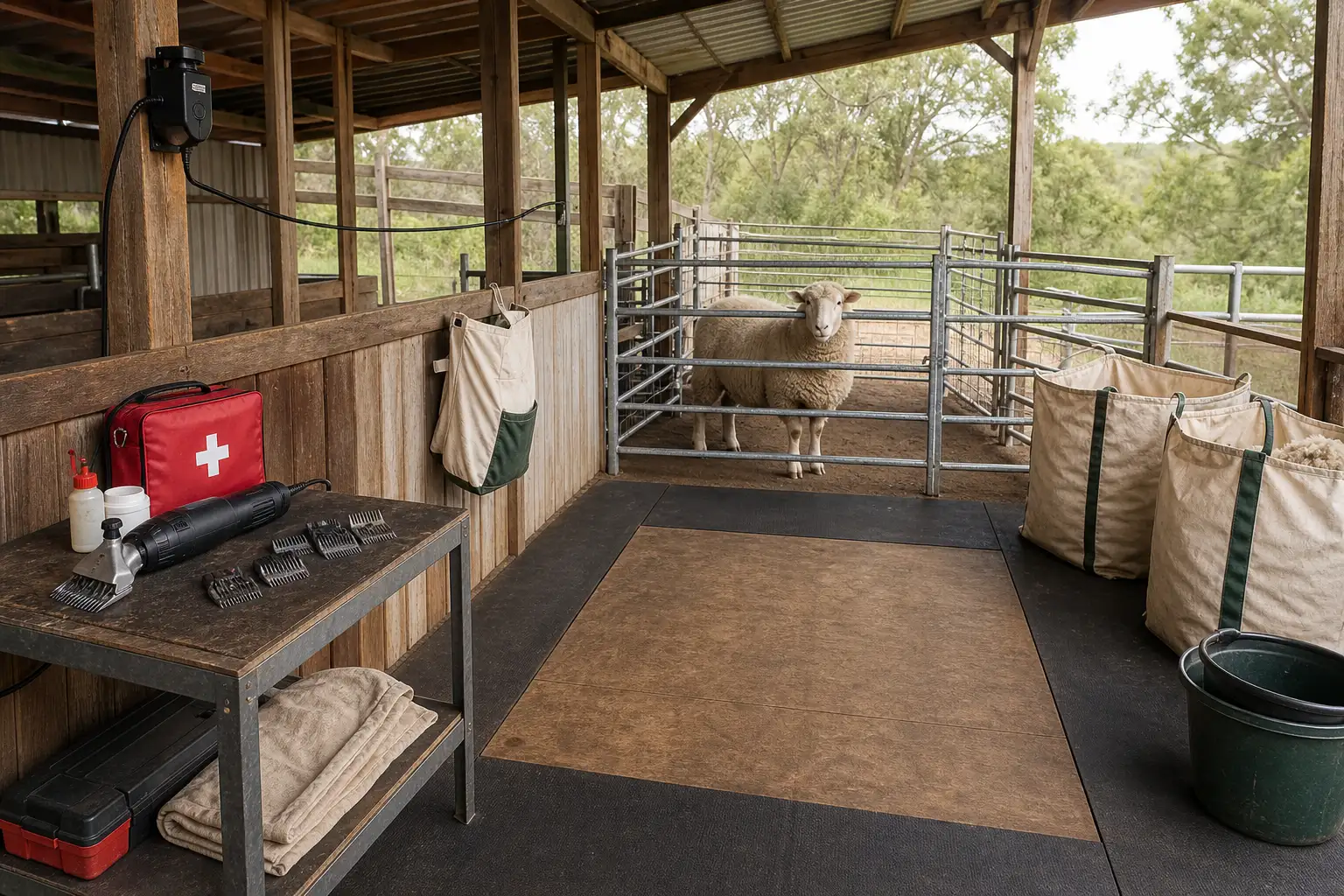
Your shearing area should be dry, well lit, shaded or sheltered, and free of junk. Remove nails, baling twine, loose wire, slippery mats, feed buckets, and anything a sheep or shearer can trip over.
A good small-flock setup includes:
- A catch pen close to the shearing spot
- Solid gates that swing and latch easily
- Non-slip footing
- A clean tarp, mat, or shearing board
- Electrical access that keeps cords away from hooves
- A place to set clean fleeces
- A trash bag for belly wool, manure tags, and unusable wool
- First-aid supplies for small cuts
- Clean water for sheep afterward
If fencing and handling are still weak spots on your farm, Sheep Fence can help you think through containment before shearing day. Shearing is a lot harder when sheep can scatter through bad gates.
Choose the Right Shearing Equipment
You can shear with hand shears or electric shears. Hand shears are quiet and simple, but slower. Electric shears are faster, but they require the right combs, cutters, tension, oiling, and confidence.
For beginners, sharp equipment matters more than buying the biggest motor. Dull blades pull wool, heat up, leave second cuts, and tempt you to push harder. That is when skin cuts happen.
Before starting, check:
- Blades are sharp and clean.
- Comb and cutter are matched correctly.
- Tension is set according to the tool instructions.
- Clippers are oiled.
- Cord is safely routed.
- Backup blades are ready.
- Blade wash or cleaner is available if recommended for your tool.
For buying guidance, Best Electric Sheep Shears for Beginners pairs well with this article because the safest tool is one you can control and maintain.
Handle Sheep Calmly
Sheep remember rough handling. Rushing the catch pen, grabbing wool, dragging sheep, yelling, or letting dogs crowd the flock creates stress before the first pass of the shears.
Move sheep quietly. Use gates and small groups. Keep lambs close enough that ewes do not panic. If you have a ram, plan his handling before the day begins. Do not improvise with a mature ram in a tight space.
Once the sheep is in shearing position, avoid twisting legs, pressing on the belly too hard, or fighting the animal’s balance. If you do not know how to set and hold a sheep safely, do not learn by trial and error on a hot day with dull blades. Hire help or get hands-on instruction.
Protect the Fleece From Damage
If you use the wool, fleece quality starts before shearing. Dry sheep, clean bedding, and good handling all matter.
Fleece damage and contamination come from:
- Wet wool
- Mud and manure tags
- Bedding mixed into fleece
- Second cuts from going over the same area repeatedly
- Dirty shearing floors
- Black or colored fibers mixed into white wool unintentionally
- Vegetable matter from hay, burrs, weeds, or seed heads
- Sweaty or overheated sheep waiting too long in crowded pens
Skirt the fleece promptly. Remove belly wool, manure-stained wool, short second cuts, and heavy vegetable matter before storing. Keep wool dry and breathable. Do not stuff warm damp fleece into plastic where it can mold.
Prevent Overheating Before and After Shearing
Shearing helps manage heat, but freshly shorn sheep still need care. Without fleece, sheep are more exposed to sunburn, wind, and cold rain. The goal is moderation.
Before shearing:
- Provide shade.
- Keep clean water available.
- Work during cool parts of the day.
- Avoid crowding sheep in hot holding pens.
- Watch for panting, drooling, weakness, or open-mouth breathing.
After shearing:
- Turn sheep out with shade and water.
- Provide shelter if rain or wind is coming.
- Watch light-skinned sheep for sun exposure.
- Avoid stressful moves immediately after shearing.
- Check for cuts, fly pressure, and lamb separation problems.
If a sheep appears severely heat stressed, weak, down, or unresponsive, call a veterinarian. Heat stress can become serious quickly.
What to Do About Shearing Cuts
Small nicks can happen even with a careful shearer. Deep cuts, gaping cuts, cuts near the udder, sheath, face, or joints, or wounds with heavy bleeding need proper attention.
Keep basic supplies ready: clean towels, antiseptic approved for livestock use, wound spray, disposable gloves, and your vet’s number. Ask your shearer how they prefer to handle minor cuts. Do not apply random ointments to wool sheep without thinking about residue, contamination, or whether the product is safe for livestock.
After shearing, check sheep again when they are standing normally. Some cuts are easier to see once the sheep is back on its feet.
Beginner Mistakes to Avoid
Avoid these common problems:
- Shearing wet sheep
- Waiting until extreme heat arrives
- Using dull blades
- Trying to shear alone without knowing how to hold the sheep
- Letting sheep wait in a hot, crowded pen
- Dragging sheep by the wool
- Setting fleeces on dirty ground
- Forgetting shelter after shearing
- Leaving cords where sheep can step on them
- Ignoring small cuts until flies find them
A calm shearing day comes from boring preparation. That is a compliment. Sheep do best when the job feels predictable.
Frequently Asked Questions About Shearing Sheep Safely
When should sheep be sheared?
Many homesteads shear in spring before hot weather arrives, but timing depends on breed, climate, shelter, lambing, and shearer availability. Avoid shearing into cold rain or during extreme heat.
Can wet sheep be sheared?
Do not plan to shear wet sheep. Wet wool is harder to cut, harder to handle, and more likely to create fleece-quality problems. Reschedule or hold sheep dry if needed.
Do sheep get sunburned after shearing?
They can, especially light-skinned sheep or sheep shorn very close before intense sun. Provide shade and avoid turning freshly shorn sheep into harsh exposure without protection.
Should beginners shear their own sheep?
A beginner can learn, but hands-on instruction is best. For the first flock shearing, hiring an experienced shearer or taking a class is usually safer for both sheep and owner.
How do I keep fleece clean during shearing?
Keep sheep dry, use a clean shearing surface, separate belly wool and manure-stained wool, skirt promptly, and store fleece dry in a breathable bag or container.