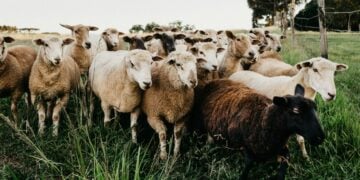

For most pasture-raised homestead sheep, choose a covered loose-mineral feeder that protects mineral from rain, manure, bedding, and tipping. A small wall-mounted feeder works well inside a barn or shelter. A low, covered, portable pasture mineral feeder works better in a grazing paddock. Avoid open pans outside unless you are willing to dump caked mineral often, and do not rely on hard mineral blocks as your only mineral program unless your veterinarian or extension nutritionist has a specific reason for your flock.
Key Takeaways
Why Mineral Feeders Matter for Pasture-Raised Sheep
Mineral feeders for sheep look like a small piece of equipment, but they affect daily flock nutrition more than many homesteaders realize. A bag of good sheep mineral does not help much if it turns into a wet brick, gets full of manure, blows across the pasture, or sits where timid ewes cannot reach it.
Pasture-raised sheep get most of their diet from grass, legumes, hay, browse, and stored forage. That does not mean pasture covers every mineral need in every season. Forage mineral levels shift with soil, weather, plant maturity, drought, fertilization, hay quality, and stage of production. Late-gestation ewes, lactating ewes, growing lambs, and maintenance animals do not all place the same demand on a mineral program.
A feeder is the bridge between the mineral on the feed tag and the sheep in the field. If the feeder is poorly placed or poorly protected, intake becomes inconsistent. Some sheep may overconsume because the feeder is too close to a loafing area. Others may not consume enough because the feeder is too far from shade, water, or the main travel path.
If you are still sorting out the basics of pasture-based flock care, start with Raising Sheep: A Beginner’s Guide to Starting a Homestead Flock and then use this guide to make your mineral setup more practical.
Loose Mineral vs. Mineral Blocks
Loose mineral is usually the better choice for sheep. Virginia Tech Extension notes that sheep mineral is commonly provided free-choice and that loose mineral should be kept in a covered feeder so it does not get wet, cake, and become hard. Their sheep mineral guidance also warns that mineral intake should be monitored and that sheep and goats have different copper needs. You can read the outside reference here: Virginia Tech Extension on minerals and vitamins for sheep.
Mineral blocks are convenient, but convenience is not the same as good intake. Blocks can be hard for sheep to consume in the amount they need, especially if they are very hard or weathered. They can also lead homesteaders to assume mineral is covered just because there is a block in the pasture.
Loose mineral has its own problem: it has to be protected. Rain makes it cake. Wind can blow lightweight tubs around. Sheep can step into low pans. Lambs can tip small dishes. A useful feeder keeps loose mineral available without turning the mineral station into a cleanup chore.
What to Look for in Mineral Feeders for Sheep
The right mineral feeder depends on your flock size, pasture layout, shelter access, and weather. A feeder that works beautifully in a dry barn aisle may fail in a windy open paddock. A heavy outdoor feeder may be overkill for two ewes in a small dry lot.
Look for these features:
- A cover, hood, or roof that keeps rain and snow out.
- Enough access space that timid sheep are not pushed away.
- A stable base or mount that sheep cannot easily tip.
- Smooth edges and no pinch points around the head or neck.
- A design that keeps mineral away from manure, bedding, and mud.
- Materials that tolerate salt and mineral exposure without rusting quickly.
- A size that matches the flock so mineral does not sit stale for too long.
- Easy cleaning, because old caked mineral should not keep collecting under fresh mineral.
For pasture-raised sheep, portability matters. If you rotate paddocks, the mineral feeder should move with the flock or be placed at a central lane where sheep have reliable access. If the feeder is awkward to move, it will eventually get left in the wrong place.
Best Types of Sheep Mineral Feeders
Covered Pasture Mineral Feeders
Covered pasture feeders are the best fit for most grazing flocks. These feeders usually have a hood, flap, roof, or weather-vane style top that shields the mineral while still letting sheep reach it.
Choose this style if your sheep spend most of the day on pasture, especially if they do not return to the barn every evening. The feeder should be heavy enough not to blow over but not so heavy that moving it becomes a two-person job every time you rotate paddocks.
Wall-Mounted Mineral Feeders
Wall-mounted feeders are useful in barns, run-in sheds, lambing areas, dry lots, and winter feeding spaces. They keep mineral off the ground and make it easy to check intake during chores.
The downside is location. If the wall-mounted feeder is only in the barn but your flock spends most of its time on pasture, intake may drop. Sheep should not have to leave their normal grazing pattern and walk across the farm just to reach mineral.
Fence-Hanging Feeders
Fence-hanging feeders can work for small flocks and short-term setups, especially when you need something simple in a pen. They are not always ideal for permanent pasture use because they can be knocked, climbed on, or exposed to rain depending on the design.
If you use a fence feeder outside, put it under roof or choose a model with meaningful weather protection. Also make sure it does not create a place where lambs can get stuck or where sheep crowd into a weak section of fence.
DIY Mineral Feeders
DIY mineral feeders can work well when they are built with the same goals as a commercial feeder: dry, clean, stable, safe, and easy to monitor. A simple roofed box mounted at sheep height may be enough for a small flock.
Avoid sharp metal edges, treated scraps where sheep can chew, buckets that swing into legs, and containers that collect rain. If the design cannot be cleaned quickly, it will not stay clean.
Where to Place a Sheep Mineral Feeder

Placement is just as important as the feeder itself. Sheep are creatures of habit. If the feeder is on a path they already use, intake is usually more consistent. If it is hidden in a corner, dominant animals may control access or the whole flock may ignore it.
Good locations include:
- Near clean water, but not where spilled water creates mud.
- Near shade in hot weather.
- Along a normal travel path between grazing and rest areas.
- On firm ground where sheep will not churn the area into muck.
- Away from manure-heavy loafing spots.
- In a place where you can check it during daily chores.
Mineral feeders also interact with fencing and rotation plans. If you are moving sheep through temporary paddocks, think about whether mineral access moves with them. For more on practical grazing boundaries, see Sheep Fence: How to Choose and Build the Right Fence for Your Flock.
How Many Mineral Feeders Does a Flock Need?
A very small flock may need only one feeder, but it still has to be accessible to every animal. If you see bossy ewes guarding the feeder, lambs getting pushed out, or thin animals never visiting the station, add another feeder or move the existing one.
For larger groups, multiple smaller feeders are often better than one crowded feeder. Separate feeder locations reduce competition and make it harder for one dominant animal to control access.
Watch your flock rather than relying only on the product label. If mineral disappears unusually fast, check for rain loss, spilling, wildlife, goats, cattle, or animals eating it for salt. If mineral barely moves, check whether it is caked, unpalatable, poorly placed, or stale.
Sheep Mineral Safety: Copper, Selenium, and Labels
The feeder keeps mineral available, but the mineral itself still has to be right for sheep. Do not pour random goat mineral, cattle mineral, or horse supplement into a sheep feeder and assume it is close enough.
Sheep are sensitive to copper compared with many other livestock species. Some regions and forage situations require more nuance, but the default homestead rule is simple: buy mineral labeled for sheep and read the tag. If you keep goats and sheep together, do not solve goat copper needs by giving both species free access to high-copper goat mineral.
Selenium is another mineral that depends heavily on region. Some areas are deficient, while excess selenium can also be dangerous. If your farm is new to you, ask your local extension office, veterinarian, or feed mill what sheep producers commonly use in your county.
A good mineral feeder cannot fix the wrong mineral. It can only protect and present what you put in it.
For a broader feeding foundation, pair your mineral plan with What Do Sheep Eat? A Practical Feeding Guide for Homestead Flocks.
How to Monitor Mineral Intake
Do not just fill the feeder and forget it. Intake tells you whether the system is working.
Use this simple method:
- Put a known amount of mineral in the feeder.
- Write down the date and number of sheep with access.
- Check how many days it takes for the flock to consume it.
- Divide the amount consumed by the number of sheep and days.
- Compare that estimate with the mineral label and local guidance.
If mineral intake is too high, the issue may be salt craving, palatability, empty waterers, poor forage, or animals wasting mineral from an open feeder. If intake is too low, the mineral may be stale, caked, poorly located, or not palatable. Sometimes the feeder is the problem. Sometimes the mineral mix is the problem.
Track changes during spring flush, dry summer spells, breeding season, late gestation, lactation, and winter hay feeding. Pasture-raised sheep do not eat the same way all year.
Cleaning and Maintenance
Mineral feeders need regular maintenance because salt and moisture are hard on equipment. Check them at least weekly, and more often in wet weather.
Dump wet, moldy, manure-contaminated, or heavily caked mineral. Scrape corners where old mineral builds up. Check mounting screws, brackets, roof hinges, hoods, rubber tubs, and drainage points. If a feeder has rusted metal where mineral sits, replace it or use a design that keeps mineral away from metal contact.
Do not keep topping fresh mineral over a dirty bottom layer. Sheep may refuse it, or worse, they may consume contaminated mineral that should have been discarded.
Frequently Asked Questions About Mineral Feeders for Sheep
What is the best mineral feeder for sheep?
The best mineral feeder for sheep is covered, stable, easy to clean, and sized for the flock. For pasture, choose a weather-protected feeder. For barns, a wall-mounted loose-mineral feeder may be enough.
Do sheep need a mineral feeder on pasture?
Most pasture-raised sheep should have access to sheep-specific mineral, and a feeder helps keep that mineral clean and dry. Pasture quality varies by soil, season, and forage type, so local guidance matters.
Can sheep use mineral blocks instead of loose mineral?
Loose mineral is usually preferred because sheep may not consume enough from hard blocks. If blocks are used, monitor intake carefully and ask a local livestock professional whether that system fits your flock.
Can goats and sheep share the same mineral feeder?
They can share a feeder only if the mineral inside is safe for sheep. Many goat minerals contain more copper than sheep should consume. If goats need extra copper, handle that separately with veterinary or extension guidance.
Where should I put a sheep mineral feeder?
Place it near normal sheep traffic, close to clean water and shade, on firm ground, and away from manure-heavy loafing areas. It should be easy for you to check during chores.
How often should I clean a sheep mineral feeder?
Check it at least weekly and more often during wet weather. Dump wet, caked, moldy, or manure-contaminated mineral instead of topping it with fresh product.