
For most first-time homesteaders, the best docile sheep breeds to consider are Katahdin, Southdown, Dorset, Polypay, and calm local crossbred ewes from a well-managed flock. Katahdins are popular for low-maintenance meat flocks because they shed and are generally easy to handle. Southdowns are small to moderate, gentle, and often manageable for small acreage. Dorsets and Polypays can be practical maternal breeds when you want lambs and wool or crossbreeding options. The best sheep for your farm is not just a breed name; it is a calm, healthy animal from a breeder who selects for temperament and everyday manageability.
What You’ll Learn
Why Temperament Matters in a First Sheep Flock
When you are new to sheep, a docile flock makes every chore easier. Catching, sorting, feeding, hoof checks, parasite monitoring, lambing season, trailer loading, and basic health care all go better when sheep are calm enough to work with. Flighty sheep turn ordinary tasks into long, sweaty problems.
That does not mean sheep need to act like pets. Good sheep still have prey instincts. They may move away when you enter the pasture, bunch with the flock, and dislike being separated. Docile means they settle quickly, respect fences, follow routine, respond to feed or a bucket, and do not explode through gates every time something changes.
The mistake many beginners make is asking, “What is the friendliest breed?” A better question is, “Which breed and breeder produce sheep that fit my land, skill level, climate, fencing, and goals?”
If you are still deciding whether sheep fit your homestead at all, read Raising Sheep: A Beginner’s Guide to Starting a Homestead Flock alongside this breed guide.
Breed Is Only Part of Temperament
Breed tendencies are real, but they are not guarantees. A quiet breed can produce a jumpy animal. A breed with a reputation for being alert can have calm lines. Temperament is shaped by genetics, flock handling, weaning stress, predator pressure, human interaction, feed routine, pasture size, and whether the animal has been chased by people, dogs, or poor fencing setups.
Before buying, ask the breeder direct questions:
- Do you cull for temperament?
- Can the sheep be moved with a bucket?
- Are they used to electric fence, netting, or permanent woven wire?
- Have they been handled through a chute or small pen?
- Are they calm around children, dogs, tractors, and common farm noise?
- Do they respect people at feeding time?
- Are rams managed with strict safety boundaries?
Watch the sheep before you buy. Sheep that lift their heads, notice you, and drift away calmly are normal. Sheep that slam fences, leap gates, or cannot settle after a few minutes may be more than a new homesteader wants to handle.
Best Docile Sheep Breeds for Beginners
Katahdin
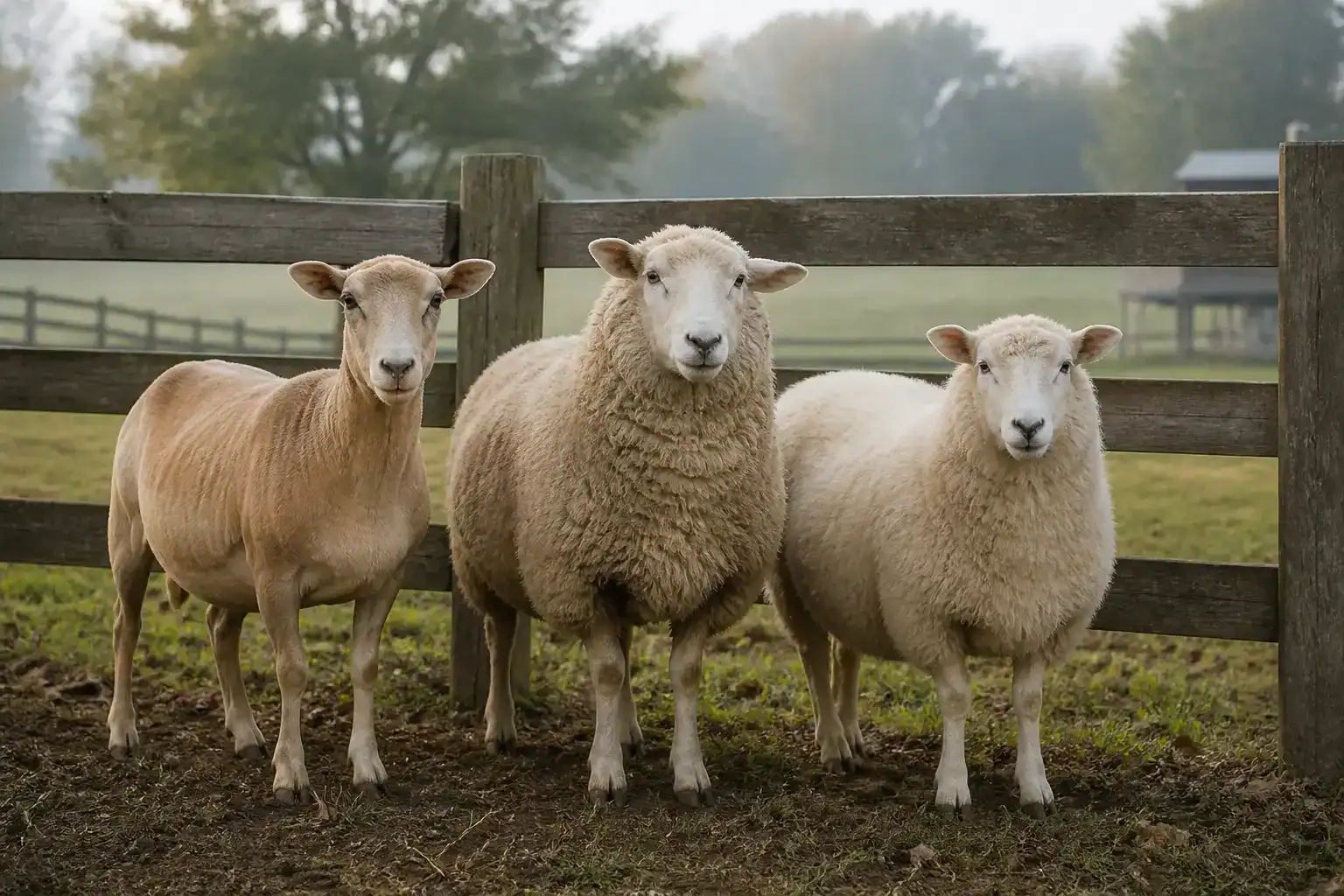
Katahdins are one of the most common beginner-friendly choices for homestead meat flocks. They are hair sheep, which means they shed and do not require annual shearing like wool breeds. That alone removes one major management task for a first-time flock owner.
Oklahoma State University’s Katahdin breed profile describes the breed as hardy, adaptable, low-maintenance, suited to grass and forage-based management, and docile enough to be easily handled. You can read the outside reference here: Oklahoma State University Katahdin sheep profile.
Katahdins are a strong fit if you want meat lambs, pasture lambing, and fewer wool chores. They are not magic, though. Some lines are calmer than others. Buy from a breeder who can show you ewes, lambs, and rams behaving quietly in a real working setup.
Southdown
Southdowns are often a good match for small-acreage homesteads because they are moderate in size and traditionally known for a gentle disposition. They are wool sheep, so you will need a shearing plan, but their smaller frame can make them less intimidating than larger terminal breeds.
Southdowns can be especially appealing for families, youth projects, small flocks, and people who want sheep that feel manageable at close range. They are meat-focused sheep rather than high-volume wool specialists.
The caveat is availability. In some areas, Southdowns may be easy to find. In others, you may see more show-focused animals than practical farm flock stock. A show line can still be useful, but do not assume every Southdown is automatically the right homestead sheep. Look for sound feet, easy lambing, good mothering, and calm handling.
Dorset
Dorsets are a practical, established breed with strong maternal use. Many homesteaders like them because they can work in meat, wool, and crossbred flock programs. Polled Dorsets are generally easier for beginners than horned animals because horns add handling and fence considerations.
Dorsets can be a good fit if you want a wool breed and may eventually raise lambs for the freezer or market. They are not always as small as Southdowns, so make sure your facilities are ready for mature ewe and ram size.
A calm Dorset ewe from a practical flock can be an excellent beginner animal. A pushy ram or nervous ewe is not beginner-friendly just because the breed name is familiar. Judge the sheep in front of you.
Polypay
Polypays were developed as productive maternal sheep, and they can be a good fit for homesteaders who want lamb production without going straight into a large commercial flock. They are generally moderate, useful, and practical when sourced from a breeder who values easy care.
Because Polypays are productive, beginners should be prepared for lambing management. A ewe that twins regularly is useful only if you are ready for body condition monitoring, minerals, lambing supplies, and enough feed during late gestation and lactation.
Polypays are worth considering if your goal is a productive homestead flock rather than a few ornamental pasture pets.
Calm Local Crossbred Ewes
Do not overlook crossbred sheep. Some of the best beginner sheep are not registered purebreds at all. A group of healthy, calm, middle-aged crossbred ewes from a neighbor’s well-managed flock may teach you more and give you fewer headaches than flashy young animals from far away.
Crossbred ewes can combine useful traits: shedding, mothering, parasite resilience, meat quality, wool, or moderate size. The key is knowing what went into the cross and whether the breeder has selected for the same realities you face: local weather, parasites, predators, forage, and fencing.
For a first flock, practical history often matters more than papers. Ask what problems the breeder culls for and whether the animals have already proven themselves under normal farm conditions.
Breeds Beginners Should Approach Carefully
Some breeds can be wonderful in the right hands but are less forgiving for beginners. Very large sheep may be hard to handle without proper facilities. Horned breeds can add risk around gates, feeders, fences, and children. Highly alert or primitive breeds may thrive on rough ground but be frustrating in a small backyard pasture.
That does not mean you should never own them. It means they may not be the best first sheep if you are still learning how to trim hooves, read body condition, manage parasites, move animals through gates, and recognize early health problems.
Rams deserve special mention. A docile breed does not make a ram safe. Never treat a ram like a pet. Do not scratch his head, encourage pushing, or let children interact with him casually. If you are brand new, consider starting with ewes or wethers before keeping a breeding ram.
Hair Sheep vs. Wool Sheep for First-Time Homesteaders
Hair sheep often feel easier because they shed and do not require shearing. Katahdins and other hair sheep can be a strong fit for meat-focused homesteads, hot climates, and owners who do not want to manage wool.
Wool sheep can be just as docile, but they add shearing, fleece care, wool quality decisions, and sometimes more flystrike management depending on climate and fleece type. If you love fiber, that may be part of the appeal. If you only want freezer lamb, wool may be an extra chore.
For a deeper look at low-maintenance meat flock options, see Hair Sheep Breeds: The Low-Maintenance Choice for Homestead Meat Production.
How to Choose the Right Docile Breed for Your Farm
Start with purpose. Are you raising sheep for meat, wool, milk, pasture management, breeding stock, youth projects, or quiet enjoyment? A docile sheep still needs to fit the job.
Then look at your infrastructure. If your fencing is still basic, do not start with sheep that challenge boundaries. If you do not have a shearing plan, choose hair sheep or line up a shearer before buying wool sheep. If you have only a small shelter, avoid very large animals until you can handle them safely.
Climate matters too. A breed that performs well in a cool northern pasture may not be the best choice for a humid parasite-heavy region. Local breeders, veterinarians, extension offices, and experienced shepherds can help you narrow choices for your county.
Finally, choose the individual animal. A calm, healthy ewe from a breeder who answers questions honestly is worth more than a breed name on a list.
Beginner Buying Checklist
Use this checklist before bringing sheep home:
- I know whether I want hair sheep or wool sheep.
- I have secure fencing, gates, and a small catch pen.
- I have a plan for hay, pasture, minerals, and clean water.
- I have local veterinary or mentor support.
- I watched the flock move and settle before buying.
- I asked about temperament, parasite history, lambing, feet, and culling.
- I avoided buying a ram as my very first sheep unless I already have proper facilities.
- I bought at least two sheep, because sheep are flock animals.
Fencing is especially important with a new flock. Even docile sheep need clear boundaries, so review Sheep Fence: How to Choose and Build the Right Fence for Your Flock before pickup day.
A Practical First-Flock Recommendation
If you are starting from scratch, I would look first for two to four calm ewes or ewe lambs from a local Katahdin, Southdown, Dorset, Polypay, or practical crossbred flock. Choose animals that are already used to people, buckets, pasture rotation, and the type of fencing you plan to use.
Do not buy the cheapest sheep just because they are available. Cheap sheep can become expensive if they bring parasite problems, bad feet, poor udders, wild behavior, or surprise pregnancies. Also do not buy one bottle lamb and assume it will grow into an easy flock by itself. Sheep need other sheep.
Your goal is not to own the most famous breed. Your goal is to build a flock you can handle calmly on normal chore days and difficult days.
Frequently Asked Questions About Best Docile Sheep Breeds
What is the friendliest sheep breed?
Southdowns and Katahdins are often considered friendly or easy to handle, but friendliness depends on the individual flock and handling history. Buy from breeders who select for calm temperament.
Are Katahdin sheep good for beginners?
Yes, Katahdins can be excellent beginner sheep because they are hair sheep, generally low maintenance, and widely used in pasture-based meat flocks. Choose calm local lines rather than buying on breed name alone.
Are wool sheep harder than hair sheep?
Wool sheep are not necessarily harder, but they require shearing and fleece management. Hair sheep remove that chore, which is why many first-time meat flock owners start with Katahdins or other shedding breeds.
Should beginners start with ewes, wethers, or rams?
Most beginners should start with ewes or wethers. Rams require firm boundaries, proper facilities, and careful handling. A docile breed does not make a ram safe.
How many sheep should a beginner buy?
Buy at least two sheep because sheep are flock animals. A small starter group of two to four calm animals is often easier to manage than one lonely sheep or a large first flock.
Does bottle raising make sheep friendlier?
Bottle-raised lambs may be comfortable around people, but that does not automatically make them safer or better behaved as adults. Overly pushy bottle babies can become difficult if boundaries are not taught early.