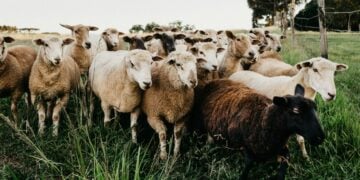

For most homestead flocks, the best sheep halters and lead ropes are simple rope halters sized for lambs, yearlings, or adult sheep, with a lead long enough for control but not so long that it drags or tangles. Choose durable rope, smooth knots, solid hardware if using a snap lead, and a fit that keeps the nosepiece between the eyes and mouth without rubbing the eyes or sliding too low. Buy more than one size if your flock includes lambs, growing yearlings, ewes, and rams.
Key Takeaways
Why Halters Matter on a Homestead
A sheep halter is not just for fairs or showmanship. On a small homestead, a halter and lead rope can help you move a sheep calmly, load a trailer, hold an animal for a quick check, teach lambs to handle quietly, and keep one ewe still while you sort the rest of the flock.
That said, sheep are not little horses. They think like prey animals, they can panic when restrained, and many would rather follow flock pressure than a person on a rope. A halter works best when it is part of a handling system: small catch pen, good gates, quiet approach, and enough patience to train before you need control in an emergency.
If you are still building the basics of sheep infrastructure, start with Raising Sheep: A Beginner’s Guide to Starting a Homestead Flock before depending on a halter to solve every handling problem.
What to Look for in Sheep Halters and Lead Ropes
Good sheep halters and lead ropes should be simple, strong, and easy to adjust. Complicated gear is not always safer. A basic rope halter can work beautifully if it fits and the sheep is trained. A poorly fitted halter can slip, rub, drag, or make the animal fight.
Look for these features:
- Correct size for lamb, yearling, ewe, or ram.
- Nosepiece that sits securely without riding into the eyes.
- Lead that is long enough to hold but not long enough to drag.
- Rope that is comfortable in the hand and not so thin that it bites.
- Smooth knots and heat-finished ends.
- Hardware that is not sharp, rusty, or likely to break.
- Colors or tags that help you sort sizes quickly.
Oklahoma State Extension’s sheep showmanship guidance gives a practical fit rule: the halter should sit on the lamb’s head with the lead rope on the left side, and the nose strap should sit between the eyes and the nose rather than in the eyes or down by the mouth. It also warns not to wrap the halter around hands or fingers. That advice applies well beyond the show ring. Read the outside reference here: Oklahoma State Extension sheep showmanship halter guidance.
Rope Halters vs. Flat Halters
Most small flocks use rope halters because they are inexpensive, adjustable, easy to store, and available in multiple sizes. Rope halters can also give clear pressure-and-release cues when you are teaching a sheep to lead.
Flat nylon or web halters may look more familiar if you have handled horses, goats, or calves, but sheep heads are shaped differently. A flat halter that fits one animal may slip on another. Some flat halters are useful for show, transport, or specific handling jobs, but they must be checked carefully for fit.
For everyday homestead use, I would rather have several well-sized rope halters than one expensive halter that fits only one sheep. Keep lamb-sized halters for training young animals, larger halters for yearlings, and sturdier options for mature ewes or rams.
Snap Leads, Plain Rope, and Safety
Some sheep halters include a built-in lead. Others use a separate rope or snap lead. A snap can be convenient when attaching to a panel for a brief supervised task, but it should never make you careless about tying.
Do not leave a sheep tied unattended. Do not tie to a weak gate, loose panel, wire fence, or anything that could come down if the sheep pulls back. If you need a sheep restrained for longer than a moment, a proper catch pen, stanchion, tilt table, or chute is usually safer than a random rope tied to a post.
When leading, hold the rope with control but do not wrap it around your hand. If a sheep jumps, spins, or bolts, a wrapped rope can injure fingers and wrists fast. Fold extra rope in your hand or keep it gathered in a way that can slide free.
Best Uses for Sheep Halters
Training Lambs
Lambs learn faster when sessions are short and calm. Start by letting the lamb feel the halter, then release pressure as soon as it steps forward. Do not drag lambs around the pen. The goal is to teach the lamb that giving to pressure makes the pressure stop.
If you raise bottle lambs or orphaned lambs, handling may be easier because they are already used to people. For practical young-lamb care, see Bottle Feeding Lambs: How to Keep an Orphaned or Rejected Lamb Alive.
Moving a Sheep Short Distances
A halter can help move one animal from a catch pen to a trailer, lambing jug, wash area, or treatment space. Keep the path clear before you start. Open gates ahead of time. Remove loose buckets, hoses, wire, and anything that can catch a foot or rope.
Holding for Quick Checks
A halter may help steady a sheep while you inspect eyes, mouth, body condition, fleece, or minor issues. It is not ideal for hoof trimming by itself; for that, you need secure restraint and a position that protects both animal and handler.
Show and Youth Projects
Show lambs need regular halter and leading practice. Fit matters because a too-low nosepiece or dragging lead can create unsafe habits. Youth handlers should be taught rope safety from day one.
Trailer Loading
A halter can help guide a sheep, but flock behavior matters. Sheep often load better when they can see or follow another sheep. Do not stand directly in front of a nervous animal or get trapped between the sheep and trailer wall.
When a Halter Is Not Enough

A halter is not a replacement for handling facilities. If you are vaccinating, checking pregnancy, trimming feet, treating parasites, sorting lambs, or shearing, you need a setup that keeps sheep controlled without requiring a wrestling match.
For larger flocks, a handling system with a holding pen, alley, chute, sorting gate, and scale may be worth building over time. Even for a small flock, a simple catch pen can make daily care safer.
Halters also do not fix poor temperament. If a ram is aggressive, a halter does not make him safe. If a ewe panics every time she is caught, more training and better facilities are needed. Choose breeding stock with manageability in mind, not just fleece, size, or color.
How to Fit a Sheep Halter
Start with the correct size. A lamb halter on a yearling may ride too high or pinch. An adult halter on a lamb may slide down and give poor control.
Place the nosepiece between the eyes and the mouth, not up against the eyes and not so low that it interferes with breathing or chewing. The lead should come from the correct side for your handling style, commonly the sheep’s left. Check that the halter tightens and releases appropriately and that knots or hardware are not rubbing the eye, cheek, or jaw.
After fitting, watch the sheep move. If the halter slips, twists, drags, or encourages the sheep to fight, adjust it or use another size.
Training Sheep to Lead
Training works best in a small pen. Put the halter on calmly. Stand beside the sheep rather than directly in front. Apply gentle forward pressure, then release immediately when the sheep steps forward. Reward quiet standing by releasing pressure and giving the sheep a moment to settle.
Keep sessions short. Five calm minutes are better than twenty minutes of pulling. Young sheep may hop, brace, or freeze at first. Do not turn the lesson into a contest. Pressure and release teaches more than force.
Practice stopping, starting, turning, and standing. End on a good note. Repeat over several days instead of expecting one session to create a perfectly trained sheep.
Common Mistakes
The first mistake is buying one halter and expecting it to fit every animal. A mixed flock needs mixed sizes.
The second mistake is letting the lead drag. A dragging lead can trip the sheep or handler and can catch on gates, feeders, and boots.
The third mistake is tying sheep and walking away. A sheep that panics while tied can injure itself quickly.
The fourth mistake is holding too close or wrapping rope around the hand. Keep control, but give yourself a safe release if the animal bolts.
The fifth mistake is using halters only during stressful events. If the first halter lesson happens during a vet visit, trailer load, or emergency, the sheep is already set up to resist. Train on quiet days.
Frequently Asked Questions About Sheep Halters and Lead Ropes
Can sheep wear halters?
Yes, sheep can wear halters for handling, training, showing, and short controlled movement. They should not be left haltered and unattended where the halter can catch on fencing or equipment.
What size halter does a sheep need?
It depends on age and head size. Lambs, yearlings, ewes, and rams may need different sizes. The nosepiece should not ride into the eyes or hang low near the mouth.
Are rope halters safe for sheep?
Rope halters can be safe when correctly fitted and used by a handler who understands pressure, release, and rope safety. They are not safe when left on unattended sheep or tied to weak objects.
Can you tie a sheep by a halter?
Only briefly and under direct supervision, using a secure setup and a safe release plan. For longer restraint, use a proper handling system, catch pen, stanchion, chute, or experienced help.
How do you train a sheep to lead?
Start in a small pen. Apply gentle pressure, release when the sheep steps forward, and keep sessions short. Practice on calm days before you need the skill for trailering, shows, or veterinary work.
Should rams be halter trained?
Rams may benefit from handling training, but they require extra caution. A halter does not make a ram safe. Do not trust a mature ram as a pet, and use proper facilities for serious handling.