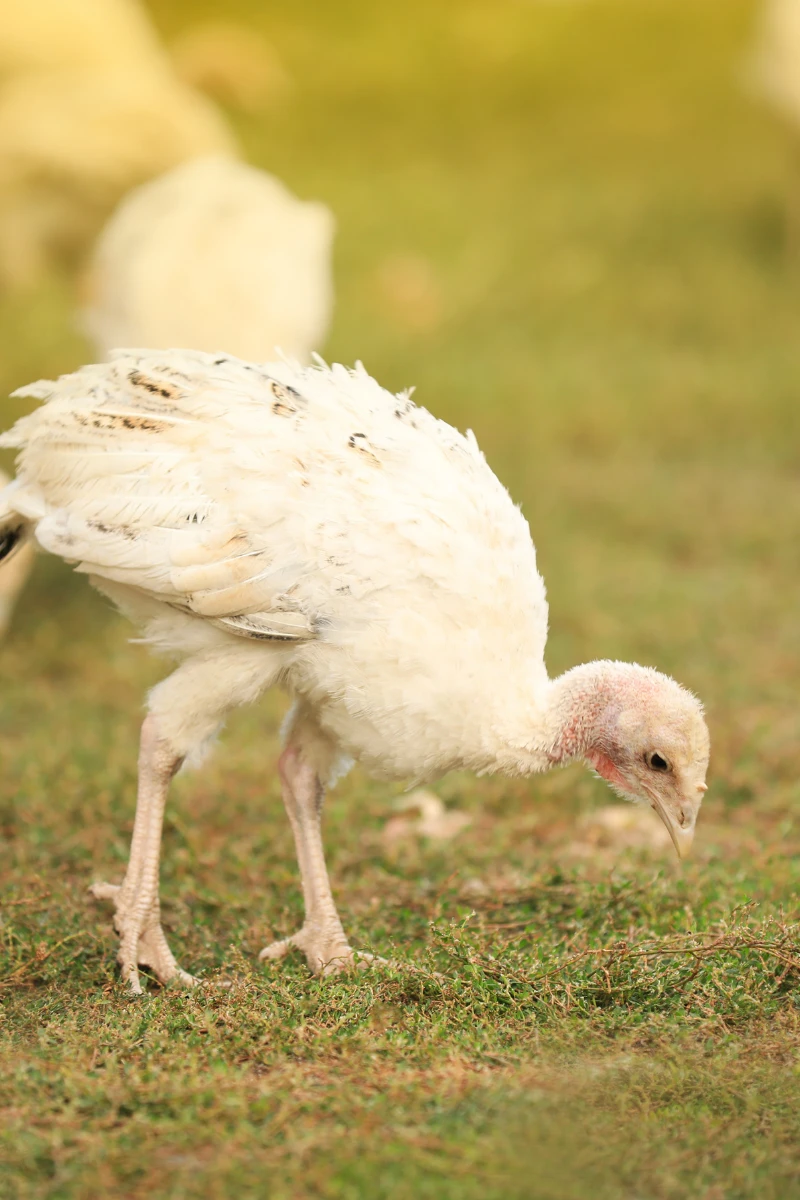

When to switch turkeys from starter feed to grower feed depends on age, breed type, feed label directions, and whether you are raising broad-breasted meat birds or slower-growing heritage turkeys. As a practical starting point, many turkey poults eat a high-protein turkey starter for the first 6 to 8 weeks, then move to a grower ration. A finisher ration may be used later for meat birds as they approach processing size.
The feed bag matters. Turkey feeds are formulated differently by brand, and some are labeled by life stage, such as starter, grower, developer, finisher, breeder, or maintenance. Use the label first, then adjust with advice from your feed mill, extension office, or poultry veterinarian.
Do not switch poults to chicken layer feed, scratch grain, or a low-protein ration just because they look big. Turkeys grow fast, build heavy frames, and need the right nutrition at the right stage.
Key Takeaways
Simple Turkey Feed Timeline
Use this as a starting framework, then confirm with your actual feed label:
| Age | Common Feed Stage | Practical Goal |
|---|---|---|
| 0 to 6 or 8 weeks | Turkey starter or game bird starter | Support early growth, feathering, and bone development |
| 6 or 8 weeks to grow-out | Turkey grower | Support steady growth without staying on starter forever |
| Final weeks for meat birds | Turkey finisher if used | Prepare birds for processing while following label directions |
| Mature heritage breeders | Breeder or maintenance ration | Maintain condition without pushing meat-bird growth |
Penn State Extension’s small-flock turkey production guide lists turkey starter, grower, finisher, and breeder rations with different protein levels and reminds flock owners to follow withdrawal instructions for medicated feeds. That is the outside authority for this article’s basic feed-stage framework.
If this is your first flock, Raising Turkeys on Your Homestead gives the bigger picture: feed, housing, fencing, processing, and management all have to fit together.
Why Turkeys Need Turkey Feed
Turkeys are not just big chickens. Poults need more appropriate nutrition than most chick feeds provide, especially early in life. Protein, amino acids, vitamins, and minerals all support growth, feathers, bone, muscle, and immune function.
A low-protein ration may look cheaper but cost you in poor growth, weak birds, leg problems, and uneven finishing. Too many treats can create the same issue by diluting the balanced ration. Scratch grains, cracked corn, greens, kitchen scraps, and garden extras should not replace the main feed.
Use turkey starter or game bird starter at the beginning. If your local feed store does not carry turkey feed, ask what they recommend for poults and confirm the protein level and label directions before buying. A bag that works for chicks may not be enough for poults.
For early setup, What You Need Before Bringing Home Turkey Poults is a useful companion because feed, brooder heat, waterers, bedding, and space all have to be ready before poults arrive.
When to Switch From Starter to Grower Feed
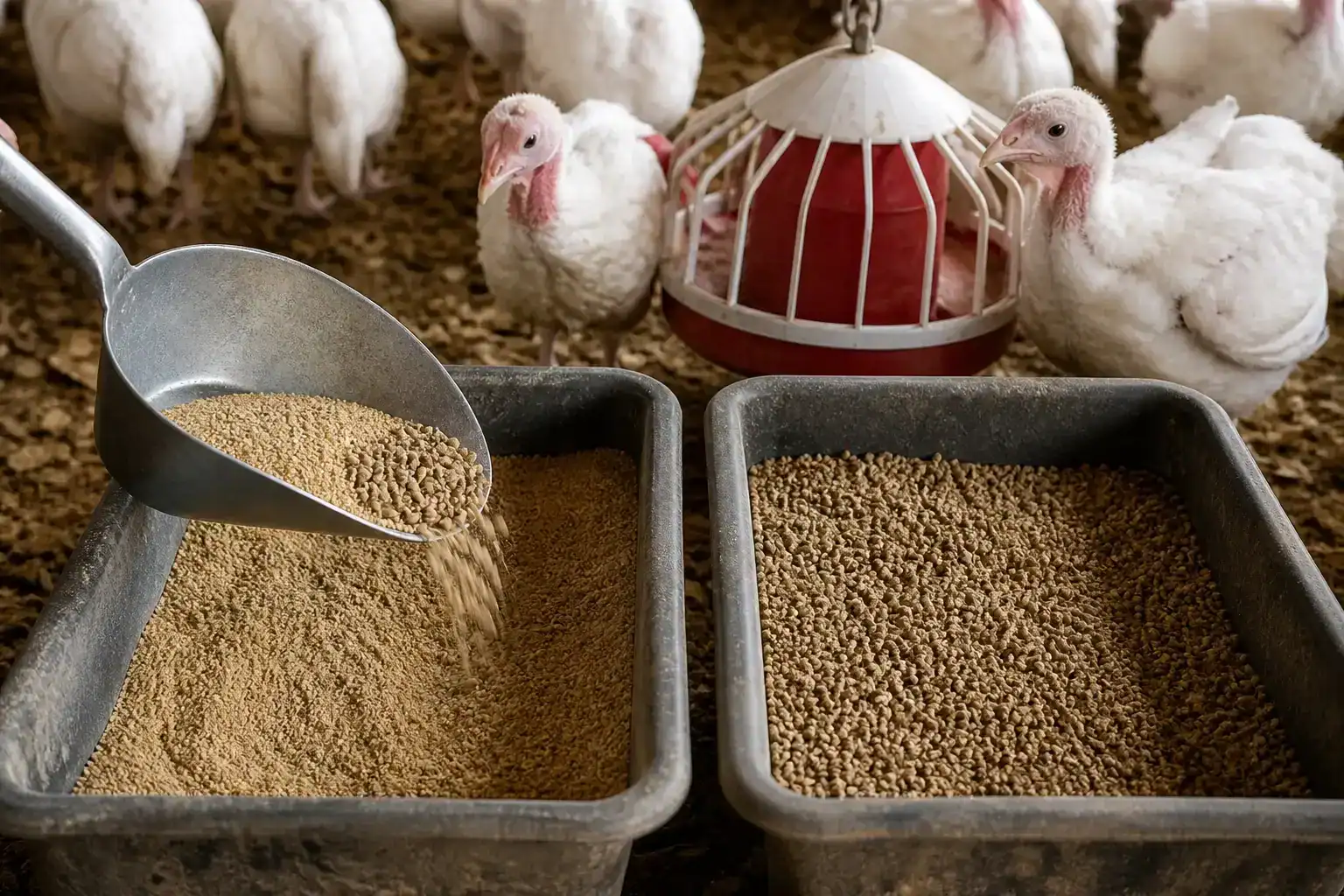
The most common homestead answer is around 6 to 8 weeks old, but that is not a universal rule. Some feed programs have a specific starter period. Others use game bird feed longer. Some broad-breasted meat birds may move through stages faster than heritage birds because they mature and finish sooner.
Switch when:
- Poults are past the fragile early brooder stage.
- Birds are feathering well and growing steadily.
- The feed label says the starter stage is ending.
- A turkey grower ration is available.
- Birds are not under unusual stress, illness, or weather pressure.
Do not switch during a crisis if you can avoid it. If birds are chilled, sick, stressed from moving, or dealing with a management problem, make feed transitions more gradually and watch closely.
How to Make the Feed Transition
You can switch feed all at once if the label and birds tolerate it, but a gradual transition is often easier on a small homestead flock.
A simple 4-day transition:
| Day | Feed Mix |
|---|---|
| Day 1 | 75% starter, 25% grower |
| Day 2 | 50% starter, 50% grower |
| Day 3 | 25% starter, 75% grower |
| Day 4 | 100% grower |
Watch droppings, appetite, energy, and whether timid birds are still eating. If birds back off feed, check pellet or crumble size. A grower pellet that is too large can frustrate younger poults. Crumbles are often easier during the transition.
What About Finisher Feed?
Finisher feed is usually used for meat birds later in grow-out, closer to processing. It may have lower protein than starter and grower rations, depending on the brand. The goal is to support final growth and condition without using early-stage starter forever.
Whether you need finisher depends on your feed program and flock goals. Some small homesteads use starter, then grower, then process. Others use a three-stage starter-grower-finisher plan. Follow the label and choose a program before the birds arrive so you are not scrambling for the next bag at the last minute.
If you are raising meat birds, connect feed timing with processing timing. Butchering Turkeys can help you plan the end of the grow-out period instead of deciding after birds are already oversized or expensive to feed.
Broad-Breasted vs. Heritage Feeding
Broad-breasted turkeys grow quickly and are usually raised for a planned processing date. Their feed program needs to support rapid growth while avoiding management mistakes that lead to leg strain, heat stress, or birds staying too long.
Heritage turkeys grow slower, range more, and may be kept for breeding or seasonal production. They still need good nutrition, but they are not managed exactly like broad-breasted meat birds. Mature heritage breeders may eventually need a breeder or maintenance ration rather than grower feed forever.
The biggest mistake is treating all turkeys the same. The second biggest mistake is trying to save money by feeding a ration that does not match the bird.
Medicated Feed and Withdrawal Times
Some starter feeds are medicated. Some are not. Medicated feed is not automatically bad, and non-medicated feed is not automatically better. The important part is knowing what is in the bag, whether it is labeled for turkeys, and what the label says about use and withdrawal.
Before processing birds, read the feed tag. If there is a medication withdrawal period, follow it exactly. If you do not understand the label, ask the feed mill, extension office, veterinarian, or manufacturer before feeding it.
Never assume a medication labeled for one species, age, or purpose is appropriate for turkeys. Label directions matter.
Grit, Forage, and Treats
If poults eat only commercial crumble or pellets, they may not need extra grit. Once they eat greens, bugs, whole grains, garden scraps, or forage, they need appropriate grit to grind food.
Forage can be good for turkeys, especially heritage birds, but it should not replace the main ration during growth. A pasture with bugs and greens still may not provide balanced protein, minerals, or energy. Treat pasture as a supplement unless you have a carefully designed system and know your birds are maintaining condition.
Keep treats simple and limited. Turkeys that fill up on cracked corn or scraps may leave the balanced feed behind.
How Much Feed Should Turkeys Eat?
Feed intake varies by strain, age, weather, feeder type, and whether birds range. Instead of chasing one universal number, watch condition and feeder behavior.
Healthy growing turkeys should:
- Come to feed eagerly
- Have access without heavy crowding
- Grow steadily
- Walk normally
- Feather well
- Maintain bright eyes and alert behavior
- Have feed available often enough that timid birds can eat
If feed disappears too quickly, check for waste, rodents, wild birds, wet clumps, and feeder design. If birds are not eating well, check heat, illness, stale feed, pellet size, crowding, and water access.
Feed Storage and Freshness
Turkey feed should smell fresh and stay dry. Moldy, rancid, or pest-contaminated feed can harm birds. Store feed in a sealed container away from rain, rodents, and direct heat.
Buy enough that you do not run out, but not so much that feed sits for months. High-protein feed can lose quality over time, especially in hot or humid storage areas.
Label bins if you keep multiple feeds on hand. Starter, grower, layer, and scratch can look similar when dumped into containers. A wrong scoop can create real problems.
Troubleshooting Feed Switch Problems
If birds struggle after switching feeds, ask:
- Is the crumble or pellet size too large?
- Did the switch happen too suddenly?
- Is the new feed fresh?
- Are waterers working?
- Are birds overcrowded at the feeder?
- Are dominant birds blocking weaker ones?
- Did weather change at the same time?
- Is the feed actually labeled for turkeys or game birds?
Return to the previous feed temporarily if needed while you solve the issue, but do not make big nutrition decisions without checking the label and asking for help when birds look unwell.
Frequently Asked Questions About When to Switch Turkeys From Starter to Grower Feed
When should I switch turkeys from starter to grower feed?
Many homesteads switch around 6 to 8 weeks, but follow your feed label first. The right timing depends on the ration, bird type, growth, and flock condition.
Can turkey poults eat chick starter?
Turkey poults usually need turkey starter or game bird starter with nutrition suited to their growth. Regular chick starter may not provide enough protein or the right balance for poults.
Do turkeys need finisher feed?
Meat turkeys may use finisher feed in the final grow-out stage, depending on the feed program. Some small flocks use starter and grower only. Follow the feed label and your processing plan.
Can I feed turkeys layer feed?
Do not feed layer ration to growing poults or meat turkeys unless a qualified poultry professional specifically recommends it. Layer feed is formulated for laying hens, not growing turkeys.
Should I mix starter and grower feed during the switch?
A gradual transition over several days can help small flocks adjust, especially if pellet size or feed texture changes. Watch appetite, droppings, and feeder access.