
Button quail are tiny ornamental birds kept for their color, soft calls, and busy ground-level behavior. They are not miniature Coturnix selected for efficient meat and egg production. A mature bird may be only about four inches long, which changes everything from enclosure safety to water depth, feed texture, and the way you handle them.
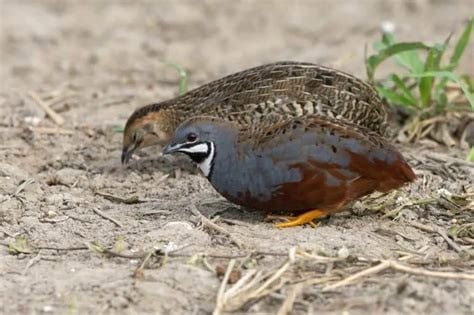
The name is confusing. In the American pet trade, button quail usually means the Chinese painted quail, king quail, or blue-breasted quail, Coturnix chinensis. True buttonquails belong to a different bird family. Ask for the scientific name when buying birds or hatching eggs so you know which animal and care requirements you are getting.
What You’ll Learn
Button Quail and Coturnix Quail Are Different Birds
Standard Japanese Coturnix quail are practical homestead poultry. They mature quickly, lay useful eggs, and some lines are bred for meat. Button quail are much smaller and are usually kept as aviary or companion birds.
Their eggs are tiny, their carcasses offer little food, and their small size makes processing impractical. Keeping them because they are charming is a perfectly good reason. Treating them as a scaled-down meat flock usually leads to poor expectations and housing that does not suit the bird.
If your goal is eggs for the kitchen or birds for the freezer, start with our Coturnix versus Bobwhite quail comparison and the broader guide to raising Coturnix quail. Button quail belong in a different plan.
How Big Do Button Quail Get?
Adult button quail are often about four inches long and weigh only a few ounces. The bird can sit in an adult hand, though most do not enjoy being grabbed or carried.
Their small size lets them slip through gaps that would hold Coturnix. Check wire spacing, doors, feeder openings, vents, and corners. A startled bird can move faster than expected, and an open aviary door can become an escape route in seconds.
PetMD’s button quail care guidance describes them as ground-dwelling birds that do not perch like finches or parrots. Build the useful space at floor level. Branches high in the enclosure may look attractive but do little for a bird that spends its life walking, scratching, dust bathing, hiding, and nesting near the ground.
Housing That Protects a Tiny Ground Bird
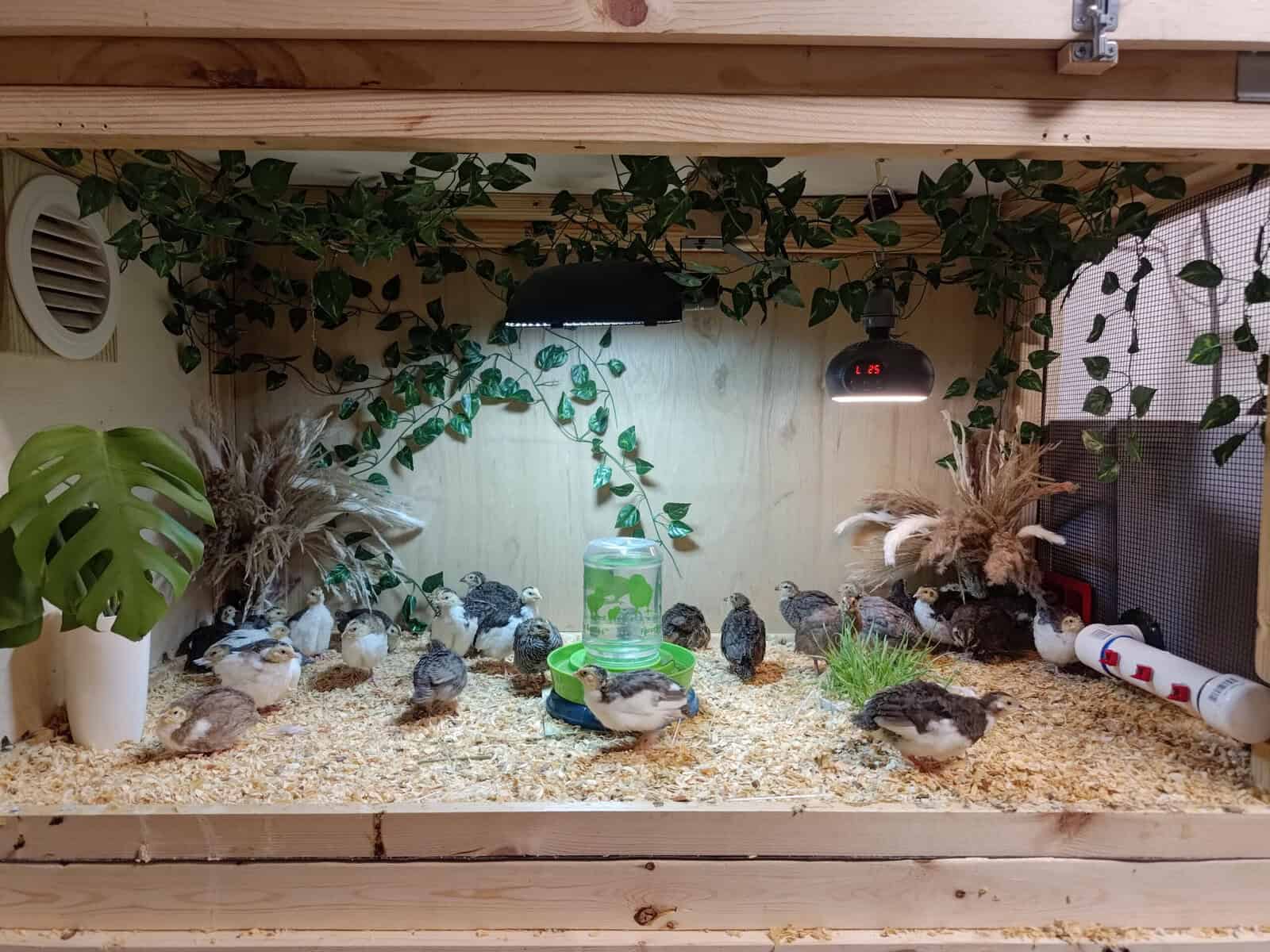
Give a pair as much floor space as you can manage, with more room when keeping a compatible group. Avoid overcrowding. Even a small bird needs distance from a pushy mate, a place to hide, and enough room to forage without being trapped in a corner.
The roof needs special thought. Quail flush upward when frightened. A hard ceiling at the wrong height can cause serious head or neck injuries. Use a low enclosure that limits acceleration or a tall aviary that gives flight room, and add soft netting or padding beneath hard overhead surfaces where appropriate.
Keep the floor dry. Paper, aspen shavings, sand in a designated dust area, and other bird-safe substrates can work when changed regularly. Avoid aromatic cedar, dusty bedding, and wire flooring that offers no comfortable resting surface.
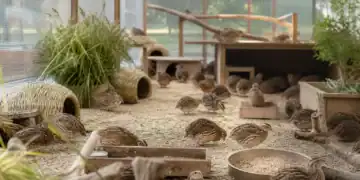
Provide low hides using grasses, bird-safe plants, small shelters, cork, or brushy cover. Position food and water where a timid bird can reach them without crossing an exposed area every time.
Button quail are often placed on the floor of a mixed aviary, but they are not cleanup equipment. They still need their own complete diet, clean water, protected resting areas, and monitoring. Larger birds can bully them, drop waste into their food, or injure them accidentally.
What Do Button Quail Eat?
Use a quality game-bird or quail feed with a particle size small enough for the bird to eat. Chicks need an appropriate high-protein starter ground into fine crumbs. Adults need a balanced ration rather than a bowl made mostly of millet.
Seeds, finely chopped greens, and small insects can provide enrichment, but treats should not replace balanced feed. Laying hens need reliable calcium. Offer an appropriate separate calcium source and ask an avian veterinarian about the ration if shells are thin or the hen lays heavily.
Fresh water must be shallow and safe. Chicks can drown in dishes that look harmless. Use a quail chick waterer, add clean pebbles where appropriate, and make sure the bird cannot become soaked or trapped.
Food and water containers should be low enough to reach but designed to limit bedding contamination. Our guide to no-waste quail feeders and waterers is written for larger Coturnix setups, but the same principles of clean feed and spill control apply after scaling the equipment safely for button quail.

Can Button Quail Live Alone?
Button quail are social, but group dynamics vary. Many keepers house a compatible male and female pair. Extra males can fight, and a single aggressive bird can injure another in a small enclosure.
Do not assume a ratio used for Coturnix will work. Watch the actual birds. Chasing, cornering, feather loss, head injuries, weight loss, or one bird being blocked from food means the arrangement needs to change.
Always have a second safe enclosure ready before adding birds. Introductions can fail even when the numbers look reasonable on paper. Quarantine new birds away from the resident group and use separate tools during that period.
Eggs, Incubation, and Chicks
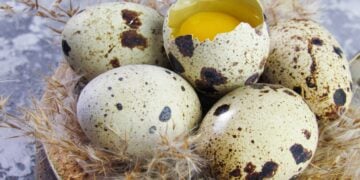
Button quail eggs are tiny. Hens may lay frequently under favorable conditions, but the eggs are not a practical kitchen product. Collecting enough for a meal takes far more effort than keeping Coturnix.
Breeding should be planned, not allowed simply because a male and female share a cage. Chicks are extremely small and can escape through ordinary wire, drown in standard waterers, chill quickly, or fail to find coarse feed.
Use an incubator and schedule appropriate to the exact species. Do not copy the settings from the Coturnix quail egg incubation guide without confirming the bird. If parents hatch chicks in an aviary, protect the family from larger birds and enclosure gaps.
Before breeding, decide where young males will live and whether you can separate incompatible birds. Tiny does not mean effortless.
Are Button Quail Good Indoor Pets?
They can live indoors in a well-designed enclosure, but they are birds, not decorative hamsters. They scatter feed, produce dust and dander, need regular cleaning, and may flush when startled.
Keep them away from kitchen fumes, smoke, aerosols, candles, and overheated nonstick cookware. Give them a predictable light cycle, ventilation without drafts, and a location where sudden dogs, children, or vacuum cleaners do not keep them in constant alarm.
Most button quail are observation pets. Some learn to approach for food, but forced handling can be frightening. Move slowly, work near floor level, and use a small secure room whenever the enclosure must be opened for maintenance.
Common Button Quail Problems
Head injuries often follow an upward flush into a hard ceiling. Prevention begins with enclosure design. Any bird with bleeding, imbalance, weakness, breathing trouble, inability to stand, or a severe impact needs prompt veterinary care.
Egg binding is a risk in small laying hens. Straining, sitting fluffed, tail pumping, weakness, or a swollen abdomen requires an avian veterinarian. Do not squeeze the bird or attempt to break an egg internally.
Overgrown nails, foot irritation, mites, respiratory signs, weight loss, and bullying also deserve attention. Weighing a tiny bird on a gram scale can reveal decline before it is obvious by sight.
Find an avian veterinarian before an emergency. Many general small-animal clinics do not treat birds, and waiting until a four-inch patient is critically ill leaves little margin.
Who Should Keep Button Quail?
Button quail suit someone who wants a small aviary bird, enjoys watching natural behavior, and is willing to build around tiny-body safety. They are a poor choice for someone seeking efficient meat, large eggs, a bird children can carry, or a flock that can live in standard chicken equipment.
Their value is not measured in pounds of feed converted to food. It is in the rustle through grass cover, the soft calls between a bonded pair, the careful scratching through leaf litter, and the pleasure of noticing a bird small enough to disappear behind a handful of stems.