
The hardest part of winter water is rarely the first frozen morning. It is the fifth one, when the bucket has frozen solid again, the hose is stiff, and every animal still needs enough liquid water to drink. To keep livestock water from freezing without electricity, you need a system that slows heat loss and a chore routine that still works during the coldest stretch.
Insulated containers, sheltered locations, larger water volume, warmer refill water, and energy free stock waterers can all buy time. None makes water freeze proof in every climate. The useful question is how long each approach keeps the drinking surface open, and how quickly you can recover when it does not.
Plan around the animals using the water, the lowest temperature you actually see, and the number of trips you can reliably make before dark.
Keeping livestock water from freezing without electricity starts with heat
Insulation holds on to existing heat; fresh warmer water brings more in. External insulation reduces heat loss, while a windbreak reduces exposure. Sunshine can contribute during the day, but it stops helping after sunset.
The British Columbia Ministry of Agriculture’s Winter Outdoor Livestock Watering factsheet explains these heat sources and losses. Although published in 2006, its distinction between retaining heat and replacing it remains useful for judging a winter setup. Its old installation details should not substitute for current local advice.
A light overnight frost and a week without an afternoon thaw call for different plans. Consider wind, daytime sun, the animals using the water, and how soon someone can return. An arrangement that needs another refill before you get home needs additional care or a different watering system.
Also trace where the water comes from. No electrical outlet beside the trough does not necessarily mean independence from electricity. A well pump elsewhere may still need power to replenish an otherwise non-electric waterer.
Make buckets and troughs easier to manage today

Choose a stable drinking container appropriate for the animals, in a sheltered location with safe footing. Useful winter sun is a bonus, provided the location remains accessible. Check where a windbreak collects drifting snow, too; protection from wind can come with a blocked approach.
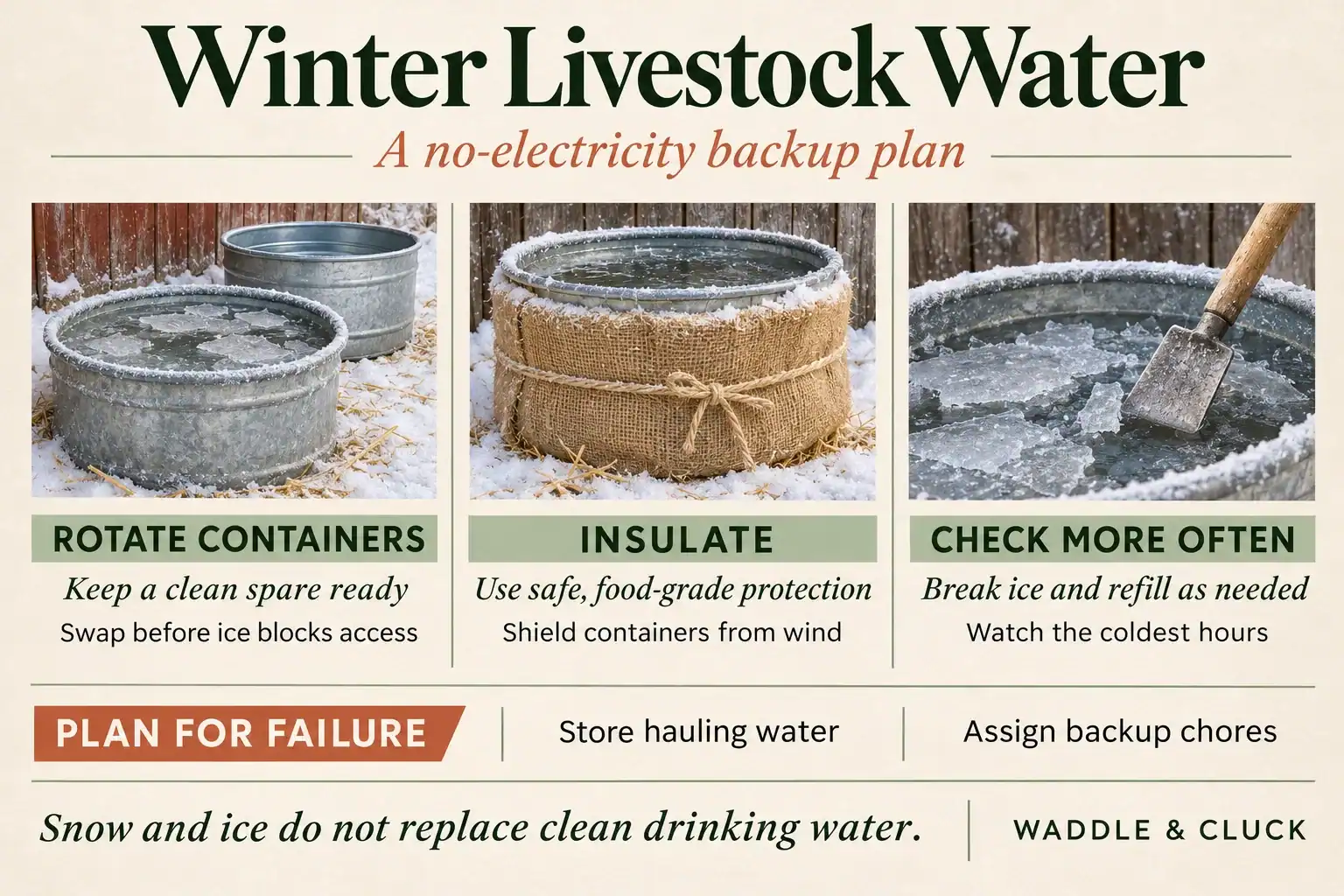
External insulation can help a container lose heat more slowly. Keep it outside the drinking vessel and protected from chewing, manure, and spilled water. Loose foam or other exposed insulation should never become something the animals can pull into the water or eat.
An outer enclosure around a tub is a concept to assess carefully, not a universal building recipe. It must leave the drinking point usable, hold the vessel securely, and allow cleaning. A clever enclosure that prevents you from seeing a frozen opening makes the chore harder.
The water surface needs attention as well as the sides. The BC factsheet identifies the open bowl surface as a major heat-loss path. A smaller exposed opening may reduce that loss, but an improvised lid can also restrict drinking or create an entrapment hazard. Use equipment designed for the species rather than cutting an opening and assuming it fits.
Bring clean warmer replacement water, not boiling water, and keep a spare container ready. Remove the frozen vessel to a suitable thawing area away from animals while the replacement stays in service. Dispose of thaw-water somewhere it will not freeze across the drinking approach or soak bedding.
Iowa State Extension’s archived explanation of freeze protection describes both warmer incoming water and protected insulation. Those measures work together, but neither establishes how many hours your container will remain drinkable. Watch the setup under its own conditions rather than relying on a fixed refill interval.
Carrying water avoids installing a permanent system, but it commits someone to repeated trips. Include filling, carrying, cleaning, and thawing in that decision. Before a cold spell, make sure the spare vessel and replacement water are available to whoever will do the next check.
Match a permanent waterer to the animals using it
Purpose-built energy-free waterers usually combine substantial insulation with heat carried in by the supply water. Some designs also use heat from the ground. Their performance depends on installation and use, not the label alone.
The BC engineering guidance specifically says these units must be sized for livestock use so enough incoming water supplies heat. Bigger is not automatically better for a small herd. If only a few animals use a unit intended for heavier use, fresh-water replacement may be insufficient for its design.
Ask the supplier about the model’s minimum-use conditions, suitability for your animals, and behavior during extended cold. Have a qualified installer or local Extension specialist assess the source, locally appropriate frost protection, and drainage. Generic trench depths and someone else’s herd size cannot answer those questions for your property.
A protected underground supply and an unfrozen bowl are separate jobs. The BC factsheet cautions that warmth rising around a supply pipe may mainly protect the pipe, with little effect on the waterer itself. A line can remain functional while the exposed drinking point freezes.
Covered drinking openings, balls, or flaps also need a closer look. Verify that every animal can operate the actual model and reach the water. Young animals, smaller livestock, and poultry cannot be assumed to use equipment intended for adult cattle.
Our guide to cattle trough capacity and refill rate separates stored volume from replenishment. Apply that distinction in winter: a full tank behind a frozen opening provides no usable access, while an open bowl with a frozen inlet cannot keep replenishing. Check access and refill separately before deciding the system is working.
Flow-through needs a reliable source and somewhere for overflow
A flow-through trough gains heat from warmer incoming supply water. Movement alone does not make water freeze-proof. How much flow is adequate depends on the incoming water temperature, exposed surface, insulation, and weather, so there is no useful universal drip rate.
The source must supply enough water throughout the cold spell. If an electric pump stops during an outage, a trough that depends on continuous replenishment loses that heat input too. Check the supply dependency before treating flow-through as an outage solution.
Overflow needs a route away from shelters and drinking approaches. Iowa State’s archived engineering explanation warns that continuous-flow tanks need adequate drainage to prevent mud and ice around them. Running a hose onto frozen ground beside the trough can leave animals with liquid water they cannot safely approach.
Consider water use and any local discharge requirements before adopting this system. A qualified local adviser can help assess whether the source and drainage make it practical. Without both, another watering arrangement is a better choice than leaving water running and hoping the overflow finds a harmless route.
Sun, saltwater bottles, and floating balls have limits
A dark container in winter sun may collect some warmth, but shading, clouds, and the long night limit passive solar help. Treat sunlight as a supplement to the rest of the watering plan. A black tub is still a tub exposed to freezing weather after dark.
Solar panels powering a pump or heater are a different category. They generate electricity, and their winter output and storage needs require system-specific planning. They are not a passive, electricity-free shortcut.
A sealed saltwater bottle does not change the freezing point of the separate drinking water around it. The salt affects the water inside the bottle. Neither the bottle nor a floating ball supplies sustained heat to replace what the trough loses.
Floating objects can also freeze in place or obstruct an opening. Do not count on them to maintain access, and do not add salt, sugar, alcohol, antifreeze, or other chemicals to drinking water as de-icers. If your plan depends on a bottle keeping the trough open until morning, replace that assumption with a real water check and fallback.

Check the drinking point for the species in front of you
Large animals and chickens can share the problem of frozen water without sharing the same solution. Container height, opening shape, and usable access must suit the animals present. For sheep, goats, and young stock, verify that each animal can reach and use the vessel; adult cattle equipment may not fit.
For dairy cattle, the University of Minnesota Extension’s cold-weather dairy guidance calls for regular freezing checks and a supply that keeps up with drinking demand. A large stored volume cannot compensate indefinitely for a frozen or inadequate inlet.
Horses need clean, fresh drinking water even when the pasture is covered in snow. Minnesota Extension’s winter horse-care guidance states that snow and ice are not adequate water sources for horses. Do not substitute an animal’s ability to nose at ice for a maintained water supply.
For chickens, look at the drinking rim or outlet rather than only the reservoir. Water inside the container is of no use if the birds cannot reach it. Avoid dishes that allow birds to step into deep water or drown; choose a vessel designed to provide safe access for the flock.
Minnesota Extension’s cold-weather chicken-care guidance, reviewed in 2026, recommends routine checks and keeping a second waterer available. That spare lets you replace a frozen waterer while it thaws in a heated area. It does not remove the need to check the replacement.
If you later move poultry water to a suitable powered location, our electric heated-base option for chicken waterers covers a different approach. It requires electricity and belongs outside the no-power plan, especially during an outage.
Build the next water check around the weak point
A glance from the gate cannot confirm that animals can drink. Walk to the water and inspect the opening, the vessel, and any valve or inlet. Observe animals using it, and check the approach for spilled water, ice, or drifting snow.
Keep the routine specific enough that another caregiver can repeat it:
- Confirm liquid water is reachable at the drinking point, including poultry rims and covered openings.
- Check that the supply replenishes as intended, rather than judging only the current tank level.
- Remove contamination and inspect protected insulation for damage or exposure.
- Confirm replacement water and a usable spare vessel are available.
- Keep spills and thaw-water away from walking areas and dry shelter.
There is no universal morning-and-evening schedule that guarantees access through every freeze. Return soon enough to prevent the drinking point from becoming unavailable, and shorten the interval as conditions worsen. If it freezes between visits, increase care or change the arrangement rather than asking the animals to break their own ice.
A workable backup might be a reliable alternate watering location or someone who can make the extra visits. Check that backup against the same power outage or cold spell; another trough on the same failed pump has the same supply problem. Contact your veterinarian if an animal is unwell or is not drinking, and seek local Extension or qualified installation advice for persistent system failures.
Water placement also affects the rest of the winter chores. Use our guide to winter livestock shelter and daily care to consider the drinking area alongside dry shelter and safe footing, with more species coverage in our animal-care guides. Before the next freeze, name the person making the next check and confirm where replacement water will come from if the usual supply stops.
Time how long your current water stays open on the next cold day. That one observation will tell you whether you need more insulation, more volume, or another scheduled refill.
Frequently Asked Questions About How to Keep Livestock Water From Freezing Without Electricity
Will an insulated bucket keep livestock water from freezing overnight?
Insulation slows heat loss but cannot guarantee open water through every night. Performance depends on the starting water temperature, container size, wind, air temperature, and how well the top is protected.
Does a floating ball keep a trough from freezing?
A floating object may keep a small area moving in mild conditions, but it can freeze into the surface during harder weather. Treat it as a minor aid, not the only plan.
Can saltwater bottles keep a trough from freezing?
Sealed saltwater bottles add thermal mass but do not supply heat. They may delay freezing slightly, yet they cannot replace checks and fresh water during sustained cold.
How often should livestock water be checked in freezing weather?
Check often enough that every animal can reach liquid water before ice closes the drinking point. The interval depends on temperature, wind, container, species, and herd size.