
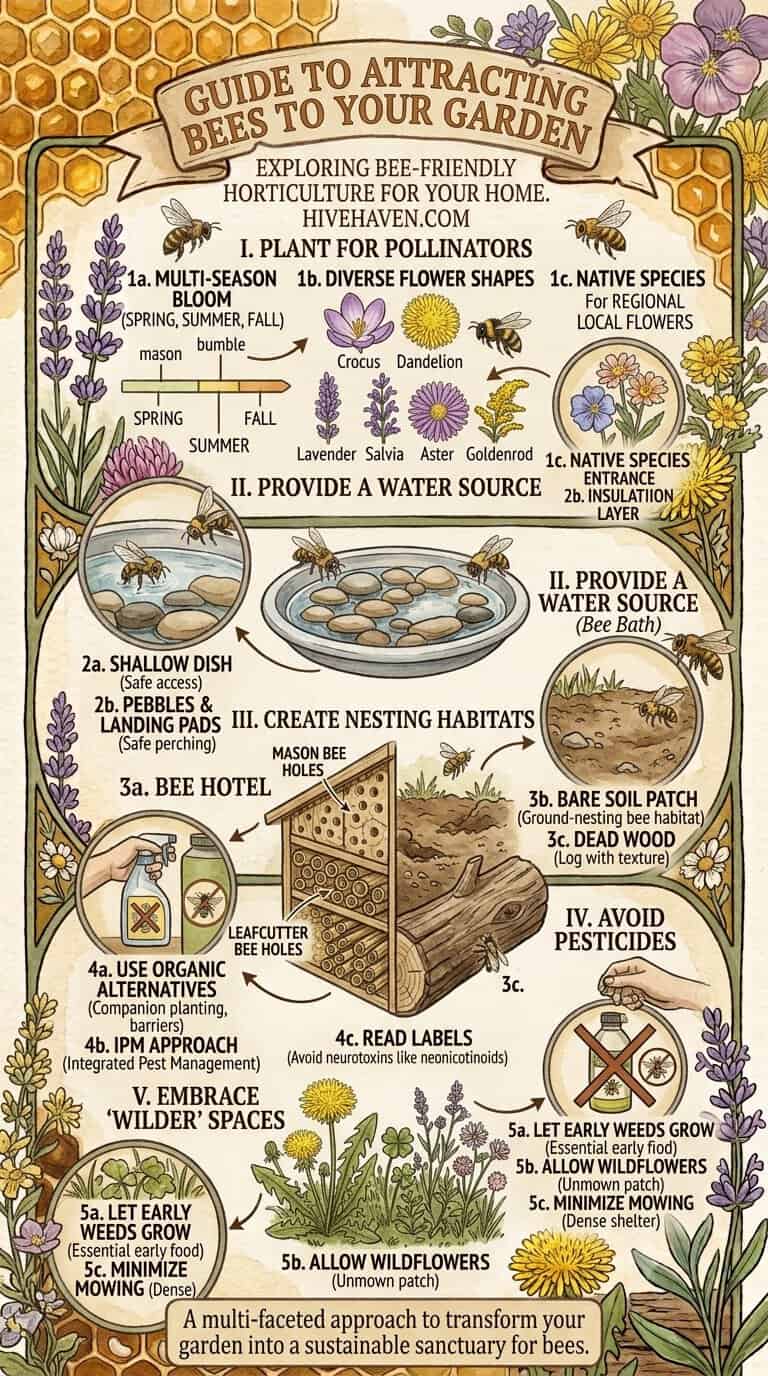
The best plants for bees are the ones that bloom in overlapping waves, from the first warm days of spring through the last mild afternoons of fall, giving foragers steady nectar and pollen across the whole season. If you want a garden that hums, you plant for continuous bloom, favor native species, and choose single-flower forms over the frilly doubles that hide their pollen. Most of that overlaps with what makes a good cutting garden, so the two beds can be the same bed.
This guide pairs with our companion piece on attracting bees by naming the specific, high-value plants worth putting in the ground, sorted by when they flower and what job they do. A yard with something in bloom every week feeds honey bees, bumble bees, and hundreds of solitary native bees at once. You do not need acres to make a real difference, just a plan.
Key Takeaways
Why Plants for Bees Need to Bloom in Waves
Bees forage in every month their colony is active, not just at peak summer, so a plant’s value depends as much on when it blooms as on how much nectar it holds. A honey bee colony can burn through 60 to 100 pounds of honey over a year, and much of that gets eaten during the lean stretches when little else is flowering.
The two hardest gaps are early spring, when a colony is raising brood but few plants have opened, and late summer into fall, when many gardens have gone to seed. Fill those gaps and you support far more bees than a June garden bursting with one kind of flower ever could. That is why we organize this guide by season first: the goal is coverage, not a single showpiece.
If the hive side puzzles you, our explainer on how bees make honey shows exactly why that steady nectar supply matters so much to the colony.
Early Spring Plants: The First Meals of the Year
The best early spring plants for bees open before most gardeners are even thinking about their beds, often in February and March. Emerging queens and overwintered colonies need pollen for brood and nectar for energy at a moment when frost still threatens, so these first bloomers do outsized work.
Flowers and Bulbs
Crocus is the classic first course, its open cups offering pollen on the first sunny afternoons above 50 degrees F. Plant them in drifts of 20 or more bulbs so foragers find them easily. Snowdrops, winter aconite, and species tulips extend the show, and later hellebores and lungwort carry pollen into April. Dandelions, often pulled on sight, are a genuine early food source, so consider leaving a few in an out-of-the-way corner.
Shrubs and Trees
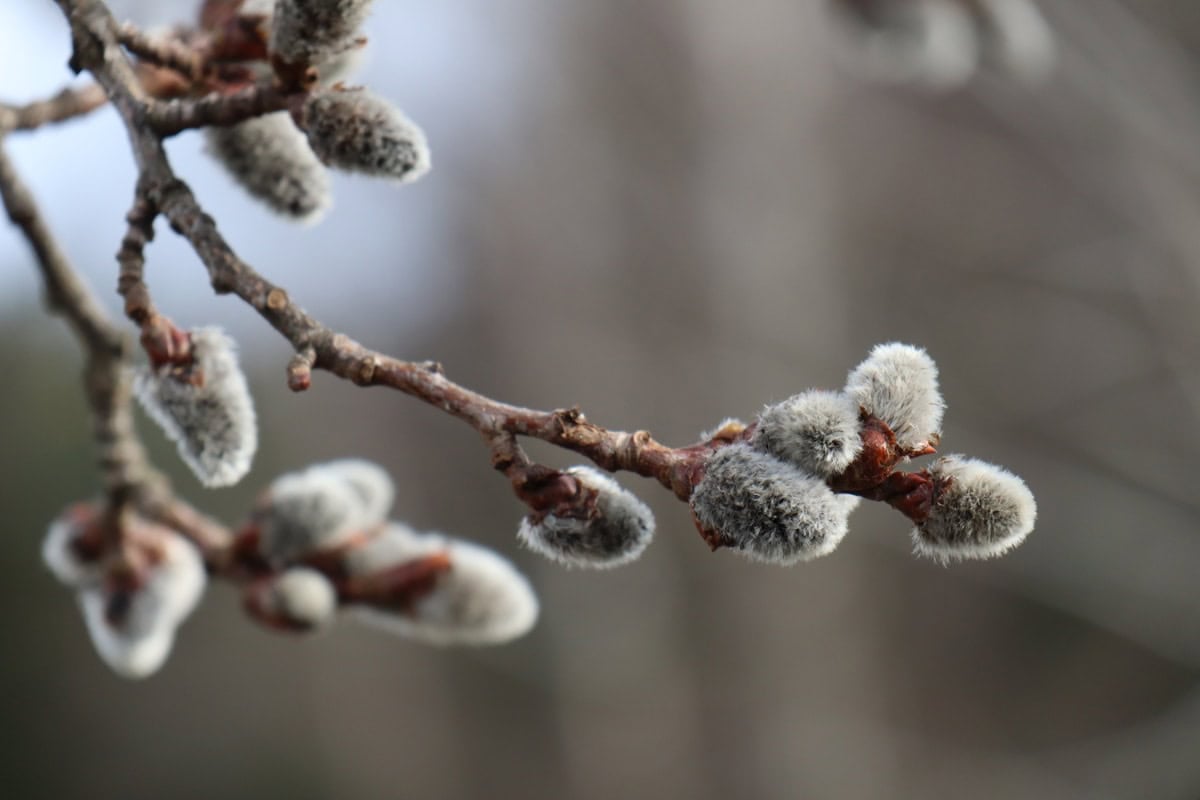
Nothing beats a willow in early spring. A single mature pussy willow or goat willow produces thousands of pollen-rich catkins, feeding a colony when almost nothing else has opened. Maples, especially red and silver maple, bloom before they leaf out and give both nectar and pollen. Fruit trees follow close behind: crabapple, plum, and cherry turn late April into a feast. Because colonies build fast in this window, our guide to beekeeping in early spring pairs naturally with planting for it.
Summer Plants: Peak Foraging
Summer is when supply is easiest, but variety still counts, because different bees have different tongue lengths and reach different flowers. The aim from June through August is a broad, overlapping mix of herbs, flowers, and legumes so every kind of bee finds a match.
Flowering Herbs
Herbs left to flower are some of the hardest-working plants for bees in the whole garden. Borage refills its nectar every two minutes and reseeds itself freely, which makes it one of the most reliable bee magnets you can grow. Lavender draws bumble bees and honey bees for weeks and thrives on neglect once established. Bee balm (Monarda) earns its name, and thyme, oregano, marjoram, and sage all pull heavy traffic once you let them bloom instead of pinching them back.
Flowers and Cover Crops
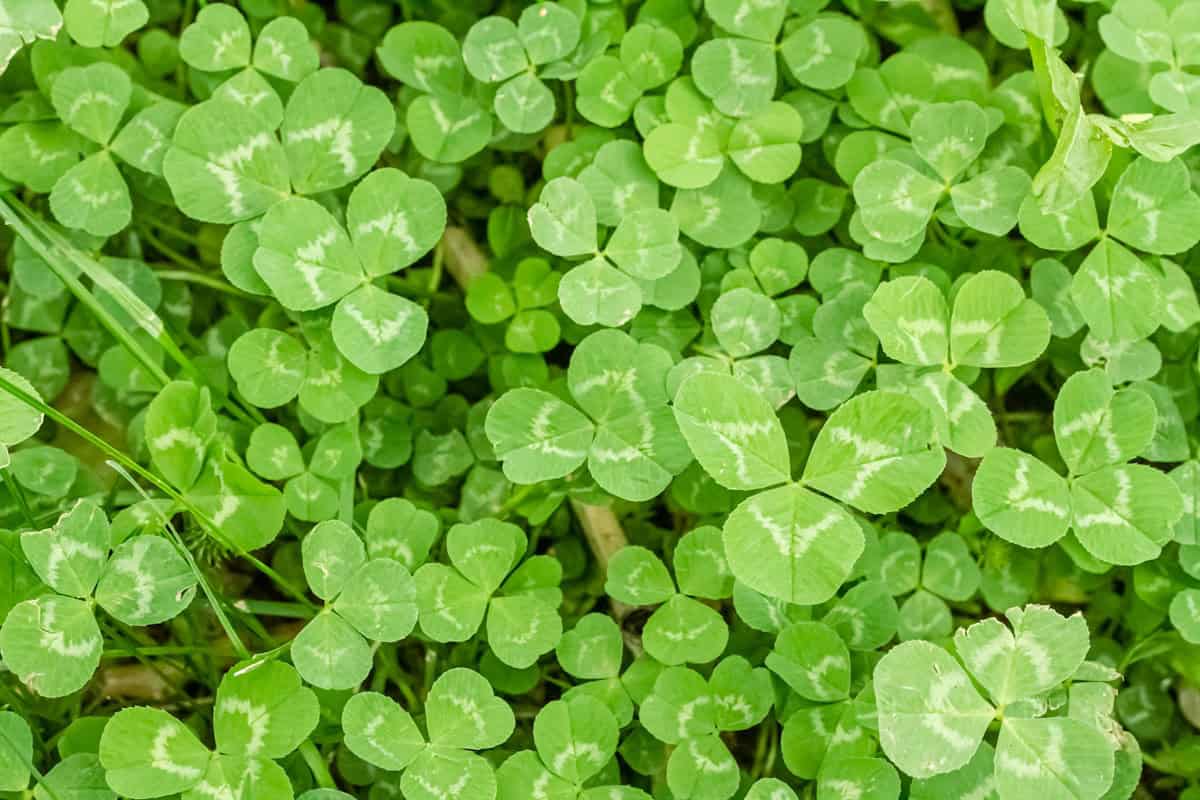
Among annuals and perennials, single-form sunflowers, cosmos, zinnias, echinacea, and Russian sage bloom for months on end. For larger spaces, clover is a workhorse: white Dutch clover in a lawn or crimson clover as a cover crop feeds bees while it builds your soil. Phacelia and buckwheat are fast cover crops that flower in six to eight weeks and can be sown in succession to plug midsummer gaps.
Catmint, salvia, and anise hyssop are three more perennials that flower for a long stretch and shrug off summer heat, and cutting them back after the first flush often triggers a fresh round of bloom. If you are shaping a whole yard around pollinators, our guide to attracting bees covers the water, shelter, and habitat side that planting alone cannot.
Fall Plants: Fueling the Winter Cluster
Fall plants for bees may be the most important of all, because what a colony gathers in September and October becomes the winter stores that carry it to spring. As summer flowers fade, two natives take over. Asters bloom in a wide palette from August through frost and swarm with bees on warm afternoons. Goldenrod, wrongly blamed for hay fever that ragweed actually causes, is a nectar powerhouse that can produce a real fall honey flow. Add sedum (Autumn Joy), Japanese anemone, and late-blooming Russian sage, and you keep the table set until the first hard freeze. A well-fed fall colony is a healthier one, which ties directly into maintaining a healthy beehive through the cold months.
Native Plants and Single-Flower Forms: Why They Matter
Native plants earn their place because local bees evolved alongside them and often depend on them, and because they need less water and fuss once established. Some native bees are specialists that can only use pollen from particular native genera, so a garden of exotics can leave them with nothing to eat. The Xerces Society regional pollinator plant lists name the best native choices for your specific area, and they are the first place we send anyone building a serious pollinator garden.
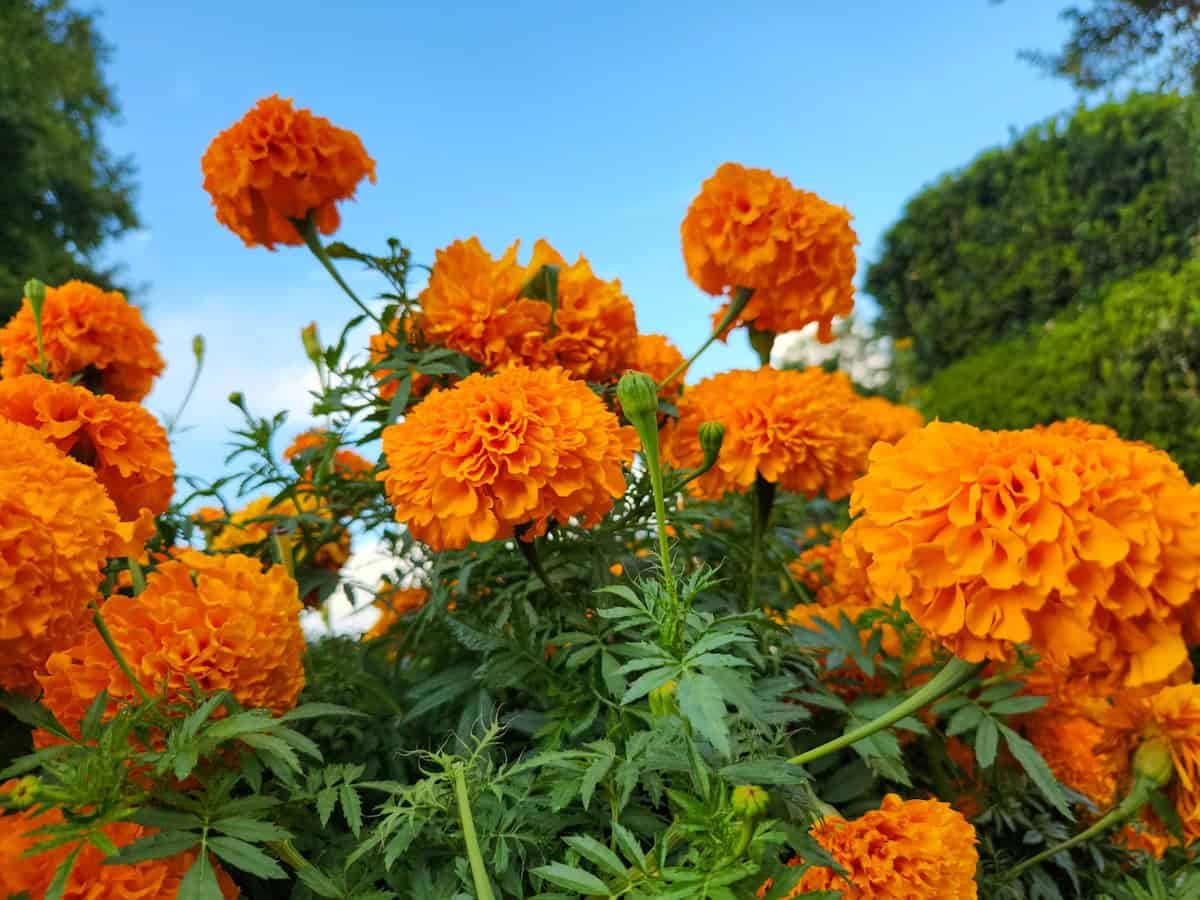
Flower shape matters just as much as origin. Many bred ornamentals, especially double-flowered roses, marigolds, and dahlias, pack in extra petals at the expense of the pollen and nectar bees came for, and some are effectively sterile. Those tightly petaled blooms also physically block bees from reaching the center, so a forager either gives up or leaves empty.
Choose single, open-faced blooms where the center is visible and reachable. A plain single dahlia feeds bees; a dense pompom variety mostly does not. When you shop, read plant tags and look past the flashiest cultivars, because the plainer, more natural-looking form is almost always the better bee plant.
Building a Continuous-Bloom Plan
A continuous-bloom plan is simpler than it sounds: pick at least three plants for each season that overlap at the edges, so something is always flowering from the first crocus to the last aster. Start by listing what already blooms in your yard by month, then find the empty weeks and plant to fill them.
Plant in clumps, not singles. A patch of one species at least three feet across is far easier for foragers to find and work than a single plant of a dozen different kinds scattered around. Group by bloom time so each season has a dense anchor the bees can return to. And skip the pesticides, especially systemic neonicotinoids, which move into pollen and nectar and harm the very bees you are working to feed.
If you can only start with a handful of plants this year, buy for the gaps rather than the peak: one willow or an early bulb drift, one long-blooming summer herb like borage or lavender, and one fall native like aster or goldenrod will feed bees across all three lean windows better than a whole bed of June annuals ever would. Add a clump each season after that, always choosing single flowers and natives where you can, and within a couple of years you will have a garden that hums from thaw to frost.
Frequently Asked Questions About Plants for Bees: A Pollinator Garden Guide
What are the best plants for bees?
The best plants for bees bloom across the whole active season rather than all at once: willow and crocus in early spring, borage, lavender, bee balm, and clover in summer, and asters and goldenrod in fall. Native, single-flower forms give the most usable pollen and nectar. Aim for at least three bloomers in each season so foragers never hit a gap.
What flowers do bees like the most?
Bees favor open, single-flower shapes where the pollen and nectar are easy to reach, such as borage, echinacea, sunflowers, asters, and lavender. They tend to skip double-flowered ornamentals like pompom dahlias and frilly marigolds, which trade pollen for extra petals. Blue, purple, and yellow blooms are especially easy for bees to spot.
When should you plant flowers for bees?
Plant spring bulbs like crocus in fall, set out perennials and shrubs in spring or fall, and sow annuals and cover crops such as borage, phacelia, and buckwheat after your last frost. Sowing cover crops in succession every few weeks keeps fresh bloom coming through summer. The goal is to have something flowering from the first warm days to the first hard freeze.
Do bees prefer native plants?
Yes, native plants are usually the best choice because local bees evolved with them, and some specialist native bees can only use pollen from particular native genera. Natives also need less water and care once established. Check the Xerces Society regional plant lists to find the strongest native options for your area.