
A propolis tincture is a concentrated liquid extract made by steeping raw propolis, the sticky resin bees collect to seal and defend their hive, in high-proof alcohol until its beneficial compounds dissolve into the liquid. Beekeepers make it because that same resin the bees rely on to sterilize their home carries antioxidant and antimicrobial plant compounds that people have used for sore throats, minor wounds, and immune support for generations.
If you keep bees, you already have the raw material, scraped off your frames and inner covers at every inspection.
What You’ll Learn
What Is Propolis, and Why Do Beekeepers Make a Tincture?
Propolis is the resinous mixture honey bees gather from tree buds and sap, then blend with wax and their own enzymes to caulk gaps, smooth rough surfaces, and coat the inside of the hive. Bees treat it as a defense system: it seals drafts, and its antimicrobial nature helps keep the colony’s warm, crowded quarters from becoming a breeding ground for pathogens. That protective role is exactly what interests people. A comprehensive research review of bee products credits propolis with antioxidant, antibacterial, and anti-inflammatory activity tied to its flavonoids and phenolic acids.
A tincture is the practical way to capture those compounds. Raw propolis is a stiff, sticky solid that softens in your hand and hardens in the cold, and it will not dissolve in water. Alcohol pulls the active resins into a liquid you can measure by the drop, store for years, and apply to skin or take under the tongue.
For beekeepers, it also turns a sticky nuisance, the stuff that glues your frames together and coats your hive tool, into something worth saving. If you want to understand how the colony that produces this resin stays strong enough to forage it, our guide to maintaining a healthy beehive covers the fundamentals.
Collecting Propolis From the Hive
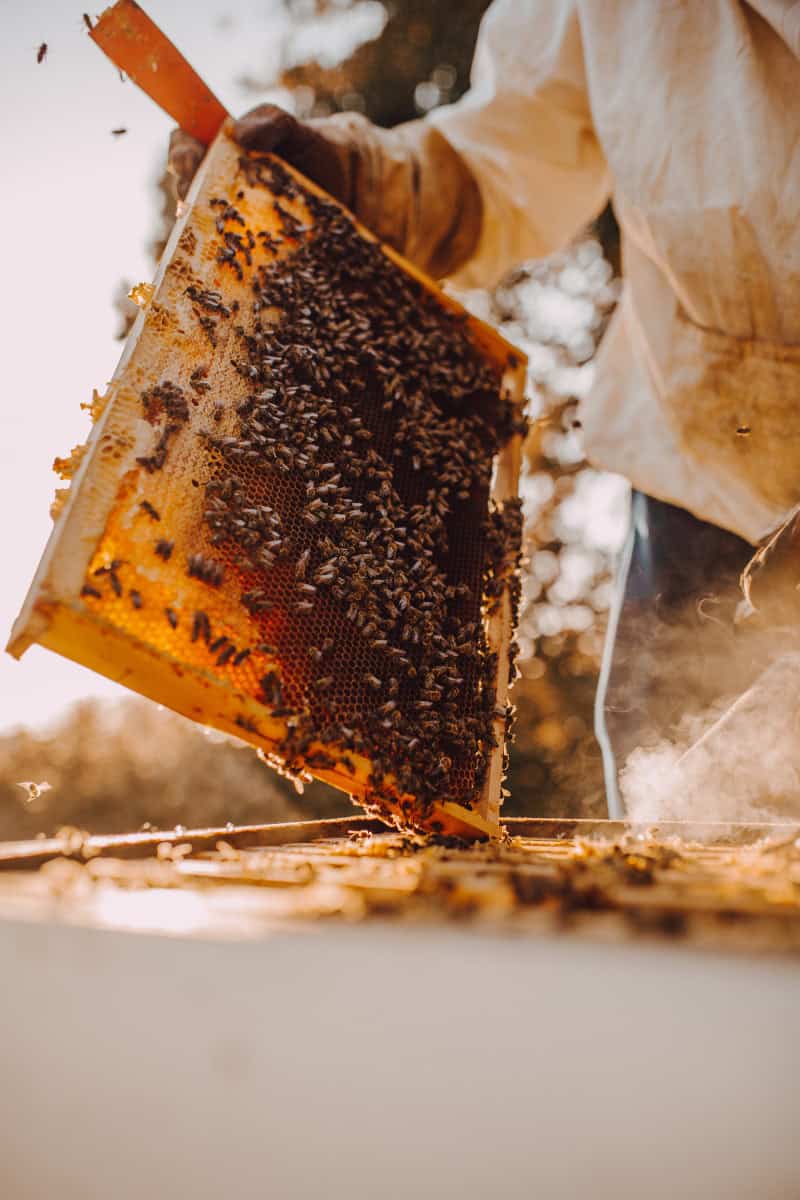
You collect propolis by scraping it off the parts of the hive where bees deposit it most heavily: the inner cover, the tops of frames, the rims of boxes, and around the entrance. During routine inspections, run your hive tool along these surfaces and drop the scrapings into a clean glass jar. A strong colony in a resinous mood can yield a surprising amount over a season, though quantity varies by genetics and region, since some bee lines are far heavier propolizers than others.
For a cleaner, larger harvest, a propolis trap works better than scraping. It is a flexible plastic mat with narrow slots that sits on top of the frames in place of the inner cover. Bees, driven to seal any small gap, pack the slots with propolis. After a few weeks you pull the mat, put it in the freezer overnight, then flex it, and the frozen propolis shatters and falls off in clean flakes.
Because trap propolis avoids the wood splinters and paint flecks that come with scraping, it makes a purer tincture. Keep whatever you collect in the freezer until you are ready to process it, both to preserve it and because cold propolis is far easier to handle. Managing propolis is one of the small skills that comes with the hobby, alongside knowing when to harvest honey from the same hives.

How to Make a Propolis Tincture With Alcohol
The alcohol method is the standard, and it comes down to a ratio, a container, and patience. Use roughly one part cleaned propolis to four parts high-proof alcohol by weight, a 1:4 ratio: for example, 50 grams of propolis to 200 grams (about 250 mL) of alcohol. Choose a high-proof grain alcohol, ideally 190 proof (95 percent) where it is legal to buy, or at least 151 proof. The higher the alcohol content, the more resin it dissolves and the less water dilutes the result. Never use rubbing alcohol or isopropyl, which are not safe to swallow.
Start by freezing the propolis solid, then grinding or grating it into a coarse powder, because the finer the particles, the more surface area the alcohol can reach. Work fast, since it softens and turns gummy as it warms. Put the powder in a clean glass jar, pour the alcohol over it, and seal the lid tightly. Label the jar with the date and ratio. Store it somewhere dark at room temperature and shake it hard once a day.
Daily shaking keeps the propolis from clumping and settling, and it speeds the extraction. Over two to four weeks the liquid turns a deep reddish-brown as the resins move into the alcohol. Two weeks gives a usable tincture, while four weeks gives a stronger one.

Straining and Bottling
Once the steep is done, strain out the solids. Pour the liquid through a coffee filter, a paper towel, or fine muslin set in a funnel. This step is slow because propolis wax clogs the filter, so give it time and swap filters if the flow stalls. What passes through is your finished tincture. Transfer it into small amber glass dropper bottles, which block the light that degrades the active compounds.
A batch this size fills several one-ounce bottles, plenty to keep and share. The leftover sludge in the filter still holds some resin and can be covered with a little more alcohol for a weaker second run if you would rather not waste it.
A Non-Alcohol Option: Glycerin Extract
If you want to avoid alcohol, food-grade vegetable glycerin makes a gentler extract suited to children, or to anyone who prefers it. A glycerin extract, technically a glycerite, is sweeter and milder, with the trade-off that glycerin pulls fewer of propolis’s resins than high-proof alcohol does, so the result is less concentrated. It also has a shorter shelf life, generally one to two years versus many years for an alcohol tincture.
100% Pure, USP Pharmaceutical & Food Grade, All-Natural Moisturizer & Cleanser for Skin, Hair, Soap Making, DIY Beauty & More

To make one, use the same rough 1:4 ratio of propolis to glycerin. Because glycerin is thick and extracts slowly at room temperature, gentle warmth helps: set the sealed jar in a slow cooker of water held around 100 degrees F, or in a warm water bath, for several hours to a couple of days, shaking when you can. Some makers run it two to four weeks at room temperature with daily shaking instead, trading time for heat. Strain it the same way, though the thick glycerin passes through a filter even more slowly. Store the finished glycerite in the refrigerator to stretch its shelf life.
How to Use Propolis Tincture and Typical Dosage
People use propolis tincture two main ways: internally for throat and immune support, and topically on skin. Internally, a common approach is 15 to 30 drops (roughly half a milliliter to one milliliter) in a little water or juice, up to three times a day. Alcohol tincture is potent and tastes sharply of resin, so diluting it makes it far easier to take, and dropped straight onto the tongue it delivers a strong, numbing, bitter hit. Many people reach for it at the first scratch of a sore throat.
Topically, you can dab diluted tincture on minor cuts, cold sores, or chapped skin, where its antimicrobial resins may help. Do not put full-strength alcohol tincture on broken skin, since it stings hard, so dilute it first or choose the glycerin version. Propolis tincture is a folk and complementary remedy, not a replacement for medical care, and it is not evaluated the way pharmaceuticals are, so treat these amounts as general starting points and talk to your doctor about anything serious. This resourcefulness, using every product the hive offers, is the same instinct behind rendering beeswax from cappings and old comb.
Storing Your Tincture
Store alcohol propolis tincture in a tightly capped amber glass bottle, away from heat and direct light, and it will hold its potency for several years, because the high alcohol content acts as its own preservative. There is no need to refrigerate the alcohol version, though a cool, dark cupboard is ideal. Glycerin extracts are more perishable and belong in the refrigerator, where they will last one to two years.
If a tincture ever smells off, turns cloudy in a way it did not start, or shows any sign of mold, which is far more likely in a low-alcohol or glycerin batch, throw it out. Keep every bottle clearly labeled with its contents and date, and well out of reach of children given the alcohol content and the dropper.

Safety and Allergy Notes
Propolis is generally well tolerated, but it is a known allergen, and that is the most important caution here. People who are allergic to bees, bee products, or tree and conifer resins are the most likely to react, and reactions can range from contact dermatitis (redness, itching, a rash where it touched skin) to mouth irritation. Before using a new batch, test it: put a small diluted amount on the inside of your forearm, or a tiny drop in your mouth, and wait 24 hours to see how you respond. Stop right away if you notice swelling, hives, or trouble breathing, and seek care.
Skip propolis, or clear it with a doctor first, if you are pregnant or nursing, giving it to a child, or taking medication, since the evidence in those situations is limited. Understanding the colony behind the product helps too, and our explainer on how do bees make honey gives useful context on the industrious insects that also produce this resin. Used sensibly, with a patch test and honest attention to how your body responds, propolis tincture is a practical way to put your hive’s own medicine cabinet to work.
Whether a propolis tincture is worth making comes down to what you have and who will use it. If you keep bees and can collect clean propolis with a trap, the alcohol method gives you the strongest, longest-lasting extract for pennies, and it is the right choice for most adults. If the tincture is for a child, or for anyone who avoids alcohol, make the glycerin version instead and accept the shorter shelf life. Either way, start with a small batch, patch-test before you rely on it, and keep detailed labels so you know exactly what is in the bottle six months from now.
Frequently Asked Questions About Propolis Tincture: How to Make and Use
What alcohol is best for a propolis tincture?
High-proof grain alcohol is best, ideally 190 proof (95 percent) where you can buy it, or at least 151 proof. The higher the alcohol content, the more of propolis’s resins it dissolves and the less water dilutes your tincture. Never use rubbing alcohol or isopropyl, which are toxic to swallow.
How long does propolis tincture take to make?
Plan on two to four weeks of steeping. You can use it after two weeks, but letting it sit the full four weeks, shaking daily, produces a stronger, darker extract. Straining and bottling then takes under an hour, though the filtering itself is slow.
How do you take propolis tincture?
Most people put 15 to 30 drops in a little water or juice, up to three times a day, often at the first sign of a sore throat. You can also dab a diluted amount on minor skin irritations. Because it tastes strongly of resin and can numb the mouth, diluting it makes it far easier to take.
Is propolis tincture safe for everyone?
No. Propolis is a known allergen, and people allergic to bee products or tree resins can react with rashes or mouth irritation. Patch-test any new batch first, and skip it, or ask your doctor, if you are pregnant, nursing, giving it to a child, or on medication.