
What You’ll Learn
Direct Answer
Building a safe DIY farrowing crate for pregnant sows means creating a controlled farrowing area that protects newborn piglets from crushing, gives the sow secure footing and steady access to feed and water, keeps the pen clean and ventilated, and provides a warm creep area where piglets can rest away from the sow. It should not be a quick pen made from scrap boards and hope.
A farrowing setup has one job above all others: help the sow farrow and nurse while reducing piglet death. That means every rail, panel, gap, heat source, latch, and floor surface has to be evaluated from the level of a wet newborn piglet and a large sow lying down.
First: Should You DIY a Farrowing Crate?
A farrowing crate is a specialized piece of livestock equipment. It restrains or limits sow movement during the riskiest period around birth, mainly to reduce piglet crushing. That benefit comes with welfare tradeoffs, because the sow has less freedom to turn, nest, and move normally.
For a homestead, the question is not only whether you can build one. It is whether you can build one safely enough for the sow, the litter, and the person doing chores. If your materials are weak, the floor is slick, the heat source is risky, or you do not have farrowing experience, a DIY crate may create more danger than it solves.
Merck Veterinary Manual notes that supervised farrowing and well-designed farrowing crates or pens can help reduce preweaning mortality, including crushing. Their breeding management of pigs guidance also emphasizes the importance of farrowing supervision, warming piglets, and appropriate facilities.
This article is a planning guide, not a substitute for local veterinary, extension, or experienced producer advice. Before building, check state rules, buyer requirements, breed needs, and your own ability to monitor the sow.
What a Safe Farrowing Setup Must Do
A safe farrowing crate or farrowing pen must balance several needs at once:
- Give the sow a secure, calm place to farrow
- Reduce the chance that piglets are crushed when she lies down
- Allow piglets to reach the udder and nurse
- Provide a warm creep area away from the sow
- Keep floors dry, non-slip, and cleanable
- Allow good ventilation without drafts on piglets
- Let the caretaker observe and assist safely
- Prevent piglets from escaping, chilling, or getting trapped
- Prevent the sow from breaking equipment or injuring herself
If one part of the design solves a piglet problem by creating a sow problem, the design is not finished. For example, a tight crate may reduce movement but increase stress if it is poorly fitted, slick, loud, or hard for the sow to stand and lie in. A loose pen may feel kinder but can increase crushing if there are no rails, creep area, or supervision.
Crate, Pen, or Farrowing Rails?
Homesteaders often use the phrase farrowing crate loosely. There are several options.
A traditional farrowing crate limits the sow’s ability to turn around and controls how she lies down. It is designed to protect piglets but restricts sow movement.
A farrowing pen gives the sow more room but may include anti-crush rails along the walls. These rails create a small protected space where piglets can move when the sow lies against a wall.
A hybrid setup may use temporary confinement around birth, then give the sow more freedom once piglets are stronger and less likely to be crushed.
A simple open pen with bedding may work for experienced keepers and good maternal sows, but it has higher risk if the sow is clumsy, nervous, lame, very large, or farrowing in cold conditions.
Your choice should reflect your sow, breed, climate, litter expectations, experience, and facilities. If this is your first breeding sow, spend time with an experienced pig producer before farrowing. Managing a litter is very different from finishing feeder pigs. If you are still mostly in the meat-pig stage, Raising Pigs for Meat is the better starting point before building breeding infrastructure.
Essential Design Features
Strong Materials
Use materials that can handle a sow leaning, rubbing, pushing, and getting up repeatedly. Lightweight panels, brittle plastic, splintered lumber, exposed screws, and loose gates do not belong inside a farrowing area.
All surfaces should be smooth enough to prevent cuts but strong enough not to bend into the sow or piglets. Fasteners should be recessed or outside the animal contact area. Gates should latch securely and open in a way that does not trap the caretaker.
Safe Flooring
The floor must give traction. A slick floor increases the risk of uncontrolled lying, leg injury, and piglet crushing. Concrete can be cleanable but cold and slick if not managed. Wood can be warmer but harder to sanitize and can splinter. Rubber mats can help traction but must not create gaps where piglets get trapped.
The floor also needs drainage. Wet bedding, spilled water, and birth fluids are part of farrowing. If moisture collects under the sow or creep area, piglets chill faster and bacteria pressure rises.
Anti-Crush Space
The design needs a way for piglets to escape the sow’s body when she lies down. In a pen system, that often means farrowing rails mounted along the walls high enough for piglets to slip under but placed to prevent the sow from pinning them flat against the wall. In a crate system, side rails and controlled sow space serve that purpose.
Do not leave gaps where piglets can wedge their heads, legs, or bodies. Every opening should be checked with newborn piglet size in mind.
Warm Creep Area
Piglets are drawn to warmth, and newborn piglets chill quickly. A creep area gives them a warm place away from the sow. This can reduce the time piglets spend lying directly against her body between nursing sessions.
Heat lamps are common but risky around bedding, dust, pigs, and cords. If used, they must be secured with proper guards, kept away from bedding, and protected from chewing or sow contact. Heat pads may be safer in some setups but still require cord protection and careful placement.
The sow also needs a cooler area. Do not heat the whole pen to piglet temperature and overheat the sow. The creep should be warm; the sow area should be comfortable and well ventilated.
Feed and Water Access
A farrowing sow needs reliable water and appropriate feed access. She should not have to fight a feeder, twist awkwardly, or stand on slick footing to drink. Waterers must be secured so they do not flood the pen. Feeders should be easy to clean and positioned so spilled feed does not contaminate the piglet area.
Nutrition before and after farrowing affects sow condition and milk production. Use a proper sow ration and local guidance rather than trying to improvise during late pregnancy. For general pig-feeding foundations, review What Do Pigs Eat?
Ventilation Without Drafts
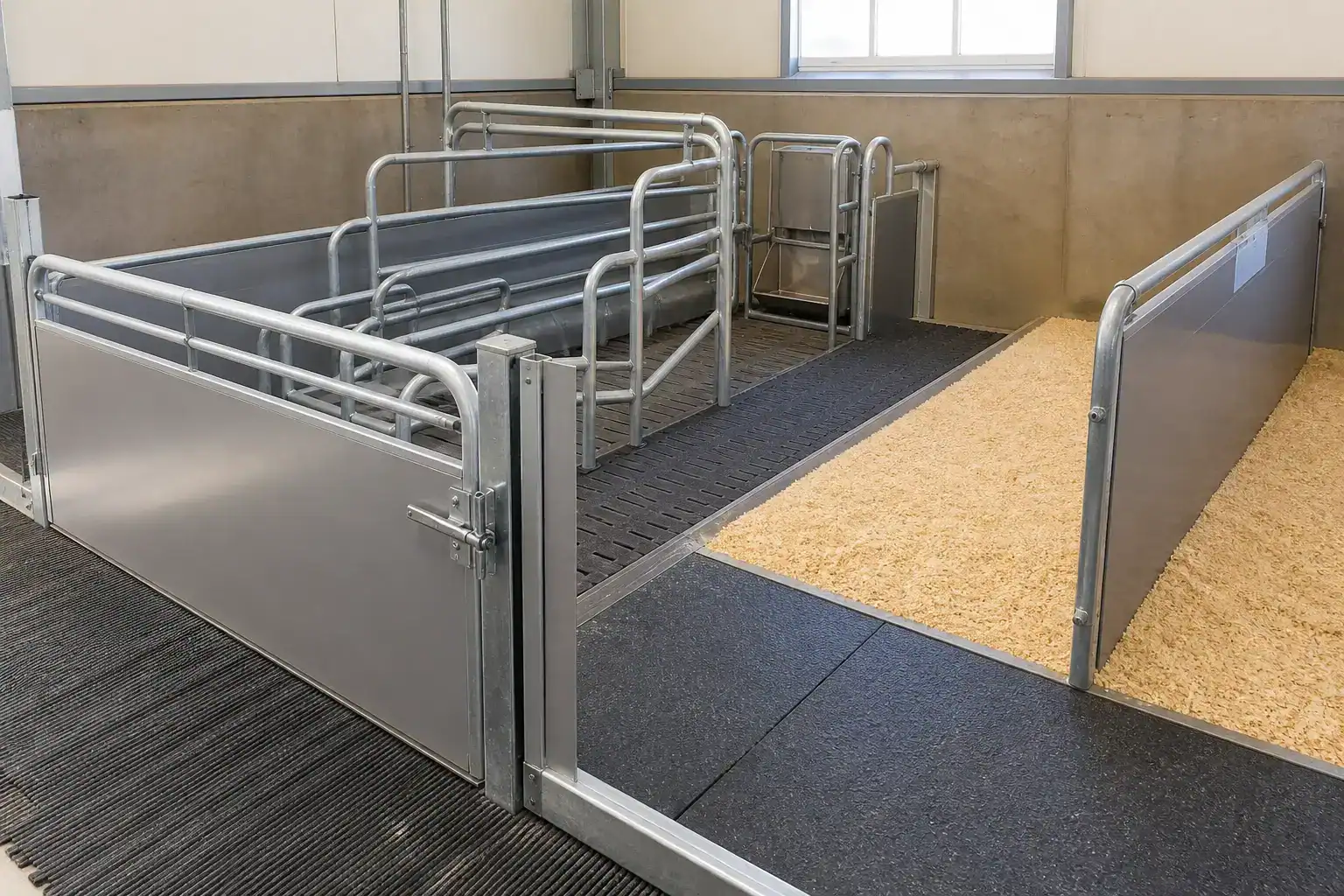
Farrowing areas need fresh air, but newborn piglets should not lie in a draft. A sealed, damp room is a respiratory risk. A drafty pen can chill piglets. Aim for air exchange above and around the pen while keeping the creep area warm and protected.
Smell is useful feedback. If ammonia or stale air hits you when you enter, ventilation and cleaning need work. If bedding is damp and piglets are piling hard under the heat source, check temperature, drafts, and flooring.
Safety Checklist Before the Sow Enters
Use this checklist before moving the sow in:
- No sharp edges, loose screws, splinters, or protruding hardware
- Gates latch securely and open safely for people
- Sow can stand, lie, eat, drink, and nurse without injury
- Piglets cannot escape through panel gaps
- Piglets cannot wedge under rails, mats, feeders, or gates
- Flooring gives traction and drains well
- Bedding is clean, dry, and not excessive near heat sources
- Heat source is guarded, secured, and out of reach
- Electrical cords are protected from chewing and moisture
- Creep area is warm and attractive to piglets
- Water cannot flood the bedding
- Lighting allows night checks
- Supplies are staged before labor begins
If any item makes you pause, fix it before farrowing. After labor starts, everything gets harder.
Timing and Sow Preparation
Pigs average about 115 days of gestation, though individual timing varies. Do not wait until the sow is actively nesting to finish the pen. Have the farrowing area ready early enough that she can settle in and you can watch for problems.
Keep the pre-farrowing period calm. Avoid unnecessary hauling, loud work, or major pen changes right before farrowing. A nervous sow is harder to manage and may be more dangerous around piglets and people.
Have supplies ready: clean towels, gloves, iodine or navel-care supplies recommended by your vet, a thermometer, clean buckets, a piglet-safe warming plan, a notebook or farrowing record sheet, your vet’s phone number, extra bedding, and a flashlight or headlamp. Do not wait until midnight in a storm to decide where the heat source plugs in.
Monitoring the First 72 Hours
The first few days are critical. Many crushing losses happen early, when piglets are small, chilled, weak, or slow to move. Once the litter is established, our guide to when to wean piglets explains age, weight, feed readiness, and how to reduce stress on both sow and piglets. Supervision matters, but so does calm. You need to observe without constantly stressing the sow.
Watch for piglets nursing and finding teats, weak piglets getting pushed aside, piglets sleeping in the creep area, the sow standing and lying carefully, piglets trapped behind rails or near walls, the sow refusing feed or water, fever, discharge, or signs of illness, excessive aggression toward piglets, and piglets chilled, piling, or crying constantly.
Call a vet if labor stalls, the sow is distressed, piglets are weak or chilled, the sow will not rise, discharge seems abnormal, or you suspect a retained piglet. Do not guess your way through a farrowing emergency.
Common DIY Mistakes
Building Too Tight
A crate that does not fit the sow can cause stress, injury, and poor nursing access. Sows vary by breed, age, condition, and frame. Measure the sow and compare with proven equipment guidance before building.
Ignoring Piglet Gaps
Tiny openings can be deadly. Piglets can wedge under boards, behind mats, beside feeders, or through panel gaps. Get down low and inspect from their level.
Using Unsafe Heat
Heat lamps hung with weak clamps are a fire hazard. Exposed cords are a chewing hazard. Bedding piled under heat is a fire hazard. Heat must be built like a permanent system, not a temporary barn trick.
Making It Hard to Clean
If the pen is hard to scrape, drain, bed, and disinfect, it will become a health risk. Good farrowing design includes chore design.
Skipping the Human Exit Plan
A protective sow can be dangerous. Make sure people can enter, assist, and exit safely. Use gates, boards, and calm handling practices. Strong pig facilities begin with strong containment, and Pig Fencing is relevant even inside the barnyard.
When to Buy Instead of Build
Buy proven farrowing equipment or get experienced help if this is your first farrowing, the sow is very large, nervous, lame, or aggressive, you cannot weld, fasten, or build strong livestock-safe rails, you do not have a safe heat-source plan, you cannot clean and disinfect the setup well, the litter is due during severe cold, or you have no one experienced to call if trouble starts.
There is no shame in buying a crate, using farrowing rails, or borrowing a proven setup. Piglets are fragile, and a sow is powerful. DIY should mean carefully built, not casually improvised.
Frequently Asked Questions About DIY Farrowing Crates
Can I build my own farrowing crate?
You can build a farrowing setup if you have the materials, skills, and guidance to make it strong, cleanable, properly fitted, and safe for both sow and piglets. If not, buy proven equipment or get experienced help.
What is the purpose of a farrowing crate?
A farrowing crate limits sow movement around birth and nursing to reduce piglet crushing. It must also allow the sow to eat, drink, stand, lie down, and nurse safely.
Are farrowing crates required?
Rules and expectations vary by location, market, and management system. Some farms use crates, some use farrowing pens with rails, and some use loose farrowing. Check local regulations and buyer standards.
How do I keep piglets warm safely?
Use a warm creep area away from the sow, protect all cords, secure heat sources, avoid bedding contact with lamps, and monitor temperature. Piglets need warmth, but the sow should not be overheated.
What is the biggest DIY farrowing mistake?
The biggest mistake is building for convenience instead of safety. Weak materials, slick floors, dangerous heat sources, and piglet trap gaps can cost lives quickly.