
What You’ll Learn
Direct Answer
For most homesteads, raising two pigs together is better than keeping a single pig. Pigs are naturally social, and a pair can root, rest, play, and settle together in a way one pig cannot. A single pig is possible, especially for a short feeder-pig season, but it usually requires more daily attention, better enrichment, and a stronger setup to prevent boredom, stress, and fence testing.
The right choice depends on your freezer space, feed budget, pen size, processing plan, and how much time you can spend with the animal. If you have the space and can use or sell the meat, two pigs are often the more practical choice. If you truly only need one, plan for the single pig as an exception that needs extra management, not as the lowest-effort option.
Why This Question Matters
A lot of homesteaders start with one pig because it feels manageable. One pig sounds like half the feed, half the smell, half the mud, half the trouble, and half the freezer commitment. Sometimes that is true. But pigs are not fence posts or garden tools. They are intelligent livestock with strong rooting, foraging, social, and exploratory behavior.
When one pig is bored, lonely, hungry, or under-stimulated, it may put all that energy into the fence, the waterer, the shelter, or you. Two pigs can create their own problems too, especially if space and feed access are tight, but a well-matched pair usually settles into a rhythm more naturally than a single pig standing alone in a pen.
Merck Veterinary Manual notes that pigs have complex social behavior, form stable groups, communicate through vocal and scent signals, and show aggression most often when unfamiliar pigs are mixed or when resources are limited. Their overview of swine behavior is a useful reminder that pig management should fit how pigs actually behave.
Pigs Are Social, But They Are Not Always Peaceful
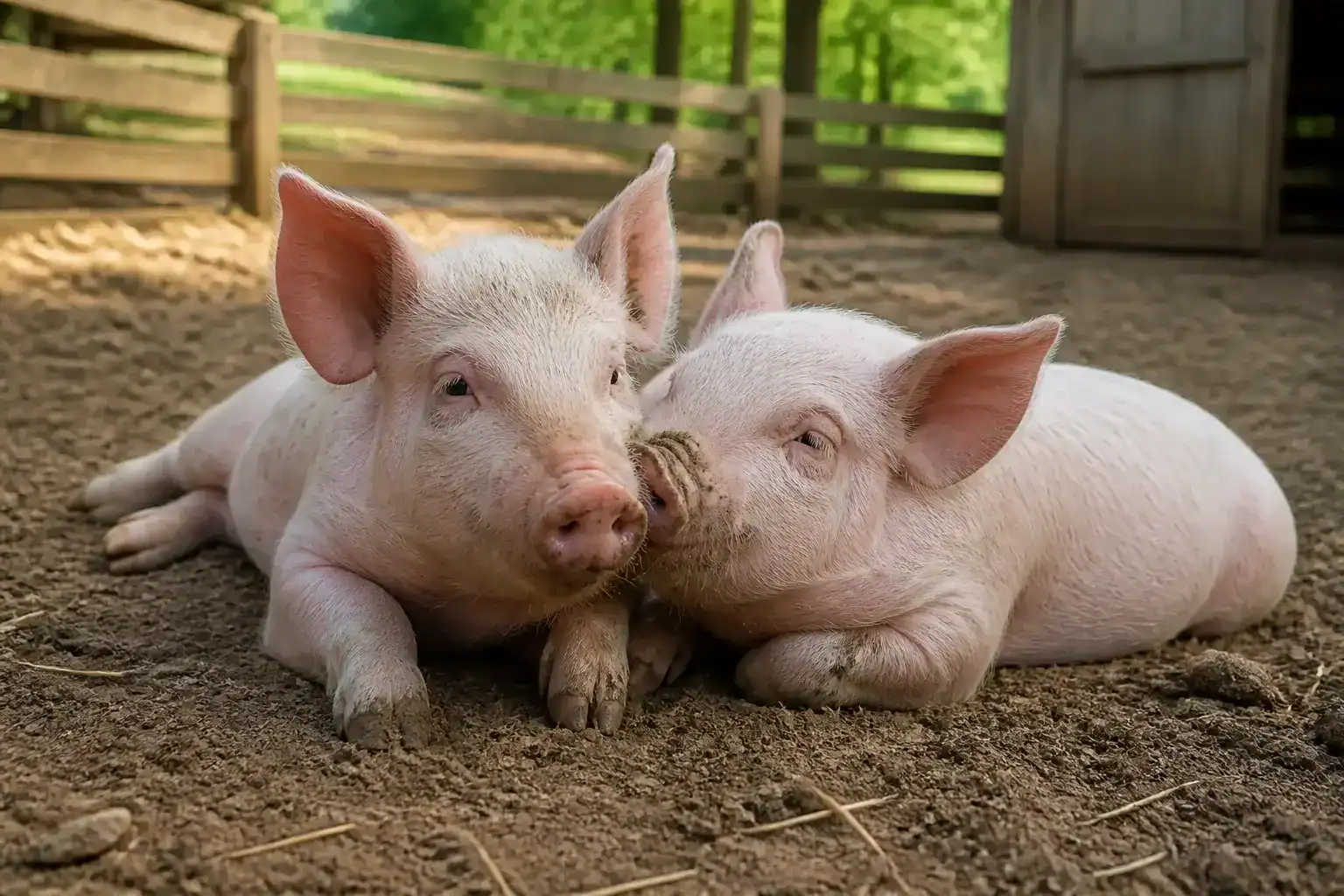
Saying pigs are social does not mean every pig instantly gets along with every other pig. It means pigs are built to live with other pigs under a stable social structure. They interact, establish rank, play, root near each other, sleep together, and learn the boundaries of their group.
That is why two littermates or two pigs bought together from the same group often work well. They already smell familiar, know each other’s body language, and have usually done the early pushing and sorting before they arrive. Two unfamiliar pigs can still work, but introductions need more care.
The trouble usually starts when pigs are mismatched by size, age, sex, temperament, or feed access. A larger pig may bully a smaller pig off feed. A pushy pig may control the water. Two boars nearing maturity may become more difficult than two barrows. A timid pig may spend too much time avoiding conflict instead of eating and growing.
If you are new, do not just ask, “Can I raise two pigs?” Ask, “Can I raise two compatible pigs with enough room, feed space, and a plan for harvest?”
When Raising Two Pigs Is Usually Better
Two pigs are usually the better choice when you are raising feeder pigs for meat and have the room, budget, and freezer plan. A pair gives the pigs companionship, activity, and warmth in cool weather. They tend to explore together, eat on a routine, and sleep in a pile. That can make the pen feel calmer than a single pig that is always looking for interaction.
Two pigs can also be useful for pasture or pen behavior. One pig alone may pace a fence or focus on a weak spot. A pair may spend more time rooting, resting, and interacting with each other. This does not mean two pigs cannot escape. It means their energy is not all directed at the homesteader or the fence.
If you are raising pork for your household, two pigs also give you more flexibility. You may keep one whole hog and sell or split the second with family. You may process at slightly different sizes if your butcher allows it. You may also find that feed, hauling, bedding, and setup costs are more efficient when spread across two animals instead of one.
Before buying, run the numbers with Raising Pigs for Meat in mind. Feed is usually the biggest ongoing cost, and two pigs eat a lot. The choice only works if you can finish both animals responsibly.
The Real Cost of Raising Two Pigs
Two pigs do not mean twice the daily time in every way. You still walk to the pen, fill water, check fencing, bed the shelter, and feed on the same schedule. But two pigs do mean more feed, more manure, more rooting pressure, more bedding, more hauling weight, and more pork at the end.
The costs that increase most clearly are:
- Feed
- Water use
- Bedding
- Butcher fees
- Freezer space
- Ground wear
- Shelter size
- Feed pan or trough space
The costs that may not double are:
- Daily chore trips
- Fencing setup
- Basic shelter materials
- Predator protection
- Learning curve
- Transport, depending on your trailer or hauler
This is why two pigs often make sense if the infrastructure is already there. If you have a secure pen, a proper shelter, and a butcher slot, the second pig may be more efficient than starting over next year. If your setup is already tight with one pig, adding a second one makes every weak point show.
When Keeping One Pig Can Work
Keeping a single pig can work when the pig is being raised for a short season, has excellent care, and is not left in a bare pen with nothing to do. It can also make sense when freezer space is limited, local processing is expensive, ordinances restrict livestock numbers, or the homestead is still learning.
A single pig needs more intentional management. It should be checked often, handled calmly, and given real enrichment. That can be fresh bedding, soil to root, logs, hanging brushes, safe toys, pasture rotation, or changing areas of the pen. A pig in a small, muddy, boring square will make its own entertainment, and that entertainment may not match your fencing budget.
Single pigs also need more attention during weather swings. In winter, they do not have another pig to pile with. In summer, they may be restless if they lack shade and a wallow. In stressful moments like transport, sickness, or a feed change, you have fewer behavioral cues from a group.
If you choose one pig, choose a healthy, sturdy feeder pig from a calm group. Avoid taking the smallest, weakest, or newly weaned pig as a solo beginner animal. That is asking a vulnerable pig to handle isolation and transition at the same time.
Space and Pen Setup
Whether you raise one pig or two, space matters. Two pigs need room to move, eat, avoid each other, sleep dry, and use a manure corner away from the bedding. A cramped pen turns ordinary pig behavior into constant pressure on fences, feeders, waterers, and each other.
A single pig also needs enough space. Do not use one pig as an excuse to shrink the pen until there is no room for rooting or movement. If you are deciding whether your current setup can handle one or two, start with how much space a single pig needs to be raised for meat, then think honestly about soil condition, drainage, shelter placement, and rotation.
For two pigs, provide more than one way to access important resources. That does not always mean two full feeders and two full water systems, but it does mean enough trough width, enough pans, or enough room for the lower-ranking pig to eat without being pinned. If one pig is always shoved aside, it will not grow evenly, and the problem will get worse as the size gap grows.
A smart two-pig pen has:
- A dry shelter where both can lie down
- Feed space wide enough for both pigs
- Water that cannot be guarded easily by one pig
- Corners and panels arranged so a pig can retreat
- Secure fencing built before the pigs arrive
- Gates that swing safely and latch well
Do not underestimate the fence. Pigs learn fast. Once one pig finds a weak latch or loose panel, the other may learn it too. Review Pig Fencing before bringing home feeder pigs, especially if this is your first season.
Feeding One Pig Versus Two
Feeding two pigs is not complicated, but it has to be fair. If feed is dumped into one small pan, the dominant pig may get more than its share. This can leave one pig growing faster and the other falling behind.
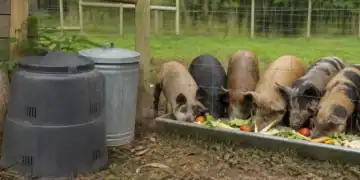
Use a long trough, two heavy pans set apart, or a feeder with enough space for both pigs. Watch them eat. Do not just fill the feeder and walk away every time. You need to know whether both pigs are actually getting access.
With one pig, feed competition is not the problem. Boredom and overeating can be. A single pig may rush people at feeding time, squeal constantly, flip pans, or root the fence line because feeding is the most exciting part of the day. Routines help. So does spreading some safe feed or produce in a rooting area instead of making every bite arrive in one bucket.
The foundation is still a complete swine ration. Household scraps, garden extras, pumpkins, and windfall fruit can be useful in moderation, but they should not replace balanced feed for a growing meat pig. If you are unsure about safe feed choices, read What Do Pigs Eat? before turning the pig pen into a compost pile.
Introducing Two Pigs
The easiest introduction is buying two pigs already raised together. Ask the breeder or farmer whether they are littermates or have been penned together. Watch them if you can. Healthy pigs should be active, alert, evenly built, and moving well.
If you must introduce unfamiliar pigs, give them space and supervision. Do not trap them in a tiny pen with one feed bowl and no escape route. Some chasing, pushing, and squealing can be normal while rank is established, but serious biting, repeated cornering, or one pig being kept from feed needs intervention.
Practical introduction tips:
- Match pigs by size as closely as possible.
- Introduce them in a larger pen, not a tight shelter.
- Put out multiple feed spots at first.
- Watch for injuries, lameness, and refusal to eat.
- Avoid adding a much smaller pig to an established larger pig.
- Keep bedding, water, and feed plentiful during the first few days.
Stable groups are calmer than constantly shuffled groups. Once pigs are settled, avoid unnecessary mixing.
Behavior Problems to Watch For
A single pig may show stress as pacing, constant calling, aggressive attention toward people, chewing equipment, rooting along fence lines, or refusing to settle. Two pigs may show problems as bullying, ear biting, flank biting, guarding feed, injuries, or uneven growth.
Do not romanticize either choice. A lonely pig is a problem. A bullied pig is also a problem. The goal is not just to own the right number of pigs. The goal is to build a setup where the pigs can behave like pigs without hurting each other or destroying the pen.
If behavior changes suddenly, check for pain, illness, heat stress, cold stress, feed shortage, water failure, or a new stressor nearby. Pigs are expressive animals, and behavior is often your first clue that something in the setup has changed.
Butcher, Freezer, and Exit Plans
Two pigs require a real end plan. Do you have freezer space for both? Is one already spoken for by a buyer or family member? Do you have two butcher appointments? Can your trailer or processor handle both on the same day?
A single pig has a simpler exit plan, but that simplicity can be misleading. If the pig becomes too large before your butcher slot opens, feed costs rise. If you cannot transport it safely, you still have a problem. If the pig is alone for months longer than expected, the welfare question gets bigger.
Book processing early. Have a backup plan. Know whether you are raising one pig for your freezer, two pigs for two households, or a pair where one will be sold. The humane choice includes finishing the plan well, not just starting with good intentions.
Decision Guide: One Pig or Two?
Choose two pigs if:
- You have enough space and secure fencing.
- You can afford the feed and processing costs.
- You have freezer space or a reliable buyer.
- You are buying littermates or pigs already grouped together.
- You want a calmer, more socially natural setup.
Choose one pig only if:
- You truly cannot use or place a second pig.
- The pig will be raised for a limited season.
- You can provide extra enrichment and attention.
- Your shelter and fencing are secure enough for a bored pig.
- You are prepared to watch closely for stress and behavior issues.
For most homesteaders, two compatible feeder pigs are the better default. One pig can work, but it should be a deliberate management choice, not just the option that sounds cheaper on paper.
Frequently Asked Questions About Keeping One Pig vs. Two
Is it cruel to keep one pig by itself?
A single pig is not automatically cruel, but pigs are social animals and one pig needs more attention, enrichment, and monitoring. A lonely, bored pig in a bare pen is not a good setup.
Are two pigs harder than one?
Two pigs cost more in feed, processing, bedding, and freezer space, but they do not always double the daily chore time. In many cases, two compatible pigs are easier behaviorally than one lonely pig.
Can two male pigs live together?
Two barrows can often be raised together successfully, especially if they are bought young and already know each other. Intact males can become harder to manage as they mature and are not the usual beginner choice.
Will two pigs fight?
Some pushing and sorting can happen, especially when pigs are first introduced or when feed space is limited. Serious fighting, repeated bullying, injuries, or one pig being kept from feed means the setup needs to change.
What if I only have freezer space for one pig?
You can raise one pig, or you can raise two and arrange a buyer or split with another household before the pigs arrive. Do not assume you will figure out the second pig later.