
Knowing when to harvest honey is the difference between a shelf-stable jar you can be proud of and a batch that ferments and has to be thrown out. Most first-year beekeepers harvest too early, pulled by excitement rather than readiness. Honey is ready to harvest when the bees say it is, and they make that clear in a specific, measurable way. Get the timing right and the rest of the process is straightforward.
Key Takeaways
When to Harvest Honey?
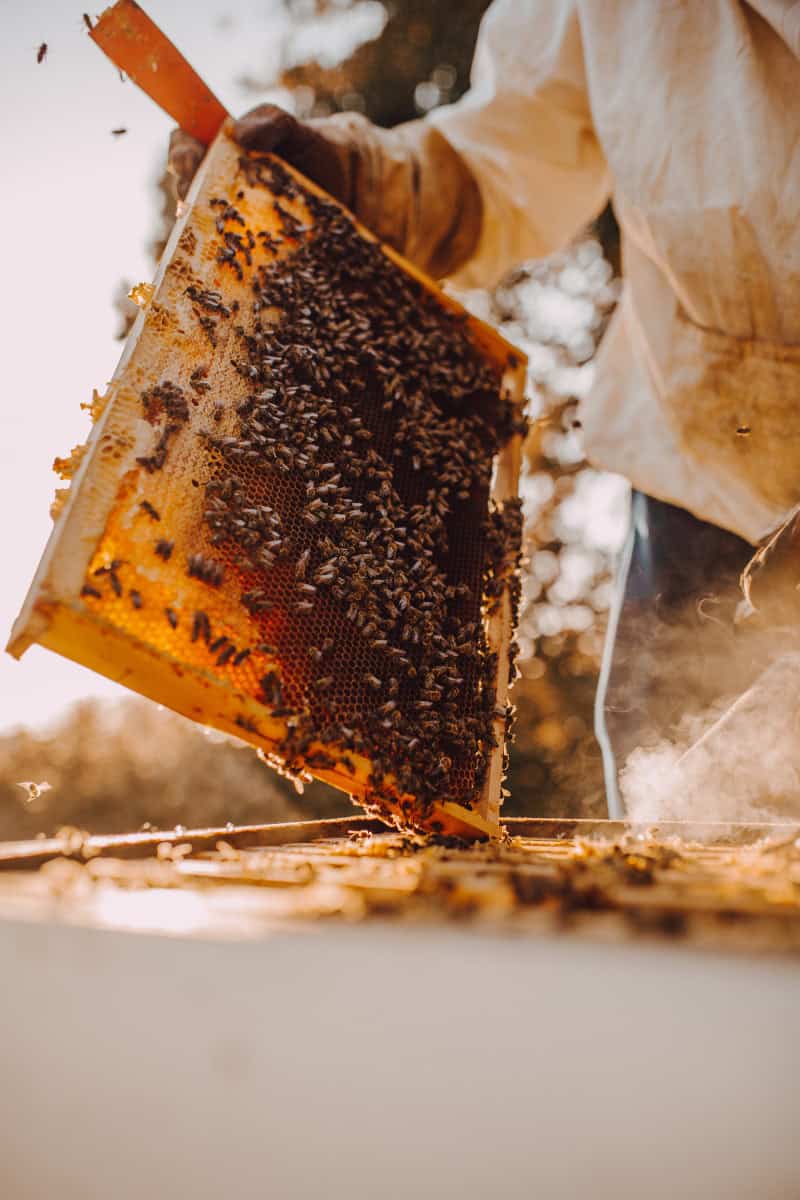
Honey is ready to harvest when the bees have capped it. Bees cap honeycomb cells with a thin layer of beeswax once the honey inside has been reduced to the right moisture content, typically below 18.6%. That capping is their signal that the job is done. An uncapped cell is still in process, with moisture levels too high to store safely.
The practical rule is 80% capped. When at least 80% of the cells in a honey super are sealed with white or cream-colored wax cappings, the super is ready to pull. Some experienced beekeepers wait for 90% or higher, which gives an even greater margin of safety on moisture content. Pulling a super at less than 80% capped is a risk not worth taking.
Do the shake test as a secondary check. Hold a frame horizontally and give it a sharp downward shake. If nectar sprays or drips out, the honey in those cells is too wet and the frame is not ready. If nothing moves, the moisture content is low enough to be safe. Use this test on any uncapped cells in an otherwise well-capped frame.

Should You Harvest Honey in Your First Year?
For most beekeepers starting with a new package or nucleus colony, the honest answer is no. A first-year colony spends the entire season building comb, raising bees, and storing enough honey to survive winter. That takes roughly 60 to 80 pounds of honey for a healthy overwintering colony in a cold climate, and a new colony rarely produces a meaningful surplus on top of that in year one.
Harvesting from a first-year hive that has not built adequate winter stores is one of the most common reasons new colonies die over winter. Before you pull any honey, confirm the colony has at least two full deep boxes of capped honey and pollen stores. If they do not, leave everything and plan for a first harvest in year two.
There are exceptions. A particularly strong first-year colony in a region with an abundant nectar flow can produce a genuine surplus. In the Southeast and parts of the mid-Atlantic, first-year harvests are possible if the colony established early and the season cooperated. Check your stores honestly against your local winter requirements before making that call.
What Time of Year Do You Harvest Honey?
The timing depends on your region and which nectar flows your bees are working. In most of the United States, the main honey harvest happens in late summer, between late July and early September, after the primary nectar flow has peaked and begun to slow.
In the Southeast, beekeepers may see an early spring harvest from tulip poplar or clover followed by a second late summer harvest. In the Midwest and Northeast, a single late summer harvest after the clover and wildflower flows is most common. In the Southwest and parts of California, timing varies considerably by the local flora.
Watch your hives rather than the calendar. When bees start backfilling the brood nest with honey and foraging activity begins to drop, the main flow is winding down. That is the window to inspect supers and assess whether they are ready to pull.
How to Check Honey Moisture Content
The shake test and visual capping check give you a good field assessment, but a refractometer gives you a precise moisture reading before you extract. Refractometers calibrated for honey are inexpensive, typically $20 to $40, and give you a reading in under a minute.
To use one, uncap a cell from a frame you plan to harvest and place a small drop of honey on the refractometer prism. Close the cover and hold it up to natural light. Read the scale through the eyepiece. Below 18.6% moisture is safe for long-term storage. Between 18.6% and 20% is borderline and carries some fermentation risk. Above 20% moisture means the honey is not ready and needs more time in the hive.
If you are harvesting from multiple supers or multiple hives, test a frame from each. Moisture content can vary between supers even in the same hive, particularly if one super was added later in the season.
How to Harvest Honey: The Basic Process
Clear the Bees From the Super
Before pulling frames, you need to move the bees out of the honey super and back into the brood boxes. There are three practical methods.
A bee escape board placed between the super and the brood boxes the evening before you plan to harvest allows bees to move down through a one-way valve but not return. By the following morning, the super is largely clear. This is the gentlest method and works well for backyard apiaries.
A fume board with a bee repellent such as Bee-Quick or Fishers Bee Escape applied to the pad clears a super in five to ten minutes on a warm day. The scent drives bees downward quickly. It is faster than a bee escape board but requires a warm day above 60 degrees F to work effectively.
Brushing bees off each frame individually with a soft bee brush is the most labor-intensive method but requires no additional equipment. Work quickly and have your extraction space ready.
Uncap and Extract
Transport frames to a clean, enclosed space away from the hive. Bees will follow the smell of honey aggressively, so work indoors or in a screened area. Uncap the cells using a hot uncapping knife, an uncapping fork, or both. A hot knife handles flat cappings efficiently. An uncapping fork reaches recessed cells the knife misses.
Place uncapped frames in an extractor. A radial extractor spins frames at high speed and pulls honey out by centrifugal force. A two-frame hand-crank extractor is sufficient for a small backyard apiary and costs $100 to $200. Electric extractors are faster but a larger investment. Many local beekeeping associations loan or rent extractors to members, which is worth checking before you buy.

Spin frames until honey stops flying from the comb. For radial extractors, two to three minutes per cycle at moderate speed is typical. Pour the extracted honey through a double-layer strainer into a clean food-grade bucket to remove wax particles and debris. Let it settle for 24 to 48 hours before bottling, which allows any remaining air bubbles and wax fragments to rise to the surface.
Check Moisture Before You Bottle
Even if you assessed frames in the hive, check the moisture content of your extracted honey before bottling. Honey from multiple frames blends together during extraction and settling, which can shift the average moisture content slightly. A reading below 18.6% before bottling confirms the batch is shelf-stable.
What to Do With Extracted Frames
Return empty drawn comb to the hive the same day you extract. Bees will clean any remaining honey from the cells overnight and have the comb ready for the next nectar flow. Do not leave wet supers outside or near the hive entrance. The smell of honey triggers robbing behavior, where bees from other colonies aggressively raid your hive. Place wet supers directly on top of the inner cover above the brood boxes so your own bees have controlled access to clean them.
Store drawn comb frames in a sealed container over winter with a few sheets of newspaper to absorb moisture. Protect them from wax moths by keeping them in a cool, dark space or treating with Para-Moth according to label directions. Drawn comb is valuable. A frame of fully drawn comb gives your bees a significant head start the following spring and saves them the energy of building comb from scratch.
How Much Honey Will You Get?
A healthy established colony in a productive season can produce between 30 and 60 pounds of surplus honey beyond their winter stores, though this varies widely by region, forage availability, and colony strength. A two-frame extractor spin typically yields one to two pounds of honey per frame depending on frame size and how fully the cells were packed.
First-year beekeepers who do harvest should expect a modest yield. A few jars from a first-year colony is a good outcome and not a sign anything went wrong. The colony’s energy in year one goes into building the infrastructure that makes larger harvests possible in years two and three.
According to the National Honey Board, properly stored honey has an indefinite shelf life when moisture content is kept below 18.6% and containers are sealed airtight. That standard is worth holding to.

Frequently Asked Questions About Harvesting Honey
Can you harvest honey without an extractor?
Yes. The crush and strain method presses honeycomb directly through a strainer to release the honey without a centrifuge. It works well for small harvests but destroys the drawn comb, which means your bees have to rebuild from scratch. For beekeepers planning to harvest annually, investing in an extractor or renting one from a local association preserves the comb and pays off quickly.
What happens if you harvest honey too early?
Honey with moisture above 18.6% will ferment in the jar, often within weeks of bottling. Fermented honey is not shelf-stable and cannot be sold or used in most culinary applications. It does not have to be wasted — it can be used to make mead — but it is not the honey harvest you were aiming for.
How do you know if capped honey is really ready?
Cappings on finished honey are dry and slightly raised above the cell surface, white to cream in color. Wet cappings that look darker or slightly translucent can indicate honey capped before it was fully reduced. When in doubt, use a refractometer. Visual inspection is a good starting point, but a moisture reading below 18.6% is the only confirmation that counts.
Do you have to harvest honey every year?
No. If your colony has not produced a surplus beyond their winter stores, leave the honey and do not harvest. Taking honey the bees need to survive winter is one of the most common reasons colonies die between October and March. A colony that comes through winter strong will reward you with a larger surplus the following year.
Can you harvest honey in fall?
A fall harvest is possible if your bees have produced a genuine surplus and will still have adequate stores for winter after you pull it. In most northern climates, a fall harvest leaves very little margin. Check that your colony has at least two full deep boxes of capped stores before pulling anything in September or later.
Ready to set up your first hive? Our guide to essential beekeeping equipment covers everything you need before your first season. A late flow gives you goldenrod honey. Once it is jarred the first pound tends to go quickly, usually into honey jalapeño cornbread or a jug of raw honey lemonade.